
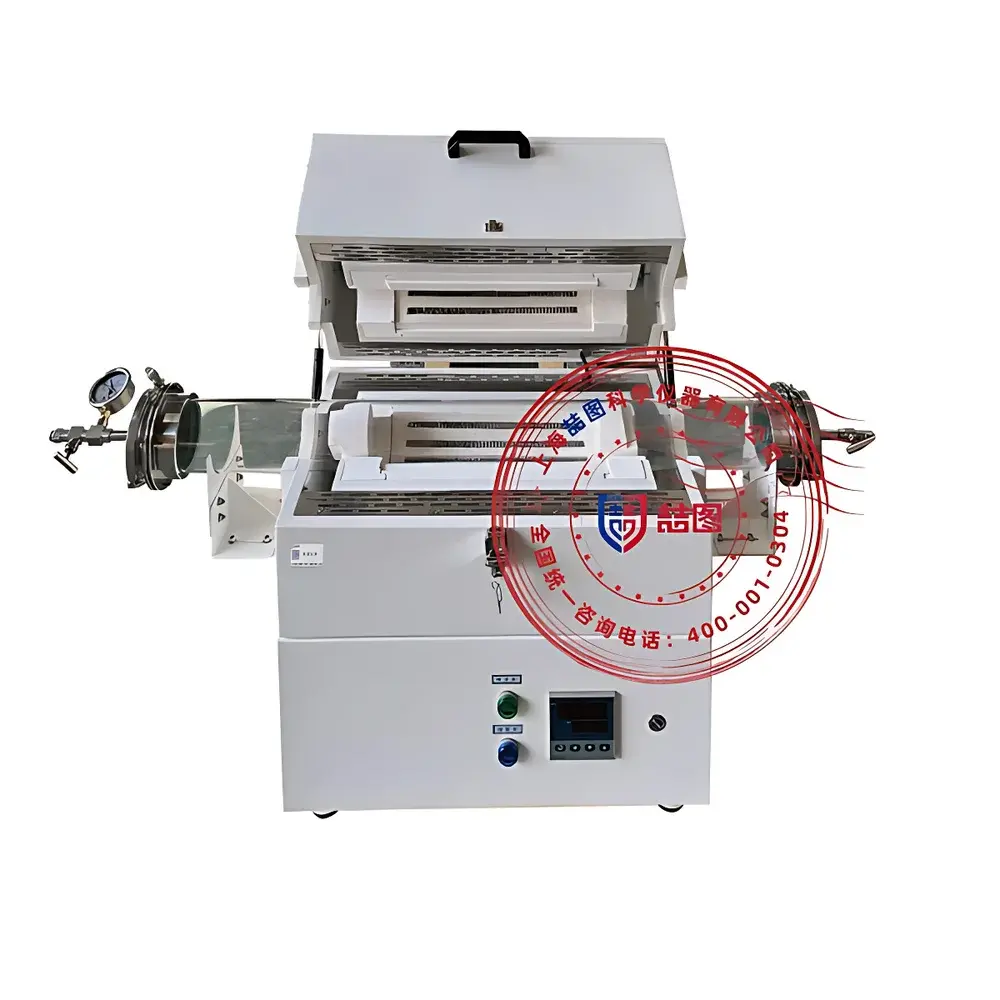
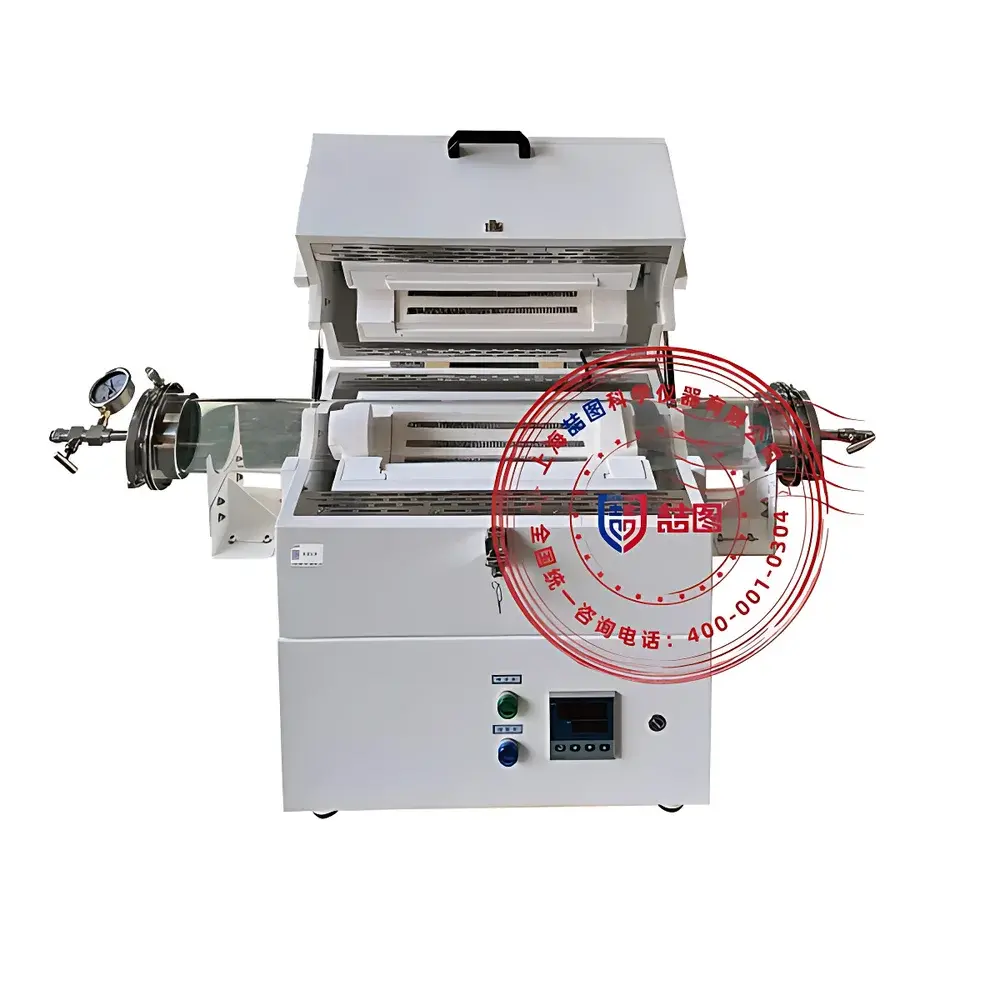
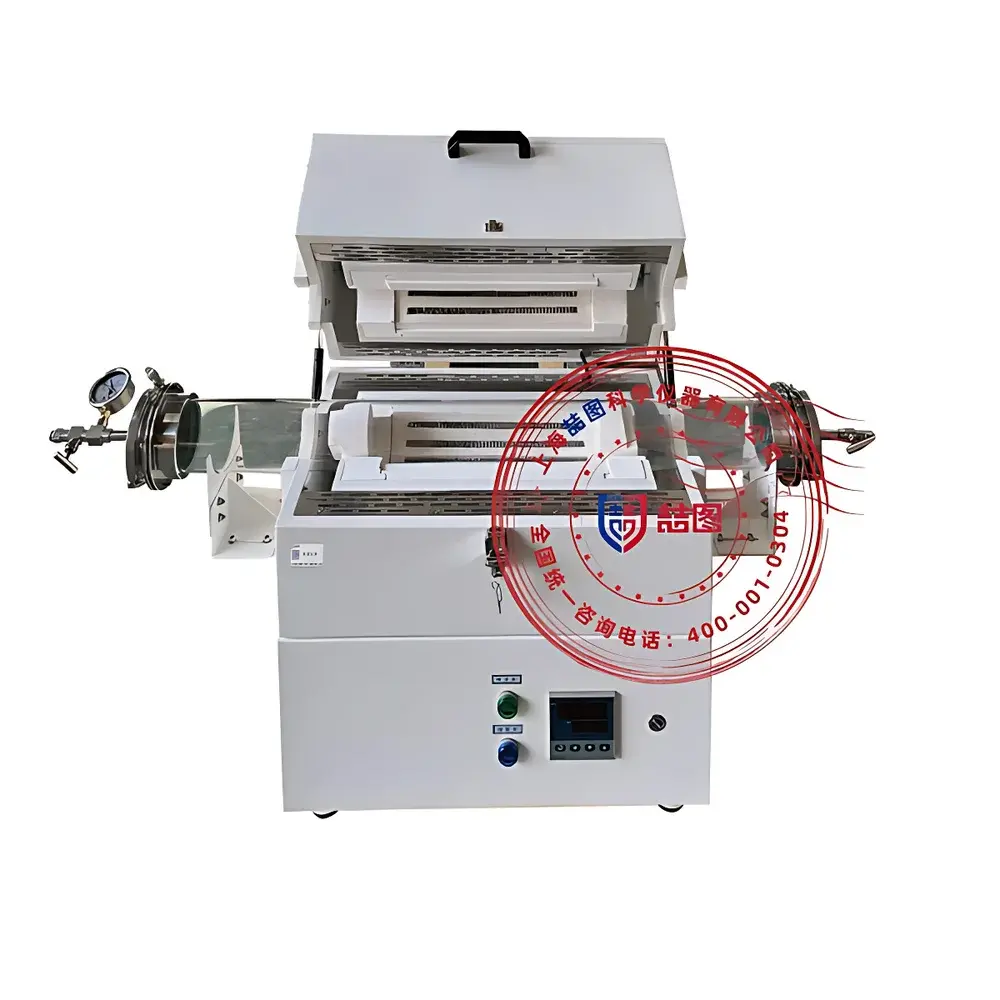
DRETOP GLK/GLS/GLB Series Tube-Type Vacuum & Controlled Atmosphere Furnace
| Brand | DRETOP |
|---|---|
| Origin | Shanghai, China |
| Manufacturer Type | Authorized Distributor |
| Country of Origin | China |
| Model Series | GLK, GLS, GLB |
| Instrument Type | Horizontal Tube Furnace |
| Max Temperature | 1200°C (GLK), 1400°C (GLS), 1700°C (GLB) |
| Temperature Control Accuracy | ±1°C |
| Power Supply | 220 V / 380 V, 50 Hz |
| Ramp Rate to Max Temp | ≤60 min (typical) |
| Heating Elements | Ni-Cr Alloy (GLK), SiC Rods (GLS), MoSi₂ Rods (GLB) |
| Internal Tube Dimensions | Ø40–100 mm × L205–440 mm |
| Control System | Intelligent Programmable PID Controller with Multi-Stage Ramp-Soak Profiles |
| Vacuum Level | ≤−0.1 MPa (1×10⁻³ mbar typical with optional pump) |
| Tube Material | High-Purity Quartz (GLK) or 99.7% Al₂O₃ Ceramic (GLS/GLB) |
| Sealing | Dual O-ring KF-Flange Assembly with Mechanical Compression |
| Atmosphere Compatibility | Inert (N₂, Ar), Reducing (H₂, forming gas), Vacuum, or Mixed Gas via Side-Mounted Gas Inlets |
| Safety Features | Over-Temperature Cut-Off, Thermocouple Break Detection, Door-Interlocked Power Shut-Off (GLK), Ground Fault Protection |
| Compliance | Designed for GLP/GMP-aligned lab environments |
Overview
The DRETOP GLK/GLS/GLB Series Tube-Type Vacuum & Controlled Atmosphere Furnace is a precision-engineered horizontal tube furnace system designed for high-reliability thermal processing under rigorously controlled environmental conditions. Operating on the principle of resistive heating within a sealed, evacuated, or gas-purged quartz or alumina tube, this furnace enables reproducible heat treatment across three distinct maximum temperature classes: 1200°C (GLK), 1400°C (GLS), and 1700°C (GLB). Its core architecture integrates vacuum integrity, programmable thermal profiling, and inert/reducing atmosphere compatibility—making it indispensable for applications where oxidation suppression, volatile byproduct removal, phase purity preservation, and stoichiometric control are critical. Unlike conventional muffle furnaces, its tubular geometry ensures uniform radial heat distribution, minimized thermal gradients, and direct exposure of samples to precisely regulated gaseous or vacuum environments—key requirements in advanced materials synthesis, semiconductor precursor annealing, and high-purity metallurgical processing.
Key Features
- Multi-stage programmable temperature control (up to 30 segments) enabling complex ramp-hold-cool profiles with ±1°C stability at setpoint.
- Modular heating element selection: Ni-Cr alloy (GLK), silicon carbide rods (GLS), or molybdenum disilicide (MoSi₂) elements (GLB), each optimized for thermal efficiency, longevity, and resistance to thermal cycling stress.
- Vacuum-tight KF-flanged tube ends with dual elastomeric O-ring seals (Viton or Kalrez depending on temp class) achieving ≤−0.1 MPa base pressure; optional integration with two-stage rotary vane or turbomolecular pumps.
- High-purity tube options: fused quartz (GLK, ≤1200°C) or 99.7% alumina ceramic (GLS/GLB, up to 1700°C), both exhibiting low alkali content, minimal outgassing, and resistance to thermal shock.
- Side-entry sample loading configuration (GLS/GLB) and top-hinged lid with safety interlock (GLK) ensure operational safety and process repeatability.
- Integrated gas manifold ports (standard NPT or KF) support continuous flow, dynamic pressure regulation, and multi-gas mixing (e.g., Ar/H₂ blends) with mass flow controller compatibility.
- Energy-efficient insulation using vacuum-formed polycrystalline mullite fiber modules, delivering >85% thermal retention and uniform axial/radial temperature distribution (±3°C over 100 mm zone).
- Comprehensive safety architecture including thermocouple break detection, independent over-temperature limit controller, ground-fault circuit interruption, and emergency power cutoff upon door actuation.
Sample Compatibility & Compliance
The GLK/GLS/GLB series accommodates cylindrical or rod-shaped specimens up to Ø100 mm × 440 mm, supporting diverse material forms—including powders, pellets, fibers, thin films, and small crucibles. Its vacuum and atmosphere capabilities meet critical requirements for ASTM C1171 (ceramic sintering), ISO 11567 (metal powder heat treatment), and USP (pharmaceutical excipient drying). The furnace’s design supports full traceability under GLP and GMP frameworks: all temperature profiles are timestamped and exportable in CSV format; optional audit trail logging complies with FDA 21 CFR Part 11 when paired with validated software. All models conform to IEC 61000-6-3 (EMC) and IEC 61010-1 (electrical safety) standards. Tube material selection follows ISO 8502-3 for low-metallic leachables, ensuring suitability for battery cathode synthesis (e.g., LiCoO₂, NMC), MIM/CIM debinding, and CVD precursor decomposition.
Software & Data Management
Equipped with an embedded 7-inch TFT touchscreen HMI running real-time embedded Linux, the furnace provides intuitive profile editing, live temperature curve visualization, and event-triggered data logging (sample temperature, chamber pressure, gas flow rates, power consumption). Data export supports USB flash drive storage in .csv or .xls formats, with optional Ethernet/Wi-Fi connectivity for remote monitoring via Modbus TCP or OPC UA protocols. For regulated environments, the optional DRETOP LabControl Suite offers electronic signature capability, user role-based access control (admin/operator/auditor), and automated report generation aligned with ISO/IEC 17025 clause 7.8. All firmware updates are digitally signed and verified, and system logs retain 30 days of operational history with cyclic overwrite protection.
Applications
This furnace serves as a foundational platform for R&D and pilot-scale production across multiple high-tech domains: synthesis of lithium-ion battery cathodes (e.g., calcination of NCA, LFP precursors); thermal annealing of graphene oxide and transition metal dichalcogenides; carbothermal reduction of metal oxides; sintering of ZrO₂, SiC, and Si₃N₄ ceramics; hydrogen reduction of tungsten/molybdenum powders; pyrolysis of polymer-derived ceramics; metal injection molding (MIM) binder removal; and chemical vapor deposition (CVD) of carbon nanotubes or 2D materials. Its precise atmosphere control also supports corrosion studies (ASTM G102), thermogravimetric analysis coupling, and rapid thermal processing (RTP) protocol development.
FAQ
What vacuum level can be achieved without auxiliary pumping?
Base vacuum is approximately −0.095 MPa (≈50 mbar) using the integrated mechanical vacuum valve; full −0.1 MPa requires connection to an external vacuum pump.
Can the furnace operate under positive pressure?
Yes—when configured with pressure-rated flanges and safety burst discs, it supports up to 0.5 bar(g) inert gas overpressure with appropriate flow regulation.
Is furnace calibration traceable to NIST standards?
Yes—optional factory calibration includes NIST-traceable thermocouple verification at three points (300°C, 800°C, 1200°C or equivalent), documented per ISO/IEC 17025.
What maintenance intervals are recommended for heating elements?
Ni-Cr elements: inspect every 500 h; SiC rods: replace after ~2,000 h at 1400°C; MoSi₂ elements: service life exceeds 3,000 h at 1600°C with proper ramp rate control.
Does the system support third-party SCADA integration?
Yes—Modbus RTU (RS485) and Modbus TCP interfaces are standard; OPC UA gateway available as add-on for Siemens PCS7, Rockwell FactoryTalk, or Ignition platforms.



