Smart SpectroTM Portable/Desktop UV-Vis Spectrophotometer
| Origin | USA |
|---|---|
| Manufacturer Type | Authorized Distributor |
| Origin Category | Imported |
| Model | Smart SpectroTM |
| Pricing | Available Upon Request |
Overview
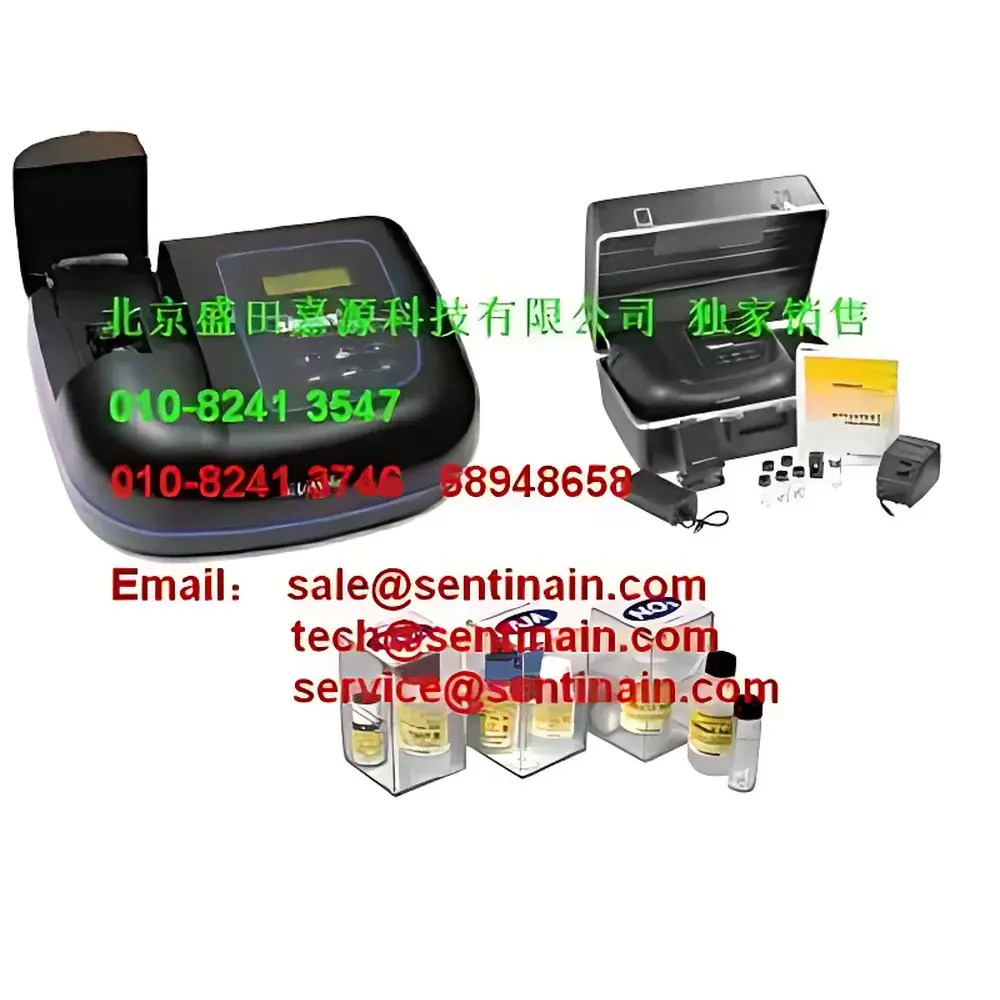
The Smart SpectroTM Portable/Desktop UV-Vis Spectrophotometer is a dual-mode analytical instrument engineered for high-fidelity absorbance and transmittance measurements across the visible and near-ultraviolet spectrum (350–1000 nm). It operates on the principle of single-beam, grating-based monochromation—utilizing a 1200 lines/mm holographic grating within a modified Ebert optical mount—to deliver stable, reproducible photometric data under both field-deployable and laboratory-controlled conditions. Designed to meet the operational rigor of environmental monitoring, water quality analysis, and industrial process control, the instrument complies with fundamental performance criteria aligned with ASTM E275, ISO 6223, and EPA Method 415.1 for spectrophotometric validation. Its quartz halogen light source (rated >1000 h lifetime) ensures consistent spectral output, while the silicon photodiode detector provides linear response over a photometric range of –0.1 to 2.5 A (0–125% T), with stray light <0.5% T at 340 nm—critical for low-absorbance trace analyte quantification.
Key Features
- Automated wavelength selection with ±2 nm accuracy and 1 nm resolution, eliminating manual calibration drift during sequential multi-analyte workflows.
- 80 pre-programmed test methods—including EPA-compliant protocols for ammonia nitrogen, nitrate, phosphate, COD, chlorine species, heavy metals (e.g., Cr(VI), Cd, Pb), and organic compounds (e.g., phenol, cyanuric acid)—each optimized for reagent chemistry, pathlength, and reaction kinetics.
- 25 user-definable calibration curves stored in non-volatile memory; supports custom curve fitting (linear, quadratic, or polynomial) via SMARTLink 2 software with audit-trail logging compliant with FDA 21 CFR Part 11 requirements.
- Dual sample chamber configuration: six 25 mm round cuvette positions + two interchangeable holders accommodating both standard 25 mm round cells and 10 mm square COD vials—enabling seamless transition between routine screening and regulatory digestion-based assays.
- Robust portable architecture: 4.65 kg mass, 35 × 28 × 17 cm footprint, rechargeable battery pack (2000-BP), and IP54-rated enclosure rated for operation from 0–40 °C—validated for use in wastewater treatment plants, municipal labs, and remote sampling sites.
- Integrated diagnostics and self-test routines—including lamp intensity verification, dark current measurement, and grating position validation—ensuring metrological integrity prior to each measurement cycle.
Sample Compatibility & Compliance
The Smart SpectroTM accommodates diverse sample matrices including fresh water, salt water, digested wastewater, industrial effluents, and reagent-treated extracts. Its assay library explicitly supports U.S. EPA Methods (e.g., 351.2 for nitrate, 365.2 for phosphate, 410.4 for total phosphorus), ASTM D1253 for residual chlorine, and ISO 6332 for iron by 1,10-phenanthroline. Reagent compatibility spans tablet-based (DPD, salicylate), unit-dose vial (UDV), liquid reagent, and digestion-dependent chemistries (e.g., persulfate oxidation for total nitrogen/phosphorus). All test codes—including 3642-SC (Ammonia HR), 3645-SC (Cr(VI)), and 4024/4025 (Total Phosphorus LR/HR)—reference NIST-traceable standards and are validated per CLSI EP9-A3 guidelines for method comparison. Note: Turbidity measurement (2–400 NTU) is provided as an absorbance-based approximation and is not certified for EPA Method 180.1 compliance.
Software & Data Management
SMARTLink 2 Software (Order Code 1912-3 or 1912-CD) enables bidirectional RS-232 communication for instrument control, real-time data streaming, and secure export to CSV or PDF formats. The software enforces role-based access control, electronic signatures, and full audit trails—including timestamps, operator ID, calibration history, and raw absorbance values—for GLP/GMP environments. Calibration data is encrypted and time-stamped upon entry; all modifications require dual authorization. Instrument firmware supports over-the-air updates via USB interface, ensuring long-term alignment with evolving regulatory guidance (e.g., updated EPA Method revisions or ISO 17025:2017 documentation requirements).
Applications
- Environmental laboratories performing routine compliance testing for drinking water (USP , WHO Guidelines), wastewater discharge (NPDES permits), and surface water monitoring (Clean Water Act Section 304).
- Industrial QA/QC teams validating pretreatment chemistry in electroplating, pharmaceutical manufacturing, and power plant cooling systems—particularly for hydrazine, DEHA, and copper corrosion inhibitors.
- Field technicians conducting rapid assessment of disinfectant residuals (free/total chlorine, chlorine dioxide), nutrient loading (nitrate/nitrite, orthophosphate), and toxicity indicators (cyanide, mercury) without lab dependency.
- Academic and research facilities requiring flexible platform support for method development—leveraging the instrument’s open-wavelength mode (manual λ selection) and user-defined curve generation for novel chromogenic assays.
FAQ
Does the Smart SpectroTM comply with EPA Method 180.1 for turbidity?
No. Turbidity is measured via absorbance at 860 nm and reported in arbitrary units; it is intended for relative trending only and does not satisfy EPA 180.1 certification requirements.
Is digestion heating integrated into the instrument?
No. High-range COD and total nutrient tests (e.g., Total Nitrogen, Total Phosphorus) require external block digesters (e.g., Hach DRB200) as specified in test codes marked with ‡.
Can I import third-party calibration standards?
Yes—user calibrations accept concentration-absorbance pairs in SI units (mg/L, ppm, µM); slope and intercept are auto-calculated with R² reporting and outlier detection.
What accessories are required for UDV-based tests?
Tests marked with † (e.g., Alkalinity UDV, Bromine UDV) require accessory kit Order Code 1961 or 1962, which includes calibrated unit-dose vials and dedicated holder inserts.
Is the instrument suitable for GxP-regulated environments?
Yes—when used with SMARTLink 2 Software, it supports 21 CFR Part 11-compliant electronic records, including audit trail review, signature authentication, and data integrity safeguards.