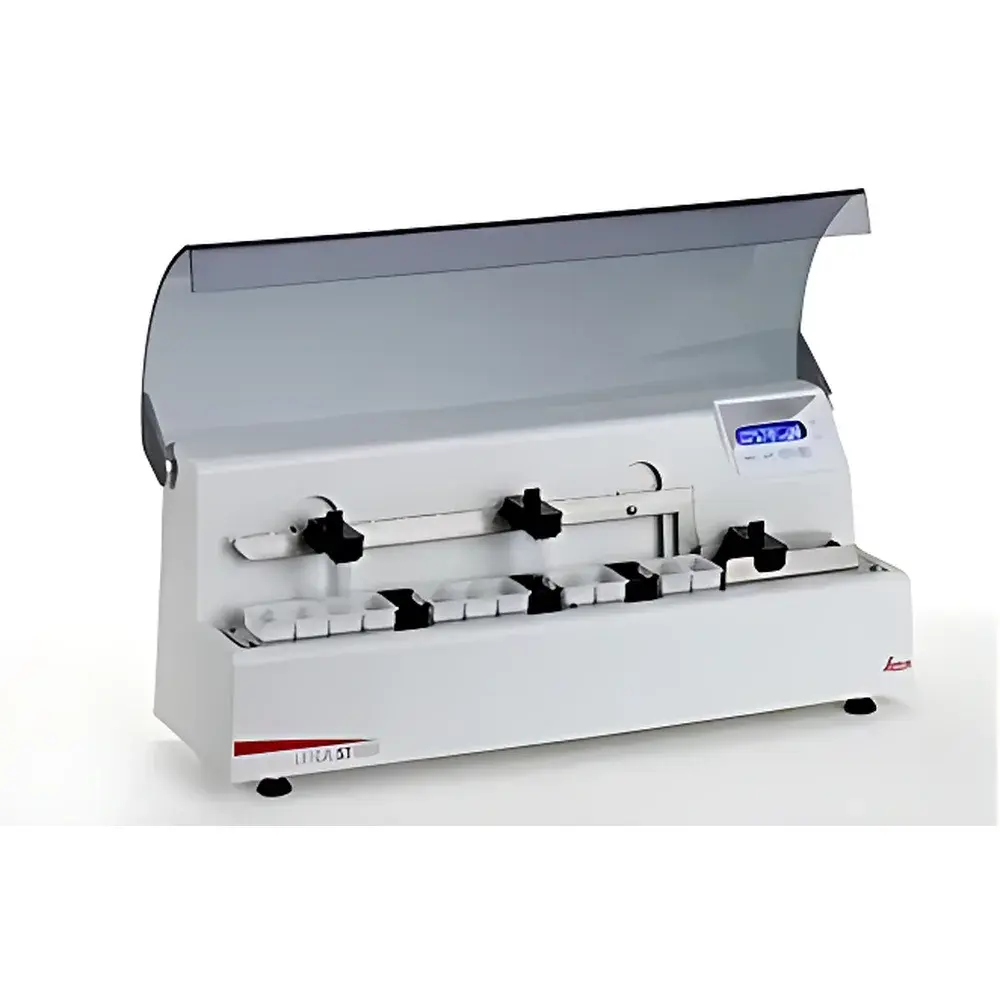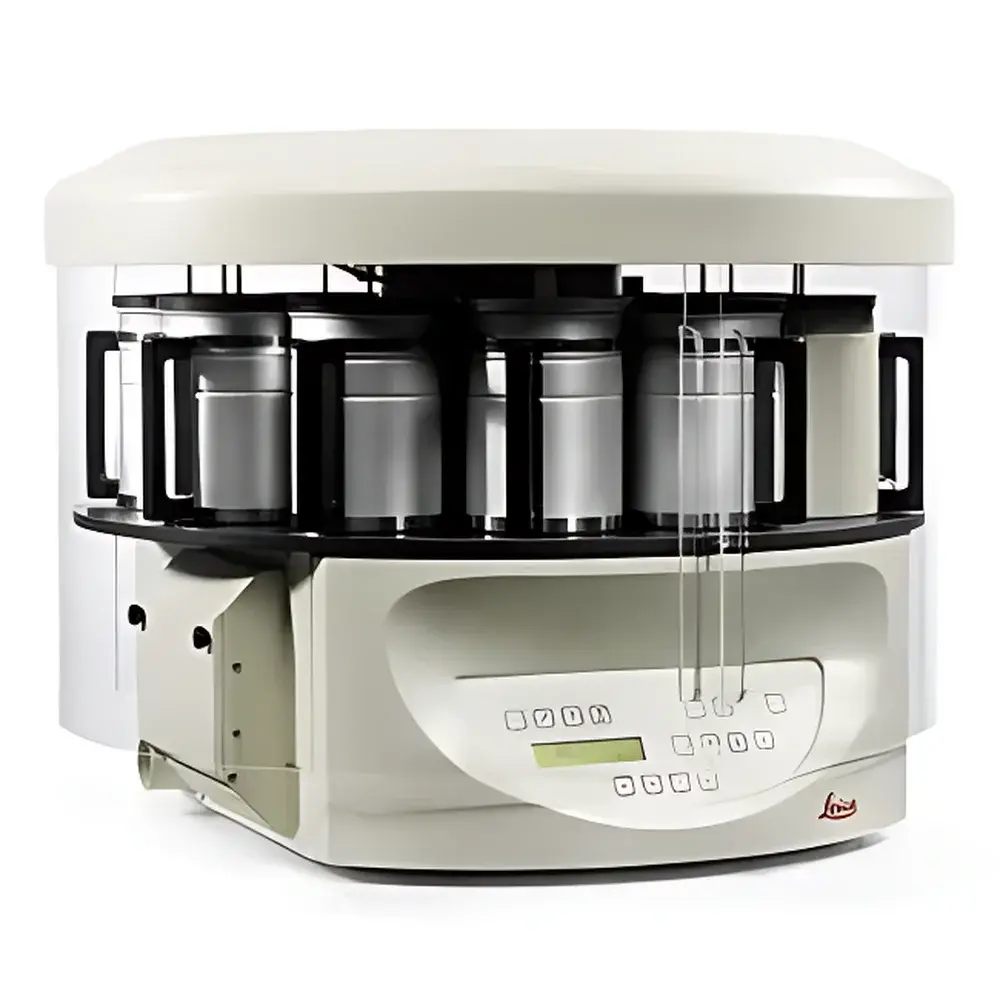
Leica TP1020 Semi-Automatic Benchtop Tissue Processor
| Origin | Germany |
|---|---|
| Manufacturer Type | Authorized Distributor |
| Origin Category | Imported |
| Model | TP1020 |
| Pricing | Upon Request |
Overview
The Leica TP1020 is a semi-automatic benchtop tissue processor engineered for consistent, reproducible dehydration, clearing, and infiltration of biological specimens in histopathology laboratories. It operates on a fixed-cycle, reagent-based protocol—utilizing precisely timed immersion in graded alcohols, xylene (or xylene substitutes), and molten paraffin—to prepare tissue samples for microtome sectioning. Unlike fully automated systems requiring complex fluidics and integrated embedding stations, the TP1020 delivers clinical-grade processing reliability with mechanical simplicity, intuitive manual intervention points, and robust fail-safe architecture. Its design prioritizes specimen integrity through controlled temperature management, gentle agitation, and programmable dwell times per reagent station—critical for preserving antigenicity, morphology, and nucleic acid stability in diagnostic and research workflows.
Key Features
- Mechanical Resilience & Power-Out Protection: A fully mechanical timer and cam-driven valve system ensures uninterrupted progression through the final dehydration and infiltration stages—even during unexpected power loss—preventing tissue desiccation and maintaining protocol continuity.
- Modular Configuration Options: Available in four configurations: Base model; Base + vacuum-assisted infiltration; Base + fume extraction system; Base + both vacuum and fume extraction—enabling labs to scale safety and performance according to local ventilation standards and workload profiles.
- Flexible Throughput Capacity: Accommodates either 100 or 200 standard-sized tissue cassettes per run, supporting variable daily workloads without compromising cycle consistency or reagent exchange efficiency.
- Human-Centered Interface: Large, tactile function keys and a high-contrast LCD display simplify operation—reducing operator training time and minimizing procedural errors in multi-shift or high-turnover environments.
- Thermal Stability & Reagent Integrity: Independent heating zones maintain precise, uniform temperatures across all reagent baths (typically 37–60 °C), while sealed reservoirs minimize evaporation and cross-contamination between alcohol, clearing agent, and paraffin stations.
Sample Compatibility & Compliance
The TP1020 processes human and animal soft-tissue specimens—including biopsy cores, surgical resections, and small organ sections—across routine diagnostic, frozen-section adjunct, and pre-research histology applications. It supports standard histological cassettes (e.g., Leica HistoCore Cassettes, Sakura Tissue-Tek formats) and is compatible with common reagents including ethanol (70–100%), isopropanol, xylene, limonene-based substitutes, and low-melting-point paraffin (56–58 °C). The system complies with IEC 61010-1 (Safety Requirements for Electrical Equipment for Measurement, Control, and Laboratory Use) and meets essential requirements of the EU In Vitro Diagnostic Medical Devices Regulation (IVDR 2017/746) when used as part of a validated histopathology workflow. Optional fume extraction configurations support adherence to OSHA 29 CFR 1910.1200 (Hazard Communication Standard) and local occupational exposure limits for organic vapors.
Software & Data Management
As a semi-automatic platform, the TP1020 does not incorporate embedded software or network connectivity. All protocols are manually programmed via physical controls, ensuring deterministic behavior and eliminating firmware-related downtime or cybersecurity vulnerabilities. Cycle logs—including start time, stage transitions, and operator ID (manually entered)—can be recorded externally in laboratory information systems (LIS) or paper-based GLP/GMP-compliant logbooks. For labs requiring audit trails, integration with third-party digital workflow tools (e.g., Sectra Pathology, Philips IntelliSite) is achieved via manual data entry or barcode-scanned cassette tracking at load/unload steps—fully supporting FDA 21 CFR Part 11 principles when paired with appropriate procedural controls.
Applications
- Routine surgical pathology specimen preparation in community hospitals and reference laboratories
- High-fidelity tissue processing for immunohistochemistry (IHC) and in situ hybridization (ISH) where alcohol gradient fidelity directly impacts epitope retrieval
- Academic and pharmaceutical research labs requiring reproducible baseline processing prior to downstream molecular analysis (e.g., RNA-seq, spatial transcriptomics)
- Training facilities and teaching hospitals where hands-on understanding of tissue processing fundamentals remains pedagogically essential
- Resource-constrained settings benefiting from mechanical reliability, minimal maintenance, and absence of proprietary fluidic cartridges
FAQ
Does the TP1020 support programmable multi-step protocols with variable dwell times?
Yes—each of the up to 12 reagent stations can be assigned an independent dwell time (1–240 minutes), temperature setpoint, and agitation mode (static or intermittent rocking), enabling full customization for delicate or calcified tissues.
Is vacuum infiltration mandatory for optimal paraffin penetration?
Vacuum is optional but recommended for dense or fatty tissues (e.g., breast, prostate, lung); the base model achieves reliable infiltration for most routine specimens using extended dwell times and thermal diffusion alone.
Can the TP1020 be validated for ISO 15189 or CAP-accredited laboratories?
Yes—the device’s mechanical repeatability, traceable temperature calibration options, and documented maintenance schedules enable successful inclusion in laboratory validation protocols under ISO 15189:2022 Clause 5.3 and CAP checklist ANP.40350.
What maintenance is required to ensure long-term operational stability?
Routine tasks include weekly cleaning of reagent bath filters, biannual inspection of camshaft lubrication, and annual verification of temperature sensor accuracy using NIST-traceable thermometers—no software updates or consumable fluidics kits are required.