
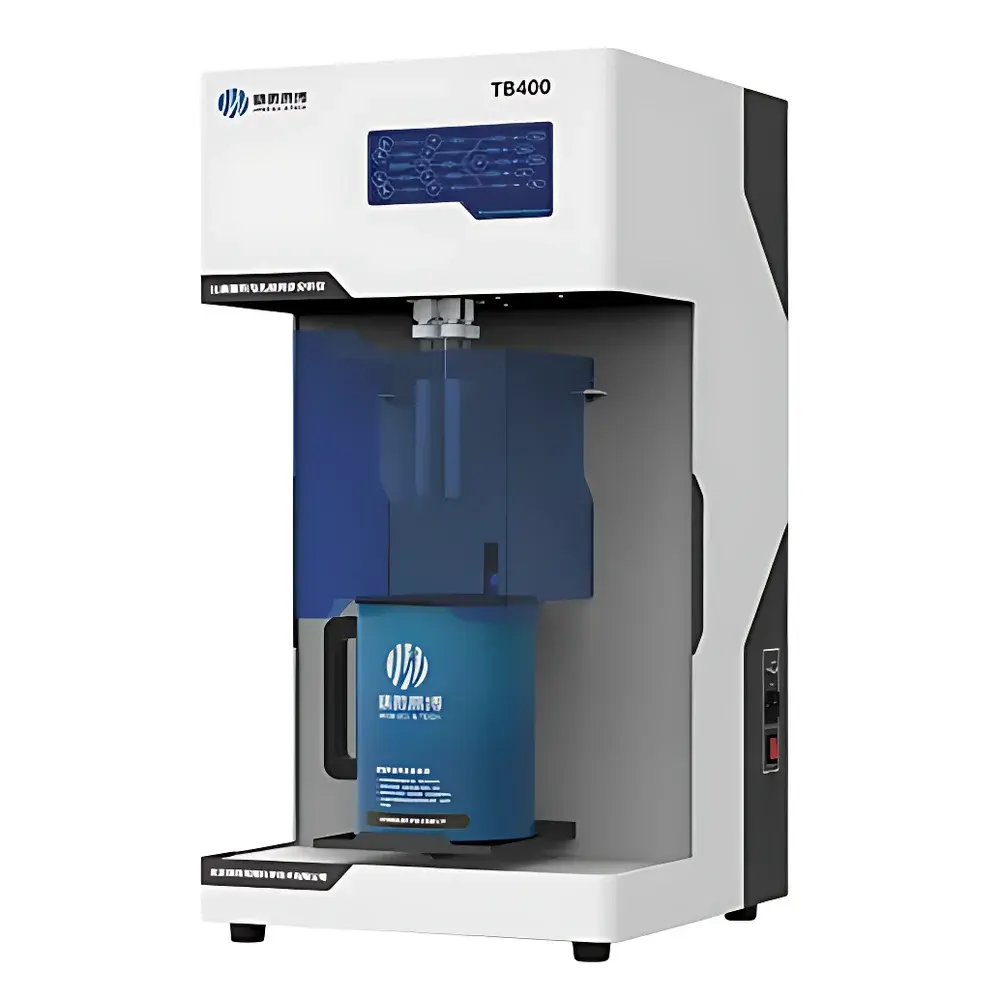
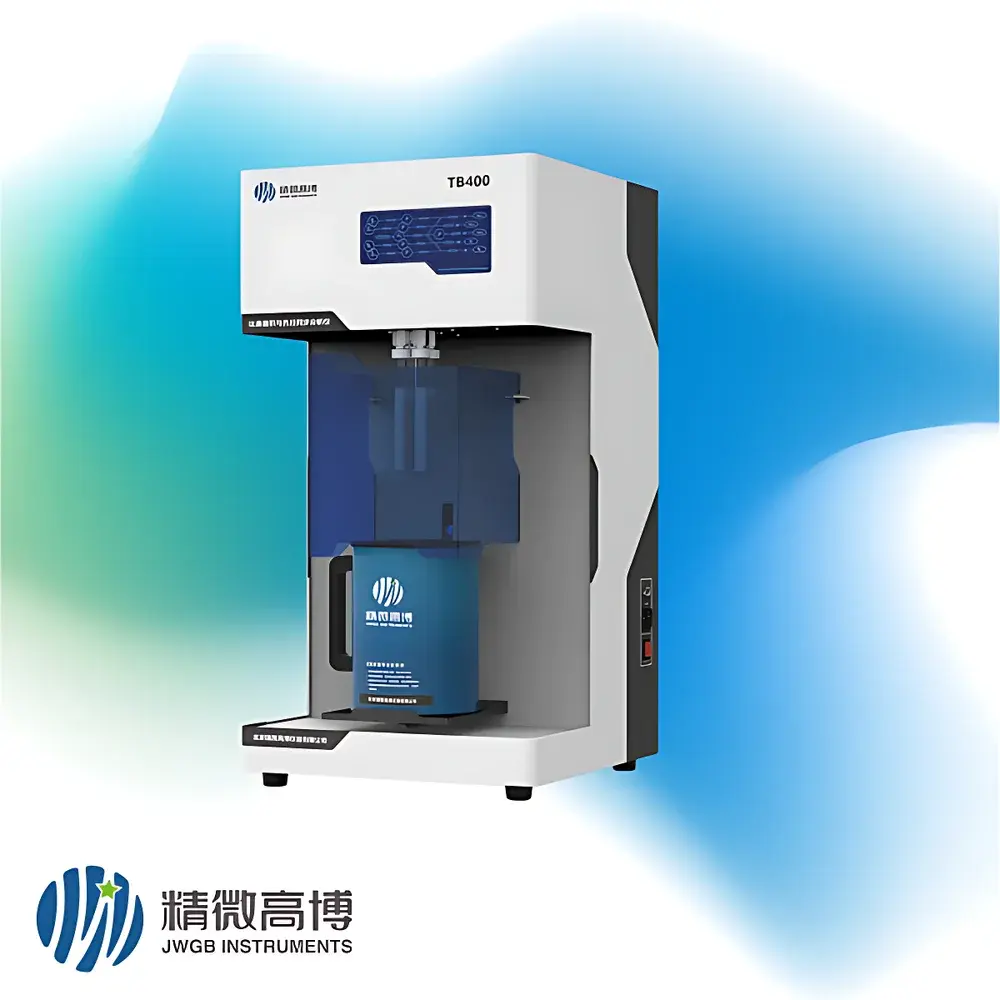
JWGB JW-TB400 High-Throughput Specific Surface Area and Pore Size Analyzer (Up to 12 Stations)
| Brand | JWGB |
|---|---|
| Origin | Beijing, China |
| Manufacturer Type | Direct Manufacturer |
| Instrument Category | Domestic |
| Model | JW-TB400 High-Throughput Specific Surface Area and Pore Size Analyzer |
| Instrument Type | Specific Surface Area and Pore Size Analyzer |
| Measurement Principle | Static Volumetric Gas Adsorption |
| Number of Analysis Stations | 4 |
| Specific Surface Area Range | >0.0005 m²/g |
| Pressure Range | 1×10⁻⁵ – 0.998 atm |
| Analytical Theory | Static Volumetric Method |
Overview
The JWGB JW-TB400 High-Throughput Specific Surface Area and Pore Size Analyzer is a precision-engineered static volumetric gas adsorption system designed for comprehensive characterization of surface area, pore volume, and pore size distribution in micro- and mesoporous solid materials. Operating on the fundamental principles of physical adsorption, the instrument quantifies nitrogen (or other probe gas) uptake at controlled equilibrium pressures across a defined relative pressure range (P/P₀ = 1×10⁻⁵ to 0.998), enabling rigorous application of established thermodynamic and statistical mechanical models. Unlike dynamic or flow-based systems, the static volumetric method ensures high reproducibility by eliminating mass-flow uncertainties and enabling true equilibrium measurements at each data point. The JW-TB400’s architecture supports up to 12 analysis stations (standard configuration: 4 stations), with shared cryogenic Dewar and ultra-stable gas dosing manifold — a design that minimizes inter-station calibration drift and guarantees cross-sample comparability under identical thermal and pressure conditions.
Key Features
- Multi-station static volumetric architecture with synchronized pressure transduction and temperature-controlled sample immersion
- Integrated high-precision capacitance manometers (±0.05% full scale) and calibrated reference volumes traceable to NIST standards
- Dual-mode degassing: programmable vacuum heating (up to 400 °C) with real-time pressure monitoring and leak-rate validation
- Automated liquid nitrogen level control via cryo-level sensor to maintain constant bath depth during extended isotherm acquisition
- Modular vacuum system featuring dual-stage rotary vane pump and optional turbomolecular pump for ultimate base pressure (<1×10⁻⁷ Torr)
- Robust stainless-steel gas handling manifold with electropolished internal surfaces and metal-sealed valves for ultra-low outgassing
Sample Compatibility & Compliance
The JW-TB400 accommodates standard 6–8 mm OD U-shaped quartz sample tubes and supports powders, granules, monoliths, and thin-film-coated substrates. Sample mass range is optimized from 10 mg to 2 g depending on expected surface area and pore volume. All analytical protocols align with internationally recognized standards including ISO 9277 (surface area by BET), ISO 15901-2 (pore size distribution by BJH, t-plot, and DFT methods), and ASTM D3663 (BET surface area of activated carbon). Data acquisition and reporting support audit-ready workflows compliant with GLP and GMP environments, including electronic signatures, user access levels, and full audit trail logging per FDA 21 CFR Part 11 requirements when paired with validated software modules.
Software & Data Management
JWGB’s proprietary “JW-Analyzer” software provides a unified platform for instrument control, real-time isotherm visualization, and advanced modeling. It supports concurrent processing of multiple isotherms with batch mode analysis, automated baseline correction, and outlier detection based on IUPAC-recommended quality metrics. The software embeds over 15 physical adsorption models—including BET (single-point and multi-point), Langmuir, STSA, BJH desorption/adsorption, t-plot micropore analysis, DR/DA, HK, SF, and NLDFT kernel libraries (carbon, silica, alumina templates)—all selectable with uncertainty propagation. Export formats include ASTM E1726-compliant CSV, PDF reports with embedded metadata, and XML for LIMS integration. Raw pressure–volume–temperature datasets are stored with full parameter history, ensuring full traceability from measurement to final report.
Applications
The JW-TB400 serves critical R&D and QC functions across catalyst development, battery electrode material screening (e.g., LiFePO₄, Si anodes), pharmaceutical excipient qualification (e.g., fumed silica, microcrystalline cellulose), MOF/COF characterization, activated carbon certification, and ceramic sintering process optimization. Its high-throughput capability enables statistically robust DOE studies—such as evaluating calcination temperature effects on TiO₂ photocatalyst porosity or correlating binder content with pore collapse in solid oxide fuel cell cathodes. In regulatory contexts, it delivers the metrological rigor required for USP , EP 2.9.28, and JP 17 surface area specifications.
FAQ
What gases can be used besides nitrogen?
Nitrogen (77 K) is standard; argon (87 K), krypton (120 K), and carbon dioxide (273 K) are supported for low-surface-area or microporous materials, with corresponding calibration and model selection.
Is NLDFT modeling included in the base software?
Yes — pre-validated NLDFT kernels for slit-carbon, cylindrical silica, and gamma-alumina are embedded; custom kernel import requires optional Advanced Modeling Module.
How is inter-station reproducibility verified?
Each station undergoes independent gravimetric calibration using certified reference materials (e.g., NIST SRM 1990a), and daily QC checks employ standardized silica gel samples with certified surface area.
Can the system perform chemisorption analysis?
No — the JW-TB400 is dedicated to physisorption. For chemisorption (e.g., H₂, CO, NH₃), JWGB offers complementary instruments such as the JW-RB series with TPD/TPR capabilities.
What vacuum level is achievable with the standard pump configuration?
With the dual-stage rotary vane pump and cold trap, the system achieves ≤5×10⁻⁶ Torr after overnight pump-down; turbomolecular pump option extends this to <1×10⁻⁷ Torr.



