
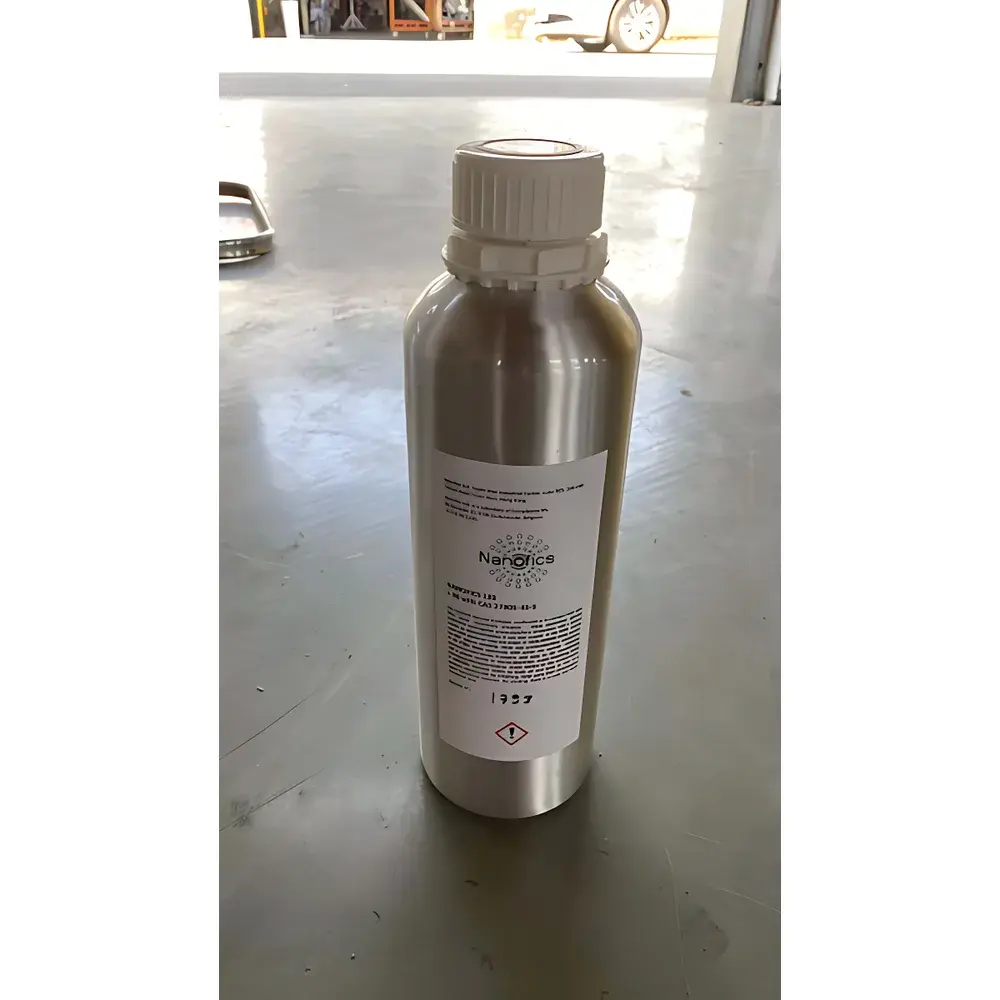
Europlasma Nanofics@ CD 600 PLC Low-Pressure Plasma Surface Treater
| Brand | Europlasma |
|---|---|
| Origin | Belgium |
| Model | Nanofics@ CD 600 PLC |
| Instrument Type | Imported Low-Pressure Plasma Surface Treater |
| Power | 5 kW |
| Dimensions | 600 × 600 × 600 mm |
| Chamber Volume | 216 L |
| Chamber Material | Aluminum |
| Operating Gases | Oxygen, Argon, etc. |
| Control System | Fully Automated PLC-Based Interface |
| Vacuum System | Dry Pumping Unit (480 m³/h) with Dual Pirani Gauges |
| RF Generator | Customizable Frequency & Power Delivery |
| Compliance | CE Certified |
| Safety Features | Emergency Stop, Vacuum Interlock, Thermal Overload Protection |
Overview
The Europlasma Nanofics@ CD 600 PLC is a high-capacity, low-pressure plasma surface treatment system engineered for precision functionalization of material surfaces under controlled vacuum conditions. Utilizing radiofrequency (RF)–generated cold plasma in the 13.56 MHz range, the system enables reproducible, non-thermal surface modification without bulk heating or substrate damage. Its core operational principle relies on dissociation of process gases (e.g., O₂, Ar, N₂, or gas mixtures) into reactive species—ions, electrons, radicals, and metastables—that interact with solid interfaces to induce chemical grafting, etching, cross-linking, or deposition. The Nanofics@ platform specifically supports two proprietary surface engineering modes: hydrophobic/oleophobic coating via Nanofics@ fluorinated precursor chemistry, and hydrophilic activation or coating using plasma-polymerized acrylic acid or allylamine derivatives. This dual-mode capability makes it uniquely suited for applications demanding either water-repellent barrier functionality or enhanced wettability and adhesion promotion.
Key Features
- 216-liter aluminum vacuum chamber (600 × 600 × 600 mm internal dimensions) with borosilicate glass viewport for real-time process observation
- Integrated dry vacuum pumping system delivering 480 m³/h pumping speed, supported by dual Pirani gauges for accurate pressure monitoring across 10⁻³ to 10 mbar range
- 5 kW RF generator with impedance-matching network, configurable for continuous or pulsed power delivery to optimize energy coupling per material class
- PLC-based automation with 17-inch industrial touchscreen HMI, enabling recipe-driven operation, parameter logging, and audit-ready event sequencing
- Single-gas inlet with mass flow controller (MFC), 1/4″ Swagelok fitting, and regulated input pressure (1 bar); compatible with O₂, Ar, N₂, CF₄, NH₃, and custom gas blends
- Five standard sample trays (552 × 522 × 40 mm) with optimized spacing for uniform plasma exposure; optional custom fixtures available for complex geometries
- Comprehensive safety architecture: hardware interlocked emergency stop, vacuum pump protection logic, thermal cutoff at 85°C, and CE-compliant electromagnetic compatibility
Sample Compatibility & Compliance
The CD 600 PLC accommodates substrates ranging from rigid PCBs and medical polymer tubing to flexible nonwovens, thin-film batteries, and elastomeric wearables. Its large-volume chamber allows batch processing of up to 200 g of small components (e.g., hearing aid housings) or full-size textile rolls (up to 30 cm width). Surface treatments comply with ISO 13485 requirements for medical device manufacturing environments and support GLP/GMP-aligned documentation protocols—including user access control via password-protected operator levels and timestamped parameter traceability. While not inherently FDA 21 CFR Part 11–compliant, the system’s data export functionality (CSV/Excel) and audit trail logs facilitate integration into validated quality management systems. All plasma chemistries used with Nanofics@ coatings are halogen-free and REACH-compliant; PlasmaGuard® variants meet IPC-CC-830B standards for electronic conformal coating performance.
Software & Data Management
Control firmware runs on a deterministic Siemens S7-1200 PLC with integrated web server for remote diagnostics via Ethernet. Each treatment cycle records >30 real-time parameters—including chamber pressure, RF forward/reflected power, gas flow rate, elapsed time, and stage temperature—stored locally with automatic timestamping and user-defined naming conventions. Exportable logs support post-process correlation of surface energy (via contact angle analysis), XPS-confirmed elemental composition, or dyne test validation. Optional software add-ons include automated pass/fail decision logic based on predefined thresholds and integration with MES platforms via OPC UA protocol.
Applications
- Medical Devices: Plasma activation of silicone catheters prior to adhesive bonding; hydrophilic coating of diagnostic microfluidic chips; sterilization-assisted surface functionalization of surgical masks and needle hubs
- Electronics: Hydrophobic Nanofics@ encapsulation of Bluetooth earbuds and smartwatch housings; plasma cleaning and oxide removal on halogen-free PCBs prior to conformal coating
- Energy Storage: Surface conditioning of lithium-ion battery separator films to improve electrolyte wettability and interfacial ion transport
- Technical Textiles: Durable water repellency (DWR) treatment of outdoor apparel fabrics without PFAS; permanent hydrophilicity imparted to wound-contact dressings
- Automotive & Aerospace: Adhesion promotion on polypropylene bumpers prior to painting; corrosion-inhibiting plasma polymer layers on aluminum alloy components
FAQ
What surface energies can be achieved with Nanofics@ versus PlasmaGuard® treatments?
Nanofics@ coatings typically yield water contact angles >110° (surface energy <20 mN/m), while PlasmaGuard® hydrophilic treatments achieve angles <10° (<72 mN/m), depending on substrate morphology and process duration.
Is the system compatible with reactive gas chemistries beyond O₂ and Ar?
Yes—custom RF matching networks and MFC calibration allow safe integration of NH₃, CF₄, C₂F₆, and organosilicon precursors, subject to chamber material compatibility and exhaust handling requirements.
How is process repeatability ensured across multiple batches?
Repeatability is maintained through closed-loop pressure regulation, stabilized RF power delivery, and recipe-based execution with built-in deviation alarms that halt processing if any parameter exceeds ±3% of setpoint.
Can the CD 600 PLC be validated for ISO 13485-certified production lines?
Yes—full IQ/OQ documentation packages are available, including factory acceptance testing reports, calibration certificates for all sensors, and traceable verification of safety interlocks and software version control.
What maintenance intervals are recommended for the dry pump and RF generator?
Dry pump oil change every 2,000 operating hours; RF generator capacitor inspection annually; Pirani gauge recalibration biannually—detailed schedules are provided in the OEM service manual.



