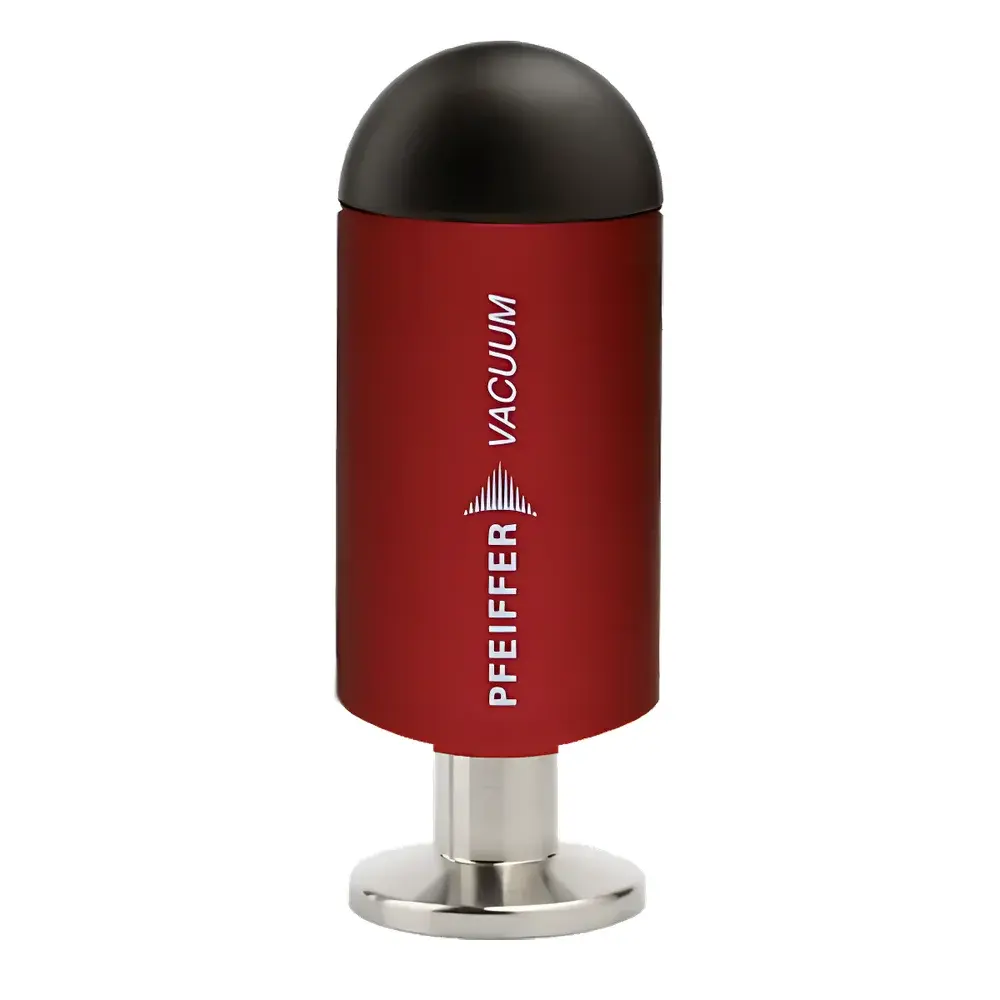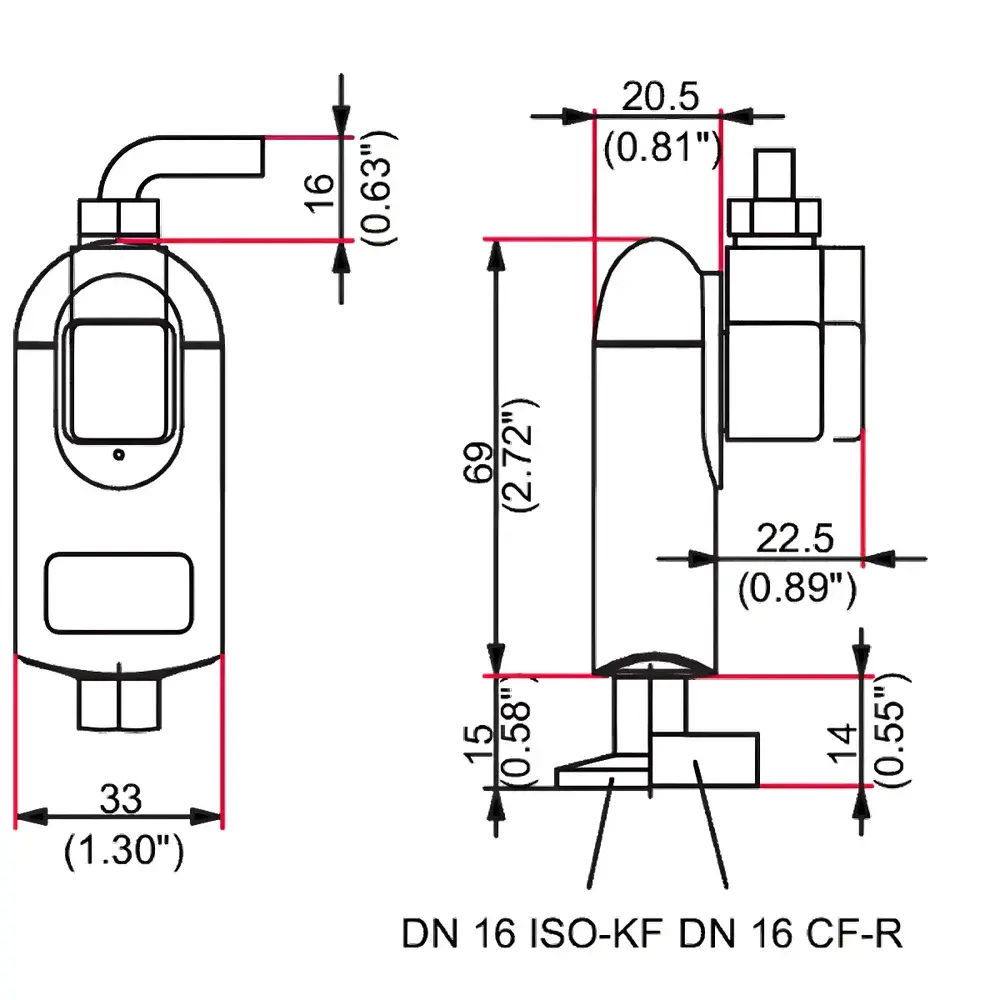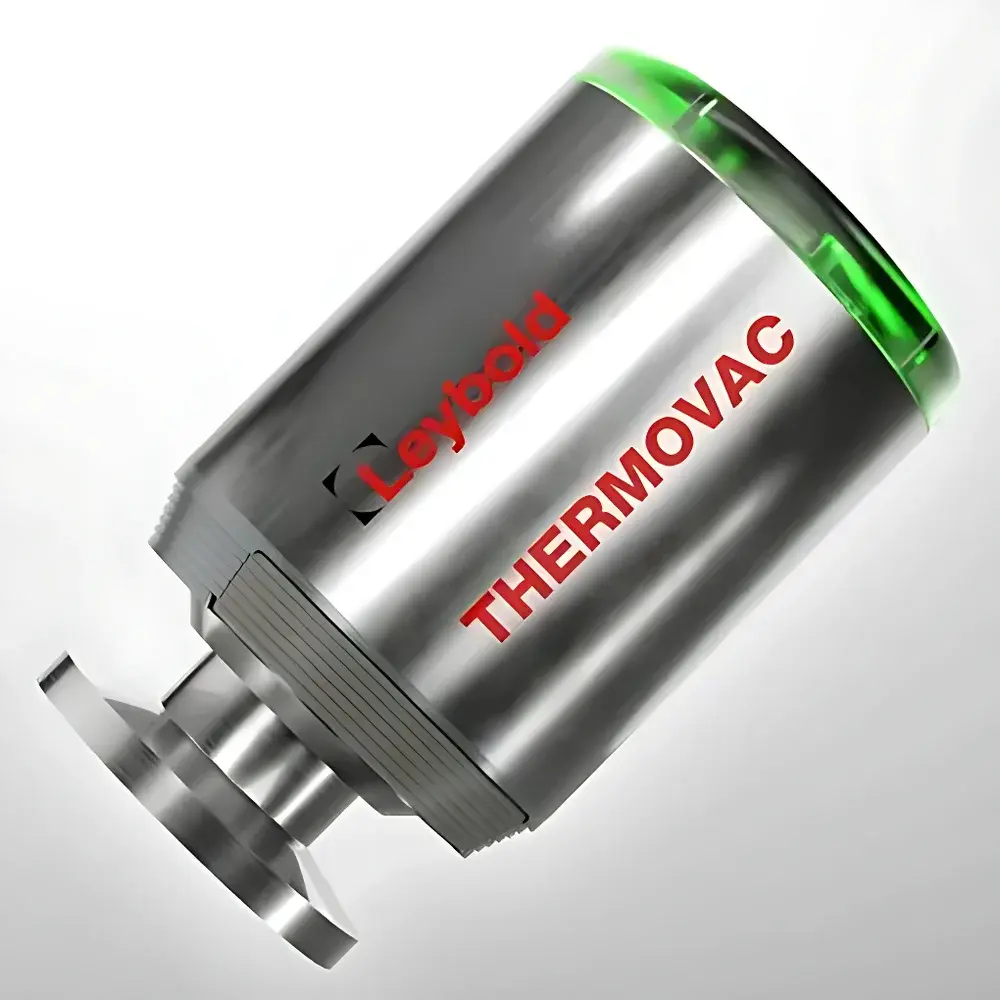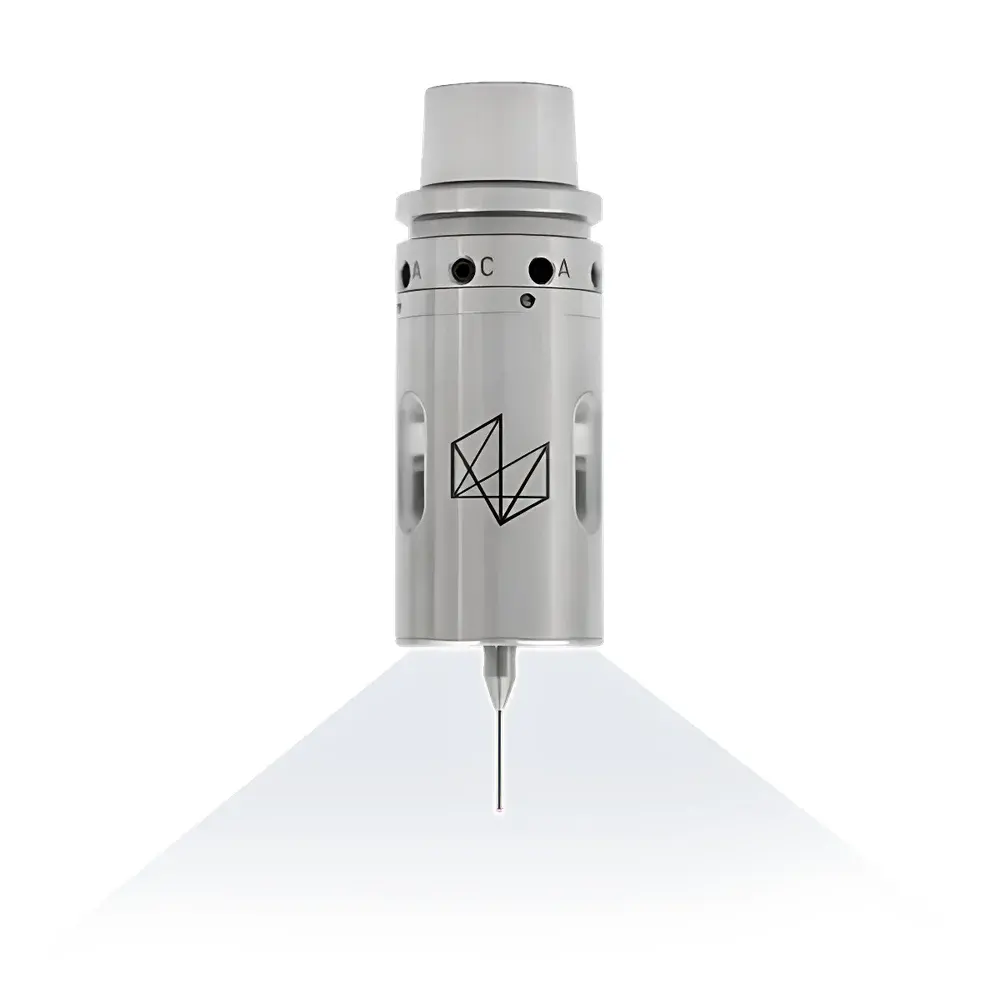
Hexagon Metrology m&h IRP40.50 Infrared Trigger Probe
| Brand | m&h |
|---|---|
| Origin | Imported (Germany) |
| Model | IRP40.50 |
| Diameter | 25 mm |
| Length | 42.4 mm |
| Protection Rating | IP68 |
| Activation Technology | HDR+ (High Data Rate+) Bidirectional Infrared Communication |
| Environmental Immunity | Immune to Ambient Light Interference |
| Application | In-machine probing on CNC machining centers |
Overview
The m&h IRP40.50 is a compact, high-reliability infrared-triggered in-machine probe engineered by Hexagon Metrology for precision coordinate measurement directly within CNC machining environments. Based on non-contact infrared (IR) optical triggering technology, the IRP40.50 operates via bidirectional pulsed infrared communication between the probe body and its dedicated receiver unit—eliminating mechanical switch wear, electrical contact degradation, or RF interference susceptibility common in radio-frequency probes. Its ultra-compact form factor—25 mm diameter and 42.4 mm length—enables integration into confined Z-axis work envelopes, including vertical machining centers with limited tool-change clearance or multi-axis mills where traditional probes risk collision during automatic tool change cycles. Designed for deterministic, repeatable triggering under dynamic machine motion, the probe delivers sub-micron repeatability (≤ 0.5 µm MPE under ISO 10360-5 conditions) when used with calibrated kinematic mounts and validated receiver alignment.
Key Features
- Ultra-compact mechanical envelope (Ø25 × L42.4 mm) optimized for tight Z-axis installation on vertical and horizontal machining centers.
- HDR+ (High Data Rate+) bidirectional infrared communication protocol ensures robust signal integrity at up to 1,200 Hz trigger rate, supporting high-speed scanning and rapid point acquisition without data loss.
- IP68-rated housing provides full protection against coolant ingress, metal chips, and shop-floor particulates—validated per IEC 60529 for continuous operation in wet, oily, and high-vibration production environments.
- Ambient light immunity achieved through narrow-band IR filtering (940 nm center wavelength) and synchronized pulse encoding—ensuring stable performance under fluorescent, LED, and daylight illumination without shielding requirements.
- Zero-contact triggering mechanism eliminates mechanical hysteresis, wear-related drift, or preload dependency—critical for consistent first-article inspection and statistical process control (SPC) traceability.
Sample Compatibility & Compliance
The IRP40.50 is compatible with all standard m&h-compatible CNC controllers (e.g., Siemens SINUMERIK 840D sl, Heidenhain TNC 640, Fanuc 31i-B) via OEM-integrated probing interfaces. It supports both single-point touch-triggering and dynamic scanning modes when paired with m&h’s Probing Suite software. The probe conforms to ISO 10360-5:2017 for probing performance verification and meets EN 60204-1 for electrical safety in industrial machinery. Its design supports GLP/GMP-aligned manufacturing workflows, with optional audit-trail logging enabled through m&h’s certified software modules compliant with FDA 21 CFR Part 11 requirements for electronic records and signatures.
Software & Data Management
Integration is achieved through m&h’s Probing Suite v5.x—a Windows-based application providing real-time probe status monitoring, geometric error compensation mapping (e.g., thermal drift correction), and automated report generation in PDF/CSV/XML formats. All probe events—including trigger timestamps, machine position coordinates (X/Y/Z/A/B/C), and environmental status flags—are logged with millisecond resolution and stored in an encrypted SQLite database. Raw data exports support post-processing in third-party metrology platforms (e.g., PC-DMIS, QUINDOS) via standardized DMIS 4.3 and STEP AP242 schemas. Firmware updates are delivered over secure HTTPS channels with SHA-256 signature verification.
Applications
- In-process verification of critical dimensions (e.g., bore diameters, slot widths, positional tolerances) on aerospace turbine blades and medical implant components.
- Automated setup validation—including workpiece origin registration, fixture offset compensation, and tool-length verification—reducing manual intervention and operator-induced error.
- Statistical process control (SPC) sampling during high-mix, low-volume production runs where rapid requalification between part families is required.
- Adaptive machining feedback loops—where measured deviations are fed back to CAM systems to adjust toolpaths in subsequent operations (closed-loop manufacturing).
- Calibration verification of machine volumetric accuracy using ball-bar or step-gauge routines aligned with ASME B5.54 and VDI/VDE 2617 standards.
FAQ
What is the maximum recommended operating temperature range for the IRP40.50?
The probe is rated for continuous operation between –10 °C and +50 °C ambient, with short-term exposure up to +60 °C permissible when coolant flow is maintained.
Can the IRP40.50 be used with non-m&h receivers?
No—HDR+ communication requires proprietary synchronization protocols and timing calibration; only m&h-certified receivers (e.g., RCV-200 series) ensure guaranteed interoperability and metrological traceability.
Is the probe suitable for use in dry machining environments with minimal coolant?
Yes—its IP68 rating covers protection against dust and temporary submersion, but in dry environments, static charge accumulation on the housing must be mitigated via grounding straps per IEC 61340-5-1.
Does the IRP40.50 require periodic recalibration?
Per ISO 10360-5, annual verification against traceable artifacts (e.g., gauge blocks, sphere masters) is recommended; no user-serviceable internal adjustments exist.
How does the IRP40.50 handle electromagnetic interference from nearby VFDs or welding equipment?
Infrared transmission is inherently immune to EMI/RFI; however, physical shielding of the receiver cable (double-shielded twisted pair, grounded at one end) is advised in high-noise zones per IEC 61000-6-2.