
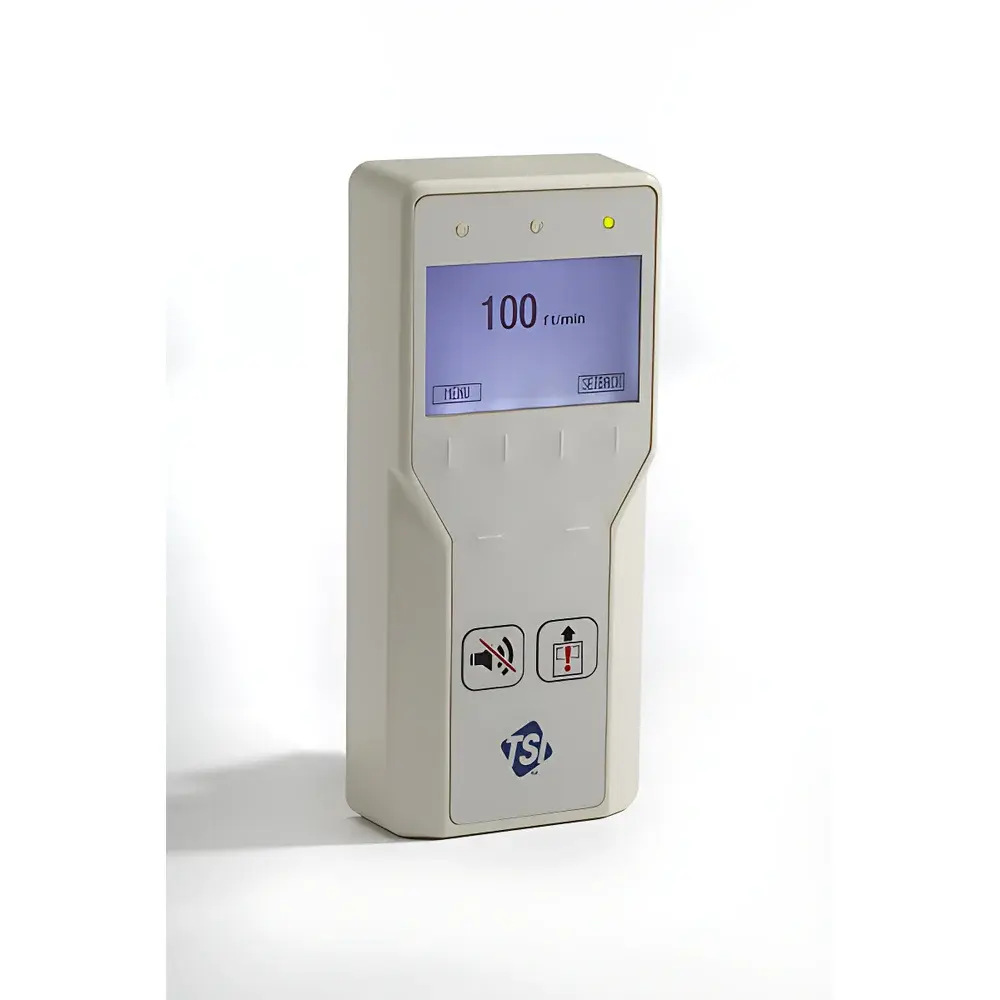
TSI FHC50 & FHM10 Fume Hood Monitoring and Control System
| Brand | TSI |
|---|---|
| Origin | USA |
| Model | FHC50 / FHM10 |
| Cabinet Type | Single-Face Chemical Fume Hood |
| Construction Material | Polypropylene (PP) |
| Compliance Standards | ANSI Z9.5, NFPA 45, OSHA 1910.145, SEFA 1.5 |
| Communication Protocols | BACnet®, LonWorks®, Modbus™ |
| Alarm Outputs | Visual (LED), Audible (85 dB), Remote Relay |
| Display | Backlit LCD with Real-Time Surface Velocity, Temperature, and Status Indicators |
| Installation Options | Surface-Mount or Flush-Mount |
| Sensor Technology | Thermal Anemometry (FHM10), Dual-Sensor Fusion (FHC50: Sash Position + Face Velocity) |
| Actuation | Fast-Response Linear Actuator for VAV Valve Control |
| Environmental Compensation | Integrated Temperature and Barometric Pressure Compensation |
Overview
The TSI FHC50 Fume Hood Controller and FHM10 Fume Hood Monitor constitute an integrated, standards-compliant safety and energy management system engineered specifically for single-face chemical fume hoods in research, academic, pharmaceutical, and healthcare laboratories. These devices operate on the fundamental principle of real-time, direct measurement and dynamic regulation of face velocity—the linear airspeed (m/s or ft/min) across the hood’s sash opening—recognized by ANSI Z9.5-2022 and NFPA 45 as the primary quantitative indicator of containment performance. Unlike indirect airflow estimation methods, the FHM10 employs thermally compensated hot-wire anemometry to deliver traceable, NIST-traceable surface velocity measurements with ±0.03 m/s accuracy under variable ambient conditions. The FHC50 extends this capability into closed-loop control: it continuously correlates sash position (via integrated potentiometric or encoder-based sash sensor) with measured face velocity to modulate a linearly actuated venturi valve or damper, maintaining a user-defined target face velocity (e.g., 0.5 m/s) across the full sash travel range. This architecture ensures both personnel protection—by preventing velocity excursions below minimum containment thresholds—and laboratory energy efficiency—by minimizing unnecessary exhaust volume during partial-sash operation.
Key Features
- Real-time face velocity monitoring with automatic temperature and barometric pressure compensation (FHM10)
- Closed-loop, sash-position-aware velocity control via fast-response linear actuator (FHC50)
- Dual-sensor architecture: simultaneous integration of thermal anemometer and sash position transducer
- Triple-mode alarm system: high-intensity visual LED indicators, 85 dB audible alert, and dry-contact relay for remote notification
- Configurable setpoints and alarm thresholds compliant with ANSI Z9.5 (0.3–0.6 m/s operational range) and SEFA 1.5
- Backlit alphanumeric LCD display showing live velocity, sash height (% open), temperature, status flags, and alarm history
- Support for multiple mounting configurations: surface-mount enclosure or flush-mounted bezel with IP54-rated front panel
- Factory-calibrated sensors with documented calibration certificate; field verification supported via TSI’s NIST-traceable calibration kit (Model 8010)
Sample Compatibility & Compliance
The FHC50/FHM10 system is validated for use with standard polypropylene (PP)-constructed single-face fume hoods operating under negative pressure relative to the lab environment. It meets functional safety requirements defined in ANSI Z9.5-2022 Section 6.3 (Monitoring and Alarming), NFPA 45-2022 Chapter 7 (Ventilation), and OSHA 1910.145(a)(2) for hazard warning systems. Its analog output (4–20 mA) and digital communication interfaces support integration into GLP- and GMP-regulated environments where audit trails and data integrity are mandated. All firmware implements deterministic response timing (<500 ms alarm activation latency) and retains non-volatile event logs—including timestamped low-velocity events, sash motion sequences, and configuration changes—for regulatory review per FDA 21 CFR Part 11 (when paired with compliant BMS logging infrastructure).
Software & Data Management
Configuration and diagnostics are performed locally via intuitive membrane keypad navigation or remotely using TSI’s Fume Hood Manager™ PC software (Windows-compatible, USB/RS-485 interface). The software enables batch configuration of multiple units, firmware updates, calibration offset adjustment, and export of CSV-formatted operational logs. Digital communication modules support native BACnet MS/TP and IP, LonWorks FT-10, and Modbus RTU/TCP protocols—enabling bidirectional data exchange with enterprise-level Building Management Systems (BMS). Critical parameters—including current face velocity, sash position, alarm state, and valve actuator feedback—are mapped to standard BACnet objects (e.g., AV, BI, BO), facilitating centralized dashboard visualization, automated reporting, and HVAC demand-response coordination without proprietary gateways.
Applications
This system is deployed in settings where chemical containment integrity and operational accountability are non-negotiable: university teaching and research laboratories conducting organic synthesis or nanoparticle handling; pharmaceutical QC/QA labs performing stability testing per ICH Q1–Q5 guidelines; biosafety Level 2 (BSL-2) facilities managing low-to-moderate risk pathogens; clinical diagnostic labs processing cytotoxic agents; and government environmental testing centers adhering to EPA Method 205 compliance frameworks. Its modular design supports retrofit installations into legacy hoods and seamless integration into new construction projects aligned with LEED v4.1 Energy and Atmosphere credit requirements for demand-controlled ventilation.
FAQ
Does the FHM10 require annual recalibration?
Yes—TSI recommends annual verification against a NIST-traceable reference anemometer (e.g., TSI 8010) per ISO/IEC 17025:2017 Clause 6.5. Calibration records must be retained for audit purposes.
Can the FHC50 control non-TSI valves?
Yes—it provides 0–10 VDC or 4–20 mA analog output signals compatible with third-party linear actuators and VAV controllers meeting IEC 60529 IP54 or higher ingress protection.
Is the system suitable for radiochemistry hoods?
Yes—provided the hood is constructed from chemically inert materials (e.g., stainless steel or PP) and operates within the specified velocity range; optional lead-lined sensor housings are available upon request.
How does temperature compensation improve measurement reliability?
Ambient temperature fluctuations alter air density and sensor thermal response; built-in PT1000 thermistor and microprocessor-based compensation algorithms maintain velocity accuracy across –10°C to +40°C lab environments.
What documentation is provided for regulatory submissions?
Each unit ships with a Certificate of Conformance, Factory Calibration Report, ANSI/NFPA/SEFA compliance summary, and I/O signal mapping datasheet—sufficient for inclusion in lab safety SOPs and facility validation protocols.



