
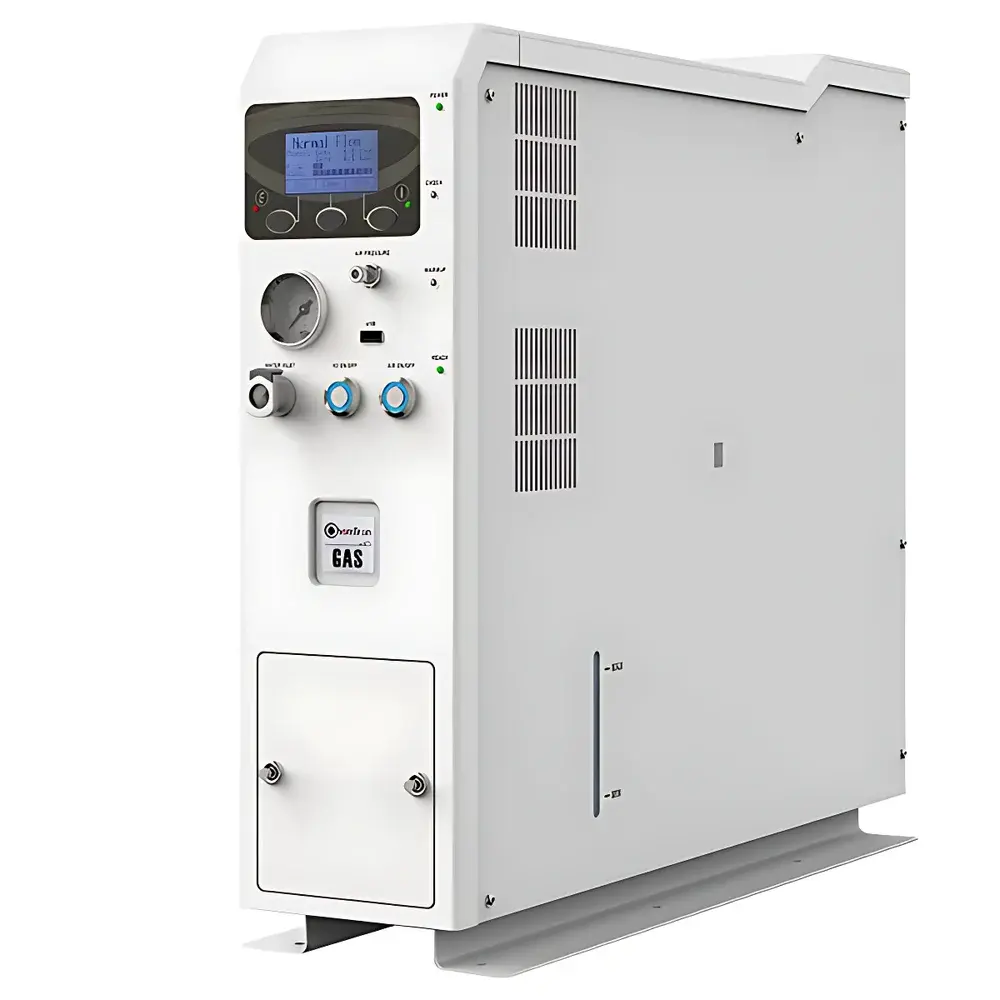
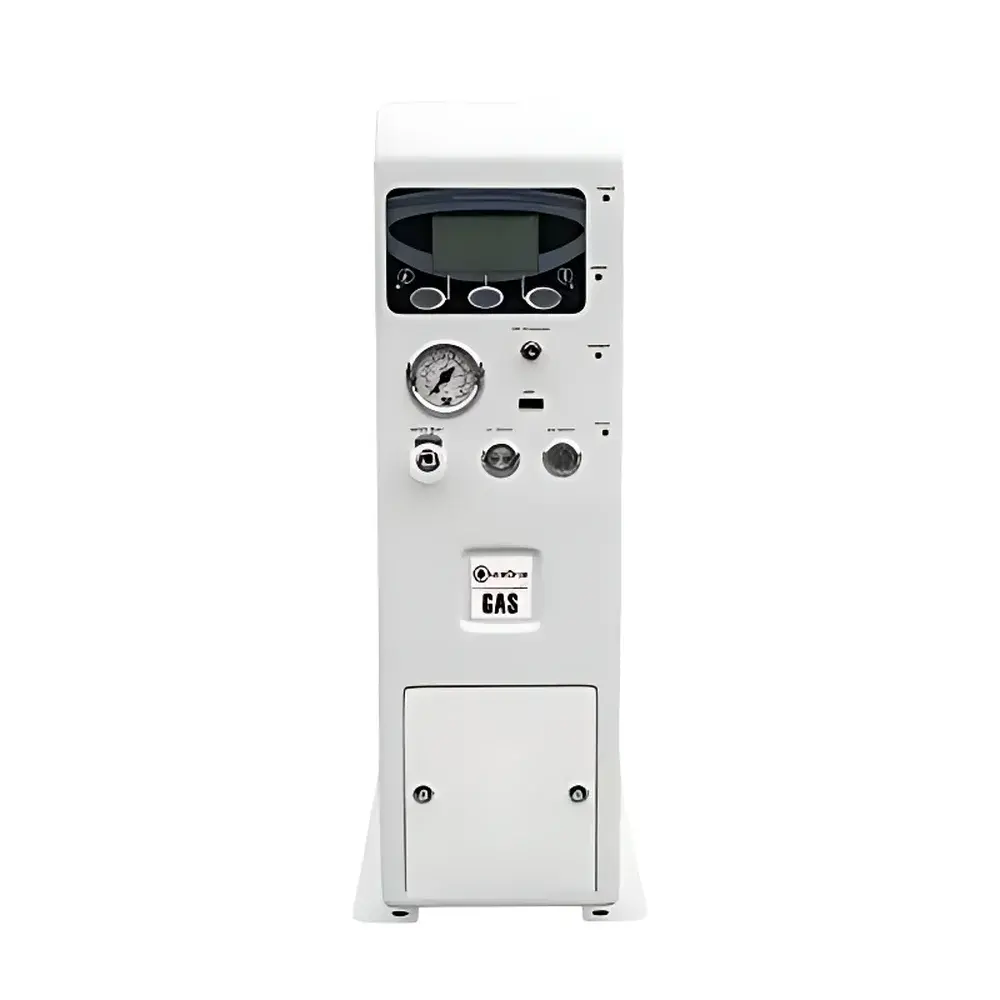
ChemTron FID TOWER NM Series High-Purity Hydrogen Generator (Tower Expert Configuration)
| Brand | ChemTron |
|---|---|
| Origin | Germany |
| Model | FID TOWER NM |
| Hydrogen Generation Principle | Proton Exchange Membrane (PEM) Electrolysis of Ultrapure Water |
| Output Flow Rate | 5000 mL/min |
| Output Pressure | 11 bar |
| Hydrogen Purity | 99.99996% |
Overview
The ChemTron FID TOWER NM Series High-Purity Hydrogen Generator (Tower Expert Configuration) is an engineered solution for laboratories requiring continuous, on-demand, ultra-high-purity hydrogen gas—specifically designed to replace traditional high-pressure hydrogen cylinders in analytical and process applications. Utilizing catalyzed proton exchange membrane (CPEM) electrolysis technology, the system splits ultrapure water (≥5 MΩ·cm resistivity) into hydrogen and oxygen without alkaline electrolytes, corrosive chemicals, or consumable desiccants. The core electrochemical module—CCEEL (Catalyzed Compact Electrolytic Electrode Layer)—features a titanium alloy cell housing and platinum-coated electrodes, ensuring long-term chemical inertness, minimal cross-contamination, and stable gas output under varying load conditions. With an internal gas volume <50 mL and operating pressure capped at 11 bar (well below ASME Section VIII thresholds), the unit complies with IEC 61000-6-4 (EMC) and carries CE, CSA, and FCC certifications—making it suitable for installation directly beside GC, GC-MS, ICP-MS, and fuel cell test benches without safety reclassification.
Key Features
- Ultra-high hydrogen purity certified at 99.99996% (6.6 N) by independent third-party testing per ISO 8573-1:2010 Class 1 compressed air/gas standards
- CPEM membrane stack with Pt/Pt–Ir alloy catalysts and titanium CCEEL cell body—eliminating metal ion leaching and trace hydrocarbon carryover
- Three-stage purification architecture: (1) PEM-selective permeation, (2) static hydrophobic membrane drying, (3) dual-stage cold-regenerative purifier—no palladium beds, no regeneration cycles, no downtime
- Comprehensive real-time diagnostics: integrated conductivity monitoring of feedwater, dual pressure fault detection (internal leak & external supply drop), electrolyzer voltage/current/temperature sensing, seismic/vibration shutdown, and overpressure venting at outlet
- Tower-form factor: 14 cm footprint width; optimized vertical layout minimizes lab floor space while enabling modular stacking with optional zero-air modules (e.g., 1800/5000 series)
- Scalable cascade control (optional): up to 8 units synchronized via RS485; automatic flow redistribution upon single-unit failure to maintain uninterrupted GC carrier/burner gas supply
Sample Compatibility & Compliance
The FID TOWER NM is validated for use with flame ionization detectors (FID), pulsed discharge helium ionization (PDHID), thermal conductivity detectors (TCD), and hydrogen-sensitive mass spectrometry interfaces—including GC-MS electron ionization sources and ICP-MS nebulizer gas lines. Its hydrogen meets ASTM D7225–22 specifications for instrumental gas purity and satisfies USP and EP 2.2.40 requirements for pharmaceutical residual solvent analysis. All firmware and data logging functions comply with FDA 21 CFR Part 11 (electronic records/signatures) when paired with optional PC software. The system supports GLP/GMP audit trails through timestamped event logs, user-access-level permissions, and non-erasable alarm history storage.
Software & Data Management
An optional Windows-based PC application enables remote configuration, real-time parameter monitoring (flow, pressure, water conductivity, cell voltage), and cascade group management. The software exports CSV-formatted operational logs with ISO 8601 timestamps and supports automated report generation for quality assurance documentation. Firmware updates are delivered via secure HTTPS download with SHA-256 checksum verification—ensuring integrity during regulatory audits. All stored data retains full traceability: operator ID, change type (e.g., pressure setpoint adjustment), pre- and post-value, and system state snapshot.
Applications
- GC and GC-MS carrier and detector fuel gas—especially critical for fast-GC methods where baseline stability and detector longevity depend on sub-ppb O₂/H₂O levels
- ICP-MS hydrogen reaction cell gas for polyatomic interference removal (e.g., ArO⁺, ClO⁺)
- Hydrogenation reactor feedstock in catalytic screening platforms
- Fuel cell durability testing under controlled H₂ partial pressure
- Deuterium stream generation via isotopic exchange (when coupled with D₂O feedwater)
- Ambient air-sensitive applications in flavor/fragrance labs—where volatile organic compounds would otherwise compromise conventional dryers
FAQ
Does the FID TOWER NM require KOH or other liquid electrolytes?
No. It operates exclusively on ultrapure water via solid polymer PEM electrolysis—eliminating corrosion, maintenance downtime, and hazardous waste disposal.
Can it be used as both carrier and fuel gas simultaneously on a single GC?
Yes. The 5000 mL/min maximum flow supports dual-path configurations (e.g., 300 mL/min carrier + 4700 mL/min FID flame) with pressure-independent flow regulation.
What happens if feedwater conductivity exceeds 1 µS/cm?
The system halts electrolyzer operation, triggers audible/visual alarms, and displays “High Conductivity” on the LCD—preventing membrane degradation and gas impurity generation.
Is the cold-regenerative purifier serviceable in-house?
No. It is a sealed, field-replaceable cartridge with a rated lifetime of ≥20,000 hours; replacement requires only a single 1/8″ Swagelock disconnection and is covered under extended warranty terms.
How does cascade redundancy ensure uptime?
When configured in cascade mode, each unit shares real-time flow demand data; if one generator faults, others dynamically increase output within ±0.5 bar pressure deviation—maintaining total system flow within GC manufacturer-specified tolerances.



