
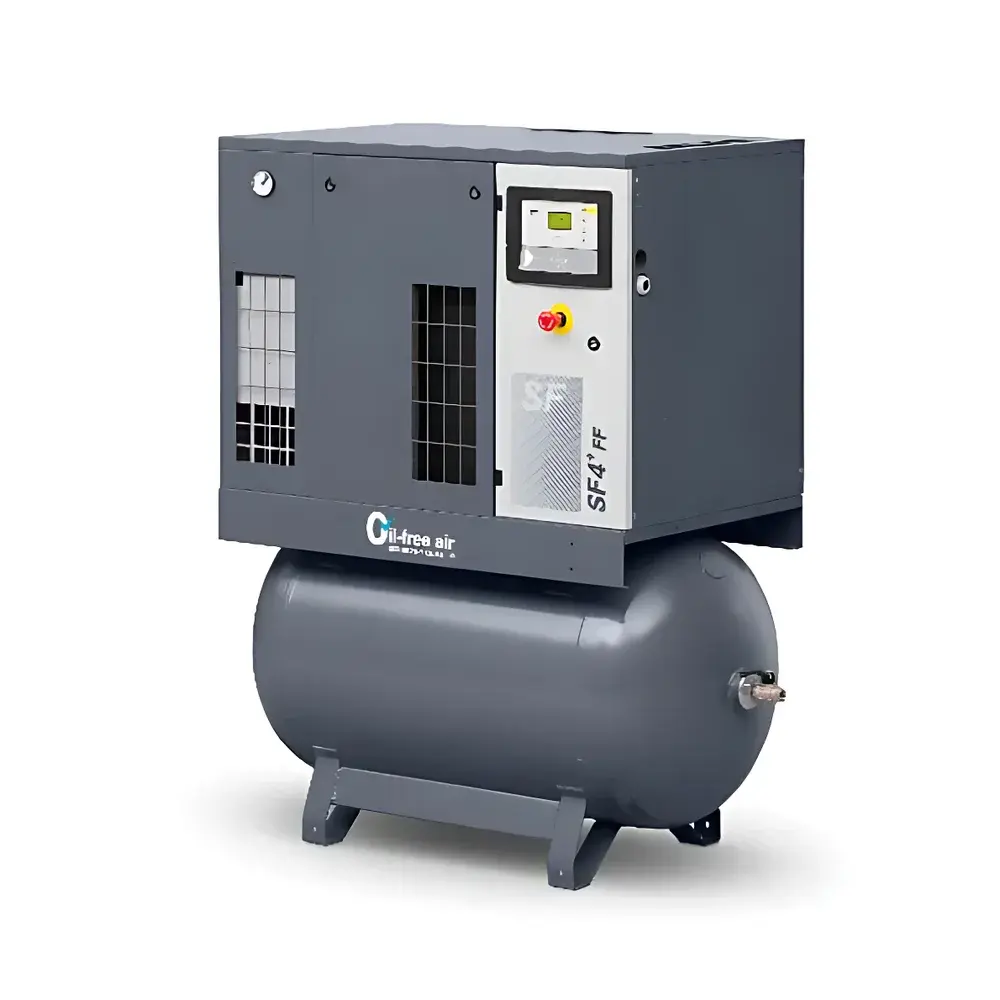
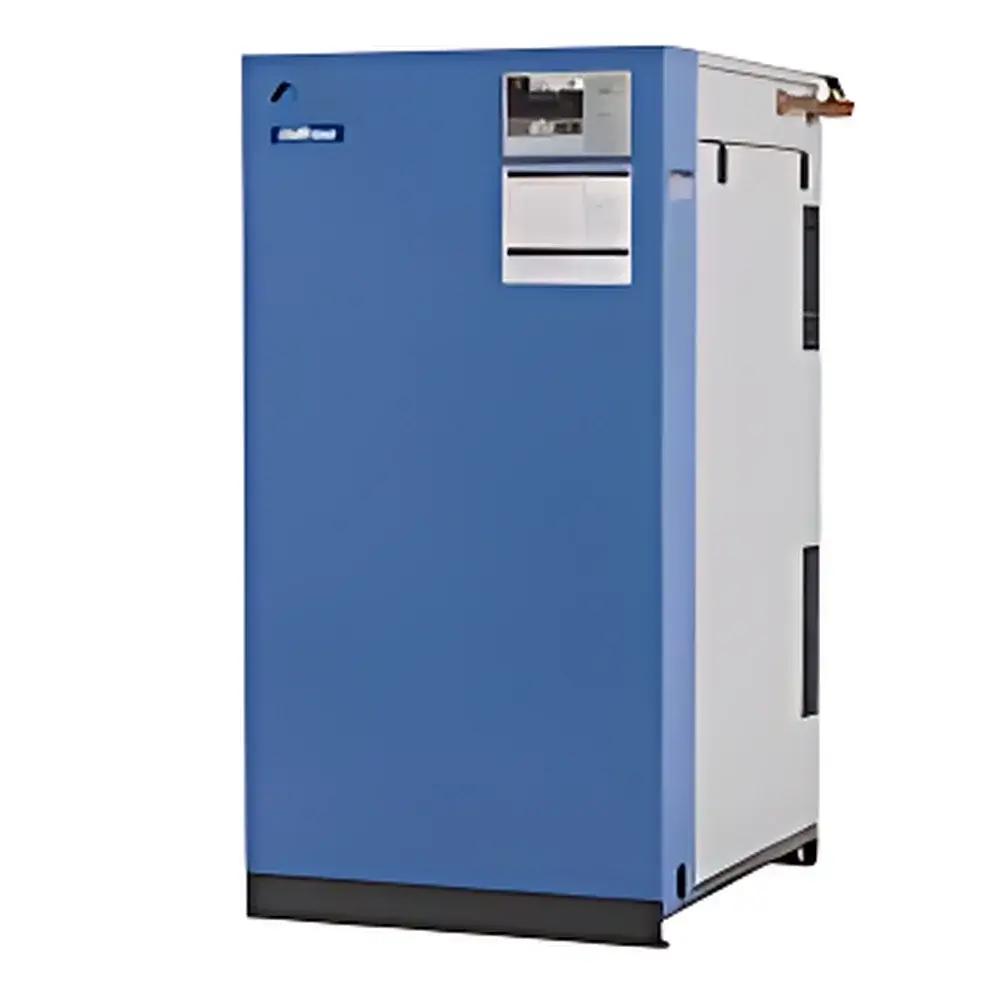
ChemTron GHS120L High-Flow Oil-Free Air Supply System
| Brand | ChemTron |
|---|---|
| Origin | Germany |
| Model | GHS120L |
| Flow Rate | 120 L/min |
| Maximum Pressure | 10 bar (145 psi) |
| Motor Power | 1.5 kW |
| Noise Level | 53 dB(A) |
| Oil Content Class | ISO 8573-1 Class 0 (Certified Oil-Free) |
| Motor Efficiency Class | IE3 |
| Control Mode | Start/Stop |
| Weight | 120 kg |
| Dimensions (W×D×H) | 1025 × 690 × 840 mm |
| Inlet/Outlet Port | G1/2" F |
Overview
The ChemTron GHS120L High-Flow Oil-Free Air Supply System is an engineered solution for laboratories and analytical instrumentation requiring continuous, certified Class 0 oil-free compressed air per ISO 8573-1. Built on proven scroll compression technology, the GHS120L eliminates all risk of hydrocarbon contamination—critical for gas chromatography (GC), GC-MS, FTIR, nitrogen generators, and other sensitive analytical platforms where trace oil vapor or aerosols could compromise detector integrity, column lifetime, or calibration stability. Unlike oil-lubricated piston or rotary screw compressors, the GHS120L employs a dual-scroll mechanism in which one fixed and one orbiting spiral generate compression through progressive volume reduction—without metal-to-metal contact, lubricants, or valves. This inherently oil-free thermodynamic process delivers pulse-free, low-vibration airflow with exceptional long-term stability and minimal maintenance overhead.
Key Features
- ISO 8573-1 Class 0 certified oil-free air—zero detectable oil in vapor, aerosol, or liquid phase (≤0.01 mg/m³, validated per ISO 8573-2 and -5)
- IE3 high-efficiency motor delivering optimal energy conversion across variable load profiles; no unloaded running losses due to intelligent start/stop control logic
- Integrated refrigerated dryer with optimized heat exchange design, achieving a pressure dew point of ≤3°C—preventing condensate formation in downstream piping and protecting moisture-sensitive instruments such as nitrogen generators and laser-based analyzers
- Ultra-low acoustic signature: 53 dB(A) at 1 m distance—suitable for placement inside analytical labs, cleanrooms, or shared instrument rooms without structural noise mitigation
- Robust scroll architecture with only two primary moving parts (orbiting and fixed scrolls), resulting in >30,000 hours MTBF and service intervals exceeding 4,000 operating hours
- Compact footprint (1025 × 690 × 840 mm) and G1/2″ female NPT inlet/outlet ports simplify integration into existing lab utility infrastructure
Sample Compatibility & Compliance
The GHS120L is designed for direct compatibility with laboratory-grade gas purification systems, zero-air generators, and nitrogen/oxygen separation modules. Its stable flow-pressure profile (120 L/min at 10 bar) meets the dynamic demand requirements of multi-instrument air networks—including simultaneous operation of GC-FID, headspace samplers, and pneumatic sample handling systems. The system complies with ISO 8573-1:2010 Class 0 (oil-free), ISO 8573-7:2003 (vapor content), and ISO 8573-2:2019 (particulate testing). All electrical components conform to IEC 61000-6-3 (EMC emissions) and IEC 61000-6-2 (immunity), while mechanical safety adheres to EU Machinery Directive 2006/42/EC. Documentation includes full factory calibration certificates, CE marking, and conformity declarations traceable to DAkkS-accredited metrology standards.
Software & Data Management
While the GHS120L operates via hardware-based start/stop control (no embedded microprocessor or network interface), its operational parameters are fully compatible with third-party building management systems (BMS) and lab infrastructure monitoring platforms via dry-contact relay outputs (standard). Optional analog 4–20 mA pressure and temperature signal outputs enable real-time logging in LIMS or SCADA environments. All maintenance events—including filter replacement intervals, dryer desiccant status, and motor thermal cycling—are recorded in the user logbook per GLP-compliant record-keeping protocols. The absence of firmware or cloud connectivity ensures compliance with FDA 21 CFR Part 11 Annex 11 requirements for audit-trail integrity in regulated QC/QA laboratories.
Applications
- Primary air source for gas chromatography (GC), GC-MS, and GC-FID systems requiring Class 0 air for flame ionization and make-up gas
- Feed air for membrane- or PSA-based nitrogen generators used in LC-MS, ICP-MS, and elemental analysis
- Pneumatic actuation and sample transport in automated liquid handlers, autosamplers, and robotic workcells
- Zero-air generation for environmental air quality monitors (e.g., ozone analyzers, NOx chemiluminescence detectors)
- Instrument purge and enclosure pressurization in controlled-atmosphere gloveboxes and inert gas synthesis stations
- Calibration gas blending systems where hydrocarbon-free carrier air is mandated by ISO/IEC 17025 method validation
FAQ
Is the GHS120L certified for ISO 8573-1 Class 0 oil-free air?
Yes—the entire compression train is mechanically oil-free, and independent third-party testing confirms compliance with ISO 8573-1:2010 Class 0 for total oil content (≤0.01 mg/m³), validated per ISO 8573-2 and ISO 8573-5 test methods.
Does the integrated dryer eliminate the need for external coalescing filters?
The built-in refrigerated dryer achieves ≤3°C pressure dew point and removes bulk water; however, for applications requiring dew points below −20°C (e.g., FTIR purge lines), optional desiccant dryers or membrane polishers may be installed downstream.
Can the GHS120L support multiple instruments simultaneously?
With a rated output of 120 L/min at 10 bar, it supports up to three mid-range GC systems or two high-flow nitrogen generators—provided piping diameter, length, and pressure drop are calculated per ISO 8573-10 guidelines.
What is the recommended maintenance schedule?
Annual inspection of dryer refrigerant charge and condensate drain function; biannual check of inlet air filter and vibration isolators; scroll assembly service interval exceeds 4,000 operating hours under typical lab duty cycles.
Is remote monitoring or digital control available?
Standard configuration uses electromechanical start/stop control; optional analog outputs (4–20 mA) and relay contacts allow integration with centralized lab infrastructure monitoring systems—but no native Ethernet, Wi-Fi, or proprietary software is included.



