
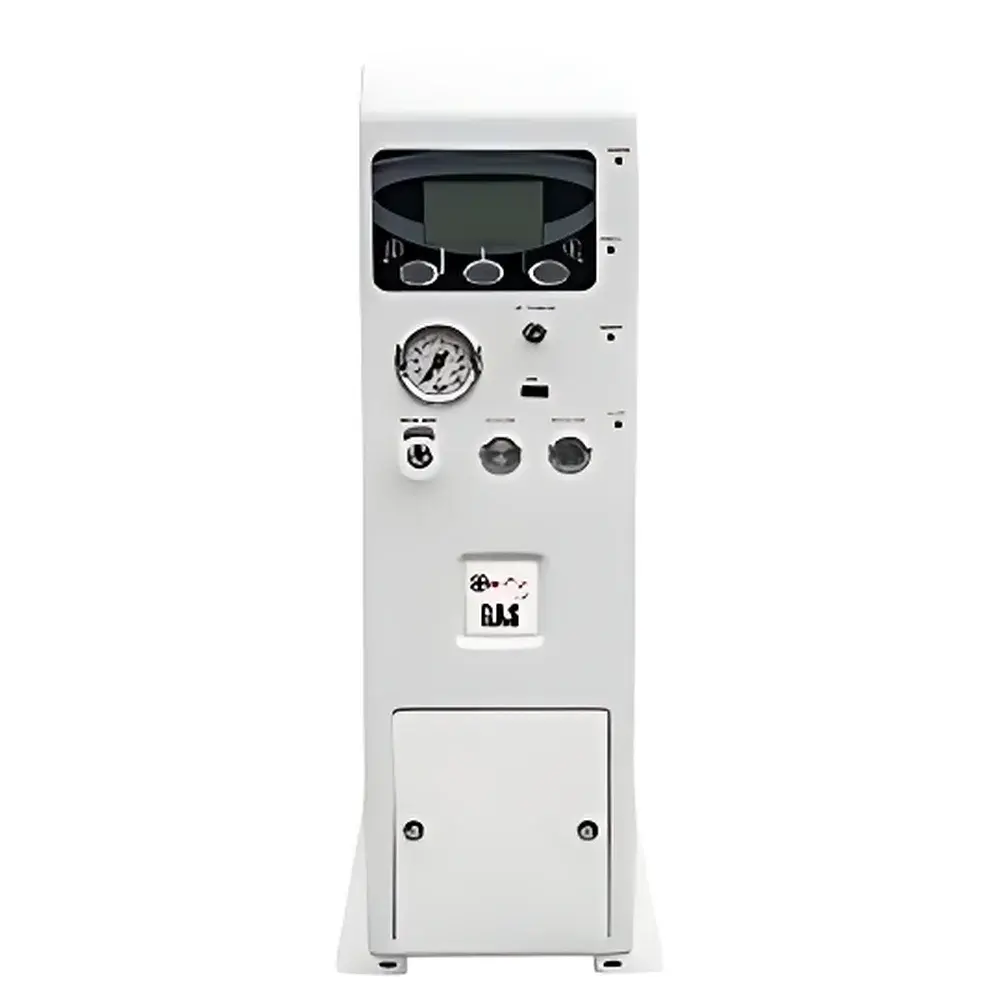
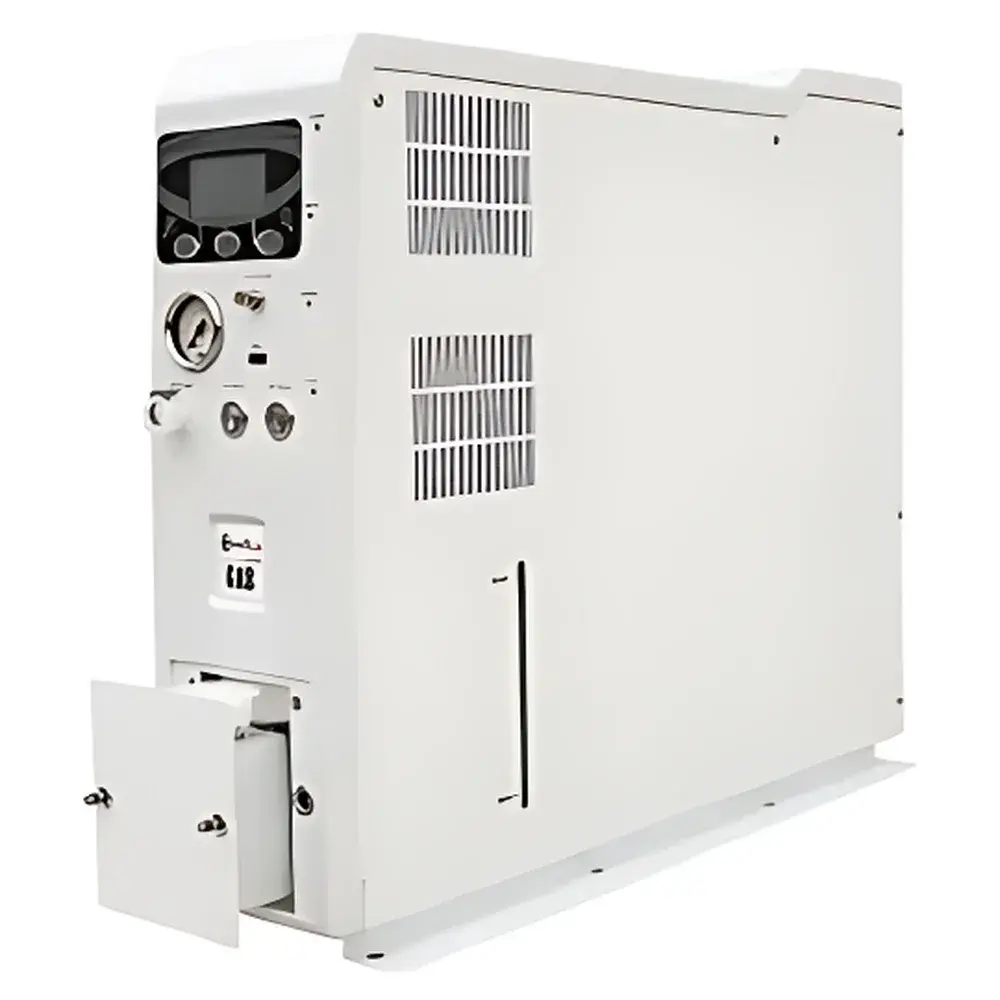
ChemTron FID TOWER Series Tower-Style High-Purity Hydrogen Generator
| Brand | ChemTron |
|---|---|
| Origin | Germany |
| Model | FID TOWER-PG / FID TOWER-NM |
| Output Flow Range | 100–1350 mL/min |
| Max Pressure | 11 bar (160 psig) |
| Purity | 99.99996% (NM), 99.9996% (PG) |
| Water Reservoir | 5 L |
| Internal Gas Volume | <50 mL |
| Dimensions | 140 × 580 × 490 mm (W×D×H) |
| Weight | 25–35 kg |
| Power | 110–120 V / 60 Hz or 220–240 V / 50 Hz |
| Operating Temp/Humidity | 15–40 °C, 0–80% RH (non-condensing) |
| Noise Level | ≤46 dB(A) |
| Gas Outlet | 1/8" Swagelock |
| Certifications | CE, CSA, FCC |
Overview
The ChemTron FID TOWER Series is a modular, tower-style high-purity hydrogen generator engineered for continuous, on-demand hydrogen supply in analytical and research laboratories. It employs proton exchange membrane (PEM) electrolysis of ultrapure water—specifically using ChemTron’s proprietary CPEM (Catalyst-Plated Electrolyte Membrane) and CCEEL (Corrosion-Resistant Electrolytic Electrode Layer) technology—to produce hydrogen gas without caustic electrolytes, liquid KOH, or regenerative desiccants. Unlike traditional alkaline or solid polymer electrolyzer (SPE) systems, the FID TOWER architecture integrates titanium-clad electrolytic cells, static membrane drying, and dual-stage cold-regenerative purification to deliver consistent 99.99996% (FID TOWER-NM) or 99.9996% (FID TOWER-PG) hydrogen purity—certified by third-party testing per ISO 8573-1 Class 1 (gaseous contaminants) and compliant with ASTM D7531 for carrier gas quality in GC applications. Designed as a direct replacement for high-pressure hydrogen cylinders, it eliminates transportation hazards, storage constraints, and supply-chain dependency while maintaining full compatibility with flame ionization detectors (FID), GC-MS, ICP-MS, hydrogen fuel cells, catalytic hydrogenation reactors, and deuterium flow systems.
Key Features
- Compact tower footprint: Only 140 mm wide—optimized for placement directly beside GC ovens, autosamplers, or mass spectrometers without occupying benchtop real estate.
- CPEM membrane: Platinum- and platinum-alloy-coated polymer electrolyte membrane ensures stable proton conduction, low overpotential, and long-term electrochemical durability under continuous operation.
- CCEEL titanium electrolyzer: Fully passivated pure-titanium cell housing prevents metal leaching, catalytic side reactions, and trace metallic contamination—critical for trace-level elemental analysis and high-sensitivity detection.
- Zero-heat electrolysis: Precision current regulation minimizes Joule heating; no active cooling required and negligible water consumption per unit gas output.
- Three-stage purification: (1) Static hydrophobic membrane dryer removes bulk moisture; (2) Dual cold-regenerative purifiers eliminate O₂, N₂, CO, and residual H₂O to sub-ppb levels; no palladium beds or consumable desiccants required.
- Comprehensive safety architecture: Real-time monitoring of internal pressure (<50 mL total stored gas volume), water conductivity, tank level, electrolyzer voltage/temperature, seismic vibration, and outlet overpressure—with automatic shutdown and audible/visual alerts per IEC 61000-6-2 and EN 61010-1 requirements.
- Scalable control: Optional cascade functionality enables synchronized operation of up to 8 units; intelligent load balancing maintains uninterrupted hydrogen supply during single-unit maintenance or failure.
Sample Compatibility & Compliance
The FID TOWER Series meets stringent gas quality requirements for critical analytical applications. Its certified 99.99996% purity (NM variant) satisfies USP , EP 2.5.27, and ISO/IEC 17025 method validation criteria for GC carrier and detector gases. The system complies with GLP and GMP environments through audit-ready event logging—including timestamped alarms, parameter deviations, and maintenance records—and supports FDA 21 CFR Part 11 compliance when paired with optional PC software (with electronic signature and role-based access). It is validated for use with Agilent, Thermo Fisher, Shimadzu, and PerkinElmer GC platforms, including fast-GC and microflow configurations. The absence of alkaline electrolytes and regenerative media renders it suitable for fragrance, flavor, and essential oil laboratories where volatile organic compound (VOC) interference must be eliminated.
Software & Data Management
An optional Windows-compatible PC application provides remote configuration, real-time status visualization (pressure, flow, water resistivity, cell voltage), and historical trend analysis over 30 days. The software logs all system events—including alarm triggers, calibration actions, and firmware updates—with exportable CSV reports for QA/QC documentation. When deployed in cascade mode, the software displays aggregate flow distribution across multiple generators and auto-generates failover event summaries. All firmware updates are delivered free-of-charge and installed via USB or network interface, ensuring long-term platform relevance without hardware obsolescence.
Applications
- GC and GC-MS carrier and detector (FID, TCD, NPD) gas supply
- ICP-MS plasma gas and collision cell make-up gas
- Hydrogen fuel cell test benches requiring ultra-low impurity feedstock
- Lab-scale catalytic hydrogenation and hydrotreating reactors
- H₂ flame sources for atomic absorption spectroscopy (AAS)
- Deuterium gas generation support systems (via isotopic water feed)
- On-site hydrogen supply for portable FTIR and Raman gas analyzers
FAQ
What is the difference between FID TOWER-NM and FID TOWER-PG models?
The NM series delivers higher purity (99.99996%) and is recommended for ultra-high-sensitivity applications such as GC-MS and ICP-MS, whereas the PG series (99.9996%) is optimized for routine GC-FID and hydrogenation workflows where marginally relaxed purity specifications are acceptable.
Can the generator operate unattended for extended periods?
Yes—designed for 24/7 continuous duty with a 5 L reservoir supporting >7 days of operation at 250 mL/min (typical GC-FID load), and integrated low-level and conductivity alarms prevent dry-run or contamination events.
Is external deionized water required?
A minimum inlet water resistivity of 1 MΩ·cm is acceptable, but ≥5 MΩ·cm is strongly recommended to maximize CPEM membrane lifetime and minimize maintenance frequency.
Does the system support integration with existing lab infrastructure?
It features standard 1/8″ Swagelock outlets, analog 0–10 V and digital RS-232/USB interfaces, and optional Ethernet connectivity for BMS or LIMS integration.
What warranty and service coverage is included?
Standard coverage includes 3 years parts-and-labor for the main unit (excluding consumables) and a 5-year extended warranty on the CCEEL electrolyzer module, plus one annual on-site preventive maintenance visit by ChemTron-certified engineers.



