
ChemTron DAB-3 Pressure Digestion Vessel
| Brand | ChemTron |
|---|---|
| Origin | Germany |
| Model | DAB-3 |
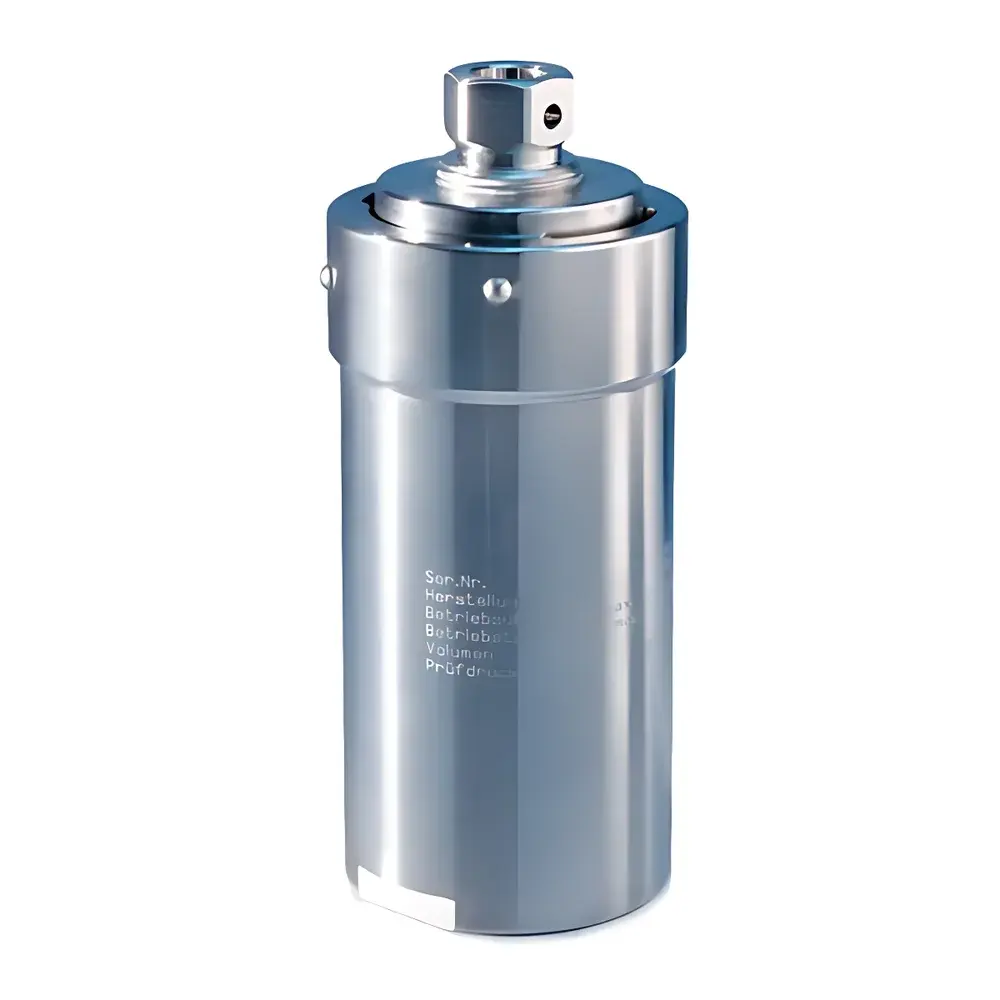
| Vessel Material | High-alloy stainless steel SS 316Ti (1.4571) |
| Liner Material | TFM-PTFE |
| Maximum Operating Pressure | 200 bar (2900 psi) |
| Maximum Operating Temperature | 230 °C |
| Internal Volume | 250 mL |
| Sealing Type | Bayonet quick-closure with V-seal or lip seal |
| Safety Device | Monel rupture disc (200 bar) with PFA protective foil and certified test documentation |
| Compliance | TÜV-certified pressure vessel per PED 2014/68/EU |
| Liner Options | TFM-PTFE inserts available in 250 mL (lip seal) and 420 mL (V-seal) configurations |
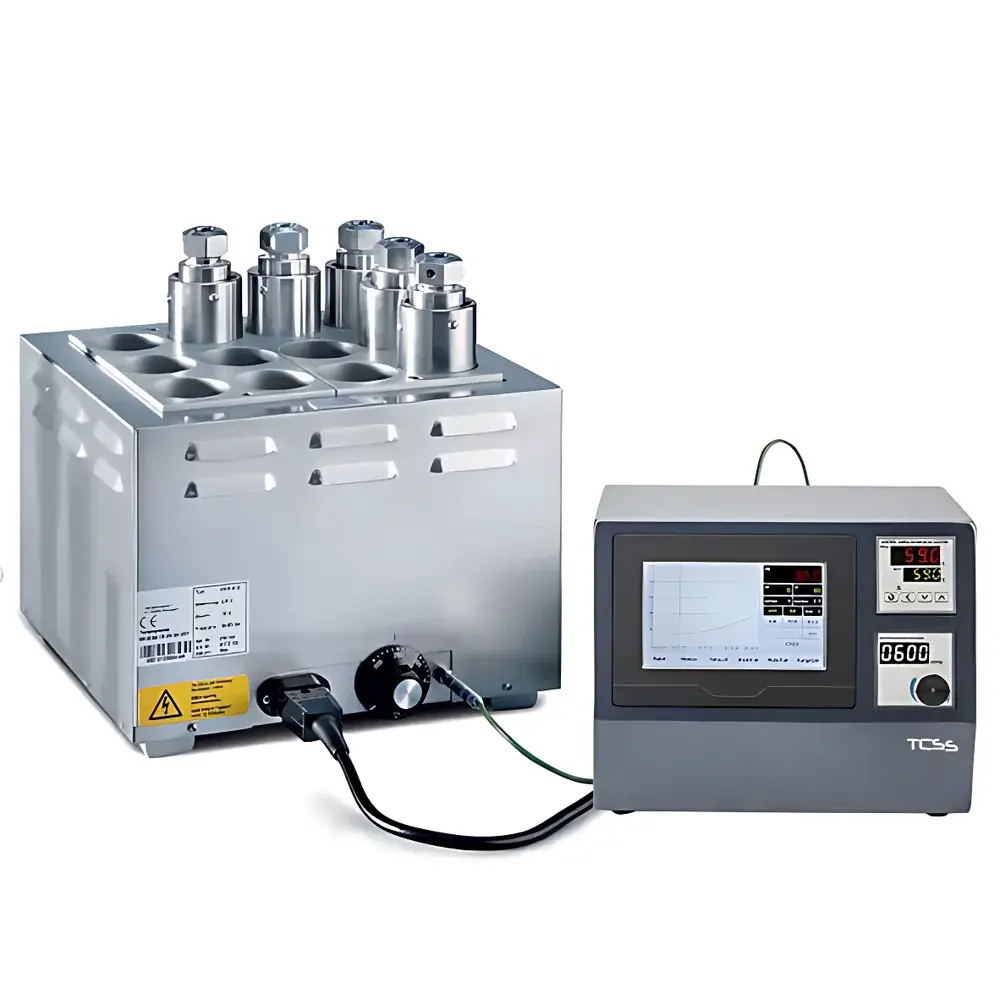
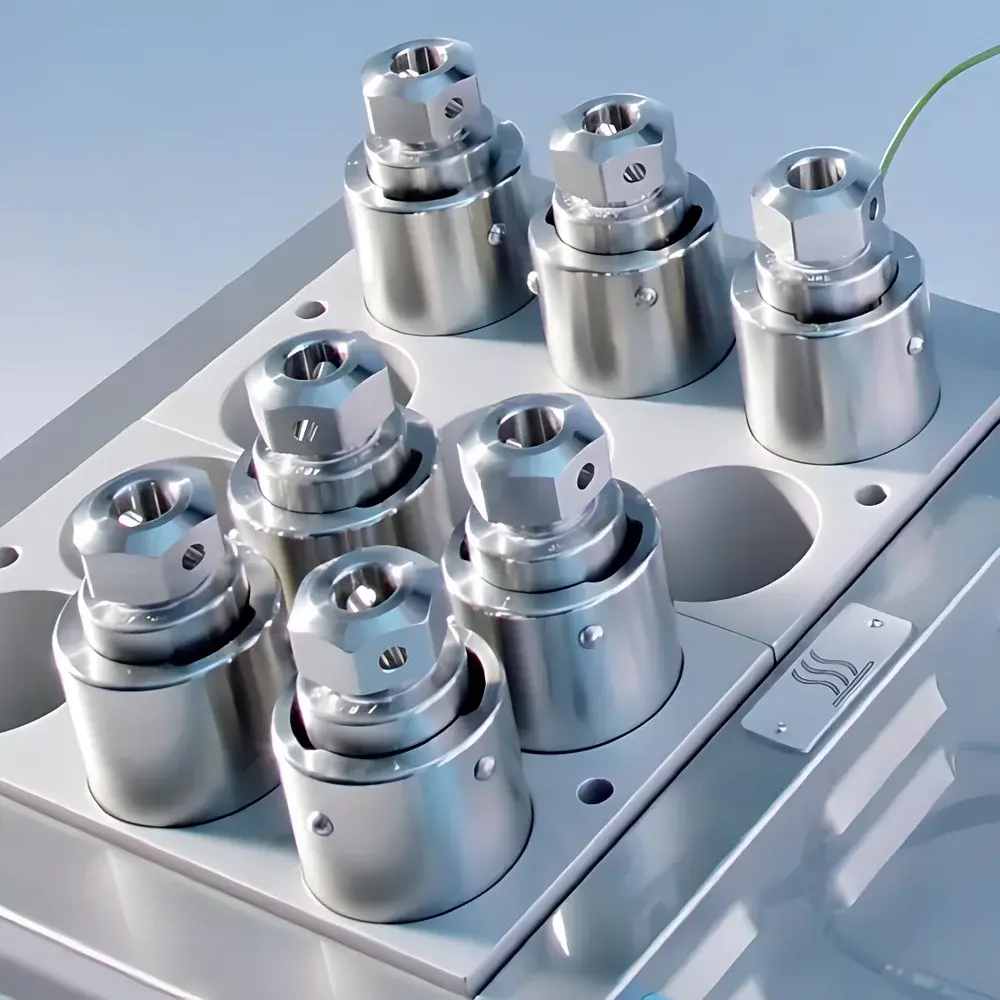
| Heating Compatibility | Compatible with 1-, 2-, and 4-position heating blocks |
Overview
The ChemTron DAB-3 Pressure Digestion Vessel is a TÜV-certified, high-integrity autoclave system engineered for controlled hydrothermal synthesis and sample digestion under subcritical and near-supercritical aqueous conditions. Operating within a validated range of up to 230 °C and 200 bar, the DAB-3 leverages the enhanced reactivity of water at elevated temperature and pressure—enabling molecular-scale reaction kinetics that replicate or surpass traditional solid-state synthesis pathways. Its design adheres strictly to the European Pressure Equipment Directive (PED 2014/68/EU), with full traceability via individual pressure test certificates. The vessel’s core architecture integrates a seamless, cold-worked SS 316Ti (1.4571) body—selected for superior resistance to chloride-induced stress corrosion cracking—and a precision-machined bayonet closure mechanism ensuring repeatable, torque-independent sealing integrity. Unlike generic laboratory reactors, the DAB-3 is purpose-built for reproducible, closed-system chemistry where pressure containment, thermal stability, and chemical inertness are non-negotiable.
Key Features
- TÜV-certified pressure vessel constructed from high-alloy stainless steel SS 316Ti (material number 1.4571), providing exceptional mechanical strength and corrosion resistance in aggressive acidic, alkaline, and halide-rich media.
- Bayonet-style quick-closure system with dual-seal options: V-seal configuration for sustained high-pressure operation and lip-seal variant optimized for rapid pressure build-up during organic sample digestion.
- Monel alloy rupture disc (24 mm diameter) rated at 200 bar, fitted with PFA protective foil and supplied with full calibration certificate—ensuring fail-safe overpressure protection aligned with ISO 4126-2 requirements.
- Modular liner compatibility: Accepts TFM-PTFE inserts in multiple volumes (250 mL standard; 420 mL optional), each featuring chemically inert, low-extractable surfaces compliant with USP Class VI and ASTM D4894 specifications.
- Interchangeable heating block integration (1-, 2-, and 4-position variants) with precise thermal gradient control; compatible with external temperature controllers offering ±0.5 °C stability over the full operating range.
Sample Compatibility & Compliance
The DAB-3 supports a broad spectrum of sample matrices including geological silicates, biological tissues, polymers, catalyst precursors, and metal-organic frameworks (MOFs). Its TFM-PTFE liners exhibit negligible leaching below 230 °C, making them suitable for trace-metal analysis per EPA Method 3052 and ISO 17294-2. All vessels undergo mandatory hydrostatic pressure testing at 1.5× maximum allowable working pressure (MAWP), documented in individual TÜV test reports. Design and manufacturing comply with PED 2014/68/EU Annex I essential safety requirements, with CE marking applied only after successful conformity assessment by a Notified Body. For regulated environments—including GLP laboratories and pharmaceutical development labs—the system supports audit-ready documentation packages, including rupture disc replacement logs, pressure test certificates, and material traceability dossiers.
Software & Data Management
When paired with the Auto Reactor 1.6 data acquisition and control software (included with control box), the DAB-3 enables time-stamped, multi-channel recording of temperature, pressure (via optional transducer), and stirring speed. The software complies with FDA 21 CFR Part 11 requirements through role-based user access, electronic signature capability, and immutable audit trails. Raw data exports to CSV and ASCII formats ensure compatibility with LIMS platforms and statistical process control (SPC) tools. All firmware updates are digitally signed and version-controlled, maintaining system integrity across instrument lifecycles.
Applications
- Hydrothermal synthesis of nanomaterials (e.g., TiO₂, ZnO, zeolites) under precisely defined p–T conditions.
- Acid digestion of environmental and food samples prior to ICP-MS/OES analysis, meeting ISO/IEC 17025 method validation criteria.
- Green chemistry applications utilizing supercritical water as solvent—eliminating need for organic solvents in oxidation and depolymerization reactions.
- Materials science research involving crystallization kinetics, phase transformation studies, and defect engineering in functional oxides.
- Method development for pharmacopeial dissolution testing under accelerated aging protocols (USP , EP 2.9.40).
FAQ
What pressure and temperature limits apply to the DAB-3 when using the TFM-PTFE liner?
The maximum validated operating conditions are 230 °C and 200 bar—regardless of liner configuration. Exceeding these values voids TÜV certification and compromises liner integrity.
Is the DAB-3 compatible with magnetic stirring?
Yes—when used with the CR001.115.6 magnetic stir bar (15 × 6 mm) and optional 2161.001 magnetic stirring unit, enabling homogeneous mixing at speeds from 100 to 1200 rpm under pressure.
Can the DAB-3 be integrated into automated synthesis platforms?
The vessel itself is manually operated, but its standardized flange geometry and pressure/temperature interface allow integration with third-party reactor management systems via analog 4–20 mA or digital RS485 outputs when equipped with appropriate sensors.
How often must the rupture disc be replaced?
Rupture discs are single-use safety components. Replacement is mandatory after any activation event or every 12 months under routine use—even if unactivated—to ensure reliability per ISO 4126-2 maintenance guidelines.
Does ChemTron provide validation support for GMP environments?
Yes—custom IQ/OQ documentation packages, including installation qualification templates, operational performance tests, and calibration records for associated heating blocks and temperature controllers, are available upon request.



