
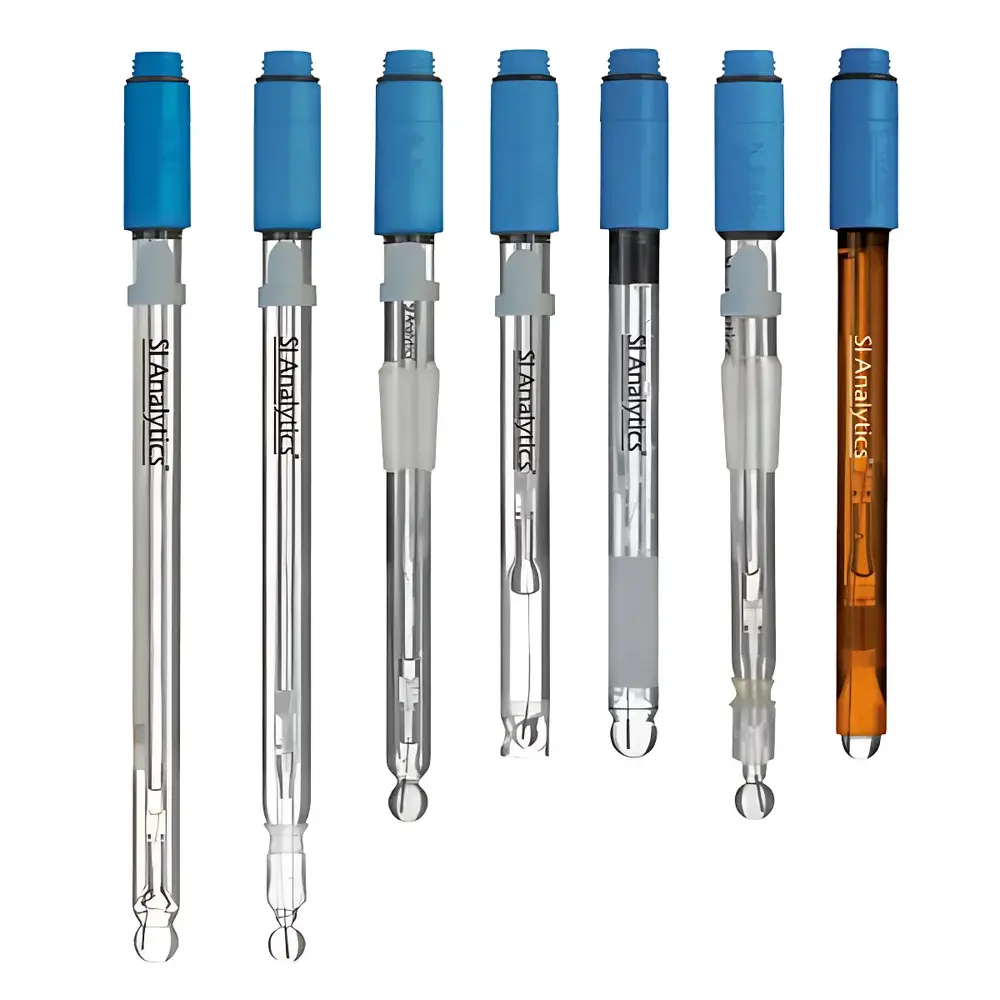
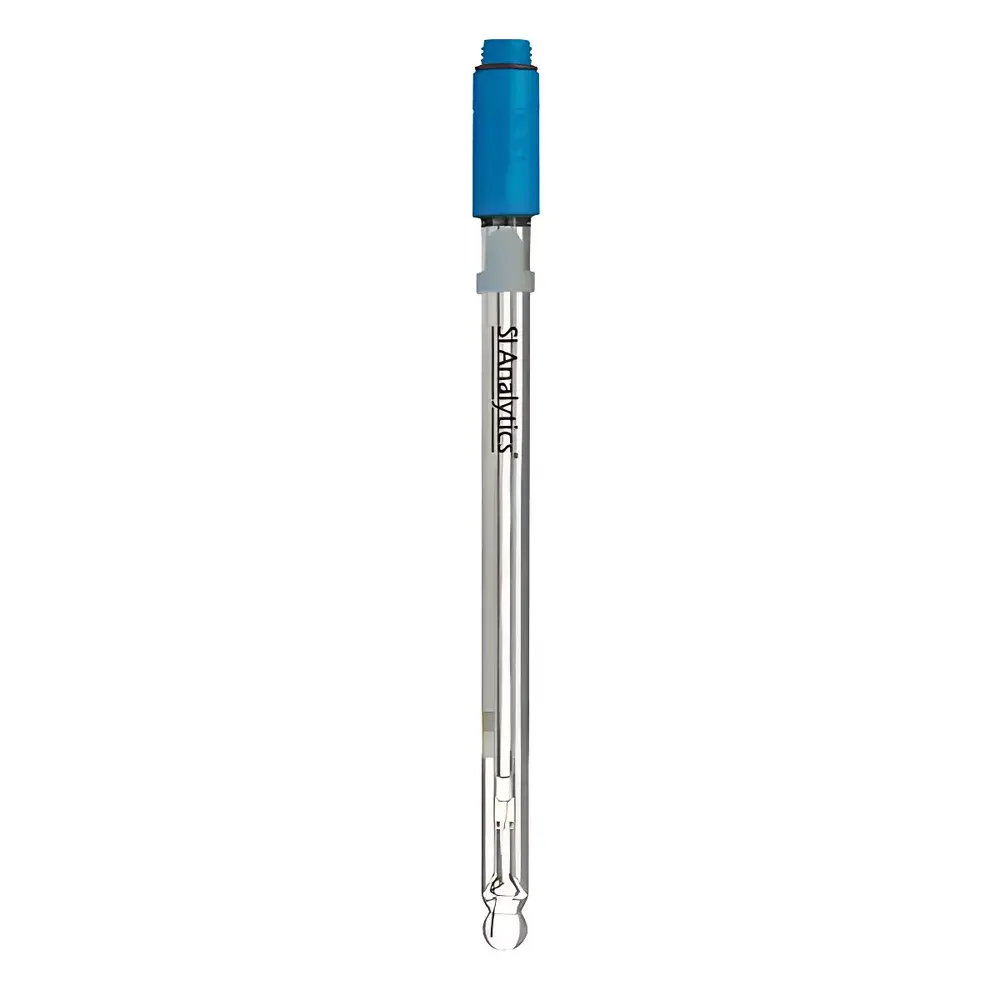
ChemTron ScienceLine A7780 pH Combination Electrode
| Brand | ChemTron |
|---|---|
| Origin | Germany |
| Model | ScienceLine A7780 |
| Electrode Type | pH Combination Electrode |
| Reference System | Silamid® |
| Body Material | Glass |
| Zero Point | pH 7.0 ± 0.3 |
| Filling Electrolyte | KCl 3 mol/L (Gel) |
| Sensing Membrane Shape | Spherical |
| pH Range | 0–14 |
| Temperature Range | –5 °C to +80 °C |
| Junction Type | Ceramic |
| Shaft Diameter | 12 mm |
| Length | 120 mm |
| Connector | Standard Threaded (BNC/DIN compatible via adapter) |
| Compliance | ISO 3696, ASTM D1193 (Type II water for calibration), GLP-ready documentation support |
Overview
The ChemTron ScienceLine A7780 is a high-precision, glass-body pH combination electrode engineered for reproducible and stable potentiometric pH measurement in routine laboratory, quality control, and research applications. Based on the Nernstian principle, it integrates a pH-sensitive glass membrane and a robust Silamid® reference system within a single, sealed probe. The spherical membrane geometry ensures rapid response (<15 s to 95% of final value in buffer solutions), uniform surface hydration, and minimized junction potential drift. Designed for compatibility with standard benchtop and portable pH meters, the A7780 delivers reliable performance across the full aqueous pH range (0–14) under controlled temperature conditions (–5 °C to +80 °C). Its gel-filled electrolyte eliminates leakage risks and reduces maintenance frequency—making it especially suitable for intermittent use, educational labs, and environments where liquid electrolyte refilling is impractical.
Key Features
- Glass shaft construction with chemical resistance to common acids, bases, and organic solvents (excluding HF and strong alkalis >10 M)
- Silamid® reference system offering long-term stability and low-temperature drift (<0.5 mV/°C)
- Pre-gelled KCl 3 mol/L electrolyte—no refilling required; maintains stable junction potential over extended storage
- Ceramic frit junction (3 × ceramic pores) providing consistent electrolyte outflow rate (~1 µL/h) and resistance to clogging by particulates or proteins
- Spherical pH-sensitive membrane (A-type glass formulation) optimized for broad-range accuracy and minimal alkaline error below pH 12
- Zero point calibrated at pH 7.0 ± 0.3 (25 °C), traceable to NIST-traceable buffer standards (ISO 17025-accredited calibration services available)
- Mechanically robust threaded connection (M12 × 0.5) compatible with universal electrode holders and adaptable to BNC or DIN inputs via optional adapters
Sample Compatibility & Compliance
The A7780 is validated for use in aqueous solutions, buffered standards, fermentation broths, food extracts, wastewater effluents, and pharmaceutical formulations. It is not recommended for non-aqueous solvents, highly viscous media (>500 cP), or samples containing sulfides, bromides, or iodides above 10 ppm without prior junction cleaning. The electrode meets functional requirements aligned with ISO 17025 clause 6.4.3 (equipment suitability), ASTM E70 (standard test method for pH of aqueous solutions), and USP (pH measurement in pharmaceutical preparations). While the device itself carries no CE marking as a standalone accessory, its design adheres to IEC 61010-1 safety principles for laboratory electrical equipment. Documentation packages support GLP/GMP audit readiness—including batch-specific calibration certificates and material declarations per RoHS 2011/65/EU.
Software & Data Management
As a passive analog sensor, the A7780 interfaces directly with any pH meter supporting high-impedance (≥1012 Ω) input circuits. When used with ChemTron-compatible meters (e.g., pH 3000 series) or third-party instruments featuring auto-electrode recognition (e.g., Metrohm 914/915 pH Lab), it enables automatic parameter loading—including slope tolerance thresholds and calibration history tagging. Raw mV output is linearly proportional to pH (–59.16 mV/pH unit at 25 °C), allowing manual calculation or integration into LIMS via RS232/USB-serial gateways. All calibration logs generated during use comply with FDA 21 CFR Part 11 requirements when paired with validated software platforms that enforce electronic signatures, audit trails, and data integrity controls.
Applications
- QC testing of raw materials and finished products in pharmaceutical manufacturing (e.g., dissolution media, excipient slurries)
- pH monitoring in bioreactor feed streams and harvest fractions during upstream processing
- Environmental analysis of surface water, leachates, and soil extracts per EPA Method 9040C
- Food & beverage QA—measuring acidity in dairy products, juices, sauces, and fermented foods
- Academic teaching labs for fundamental electrochemistry experiments (Nernst equation verification, buffer capacity studies)
- Calibration verification of in-line process sensors using offline grab-sample validation
FAQ
What is the expected service life of the A7780 under normal lab use?
With proper storage (in pH 4 buffer or专用 storage solution) and weekly calibration, typical operational lifespan exceeds 18 months. Performance degradation is indicated by >2 mV drift in zero point or slope deviation >95% of theoretical.
Can the A7780 be used for high-temperature sterilization?
No. Autoclaving or steam exposure will fracture the glass body and degrade the gel electrolyte. For sterilizable applications, consider the H64 series with ground-joint fittings and autoclavable housings.
Is the ceramic junction replaceable?
No—the junction is integral to the glass body and not field-serviceable. Clogged junctions may be regenerated by soaking in 0.1 M HNO3 for 10 minutes, followed by thorough rinsing.
Does this electrode support automatic temperature compensation (ATC)?
The A7780 does not include an integrated temperature sensor. ATC requires a separate Pt1000 or NTC probe connected to the meter’s auxiliary input.
How should the electrode be cleaned after measuring protein-rich samples?
Rinse immediately with deionized water, then soak for 15 min in pepsin/HCl solution (1% w/v pepsin, 0.1 M HCl), followed by DI water rinse and rehydration in pH 4 buffer for 2 h before reuse.






