Best Tools SC100D Integrated Spin Coater and Developer System
| Origin | Beijing, China |
|---|---|
| Manufacturer Type | Authorized Distributor |
| Origin Category | Domestic (PRC) |
| Model | SC100D |
| Price Range | USD 1,400 – 2,800 |
| Max. Rotation Speed | 0–10,000 rpm |
| Speed Resolution | 1 rpm |
| Timing Resolution | 0.1 s |
| Acceleration Range (no-load) | 10–50,000 rpm/s |
| Maximum Substrate Diameter | 203 mm (8-inch wafer) |
| Chamber Diameter | 203 mm |
| Programmable Recipes | 100 recipes × 100 steps |
| Max. Process Duration | 3000 s |
| Control System | Industrial PLC with servo motor drive |
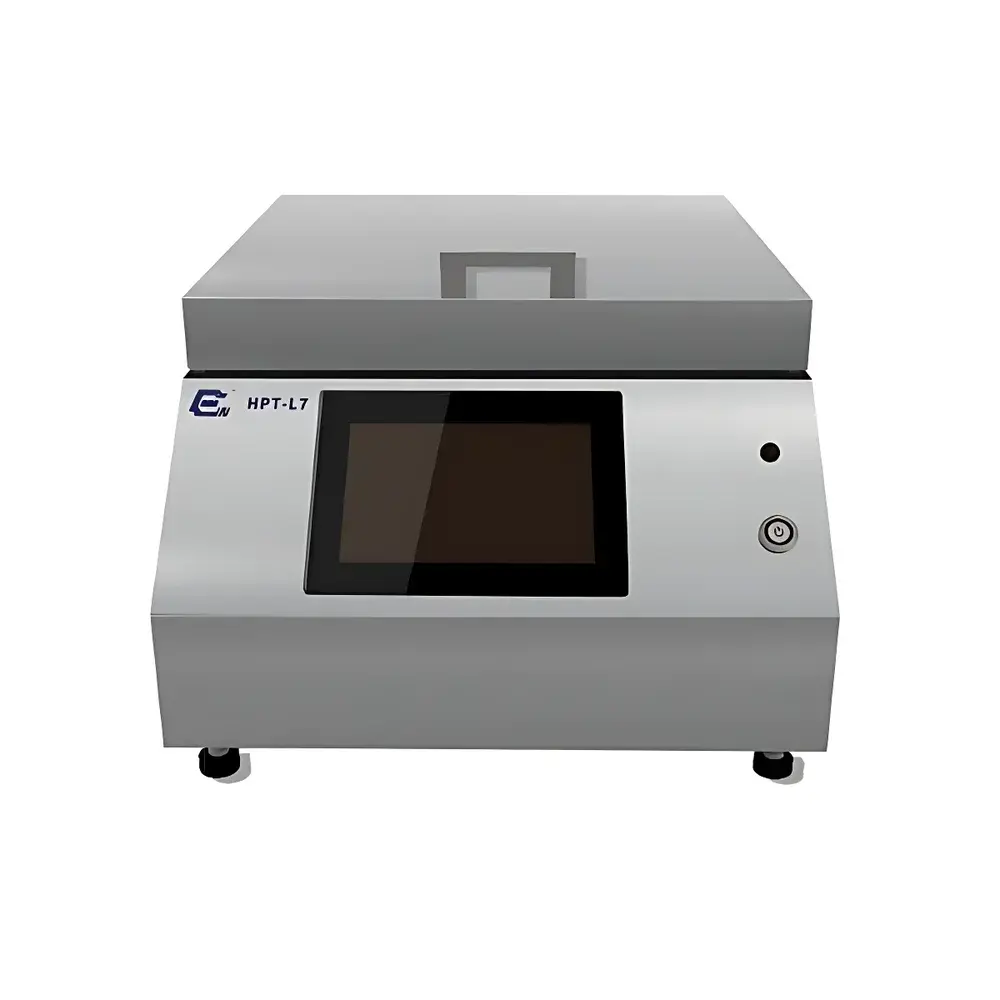
| HMI | 7-inch full-color capacitive touchscreen |
| Chamber Material | HDPE inner cavity |
| Enclosure | Stainless steel (SUS304) |
| Viewing Window | Solvent-resistant polycarbonate (PC) |
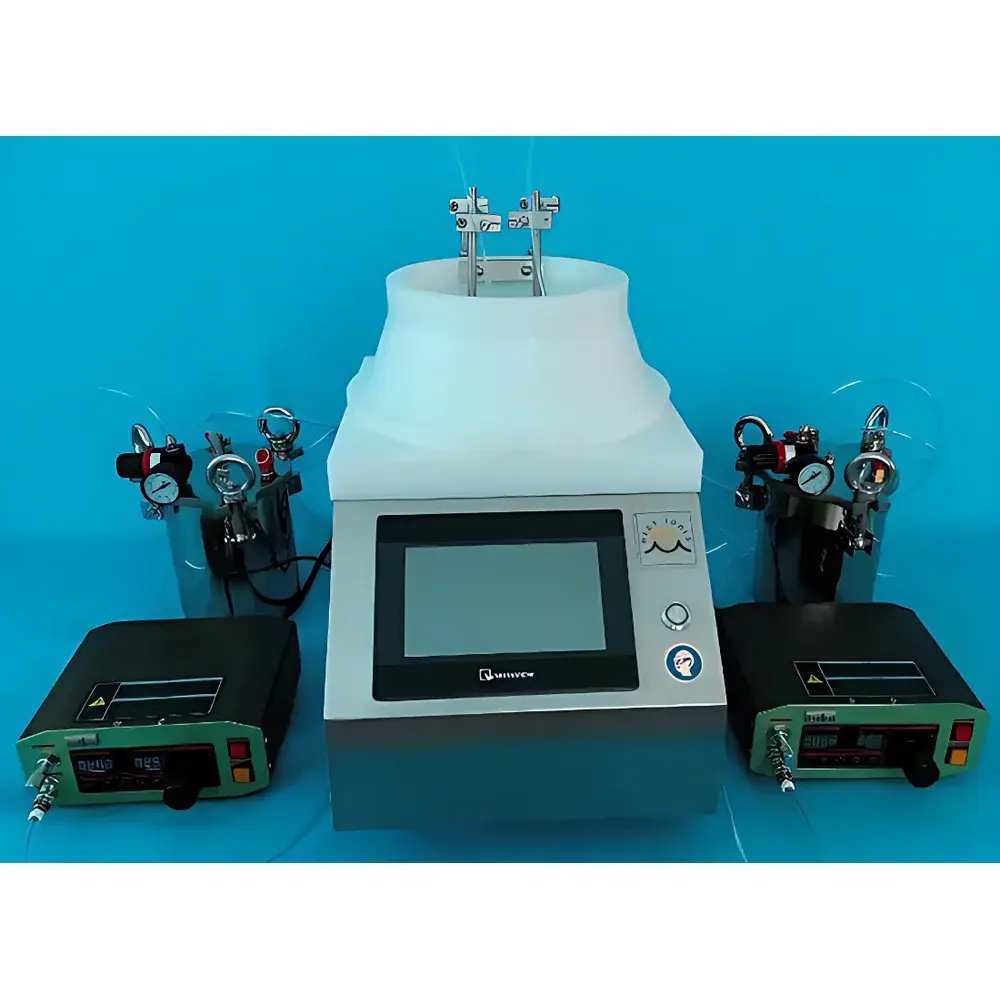
| Spray System | Quadruple independent nozzle array (developer, DI water, optional process chemicals) |
| Compliance | Designed for Class 1000 cleanroom-compatible operation |
Overview
The Best Tools SC100D Integrated Spin Coater and Developer System is an engineered solution for photolithographic processing of small-format semiconductor and microfabrication substrates. Based on the proven SC100 spin coating platform, the SC100D extends functionality by integrating a fully synchronized, programmable wet development module—enabling sequential resist coating, soft bake (when integrated with optional hotplate), exposure (via external aligner), and aqueous or solvent-based development in a single footprint. The system operates on fundamental centrifugal thin-film deposition principles for uniform resist application and controlled fluid dynamics during developer dispense and rinse cycles. Its architecture supports both lift-off and negative/positive-tone photoresist processes, making it suitable for R&D laboratories, university cleanrooms, and pilot-line fabrication of MEMS devices, PDMS-based microfluidic chips, and low-volume sensor prototypes.
Key Features
- Modular dual-function design: Combines high-precision spin coating (0–10,000 rpm) and programmable multi-nozzle development in one compact unit
- Industrial-grade servo motor with closed-loop feedback ensures speed stability ≤ ±1 rpm and acceleration repeatability across the full 10–50,000 rpm/s range
- Quadruple independent spray manifold with solenoid-controlled valves, pressure-regulated delivery, and chemically inert PTFE-lined tubing for developer, DI water, and two customizable reagent channels
- Chemical containment system featuring splash guard shroud, HDPE-lined process chamber, and PC viewing window rated for prolonged exposure to common lithographic solvents (e.g., acetone, IPA, PGMEA, TMAH)
- PLC-based real-time control architecture with deterministic timing resolution of 0.1 s per step and support for up to 100 recipes (100 steps each), each configurable for rotation profile, dispense timing, gas purge, and dwell intervals
- 7-inch industrial touchscreen HMI with intuitive icon-driven workflow navigation, recipe import/export via USB, and on-screen diagnostic logging
- Structural compliance: SUS304 stainless steel frame, corrosion-resistant fasteners, and grounding provisions meeting IEC 61000-6-2 EMC immunity standards
Sample Compatibility & Compliance
The SC100D accommodates circular wafers up to 203 mm (8-inch) diameter and square substrates up to 178 mm (7-inch) edge length. It supports standard silicon, glass, quartz, SiC, and flexible polymer substrates (e.g., PET, PI) used in MEMS, microfluidics, and organic electronics. All wet-processing components are compatible with ISO Class 6 (Class 1000) cleanroom environments when installed with appropriate exhaust ducting and solvent vapor management. While not certified to SEMI S2 or S8, the system’s mechanical design, material selection, and electrical safety follow baseline requirements aligned with UL 61010-1 and GB/T 38337–2019 (Chinese national standard for laboratory equipment safety). Optional documentation packages support internal GLP/GMP traceability protocols.
Software & Data Management
The embedded PLC firmware provides deterministic real-time execution without reliance on Windows or third-party OS layers. Recipe parameters—including rpm ramp profiles, dispense onset delay, nozzle activation sequence, and post-rinse spin-dry duration—are stored in non-volatile memory with timestamped version control. USB export generates CSV-formatted logs containing process ID, start time, step-by-step parameter setpoints, and actual motor encoder feedback (where enabled). Audit trail functionality includes operator login tracking (via optional RFID badge reader integration) and change history for recipe modifications—supporting basic 21 CFR Part 11 readiness when deployed with networked logging servers and role-based access controls.
Applications
- MEMS fabrication: Photoresist patterning for surface/bulk micromachining of accelerometers, gyroscopes, and pressure sensors
- Microfluidic device prototyping: Uniform PDMS spin-coating prior to soft lithography replication and plasma bonding
- Flexible electronics R&D: Resist application on PET and polyimide substrates for printed circuit and sensor electrode definition
- Academic teaching labs: Hands-on lithography training with reproducible, low-cost process validation
- Low-volume optoelectronic packaging: Anti-reflective and passivation layer spin-on glass (SOG) processing
FAQ
What substrate sizes does the SC100D support?
The system handles wafers up to 203 mm (8-inch) in diameter and square substrates up to 178 mm (7-inch) per side.
Can the SC100D be integrated with a hotplate or UV exposure station?
Yes—mechanical and electrical interfaces (e.g., RS-485, dry-contact I/O) are provided for synchronization with external hotplates and mask aligners using custom or OEM-provided interlock logic.
Is the spray system compatible with aggressive developers like TMAH or KOH?
The quadruple manifold uses PTFE-sealed solenoid valves and fluoropolymer tubing; compatibility with TMAH (2.38% wt) and dilute KOH is confirmed, though extended exposure to >5% KOH requires optional quartz nozzles.
Does the system include data export capability for quality records?
Yes—CSV log files containing full process metadata and parameter traceability can be exported via USB port for inclusion in internal QA documentation.
What maintenance is required for long-term reliability?
Recommended quarterly inspection includes chamber seal integrity verification, nozzle flow calibration, servo motor encoder alignment check, and HDPE chamber surface inspection for solvent-induced stress cracking.