
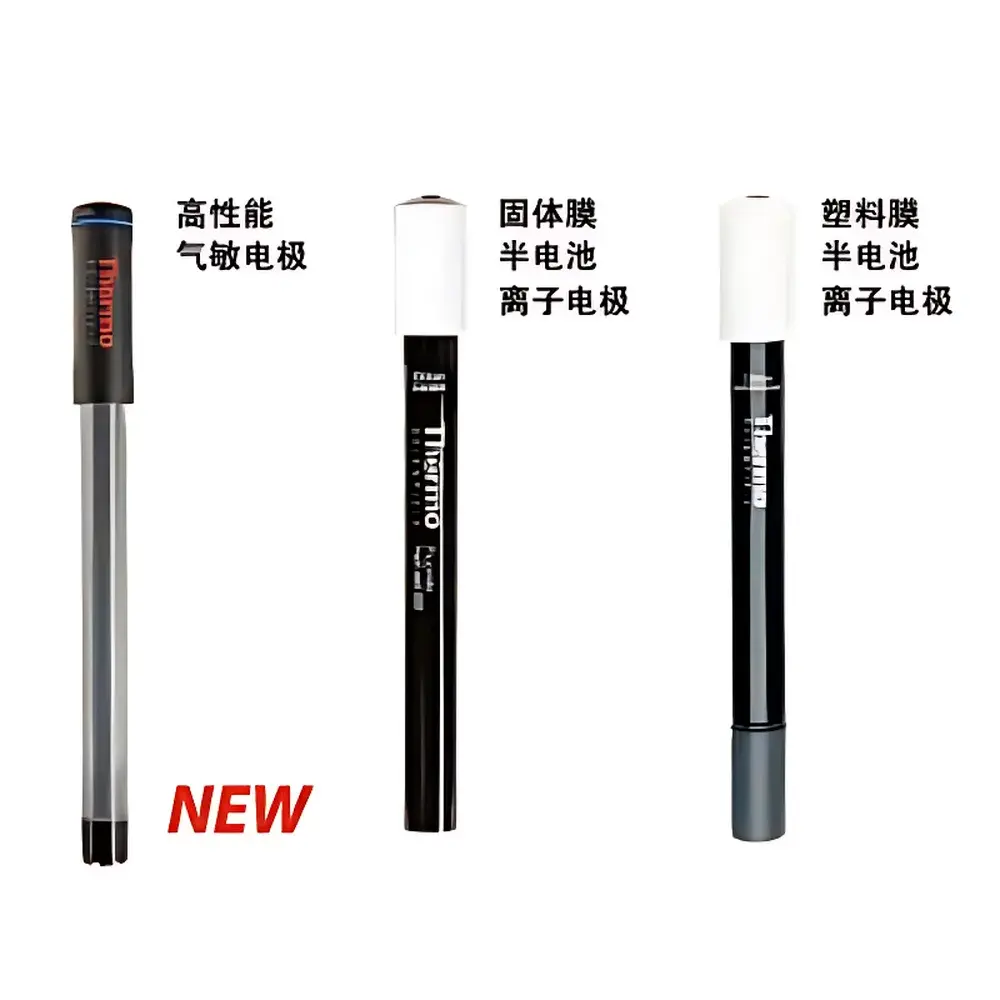
Thermo Scientific Orion ISE Series Multi-Ion Selective Electrodes
| Brand | Thermo Fisher |
|---|---|
| Origin | USA |
| Manufacturer | Thermo Fisher Scientific |
| Product Type | Imported |
| Model | ISE Series |
| Instrument Category | Multi-Ion Analyzers |
| Compliance | ASTM D1129, ISO 10523, USP <798>, EPA Method 300.0, EN ISO 10304-1 |
Overview
The Thermo Scientific Orion ISE Series comprises a comprehensive portfolio of ion-selective electrodes engineered for precise, direct potentiometric measurement of free ionic activity in aqueous and semi-aqueous matrices. Based on the Nernst equation, these electrodes generate a stable, logarithmically proportional millivolt signal relative to the thermodynamic activity (not total concentration) of target ions—enabling accurate quantification even in turbid, colored, or high-ionic-strength samples without prior separation or digestion. Each electrode features a solid-state or polymer-membrane sensing element housed in a rugged, field-ready body with BNC waterproof connectors, optimized for integration with Orion Star™, Versa Star™, and A214 benchtop meters. The series supports over 20 distinct ion species—including F⁻, Cl⁻, NO₃⁻, NH₄⁺, Ca²⁺, K⁺, Na⁺, CN⁻, S²⁻, Ag⁺, Cu²⁺, Pb²⁺, Cd²⁺, Br⁻, I⁻, SCN⁻, BF₄⁻, ClO₄⁻, and CO₂—across wide dynamic ranges (e.g., 10⁻⁷ to 10⁻¹ M for fluoride; 10⁻⁶ to 1 M for sodium) and operational temperatures up to 80 °C (100 °C for ROSS® Na⁺ electrodes). Designed for trace-level detection and robust reproducibility, the Orion ISE platform meets critical regulatory requirements for environmental monitoring, clinical diagnostics, process control, and GLP/GMP-compliant laboratories.
Key Features
- Patented membrane formulations—including crystalline solid-state (e.g., LaF₃ for F⁻), plasticized PVC (e.g., for NO₃⁻, K⁺), and gas-permeable membranes (e.g., for NH₃, CO₂)—deliver exceptional selectivity (log Kpot < −4 for primary interferents) and low detection limits.
- Integrated reference systems: ROSS® double-junction architecture minimizes liquid junction potential drift; optional outer-reference fill solutions (e.g., 3 M KCl, saturated KNO₃, or low-chloride electrolytes) ensure compatibility with chloride-sensitive applications.
- Field-deployable design with IP67-rated housings, autoclavable components (where specified), and interchangeable sensing modules (e.g., 96xxBNWP series) for rapid method switching.
- Temperature compensation via integrated Pt1000 RTD sensors (standard on all BNWP models) enables automatic correction per the Nernst slope (−59.16 mV/decade at 25 °C for monovalent ions).
- Calibration flexibility: supports one-point, two-point, or multi-point standardization; built-in algorithms for known-addition (standard addition), analyte addition (reverse addition), and Gran plot titration methods—fully compliant with ASTM D1293 and ISO 10523 protocols.
- Electrode-specific ion strength adjustment (ISA) recommendations and certified reference standards (e.g., 940907 F⁻, 930707 NO₃⁻, 921906 K⁺) ensure metrological traceability to NIST SRMs.
Sample Compatibility & Compliance
Orion ISEs are validated for use across diverse sample matrices: natural waters (surface, groundwater, seawater), wastewater, soil extracts, biological fluids (serum, urine, cell culture media), food homogenates (milk, wine, infant formula), industrial process streams (electroplating baths, semiconductor slurries), and pharmaceutical formulations. All electrodes comply with ISO/IEC 17025 calibration traceability requirements when used with certified standards and documented SOPs. For regulated environments, Orion meters support 21 CFR Part 11–compliant audit trails, electronic signatures, and secure user access control. Method validation documentation aligns with EPA Methods 300.0 (anions), 300.1 (fluoride), and 372.1 (cyanide); ASTM D6919 (chloride), D1129 (pH and ion activity); and USP for sterile product water testing. CE, UKCA, and RoHS markings confirm conformity with EU and UK safety directives.
Software & Data Management
Orion ISE measurements integrate natively with Thermo Scientific’s TraceFinder™ and Chromeleon™ CDS software suites for automated calibration curve generation, outlier rejection (Grubbs’ test), uncertainty propagation (GUM-compliant), and report export in PDF, CSV, or XML formats. Star™ Com software provides real-time data logging, customizable pass/fail criteria, and statistical process control (SPC) charting (X̄-R, CUSUM). All raw mV and temperature data are timestamped and stored with full metadata—including electrode ID, calibration history, ISA lot numbers, and analyst credentials—to satisfy GLP audit requirements. Data integrity is enforced via write-protected memory, encrypted backups, and role-based permissions (administrator, analyst, reviewer).
Applications
- Environmental Monitoring: Quantification of NO₃⁻, NH₄⁺, F⁻, CN⁻, and Cl⁻ in drinking water per WHO guidelines; ORP and sulfide (S²⁻) profiling in anaerobic digesters; borate (BF₄⁻) tracking in geothermal effluents.
- Clinical & Pharmaceutical: Direct Na⁺, K⁺, Ca²⁺, and Cl⁻ analysis in serum using ROSS® electrodes per CLIA and ISO 15197; fluoride monitoring in oral care products per USP ; cyanide screening in emergency toxicology.
- Food & Beverage: Nitrate in leafy greens (EU Regulation No. 1258/2013), iodide in dairy, ammonium in fermented beverages, and residual Cl₂ in bottling lines—all without matrix interference from proteins or pigments.
- Industrial Process Control: Real-time Cu²⁺ monitoring in acidic copper plating baths (ASTM B853); Cd²⁺ and CN⁻ verification in electroless nickel baths; CO₂ dissolution kinetics in carbonated beverage production.
- Research & Education: In-situ microelectrode measurements of extracellular Ca²⁺ transients in neuronal tissue; speciation studies of metal complexes via activity-based equilibrium modeling.
FAQ
What is the difference between ionic activity and total ion concentration?
Ionic activity reflects the thermodynamically effective concentration of free, uncomplexed ions—governed by solution ionic strength and complexation equilibria. ISEs respond directly to activity; conversion to total concentration requires rigorous activity coefficient modeling (e.g., Davies equation) or empirical ISA correction.
Can Orion ISEs measure ions in non-aqueous solvents?
Most Orion ISEs are validated only for aqueous or >80% aqueous matrices. Non-aqueous applications (e.g., ethanol, acetone) require custom membrane evaluation and are not covered under warranty or regulatory compliance claims.
How often must I recalibrate my ISE?
Calibration frequency depends on application stringency: daily for clinical QC, pre-analysis for environmental compliance, and after every 10–20 samples in high-throughput labs. Drift exceeding ±2 mV/hour warrants cleaning or membrane replacement.
Why is ionic strength adjustment mandatory for accurate ISE measurements?
Variations in background electrolyte concentration alter activity coefficients and liquid junction potentials. ISA ensures constant ionic strength across standards and samples—critical for Nernstian response and minimizing interferences from multivalent ions.
Do Orion ISEs require maintenance beyond routine cleaning?
Yes. Membrane reconditioning (e.g., soaking in conditioning solution), reference electrolyte refills (every 3–6 months), and junction clog removal (using 0.1 M HNO₃ for protein fouling) are essential for long-term stability and accuracy.







