
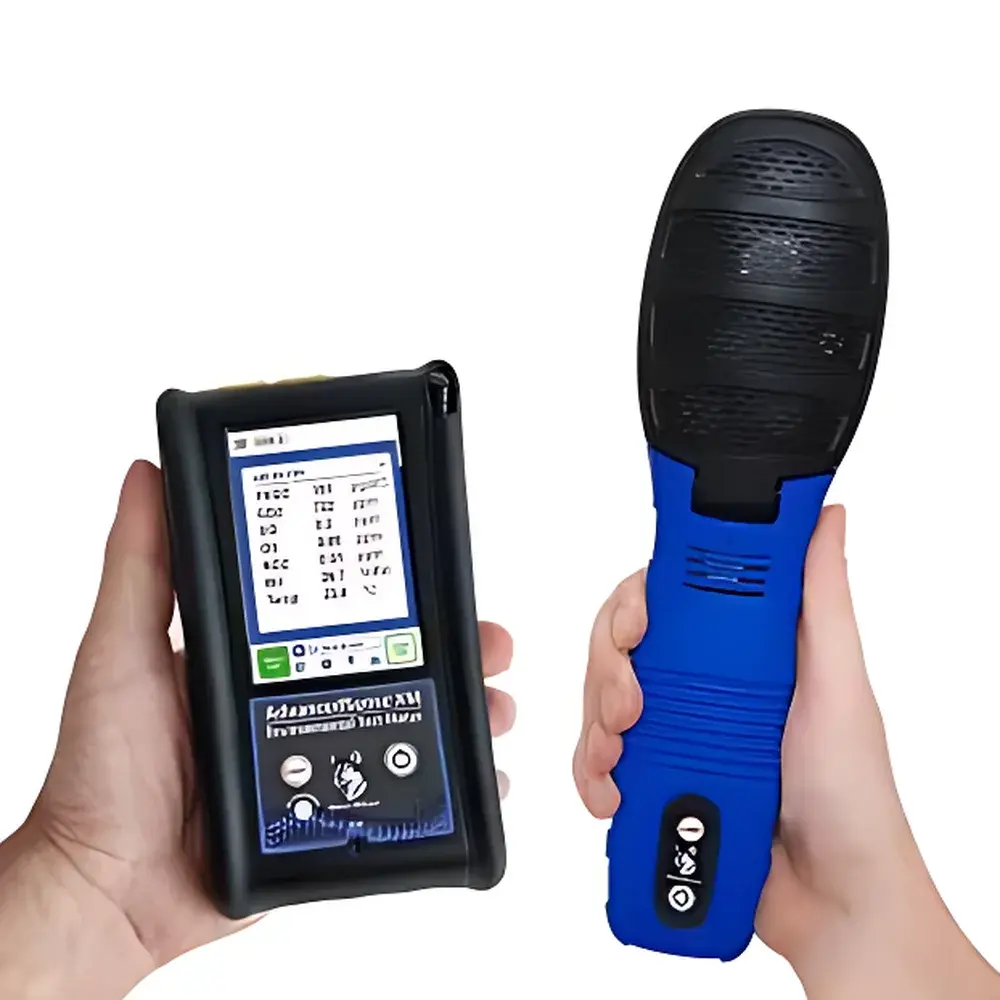
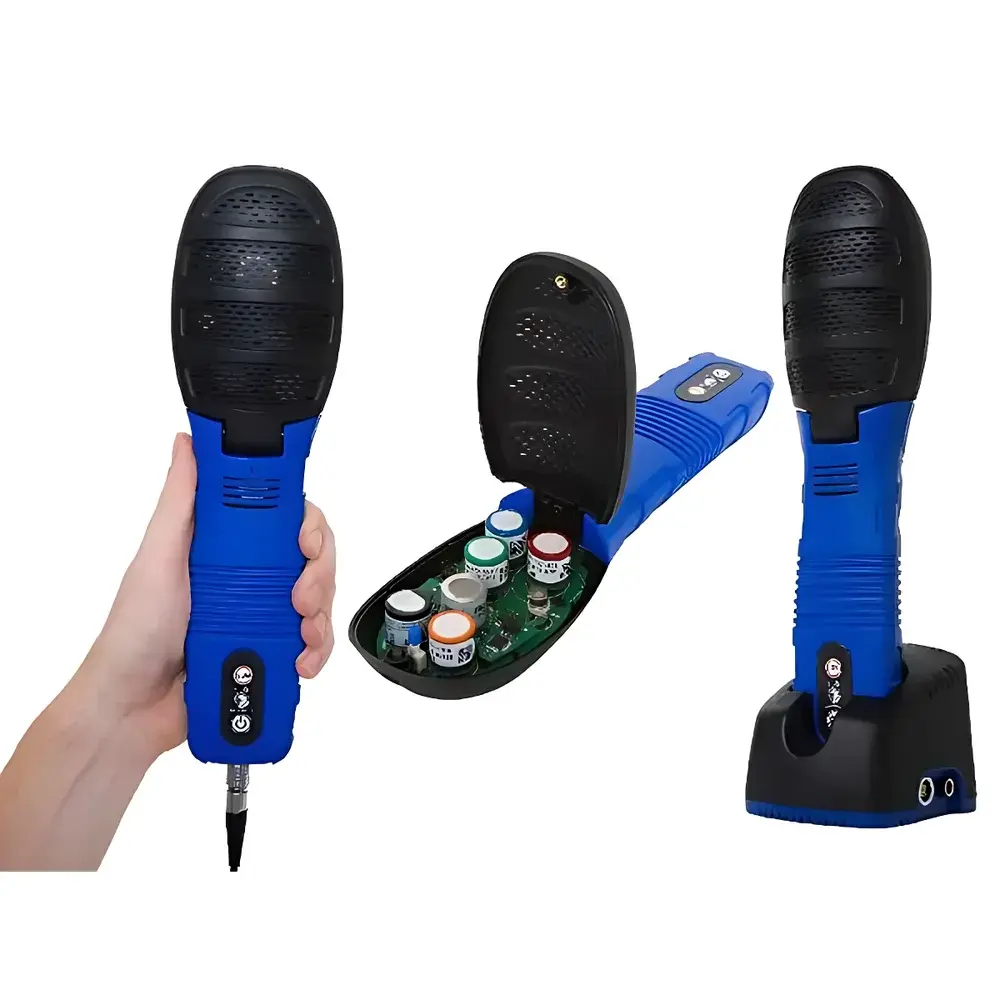
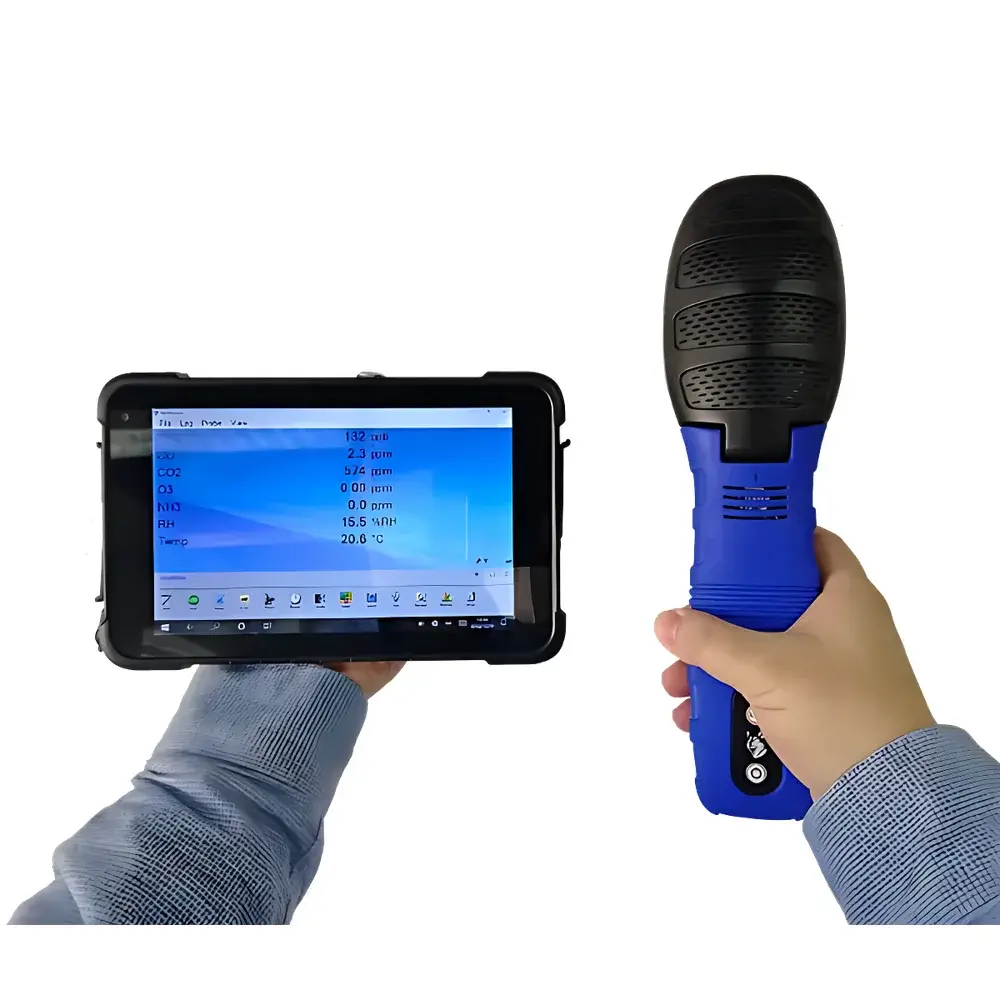
Graywolf DSII-5 Portable Multi-Gas Indoor Air Quality Monitor
| Brand | Graywolf |
|---|---|
| Model | DSII-5 |
| Origin | Beijing, China |
| Manufacturer Type | Authorized Distributor |
| Country of Origin | China |
| Pricing | Upon Request |
| Detection Parameters | TVOC, HCHO, NH₃, CO, CO₂, Temperature, Relative Humidity |
| Data Acquisition | Low-noise, high-resolution analog front-end |
| Operating System | Wolf OS |
| Connectivity | Modular probe interface (up to 20 simultaneous parameters) |
| Units | mg/m³, µg/m³, ppm, ppb, % vol |
| Annotation Capability | Text, voice, image logging on-device |
| Compliance Context | Designed for ASTM D6245, ISO 16000 series, ASHRAE 62.1, and OSHA PEL/TWA reference applications |
Overview
The Graywolf DSII-5 is a modular, portable multi-parameter indoor air quality (IAQ) monitor engineered for field-deployable precision in real-time and time-weighted environmental assessment. Built upon a low-noise, high-fidelity analog signal acquisition architecture, the DSII-5 employs electrochemical, NDIR, PID, and capacitive sensing technologies—depending on the connected probe—to deliver stable, reproducible measurements across a broad spectrum of gaseous and physical parameters. Its core design philosophy centers on adaptability: rather than a fixed-sensor instrument, it functions as a universal host platform that dynamically integrates calibrated, hot-swappable probes via standardized digital interfaces. This architecture supports both spot-check diagnostics and extended unattended monitoring campaigns—critical for IAQ baseline studies, post-remediation verification, and HVAC performance validation. The device operates within ambient temperature ranges of 0–50 °C and relative humidity up to 95% non-condensing, with internal temperature compensation applied to all gas readings to minimize thermal drift.
Key Features
- Modular host architecture supporting up to 20 concurrent parameters—including temperature, RH, CO₂, CO, TVOC, formaldehyde (HCHO), ammonia (NH₃), O₂, SO₂, NO₂, O₃, H₂S, Cl₂, HF, PH₃, and more—via interchangeable, factory-calibrated probes.
- Wolf OS embedded operating system enabling real-time data visualization, on-device annotation (text, voice memos, JPEG image capture), and configurable alarm thresholds with audible/visual alerts.
- Flexible measurement modes: instantaneous readout mode for rapid screening; scheduled logging mode with user-defined intervals (1 sec to 24 hrs); and triggered-event logging synchronized to external inputs or threshold breaches.
- Multi-unit gas concentration display: automatic conversion between mg/m³, µg/m³, ppm, ppb, and % volume—traceable to NIST-traceable calibration certificates supplied with each probe.
- Internal 8 GB non-volatile memory with FAT32 formatting, supporting CSV export via USB-C; optional Wi-Fi or Bluetooth 5.0 modules enable remote configuration and live telemetry to cloud-based dashboards.
Sample Compatibility & Compliance
The DSII-5 is validated for use with standard 1/8″ NPT or M12 threaded probe interfaces compliant with IEC 61000-4 EMC immunity requirements. All electrochemical sensors meet ISO 12032:2021 stability criteria for drift (<2% FS/month), while NDIR CO₂ modules conform to ISO 8573-1 purity class 5 for optical path integrity. Probe-specific calibration protocols align with ASTM D6245-22 (formaldehyde), ASTM D5197-21 (CO), and ISO 16000-29:2021 (TVOC speciation via PID). The system supports GLP-compliant audit trails: every measurement record includes timestamp (RTC-synced), operator ID, probe serial number, calibration due date, and environmental metadata (T/RH). Full traceability meets FDA 21 CFR Part 11 requirements when paired with Graywolf’s validated WolfLink software suite.
Software & Data Management
Data management is executed through WolfLink Desktop (Windows/macOS) and WolfCloud (SaaS). WolfLink provides raw binary decoding, spectral deconvolution for multi-gas interference correction (e.g., H₂O vapor cross-sensitivity in NH₃ detection), and automated report generation per ISO 16000-1 Annex B templates. All datasets include embedded EXIF-like metadata: GPS coordinates (optional GNSS module), barometric pressure, battery level, and sensor health flags. Export formats include CSV, PDF (with embedded graphs), and XML for LIMS integration. Audit logs track user login/logout, calibration events, firmware updates, and data deletion—retained for ≥12 months with immutable hashing.
Applications
- Indoor Air Quality (IAQ) assessments per ASHRAE Standard 62.1 and LEED IEQ Credit 1, including VOC source identification, ventilation rate verification, and occupant symptom correlation studies.
- Ongoing occupational exposure monitoring in laboratories, cleanrooms, wastewater facilities, and manufacturing plants—aligned with OSHA PELs and ACGIH TLVs®.
- Post-construction IAQ clearance testing following ISO 16000-39 protocols, including formaldehyde off-gassing profiling over 7–28 day periods.
- Public building compliance audits (schools, hospitals, transit hubs) under EPA IAQ Tools for Schools and CDC Environmental Health Tracking Program guidelines.
- Research-grade longitudinal environmental trend analysis, especially where co-located parameters (e.g., CO₂ + TVOC + particle count) inform source apportionment models.
FAQ
What calibration standards are supported for field recalibration?
Each probe ships with NIST-traceable calibration gas certificates. Field zero/span checks may be performed using certified span gases (e.g., 100 ppm CO in N₂) or electronic zero kits; calibration intervals follow ISO 17025-recommended frequencies (typically quarterly for routine use).
Can the DSII-5 operate in explosive atmospheres?
No. The DSII-5 is not intrinsically safe (IEC 60079-0) or ATEX-certified. It is rated for general indoor and non-hazardous outdoor environments only.
Is WolfLink software validated for regulated industries?
Yes. Version 4.2+ of WolfLink Desktop includes 21 CFR Part 11 compliance packages with electronic signature workflows, role-based access control, and encrypted database backups—validated per GAMP 5 Annex 11 requirements.
How is sensor cross-sensitivity managed during multi-gas measurement?
Wolf OS applies real-time algorithmic compensation using built-in interference libraries (e.g., humidity-corrected NH₃ response, CO₂-driven PID gain adjustment); users may also load custom correction matrices derived from lab intercomparison studies.
What is the typical battery life under continuous logging mode?
With all probes active and 1-minute logging interval, runtime exceeds 12 hours on the standard 7.4 V / 4400 mAh Li-ion pack; optional extended-life packs support >24 hrs.







