
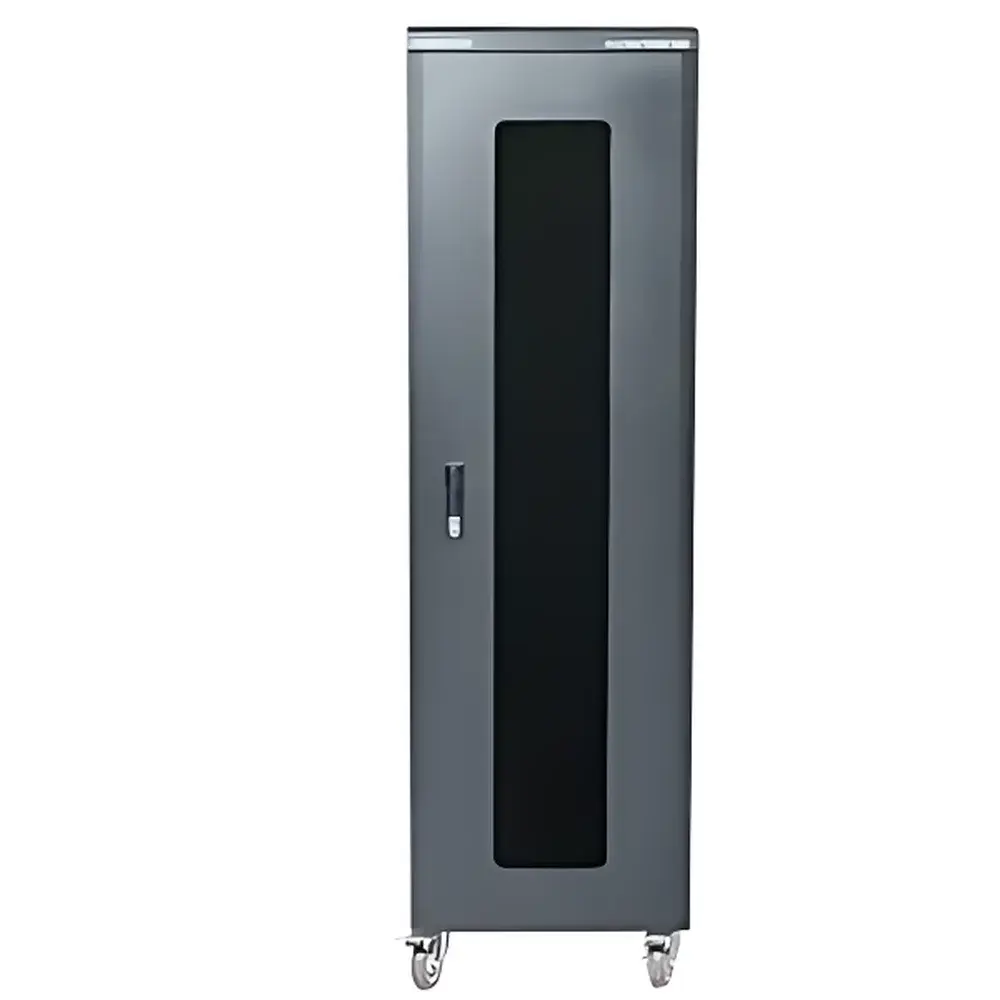
Shine SH-WIC5000 Online Water Quality Ion Chromatograph
| Brand | Shine |
|---|---|
| Origin | Shandong, China |
| Manufacturer Type | Manufacturer |
| Product Category | Domestic |
| Model | SH-WIC5000 |
| Instrument Type | Online Analyzer |
| Application Specificity | Dedicated for Water Matrix |
| Maximum Pump Pressure | 35 MPa |
| Flow Rate Range | 0–9.999 mL/min |
| Eluent Flow Rate | 0.1–5 mL/min |
| Maximum Operating Pressure | 35 MPa |
| Operating Temperature Range | Ambient +5 °C to 60 °C |
| Temperature Reproducibility | ±0.2 °C |
| Eluent Concentration Range | 0–100 mM |
| Detection Limits | 0.5 µg/L (as Cl⁻) |
Overview
The Shine SH-WIC5000 Online Water Quality Ion Chromatograph is an industrial-grade, fully automated ion chromatography system engineered for unattended, 24/7 continuous monitoring of inorganic anions and cations in municipal drinking water, surface water, groundwater, and industrial process water (e.g., power plant circulating water). It operates on the principle of suppressed conductivity detection following high-resolution ion exchange separation—leveraging dual parallel chromatographic channels to simultaneously quantify key regulatory analytes including F⁻, BrO₃⁻, Cl⁻, NO₂⁻, Br⁻, PO₄³⁻, SO₄²⁻, Li⁺, NH₄⁺, Na⁺, K⁺, Ca²⁺, and Mg²⁺. Designed to meet stringent operational demands of modern water utilities and environmental monitoring networks, the SH-WIC5000 integrates a complete inline sample preparation module—including particulate filtration, organic matter removal, and automatic backflush regeneration—eliminating manual intervention and ensuring long-term analytical integrity under field conditions.
Key Features
- Dual-channel independent flow paths enable concurrent anion and cation analysis without cross-contamination or method switching delays.
- Electrolytic eluent generator (EG) produces high-purity KOH (for anions) and MSA (for cations) on-demand; supports uninterrupted operation for up to 20 days with a single eluent reservoir.
- Full-plastic fluidic path constructed from PEEK, PTFE, and inert polypropylene ensures chemical compatibility with aggressive eluents and eliminates metal leaching—critical for ultra-trace quantification at sub-µg/L levels.
- Double suppression mode: chemical suppression for anion analysis and electrolytic suppression for cation analysis, each optimized for maximum signal-to-noise ratio and baseline stability.
- Column and detector compartments are independently thermostatted (±0.2 °C reproducibility), minimizing retention time drift and enhancing inter-day precision.
- Automated syringe-based injection system with programmable sampling frequency—up to 48 analyses per day—with integrated calibration verification and system suitability checks prior to each run.
- Intelligent self-diagnostic firmware monitors pressure, temperature, conductivity baseline, and valve actuation status; triggers alerts and initiates recovery protocols upon anomaly detection.
Sample Compatibility & Compliance
The SH-WIC5000 is validated for direct injection of clarified aqueous matrices with total suspended solids (TSS) < 1 mg/L and dissolved organic carbon (DOC) < 5 mg/L. Its integrated pretreatment module extends applicability to raw surface water and groundwater by removing colloids, humic substances, and particulates via sequential membrane filtration and reverse-flush regeneration. The system complies with ISO 10304-1:2012 (determination of dissolved anions by liquid chromatography), ASTM D4327 (standard test method for anions in water by IC), and supports data integrity requirements aligned with FDA 21 CFR Part 11 through audit-trail-enabled software logging, electronic signatures, and role-based access control.
Software & Data Management
The instrument is controlled by Shine Intelligent Chromatography Workstation (v4.x), a Windows-based platform supporting real-time chromatogram visualization, automated peak integration using adaptive baseline algorithms, and customizable reporting templates compliant with GLP/GMP documentation standards. Raw data and processed results are stored locally with optional encrypted cloud synchronization via TLS 1.2–secured API endpoints. Remote access enables diagnostics, method updates, and report generation from off-site locations. All system events—including power loss, maintenance cycles, and calibration events—are timestamped and archived with immutable audit trails for regulatory review.
Applications
- Continuous compliance monitoring of disinfection by-products (DBPs) such as bromate (BrO₃⁻) and nitrite (NO₂⁻) in chlorinated/chloraminated drinking water distribution systems.
- Early-warning detection of chloride (Cl⁻) and sulfate (SO₄²⁻) intrusion in groundwater wells near coastal or industrial zones.
- Real-time tracking of cation ratios (Ca²⁺/Mg²⁺/Na⁺) for corrosion potential assessment in utility pipelines and boiler feedwater circuits.
- Supporting ISO/IEC 17025-accredited environmental laboratories performing routine wastewater effluent testing under national discharge permits.
- Integration into SCADA environments via Modbus TCP or OPC UA for centralized telemetry and alarm management within municipal water infrastructure control rooms.
FAQ
What regulatory standards does the SH-WIC5000 support for drinking water analysis?
It meets method requirements specified in EPA Method 300.1, ISO 10304-1, and China’s GB/T 5750.10-2023 for inorganic anion and cation determination in potable water.
Can the system operate without on-site technical personnel?
Yes—the SH-WIC5000 is designed for remote operation with automatic daily calibration, self-cleaning sequences, and fault-recovery logic that resumes scheduled analysis after brief power interruptions.
Is the eluent generator compatible with gradient elution methods?
No—this model implements isocratic elution only, optimized for fixed-composition regulatory monitoring; gradient capability is available in the SH-WIC6000 series.
How is data security ensured during cloud transmission?
All data transfers use AES-256 encryption and certificate-pinned HTTPS endpoints; local storage employs full-disk encryption compliant with NIST SP 800-111 guidelines.
What maintenance intervals are recommended for field deployment?
Filter cartridges require replacement every 3 months under continuous operation; suppressor cartridges are rated for ≥2,000 injections; annual preventive maintenance includes pump seal inspection and detector cell validation.





