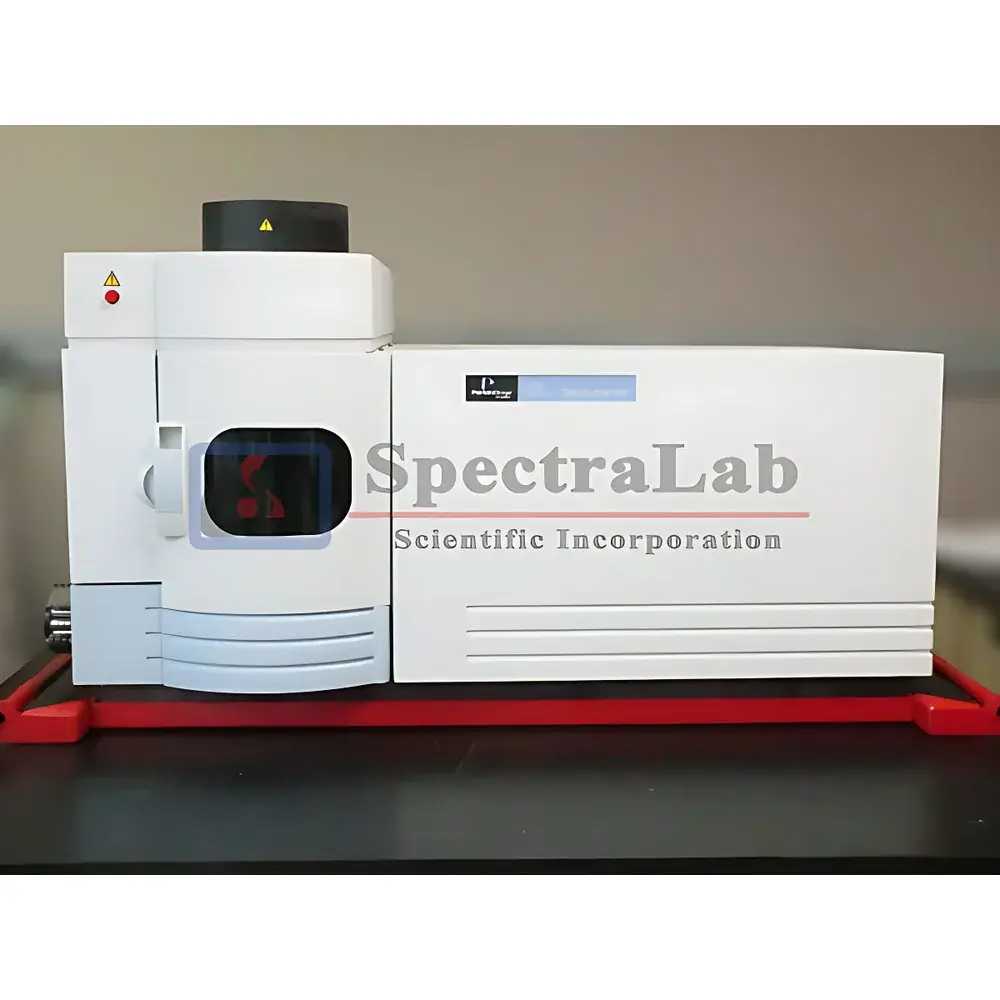
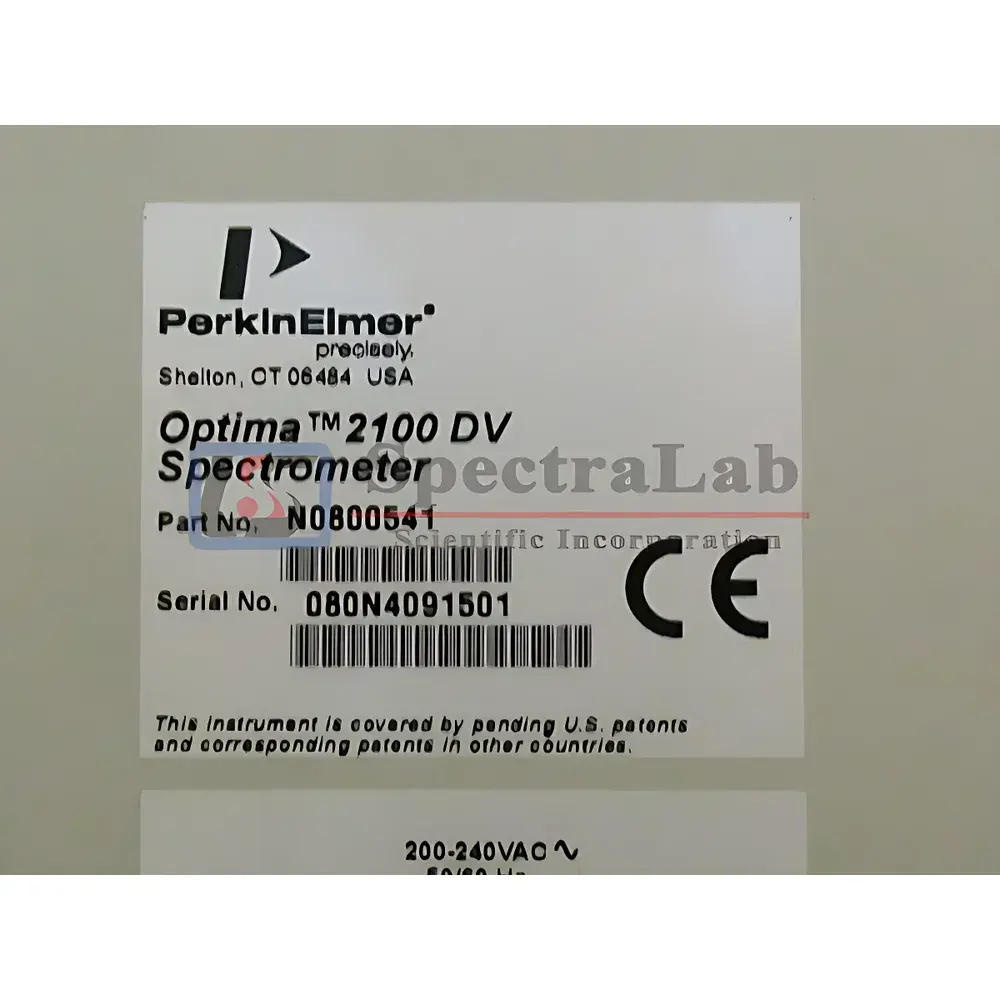
PerkinElmer Optima 2100 DV Inductively Coupled Plasma Optical Emission Spectrometer (ICP-OES)
| Brand | PerkinElmer |
|---|---|
| Origin | Canada |
| Model | Optima 2100 DV |
| Product Category | Spectroscopy |
| Operational Age | 4 years |
| Warranty | 6 months |
| Detection Limit | 0.1–1 ppb for most elements |
| Wavelength Range | 160–900 nm |
| Resolution | <0.003 nm at 200 nm, <0.007 nm at 450 nm |
| Stability | RSD <1% over 1 hour |
| Precision | RSD ≤0.5% |
| RF Frequency | 40.68 MHz |
| Sample Introduction | Dual-view axial/lateral observation with air-cut torch interface and Smart Rinse software |
| Software Platform | WinLab 32 (Windows XP-based) with audit trail, data immutability, and multivariate spectral fitting (MSF) |
Overview
The PerkinElmer Optima 2100 DV is a benchtop inductively coupled plasma optical emission spectrometer (ICP-OES) engineered for high-precision elemental analysis across environmental, clinical, geological, and industrial laboratories. It operates on the fundamental principle of plasma excitation: liquid samples are nebulized into an argon-supported 40.68 MHz ICP torch, where atoms and ions are thermally excited to emit element-specific photons. These emissions are dispersed via a high-resolution echelle grating spectrometer and detected by a solid-state CCD array, enabling simultaneous full-spectrum acquisition from 160 nm to 900 nm. Its dual-view optical path—capable of both axial and radial observation within a single run—provides analytical flexibility without hardware reconfiguration. The system’s compact architecture integrates a solid-state RF generator, temperature-stabilized sample introduction, and intelligent software-driven optimization, making it suitable for regulated environments requiring trace-level quantification and long-term method robustness.
Key Features
- Dual-view ICP-OES optics with automated air-cut interface to suppress tail-flame emission and minimize spectral interferences during axial observation.
- Temperature-controlled sample introduction system featuring HF-resistant sapphire nebulizer and Ryton™ Scott-type spray chamber, ensuring stable aerosol generation for high-salt and hydrofluoric acid matrices.
- Modular electronics architecture with distributed microprocessors for independent control of RF power, gas flow, detector integration, and optical alignment—reducing single-point failure risk and enhancing mean time between failures (MTBF).
- High-accuracy mass flow controllers (MFCs) for nebulizer gas, offering 0.01 L/min resolution and dynamic adjustment per sample matrix to maintain optimal plasma loading and signal stability.
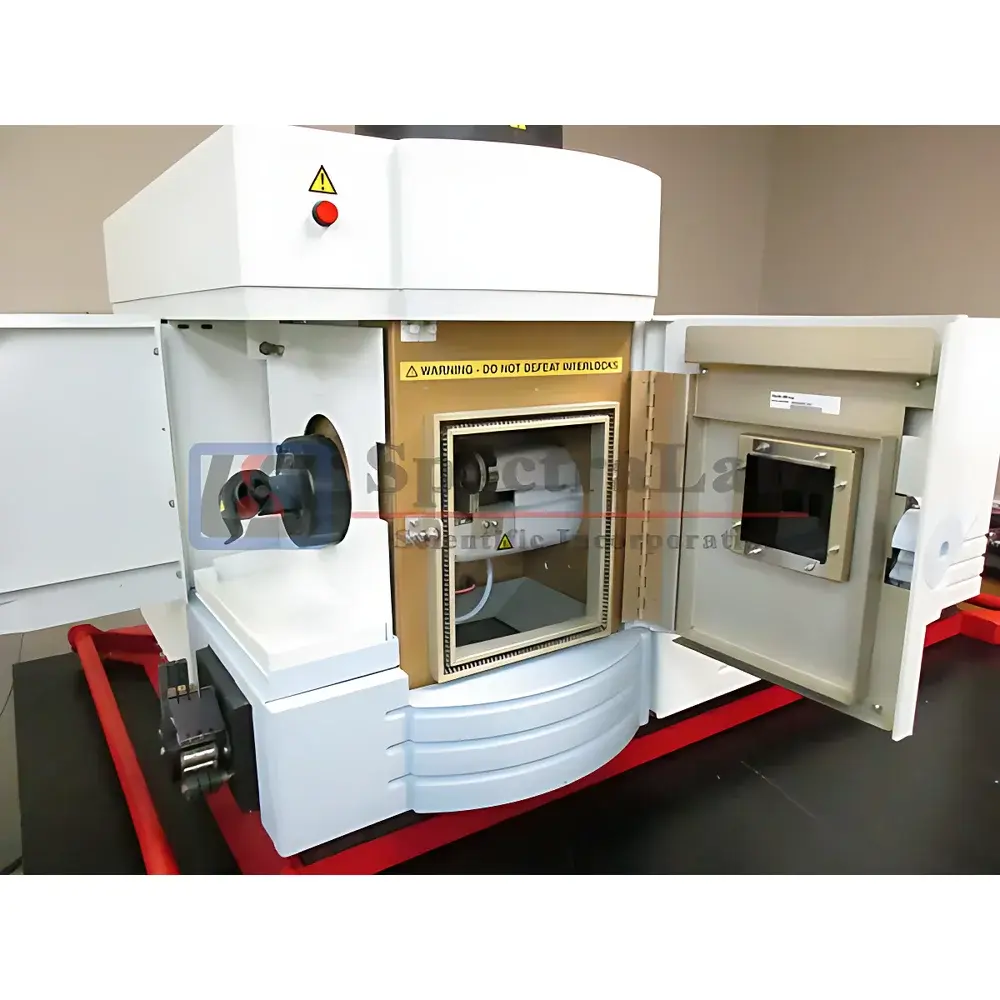
- One-minute tool-free disassembly of the central tube and spray chamber via bayonet-style fittings and dual-access front panel—facilitating rapid cleaning, maintenance, and method switching without compromising RF shielding integrity.
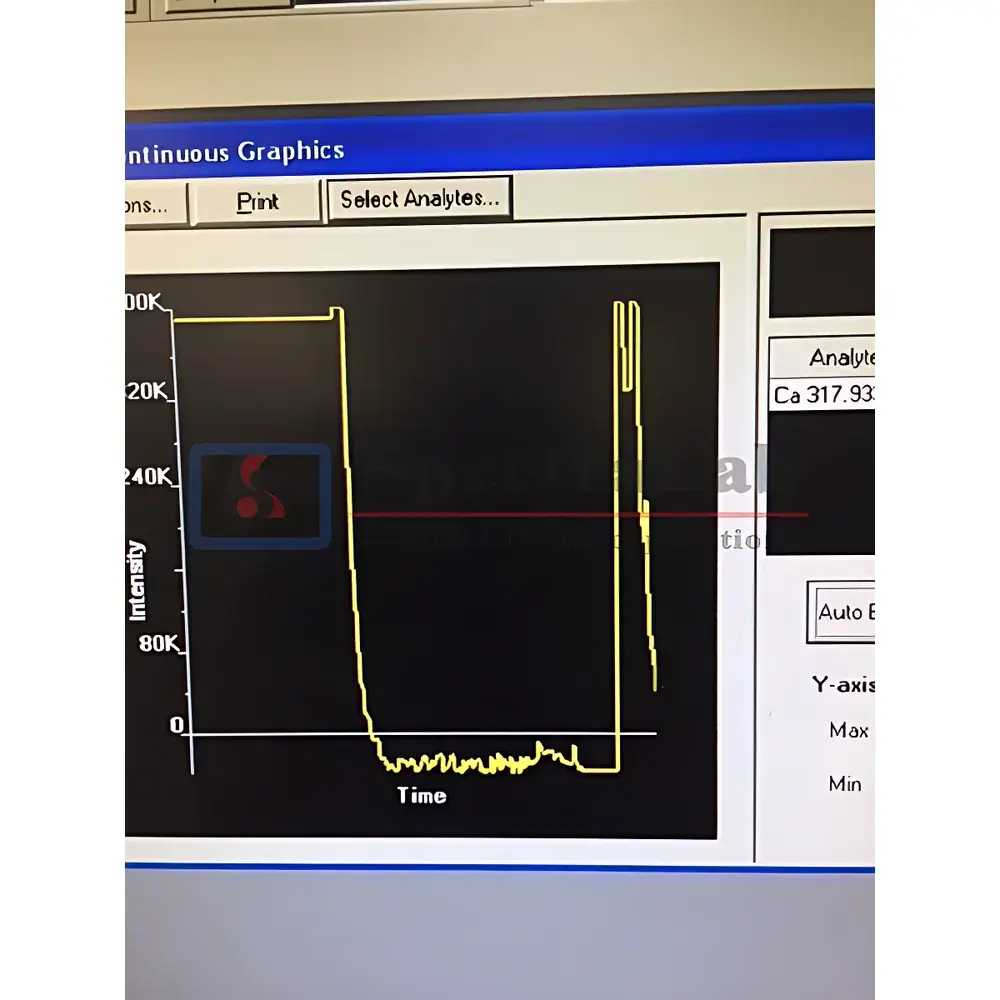
- Smart Rinse algorithm dynamically calculates inter-sample rinse duration based on previous signal decay profiles, minimizing carryover while optimizing throughput.
Sample Compatibility & Compliance
The Optima 2100 DV accommodates aqueous solutions, digested solids, and diluted organic extracts with minimal pretreatment. Its HF-resistant sample introduction enables direct analysis of fluosilicic acid digests, borosilicate glass leachates, and semiconductor process chemicals—applications commonly governed by ASTM D1976, ISO 11885, and EPA Method 200.7. The instrument meets electromagnetic compatibility requirements per CISPR 11 and features RF leakage below 0.1 mW/cm² at 5 cm—well within ICNIRP occupational exposure limits. Data integrity complies with GLP and GMP principles: WinLab 32 enforces write-once data storage, user-authenticated access control, and timestamped audit trails for all parameter changes and report generations—fully aligned with FDA 21 CFR Part 11 electronic record requirements.
Software & Data Management
WinLab 32 is a Windows XP–based platform designed for multi-user laboratory environments. It supports concurrent method development, real-time diagnostics, and offline simulation—enabling method validation without instrument occupancy. The software implements multivariate spectral fitting (MSF), a proprietary chemometric algorithm that deconvolves overlapping emission lines using reference spectra and linear regression modeling—critical for analyzing complex matrices such as wastewater sludge or alloy digests. A validated library of over 50,000 emission lines supports qualitative screening and semi-quantitative survey scans. All raw spectral data are stored in immutable binary format; modifications to calibration curves or integration windows are logged with operator ID, timestamp, and reason code—ensuring full traceability during regulatory audits.
Applications
This instrument is routinely deployed in environmental testing labs for compliance monitoring under US EPA programs (e.g., NPDES permits), in metallurgical QA/QC for alloy certification (ASTM E3061), and in pharmaceutical manufacturing for elemental impurity screening per ICH Q3D guidelines. Its sub-part-per-trillion detection capability for transition metals—particularly Cr, Ni, Cu, Zn, and Pb—supports cleanroom water monitoring and catalyst residue analysis. When interfaced with a flow injection hydride generation system (FIAS), the Optima 2100 DV extends into speciation analysis, enabling differentiation of As(III)/As(V) or Se(IV)/Se(VI) oxidation states—a capability referenced in ISO 17294-2 for drinking water assessment.
FAQ
Is this unit certified for regulatory use in GLP or GMP environments?
Yes—the WinLab 32 software provides electronic signature support, audit trail functionality, and data immutability compliant with FDA 21 CFR Part 11 and EU Annex 11 requirements.
What maintenance documentation accompanies the instrument?
A complete service history log, original factory calibration certificates, and recent performance verification reports (including RSD, DL, and wavelength accuracy tests) are provided with transfer.
Can the system be upgraded to support newer operating systems?
While WinLab 32 is native to Windows XP, virtualization solutions compliant with ISO/IEC 17025 IT infrastructure guidelines may be implemented under controlled validation protocols.
Does the 6-month warranty cover RF generator and detector replacement?
Yes—the warranty includes parts and labor for all core subsystems, including the solid-state RF generator, CCD detector assembly, and pneumatic control modules.
Are application notes and method templates included?
A full set of PerkinElmer-validated methods—including EPA 200.7, ASTM D5673, and ISO 11885 workflows—is delivered with instrument handover, along with SOP templates for routine operation and preventive maintenance.