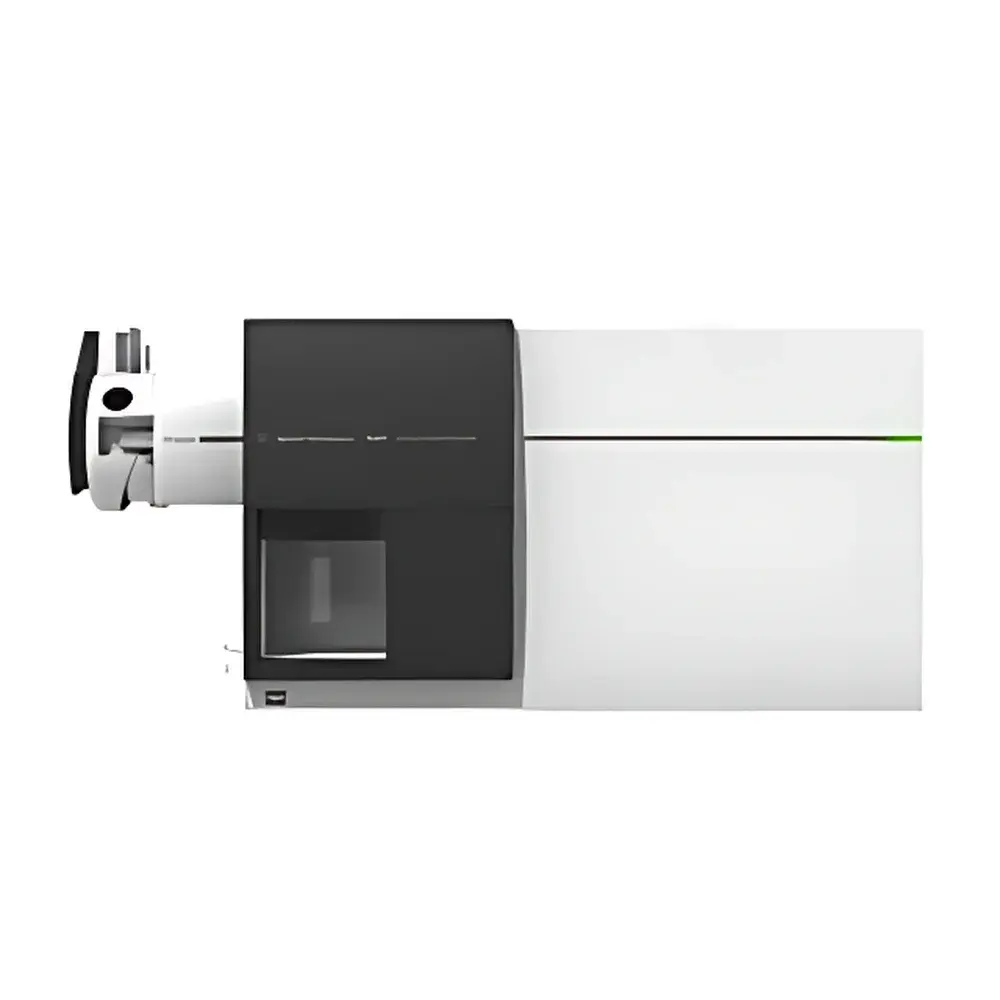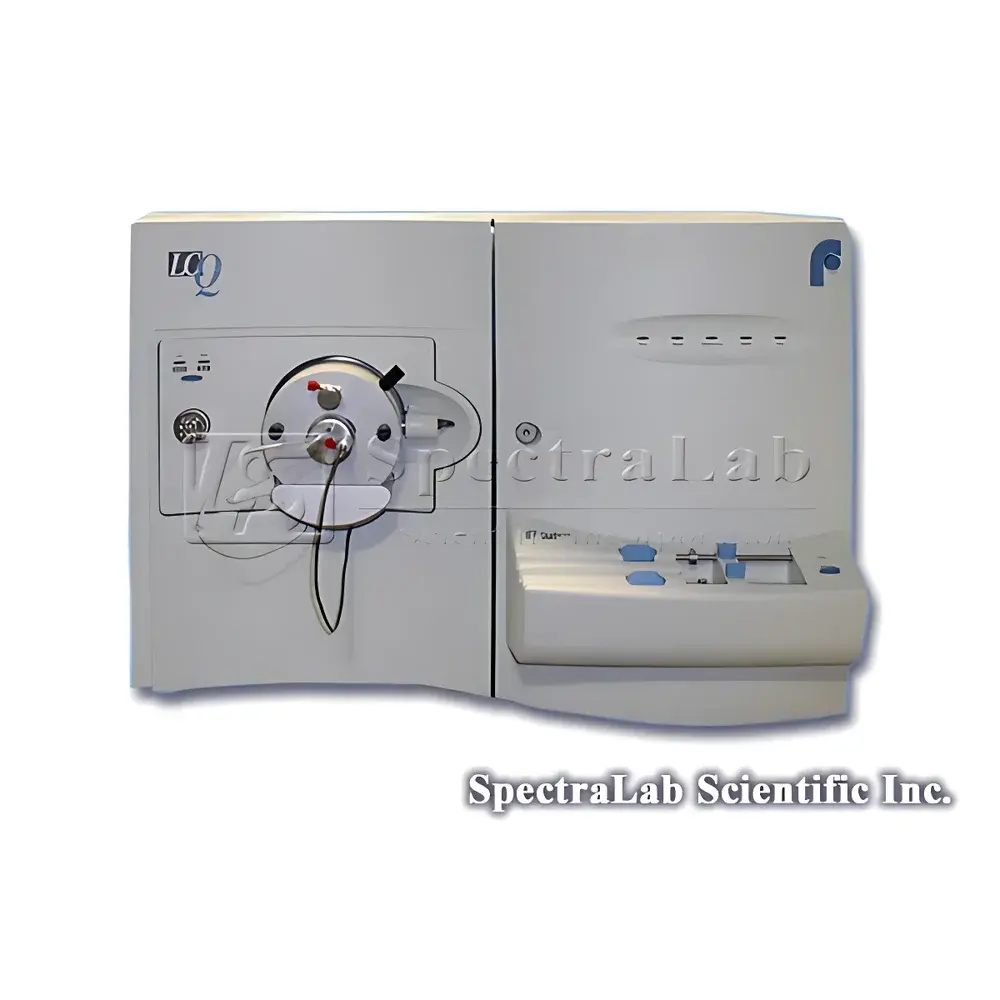
Thermo Fisher LCQ Ion Trap Mass Spectrometer (Refurbished)
| Brand | Thermo Fisher |
|---|---|
| Origin | USA |
| Manufacturer Type | Authorized Distributor |
| Origin Category | Imported |
| Model | LCQ |
| Product Category | Mass Spectrometer |
| Usage Duration | 4 years |
| Warranty Period | 6 months |
| Instrument Model | LCQ |
| Price Range | USD 6,800 – 13,600 (FOB) |
Overview
The Thermo Fisher LCQ Ion Trap Mass Spectrometer is a benchtop electrospray ionization (ESI) and atmospheric pressure chemical ionization (APCI) mass spectrometer engineered for high-sensitivity, data-dependent MSn analysis in complex mixture characterization. Built around a three-dimensional quadrupole ion trap architecture, the LCQ platform enables sequential fragmentation (up to MS3) with unit-mass resolution, dynamic range exceeding 4 orders of magnitude, and robust performance in both positive- and negative-ion modes. Designed for integration with HPLC systems—including Thermo’s Surveyor LC platforms—the instrument delivers reliable structural elucidation, peptide sequencing, metabolite identification, and impurity profiling in pharmaceutical, academic, and environmental laboratories. This refurbished unit has undergone full functional validation at SpectraLab Scientific’s ISO 9001-certified refurbishment facility, including vacuum integrity testing, mass calibration verification across m/z 50–2000, ESI source optimization, and detector gain assessment. All critical subsystems—including RF drive electronics, ion optics, and scan control firmware—have been inspected, cleaned, and calibrated per Thermo Fisher service protocols.
Key Features
- Three-dimensional ion trap geometry enabling efficient ion storage, ejection, and resonant excitation for controlled MSn experiments
- Dual ionization sources: Electrospray Ionization (ESI) and Atmospheric Pressure Chemical Ionization (APCI), each with independent temperature and gas flow control
- Mass range: m/z 50–2000 with <±0.2 Da mass accuracy (calibrated with standard tuning mix)
- Scan speed up to 10,000 Da/sec in full-scan mode; capable of >10 MS/MS events per second in data-dependent acquisition
- Integrated Xcalibur™ 1.4–2.0 software suite (licensed, pre-installed) supporting method development, real-time spectral acquisition, and automated peak detection
- Refurbished with replacement of consumable components: ion transfer capillary, source gaskets, lens assemblies, and detector filament (where applicable)
- Full diagnostic log review performed; system stability confirmed via 24-hour continuous operation test under nominal conditions
Sample Compatibility & Compliance
The LCQ accommodates liquid-phase samples introduced via standard HPLC interfaces (e.g., Thermo Surveyor, Agilent 1100/1200, Waters Alliance), with compatibility extending to microflow and nanoflow configurations using appropriate splitter or nano-ESI sources. It supports common mobile phases (water/acetonitrile/formic acid, water/methanol/ammonium acetate) and tolerates moderate levels of buffer salts (<50 mM ammonium acetate, <20 mM formic acid). The instrument meets essential electromagnetic compatibility (EMC) requirements per IEC 61326-1 and operates within Class II laser safety standards (IEC 60825-1) for its internal optical alignment aids. While not validated for GMP production environments, its data acquisition and processing workflows comply with GLP documentation standards, and Xcalibur audit trails support 21 CFR Part 11 readiness when deployed with appropriate IT controls (user authentication, electronic signatures, and secure archive configuration).
Software & Data Management
Pre-installed and licensed Xcalibur™ software (v1.4–2.0) provides complete instrument control, real-time spectral visualization, and post-run processing including extracted ion chromatograms (XIC), retention time alignment, and library matching against NIST/EPA/ Wiley spectral databases. Raw data files (.raw) are fully compatible with third-party tools such as Proteome Discoverer™ (for proteomics), Compound Discoverer™ (for small-molecule ID), and open-source platforms like MZmine 3 and Skyline. System logs record all acquisition parameters, calibration events, and user actions with timestamps. Data export supports .mzXML, .mgf, and .csv formats for interoperability with LIMS and statistical analysis pipelines. Backup images of the OS and application environment are included on delivery.
Applications
- Peptide mapping and post-translational modification (PTM) analysis in bottom-up proteomics workflows
- Metabolite identification in ADME/Tox studies using in vitro liver microsome or hepatocyte incubations
- Impurity and degradation product characterization in API stability batches (per ICH Q3B guidelines)
- Small-molecule confirmation in environmental water analysis (e.g., pesticides, pharmaceutical residues)
- Method development support for regulatory submissions requiring structural confirmation (e.g., FDA IND filings, EMA scientific advice)
- Teaching and method transfer in university core facilities where cost-effective, proven MSn capability is required
FAQ
Is this unit eligible for extended warranty or service contracts?
Yes—SpectraLab Scientific offers optional 12- or 24-month extended service agreements covering parts, labor, and remote diagnostics.
Does the system include an HPLC module?
No—the LCQ is a standalone mass spectrometer; HPLC modules (e.g., Thermo Surveyor MS Pump, AS Autosampler) are available separately and can be configured for seamless integration.
What documentation accompanies the instrument?
A complete refurbishment report, calibration certificate, Xcalibur license key, original Thermo service manuals (digital), and a traceable chain-of-custody log are provided.
Can the LCQ be upgraded to support modern data systems?
While hardware upgrades are limited due to architectural constraints, software-level enhancements—including spectral deconvolution algorithms and improved database search engines—are supported through Xcalibur patch updates.
Is installation and qualification support available?
Yes—on-site IQ/OQ support (including protocol generation, execution, and report delivery) is offered globally, compliant with ISO/IEC 17025 and ASTM E2500-15 guidance.
Related Products