
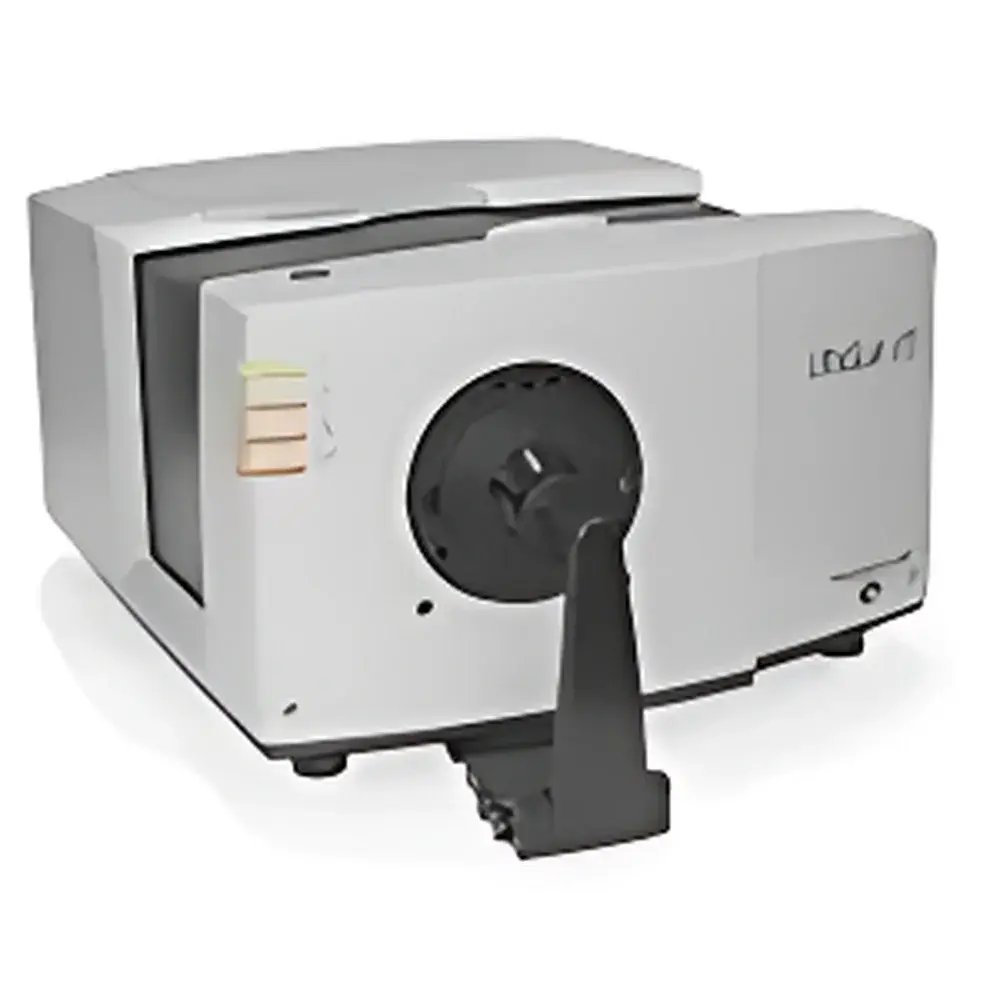
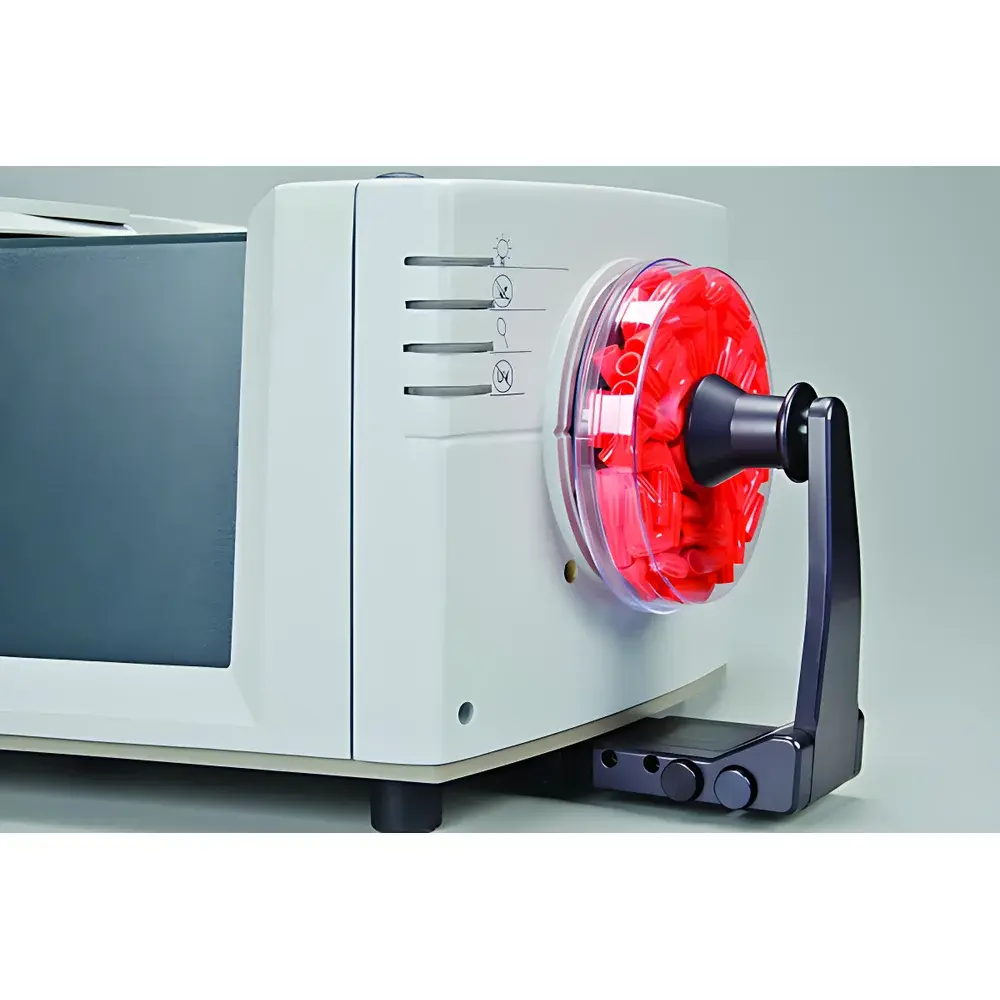
HunterLab UltraScan VIS Colorimeter, Whiteness & Yellowness Index Analyzer
| Brand | HunterLab |
|---|---|
| Origin | USA |
| Model | UltraScan VIS |
| Instrument Type | Benchtop |
| Optical Geometry | d/8° Integrating Sphere |
| Light Source | Pulsed Xenon Lamp (D65 Simulation) |
| Spectral Range | 360–780 nm |
| Repeatability | < 0.03 ΔE*ab (std dev) |
| Sample Types | Opaque, Transparent & Translucent Solids and Liquids |
| Measurement Modes | Specular Component Included (SCI) / Specular Component Excluded (SCE) |
| Aperture Sizes | 25 mm & 9.5 mm |
| Compliance | CIE No. 15:2018, ISO 7724-1, ASTM E308, USP <1061>, FDA 21 CFR Part 11 (via EasyMatch QC software) |
Overview
The HunterLab UltraScan VIS is a high-precision benchtop spectrophotometer engineered for quantitative color, whiteness, yellowness index, and haze measurement across the full CIE-recommended visible spectrum (360–780 nm). Utilizing dual-beam silicon photodiode array detection and pulsed xenon illumination calibrated to simulate the CIE Standard Illuminant D65, the instrument delivers traceable, reproducible spectral data under both SCI (total reflectance) and SCE (surface reflectance) geometries. Its d/8° integrating sphere optical architecture ensures uniform illumination and collection of diffusely reflected or transmitted light—critical for accurate characterization of scattering materials such as plastics, textiles, coatings, and turbid liquids. Designed for laboratory-grade consistency in regulated environments, the UltraScan VIS meets foundational metrological requirements outlined in ISO 7724-1, ASTM E308, and CIE Publication 15:2018, supporting compliance with GLP, GMP, and quality audit frameworks.
Key Features
- Dual-beam photodiode array optics with real-time reference beam correction at every wavelength point, minimizing drift and enhancing long-term stability.
- Pulsed xenon lamp with >1 million flashes lifetime—providing stable D65-spectrum output without warm-up delay or thermal shift.
- Two interchangeable apertures (25 mm and 9.5 mm) optimized for large-area solids (e.g., tiles, panels) and small-volume liquids or powders.
- Ergonomic sample stage with modular fixtures accommodating bottles, Petri dishes, cuvettes, films, fibers, and irregularly shaped specimens.
- Integrated UV-enhanced measurement capability down to 360 nm enables detection of optical brighteners and fluorescent whitening agents (FWAs) in paper, detergents, and textiles.
- Robust mechanical construction: stainless-steel fasteners, vibration-damped optical platform, and anti-reflection-coated sphere interior minimize stray light and thermal distortion.
- Intuitive front-panel interface with status LEDs indicating mode selection (SCI/SCE), aperture size, and measurement readiness.
Sample Compatibility & Compliance
The UltraScan VIS supports a broad range of physical forms—including opaque solids (paint chips, ceramic tiles, metal surfaces), translucent polymers (bottle preforms, automotive glass), transparent liquids (juices, milk, solvents), and semi-crystalline materials (silica gels, pharmaceutical suspensions). Its open-top transmission port accommodates oversized samples up to 50 mm in height, while optional accessories include liquid holders, powder cells, haze kits, and spherical sample cups. All measurements are traceable to NIST-traceable standards; built-in calibration verification uses certified white tile and neutral density filters. The system complies with ISO 7724-1 for colorimetric instrumentation, ASTM D1003 for haze, and USP for pharmaceutical appearance testing. When paired with EasyMatch QC software, audit trails, electronic signatures, and 21 CFR Part 11–compliant data handling are fully enabled.
Software & Data Management
EasyMatch QC is the native software platform for the UltraScan VIS, offering method-driven workflows, customizable pass/fail tolerances, statistical process control (SPC) charts, and multi-instrument fleet management. It supports automated report generation compliant with ISO/IEC 17025 documentation requirements and integrates seamlessly with LIMS and ERP systems via ODBC and CSV export. Raw spectral data (10 nm intervals) is stored in proprietary .qtx format with embedded metadata—including date/time stamp, operator ID, instrument serial number, calibration history, and environmental conditions (optional ambient sensor integration). Version-controlled method libraries ensure consistent application across shifts and sites, while role-based user permissions enforce procedural integrity in regulated manufacturing.
Applications
The UltraScan VIS serves as a primary color measurement tool in R&D laboratories and QC departments across industries including paints & coatings (color matching of pigments and binders), food & beverage (whiteness of dairy products, yellowness index of citrus juices), pharmaceuticals (appearance consistency of tablets and excipients), packaging (transmission haze of PET bottles, color uniformity of laminated films), and textiles (batch-to-batch shade control of dyed fabrics). Its ability to quantify fluorescence makes it indispensable for evaluating optical brighteners in paper pulp and detergent formulations. In advanced materials development, it characterizes spectral transmission profiles of solar-control glazing and anti-reflective coatings, providing CIE XYZ, L*a*b*, L*C*h*, and custom indices (e.g., ASTM E313 YI, ASTM E308 WI) directly from first-principles calculations.
FAQ
What is the difference between SCI and SCE measurement modes?
SCI includes specular reflectance and measures total color appearance—including surface texture effects—ideal for product development and formulation matching. SCE excludes specular reflectance and reports only diffuse color, better representing visual perception under typical viewing conditions.
Can the UltraScan VIS measure haze and clarity?
Yes—when equipped with the optional Haze Kit and calibrated per ASTM D1003, it quantifies % haze and % clarity for transparent and translucent materials.
Is the instrument suitable for measuring fluorescent samples?
Yes—the extended 360 nm lower limit and D65-simulated xenon source enable reliable detection and quantification of UV-excited fluorescence in papers, detergents, and optical brighteners.
How often does the instrument require recalibration?
Daily verification using the supplied white calibration tile is recommended; full recalibration is typically performed annually or after mechanical shock, lamp replacement, or software updates.
Does EasyMatch QC support multi-language interfaces and regulatory reporting?
Yes—software supports English, Spanish, French, German, Chinese, and Japanese UI languages, and includes configurable templates for FDA 21 CFR Part 11, ISO 9001, and ICH Q5E audit-ready reports.





