
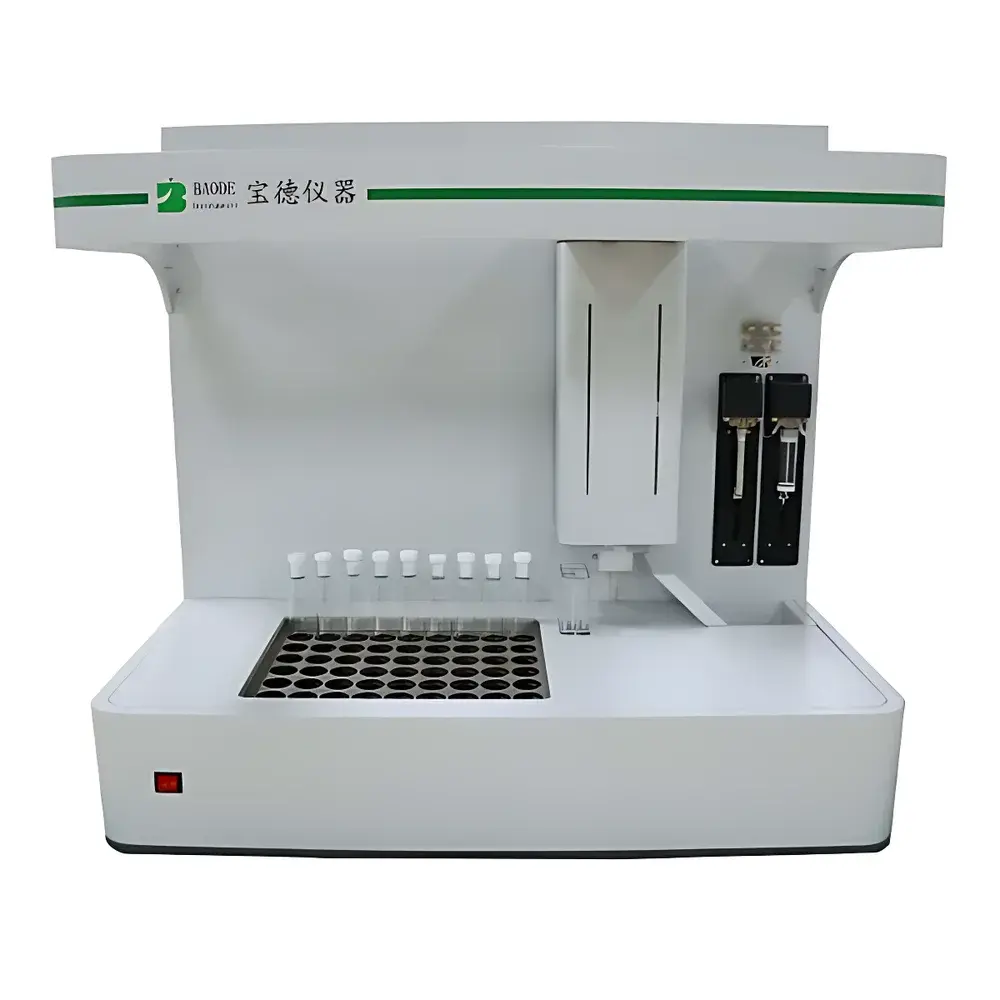
Brookfield BPN-63A Automated Total Phosphorus and Total Nitrogen Analyzer
| Brand | Brookfield |
|---|---|
| Origin | Beijing, China |
| Manufacturer Type | Original Equipment Manufacturer (OEM) |
| Product Category | Domestic |
| Model | BPN-63A |
| Measurement Parameters | Total Phosphorus (TP) and Total Nitrogen (TN) |
| Instrument Type | Laboratory-Based Analyzer |
| Measurement Principle | Spectrophotometry (UV-Vis) |
| Compliance Standards | HJ 636–2012 (Alkaline Potassium Persulfate Digestion UV Spectrophotometric Method for TN), GB 11893–1989 (Ammonium Molybdate Spectrophotometric Method for TP) |
| Sample Throughput | Batch Processing with Independent Digestion Zones |
| Digestion System | Multi-position High-Pressure Sealed Micro-Digestion Vessels |
| Automation Level | Full Workflow Automation (Reagent Dispensing, Digestion, Cooling, Mixing, Detection, Data Acquisition, Reporting) |
| Reagent Management | Dual Independent Peristaltic Pumps with Real-Time Level Monitoring and Low-Level Alarm Shutdown |
| Robotic Handling | Fully Enclosed Corrosion-Resistant 3-Axis Electric Manipulator with Precision Gripper for Cap Opening/Closing |
| Integration Capability | Standalone Operation or Pre-treatment Module for Coupling with Flow Injection Analysis (FIA) Systems |
Overview
The Brookfield BPN-63A Automated Total Phosphorus and Total Nitrogen Analyzer is a laboratory-grade, spectrophotometric instrument engineered for high-reproducibility quantification of total phosphorus (TP) and total nitrogen (TN) in aqueous environmental matrices. It implements two standardized optical detection methodologies: the ammonium molybdate spectrophotometric method (GB 11893–1989) for TP, and the alkaline potassium persulfate digestion–ultraviolet spectrophotometric method (HJ 636–2012) for TN. Unlike manual or semi-automated systems, the BPN-63A integrates digestion, reagent handling, thermal management, optical measurement, and data processing into a single platform—eliminating operator-induced variability while maintaining strict adherence to regulatory temperature, pressure, and timing requirements during oxidative digestion. Its dual-channel digestion architecture enables simultaneous but chemically isolated processing of TP and TN samples, preventing cross-contamination and enabling true parallel analysis without method interference.
Key Features
- Multi-zone high-pressure digestion module with individually sealed micro-digestion vessels—each rated for sustained operation at ≥121 °C and ≥0.1 MPa, fully compliant with HJ 636–2012 and GB 11893–1989 thermal protocols.
- Corrosion-resistant, fully enclosed 3-axis electric robotic arm with force-sensing gripper mechanism, capable of autonomous cap removal, resealing, and vessel positioning with ±0.1 mm repeatability.
- Dual independent peristaltic reagent delivery system—separate pumps for TP and TN reagents—ensuring zero carryover between analytical streams and eliminating cross-contamination risk.
- Real-time reagent volume monitoring via integrated capacitive level sensors; automatic assay suspension and audible/visual alert triggered when reagent levels fall below user-defined thresholds.
- Integrated cooling and homogenization station with programmable post-digestion cooldown profiles and vortex mixing prior to spectrophotometric readout.
- Modular architecture supporting standalone deployment or seamless integration as a front-end pretreatment unit for Brookfield’s FIA series analyzers—enabling hybrid workflows under GLP-compliant audit trails.
Sample Compatibility & Compliance
The BPN-63A accepts liquid samples within the standard range for environmental water analysis: surface water, groundwater, domestic wastewater, industrial effluents, and treated sewage. It accommodates sample volumes from 5 mL to 50 mL with programmable dilution capability. All digestion and detection protocols are validated against national regulatory standards: HJ 636–2012 for TN (including nitrate, nitrite, ammonia, organic-N, and suspended particulate N) and GB 11893–1989 for TP (covering dissolved, particulate, organic, and inorganic phosphorus species). The system supports full traceability per ISO/IEC 17025:2017 requirements, with electronic logs capturing timestamps, operator ID, digestion parameters, reagent lot numbers, and calibration history. Optional 21 CFR Part 11-compliant software modules provide electronic signatures, audit trail encryption, and role-based access control for regulated laboratories.
Software & Data Management
The embedded control software provides intuitive workflow configuration, method selection, and real-time status visualization—including digestion temperature/pressure curves, reagent consumption graphs, and robotic motion diagnostics. All raw absorbance data (220 nm and 275 nm for TN; 880 nm for TP) are stored in vendor-neutral CSV and XML formats. Calibration curves are generated using NIST-traceable reference standards, with linear regression statistics (R² ≥ 0.999) automatically reported. Data export supports LIMS integration via ASTM E1384-compliant HL7 or direct ODBC connectivity. Audit trails record every user action, parameter change, and instrument event with immutable timestamps—fully compatible with GLP/GMP documentation practices.
Applications
The BPN-63A is routinely deployed in municipal water quality monitoring labs, environmental protection agencies, third-party testing facilities, and industrial compliance units. Typical use cases include routine TP/TN screening of influent and effluent streams in wastewater treatment plants; nutrient load assessment in watershed studies; regulatory reporting for discharge permits (e.g., EPA NPDES); and method validation studies requiring high-throughput, low-variance results. Its ability to process up to 36 samples unattended—while maintaining inter-batch precision <3% RSD for both TP and TN—makes it suitable for high-volume environmental surveillance programs aligned with ISO 5667-3 and US EPA Method 353.2 equivalents.
FAQ
Does the BPN-63A support both TP and TN analysis in a single run?
Yes—the instrument features physically segregated digestion zones and independent reagent lines, allowing concurrent TP and TN processing without method interference.
Is method validation documentation available for regulatory submissions?
Yes—factory-installed IQ/OQ documentation, performance qualification reports, and standard operating procedures (SOPs) aligned with HJ 636 and GB 11893 are provided.
Can the system interface with existing LIMS platforms?
Yes—via configurable HL7 messaging or direct database push using industry-standard ODBC drivers.
What maintenance intervals are recommended for the robotic arm and digestion module?
Preventive maintenance is scheduled every 6 months or after 1,000 digestion cycles, including gripper calibration, seal inspection, and thermal sensor verification.
Is remote diagnostics supported?
Yes—optional secure remote access enables firmware updates, log retrieval, and real-time troubleshooting under ITAR-compliant encrypted channels.







