API OT Advanced Laser Tracker
| Brand | API |
|---|---|
| Origin | USA |
| Model | OT |
| Measurement Diameter | >120 m |
| Spatial Coordinate Accuracy | 10 ppm (2σ) |
Overview
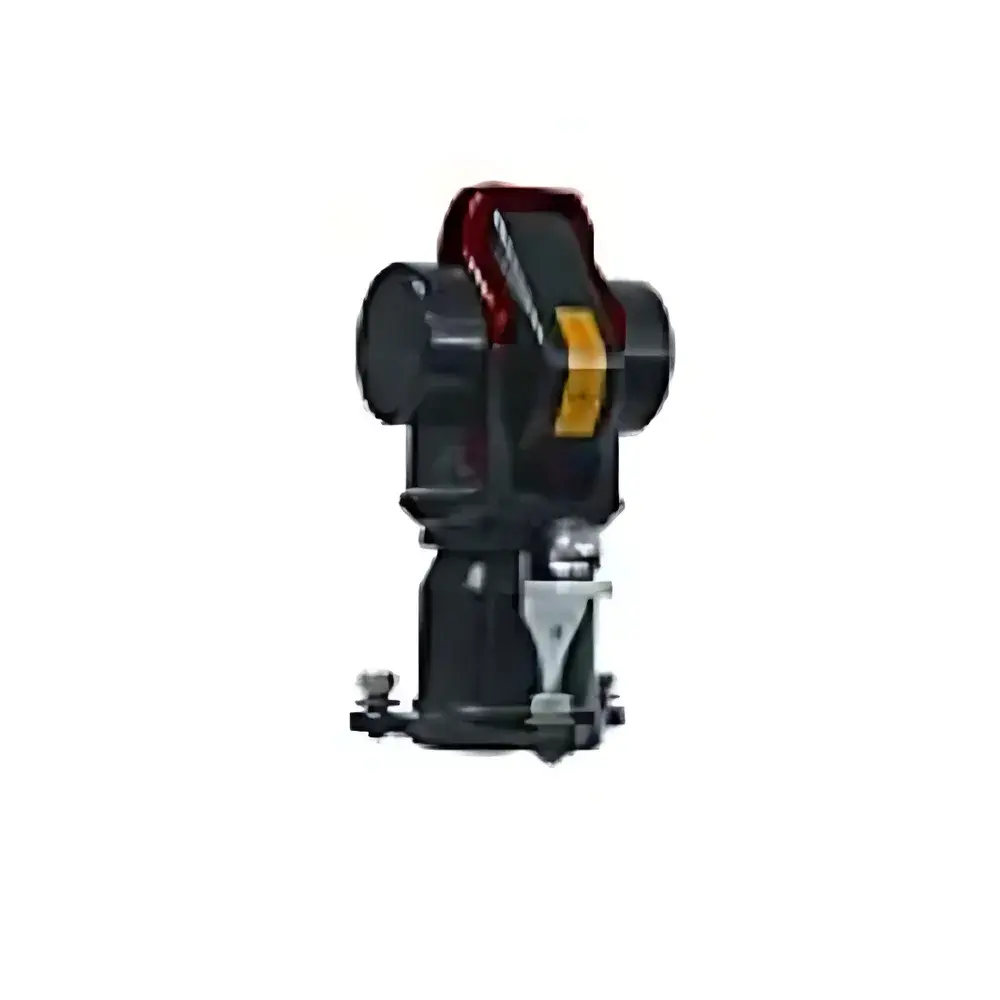
The API OT Advanced Laser Tracker is a high-precision, portable large-volume coordinate measuring system engineered for industrial metrology applications requiring traceable, real-time 3D spatial measurements over extended ranges. Based on proven laser interferometry and absolute distance measurement (ADM) principles, the OT tracker determines the 3D position of a spherical mounted retroreflector (SMR) by precisely measuring horizontal and vertical angular encoders in conjunction with a stabilized He–Ne or solid-state laser beam. Its core architecture integrates a compact, thermally stable tracking head with a dedicated controller and industry-standard metrology software—enabling deterministic uncertainty modeling, dynamic target tracking, and full compliance with ISO 10360-12 (laser trackers) and VDI/VDE 2617 Part 19 (volumetric performance testing). Designed for use in aerospace assembly jigs, automotive body-in-white verification, shipyard alignment, and precision machine tool calibration, the OT delivers metrological integrity across volumes exceeding 120 meters in diameter—without reliance on external reference networks or environmental compensation hardware beyond standard temperature and pressure inputs.
Key Features
- Proprietary Absolute Distance Metrology (ADM) engine delivering single-shot, non-resetting distance acquisition—eliminating warm-up drift and enabling immediate measurement start-up.
- Full volumetric accuracy of ≤10 ppm (2σ) across its entire operational envelope, validated per ISO 10360-12 Annex B protocols using certified artifact arrays.
- Integrated dual-mode communication architecture supporting Gigabit Ethernet and IEEE 802.11ac Wi-Fi for real-time data streaming to host PCs—compatible with both Windows-based metrology workstations and enterprise-level PLM integration via OPC UA.
- Quick-deploy mechanical interface featuring a standardized 3/8″-16 tripod mount and self-centering kinematic coupling—reducing setup time by >40% compared to legacy tracker configurations.
- Modular system design: tracking head, ruggedized controller unit, calibrated SMR set (including 0.5″, 1″, and 1.5″ diameters), transport case, and factory-validated measurement software—all supplied as a complete turnkey solution.
- Optimized for GLP/GMP environments: supports audit-trail logging, user access control, electronic signatures, and FDA 21 CFR Part 11–compliant data archiving when paired with API’s Metrology Software Suite v5.x or higher.
Sample Compatibility & Compliance
The OT system operates exclusively with NIST-traceable spherical mounted retroreflectors (SMRs) meeting ISO 10360-11 specifications for reflector geometry and surface quality. It supports all standard SMR sizes (0.5″ to 1.5″) and accommodates both manual and motorized probe extensions for hard-to-reach features. The system complies with IEC 61000-6-2 (immunity) and IEC 61000-6-4 (emissions), carries CE marking under the EU Machinery Directive 2006/42/EC and EMC Directive 2014/30/EU, and meets ANSI Z540.3 requirements for calibration traceability. Measurement reports generated through the bundled software include full uncertainty budgets aligned with GUM (JCGM 100:2008) methodology.
Software & Data Management
The OT ships with API’s Metrology Software Suite, a Windows-native application supporting real-time point cloud acquisition, best-fit geometric fitting (planes, cylinders, spheres, cones), GD&T evaluation per ASME Y14.5–2018 and ISO 1101, and automated report generation in PDF, XML, and CSV formats. All raw encoder and ADM data are stored in vendor-neutral HDF5 format with embedded metadata (timestamp, environmental conditions, operator ID, instrument serial number). Software versioning follows ISO 9001–certified development lifecycle controls; validation documentation (IQ/OQ/PQ protocols) is available upon request for regulated industries.
Applications
- Aerospace: Wing spar alignment, fuselage section mating verification, and tooling calibration for composite layup molds.
- Automotive: Body-in-white dimensional analysis, robotic cell validation, and powertrain subassembly tolerance stack-up assessment.
- Energy: Wind turbine blade root geometry inspection, nuclear containment vessel distortion monitoring, and LNG tank panel flatness verification.
- Heavy Machinery: Large gear housing bore concentricity, hydroelectric turbine runner runout mapping, and gantry crane rail straightness certification.
- Research & Standards Labs: Development of primary length standards, inter-comparison studies between laser trackers and photogrammetric systems, and uncertainty modeling benchmarking.
FAQ
What is the maximum unambiguous measurement range of the OT laser tracker?
The OT achieves continuous, single-point measurement up to 120 meters in diameter under standard atmospheric conditions (20 °C, 1013.25 hPa, 50% RH) with no line-of-sight interruptions.
Does the OT support dynamic tracking of moving targets?
Yes—the system provides real-time angular update rates up to 1000 Hz and distance sampling at 2 kHz, enabling high-fidelity motion capture of slow-moving fixtures or guided robotic arms.
Is third-party software integration supported?
The OT exposes a documented TCP/IP API and COM interface compatible with MATLAB, Python (via pywin32), and custom C#/.NET applications for automated workflow orchestration.
How is thermal drift compensated during extended measurements?
The tracking head incorporates dual-axis temperature sensors and an internal barometric pressure sensor; environmental corrections are applied in real time using the Edlén equation and manufacturer-provided refractive index models.
Can the OT be used in outdoor environments?
While rated IP54 for dust and splash resistance, outdoor deployment requires supplementary sun-shading, wind baffling, and strict adherence to ISO 10360-12 environmental monitoring protocols—particularly for measurements demanding <15 ppm uncertainty.