
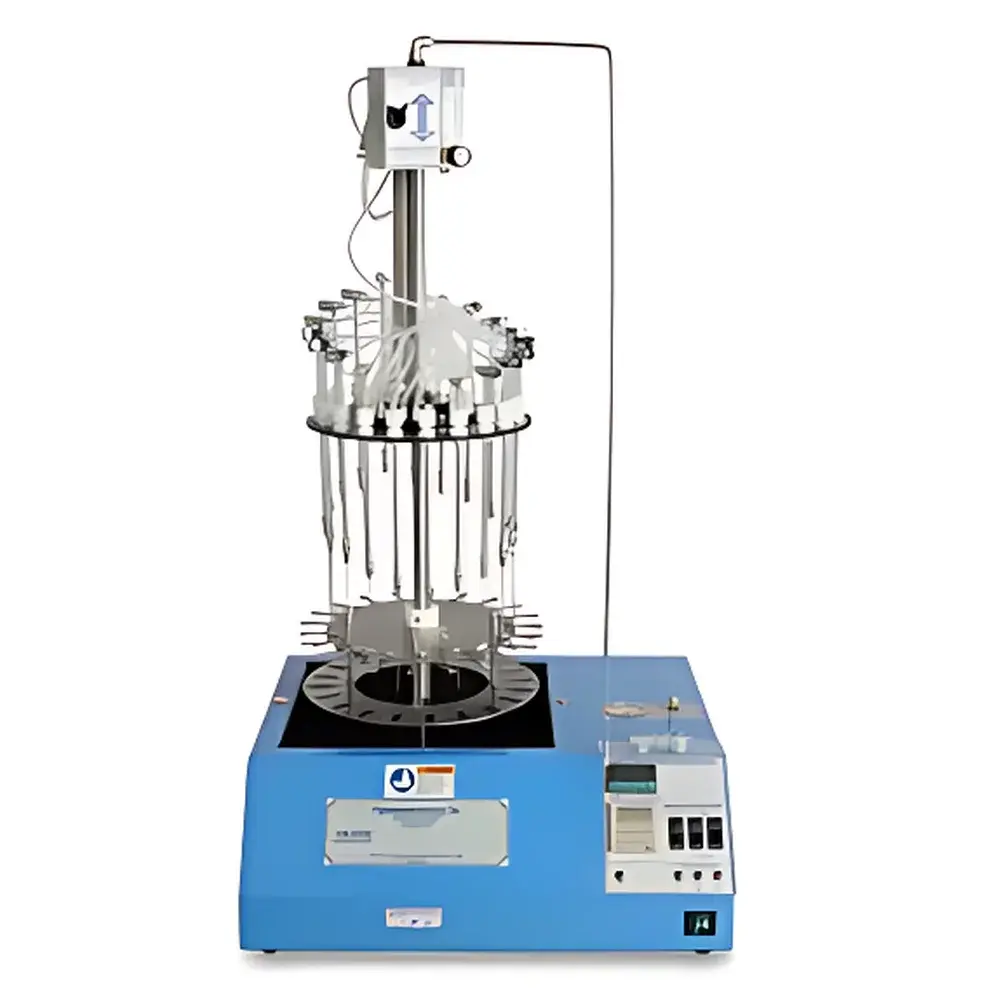
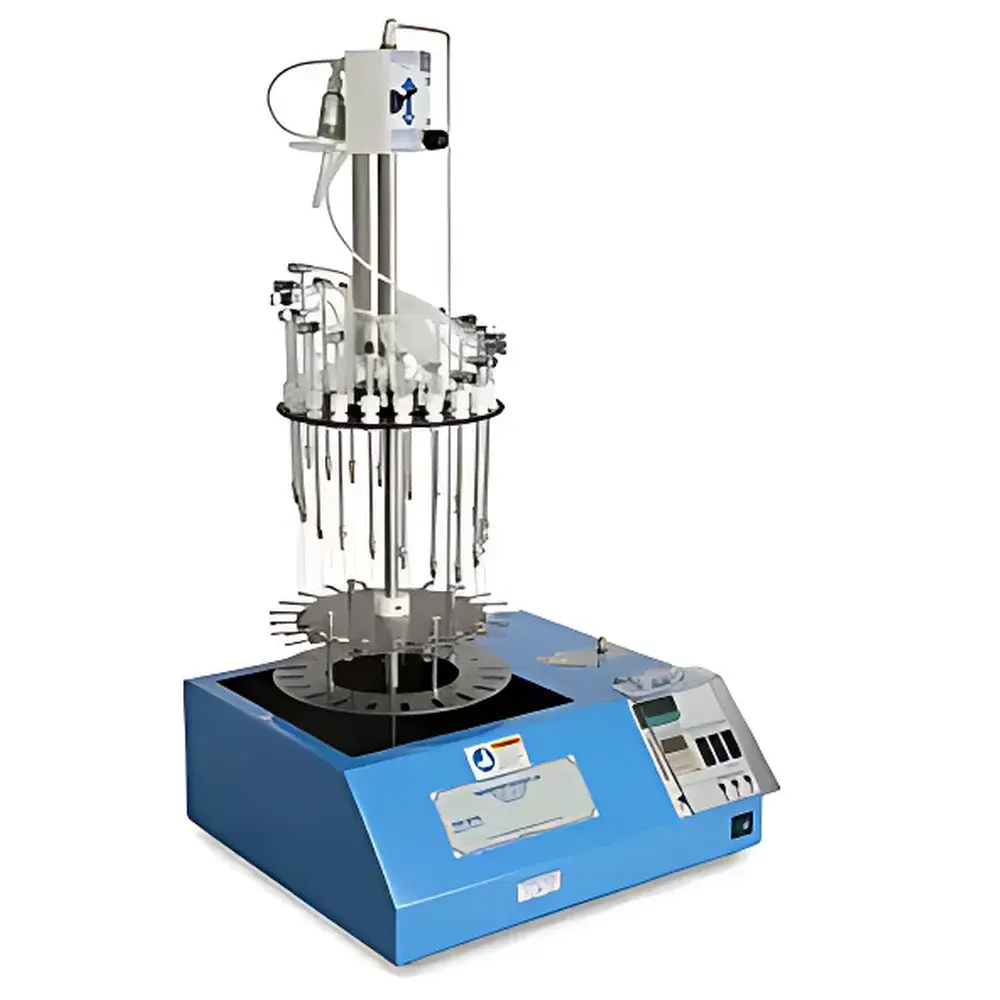
Organomation N-EVAP-20 Automated Nitrogen Evaporator
| Brand | Organomation |
|---|---|
| Origin | USA |
| Model | N-EVAP-20 Automated |
| Heating Method | Water Bath |
| Temperature Range | 30–100 °C |
| Temperature Stability | ±0.5 °C |
| Sample Capacity | 20 positions |
| Tube Diameter Compatibility | 10–30 mm (standard), optional 30–54 mm |
| Nitrogen Flow Rate | 0–20 L/min |
| Heating Power | 800 W |
| Pressure Input Range | 0–30 psig |
| Actuation | Pneumatic cylinder with regulated output (30–160 psig) |
| Needle Material | Stainless steel, 4 in × 19 gauge (102 mm × 19 ga) |
| Safety Features | High-temperature cutoff switch, acid-resistant coating (optional #RT), dual nitrogen filtration, circuit breaker, covered safety guard |
Overview
The Organomation N-EVAP-20 Automated Nitrogen Evaporator is an engineered solution for precise, reproducible solvent removal from multiple liquid samples under inert nitrogen atmosphere. Designed around a thermostatically controlled water bath and pneumatically actuated sample positioning system, it operates on the principle of gentle, directed nitrogen gas flow across the surface of each sample—accelerating evaporation while minimizing thermal stress and analyte degradation. Unlike open-vessel heating or vacuum-based concentrators, the N-EVAP-20 maintains consistent temperature uniformity (±0.5 °C) across its 20-position bath and enables independent, needle-level gas flow regulation—critical for applications involving thermolabile compounds, residual solvent analysis, or regulated environmental and pharmaceutical workflows.
Key Features
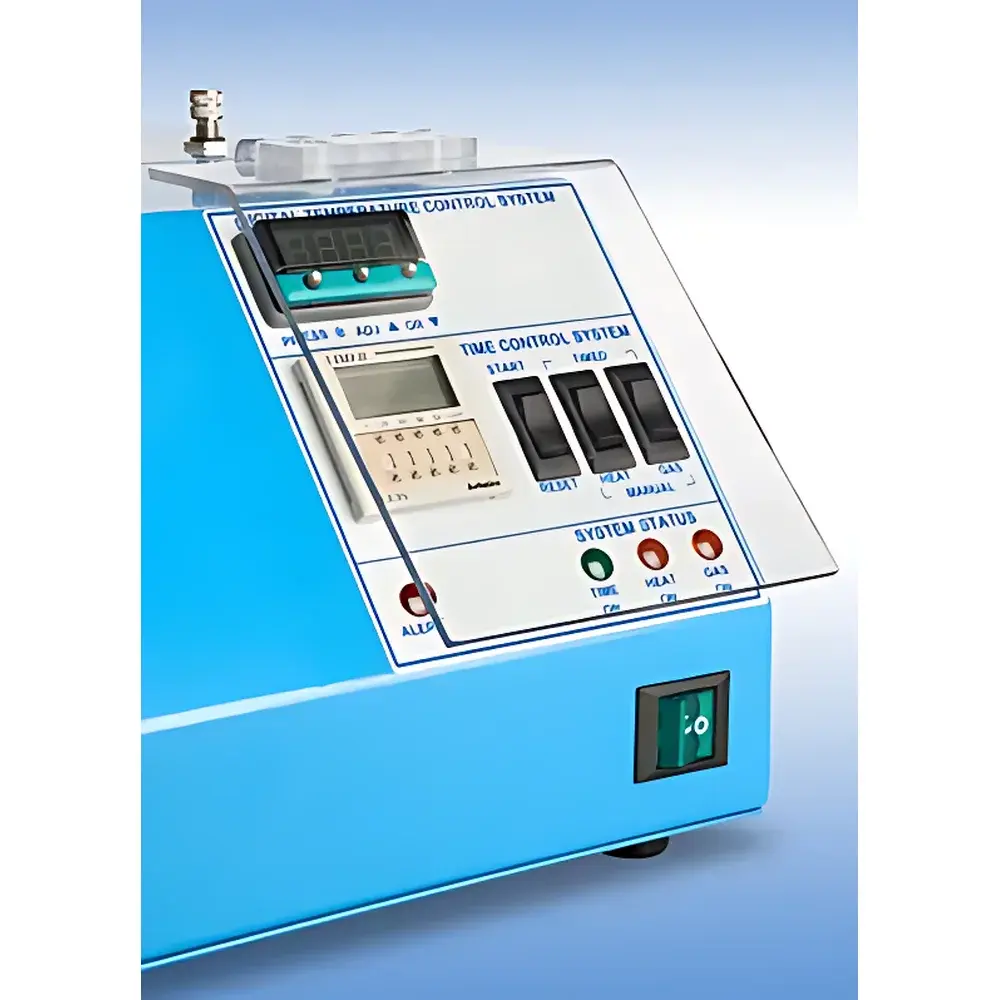
- Automated endpoint control: Programmable electronic timer initiates pneumatic lift-and-retract cycle upon completion, removing sample tubes from heat and terminating nitrogen flow—reducing over-concentration and oxidation risk.
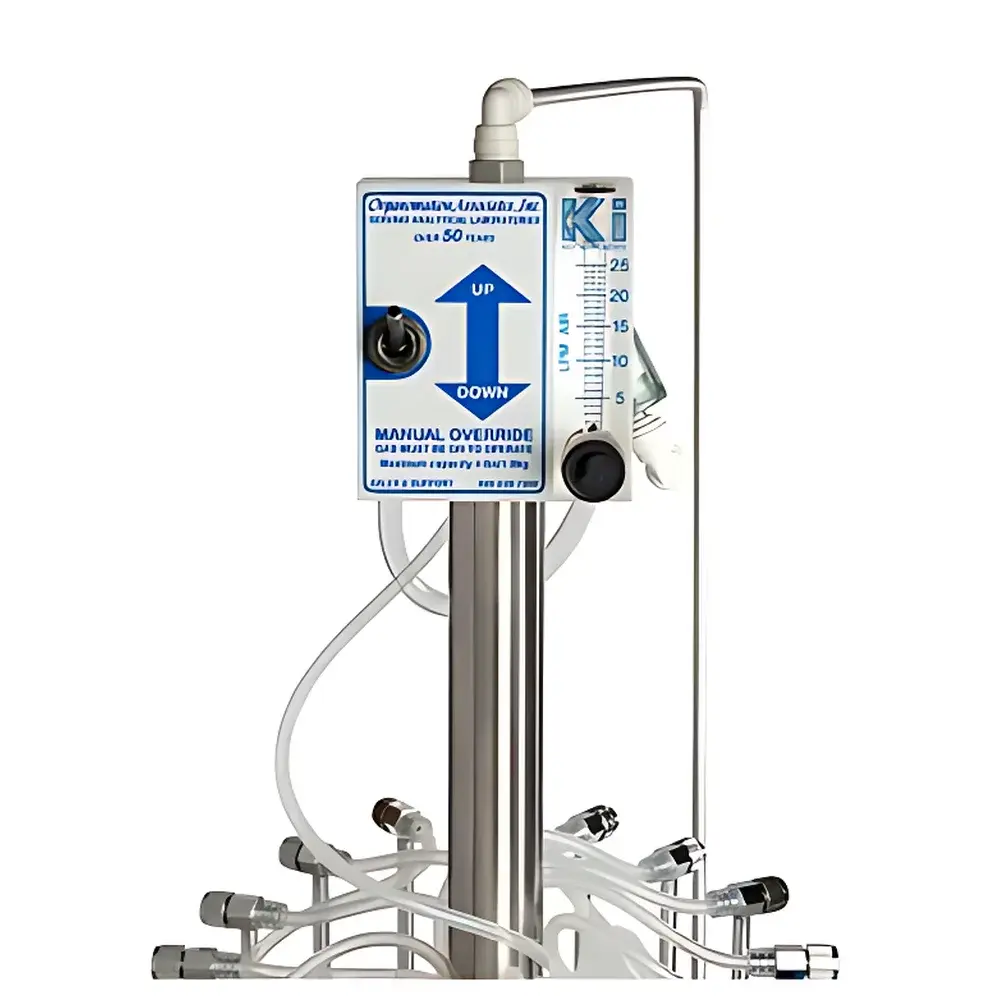
- Independent per-channel gas regulation: Precision-machined stainless-steel needles (4 in × 19 gauge) feature high-accuracy variable valves, allowing discrete flow adjustment (0–20 L/min total, distributed across positions) without cross-contamination or pressure imbalance.
- Pneumatic elevation system: Dual-action cylinder provides smooth, repeatable vertical movement of the sample tray (30–160 psig output range), synchronized with timing and temperature logic to ensure mechanical reliability over thousands of cycles.
- Digital PID temperature control: LED-display controller with ±0.5 °C stability across 30–100 °C range; integrated high-limit safety cutoff prevents uncontrolled thermal excursion.
- Robust corrosion-resistant construction: All wetted surfaces—including needle tips, manifold, and bath housing—feature optional acid-resistant coating (Part #RT); standard stainless-steel hardware resists degradation from organic solvents and acidic vapors.
- Comprehensive safety architecture: Includes covered safety guard, dual-stage nitrogen filtration (particulate + hydrocarbon), grounded circuit breaker, and pressure-regulated input (0–30 psig) compatible with standard lab nitrogen sources.
Sample Compatibility & Compliance
The N-EVAP-20 accommodates standard round-bottom test tubes (10–30 mm OD) using its fixed circular single-ring support. An optional large-bore configuration supports vessels up to 54 mm OD (e.g., 50 mL centrifuge tubes or 100 mL EPA vials), enhancing flexibility for regulatory-compliant sample prep in environmental testing (EPA Methods 505, 525.3, 8081B), pesticide residue analysis (AOAC 2007.01), and pharmaceutical impurity profiling (ICH Q2(R2)). Its closed-loop pneumatic design, traceable temperature logging capability (via optional RS232/USB interface), and configurable audit trail support alignment with GLP and GMP documentation requirements. While not inherently 21 CFR Part 11 compliant, the system’s deterministic operation, manual calibration logs, and physical access controls facilitate integration into validated laboratory workflows.
Software & Data Management
The N-EVAP-20 operates via embedded microcontroller with front-panel digital interface—no PC dependency required. Temperature setpoint, timer duration (0–999 min), and coarse flow staging are configured directly on the LED display. For laboratories requiring data capture, optional analog voltage output (0–5 V) or TTL serial communication (RS232) enables connection to LIMS or SCADA systems for time-stamped event logging (start/end, temperature deviation alerts, actuator status). All parameter changes are non-volatile and retained through power cycling. Firmware updates are performed via proprietary service utility; no user-accessible OS or network stack is present—minimizing cybersecurity exposure in regulated environments.
Applications
- Environmental analysis: Concentration of aqueous extracts prior to GC-MS detection of PAHs, PCBs, and organochlorine pesticides per EPA SW-846 protocols.
- Clinical toxicology: Parallel evaporation of serum, urine, or whole blood extracts during LC-MS/MS screening for drugs of abuse and metabolites.
- Food safety testing: Cleanup and concentration steps in multi-residue pesticide methods (QuEChERS derivatives) where matrix interference demands low-temperature, oxygen-free drying.
- Forensic chemistry: Preparation of seized drug dilutions and reference standards under chain-of-custody conditions requiring minimal handling and thermal consistency.
- Academic research: Reproducible sample preparation for stable isotope labeling experiments, where solvent carryover or analyte decomposition must be rigorously excluded.
FAQ
Is the N-EVAP-20 compatible with non-nitrogen inert gases such as argon or helium?
Yes—provided gas supply pressure remains within the specified 0–30 psig input range and filtration is appropriate for the gas type (e.g., additional moisture trap for helium). Flow calibration should be reverified when switching gases due to differing viscosity and density.
Can the unit be operated without the pneumatic lift function?
Yes—the lift mechanism can be manually disengaged via valve isolation; manual tube insertion/removal is fully supported without compromising temperature or flow control.
What maintenance intervals are recommended for long-term reliability?
Monthly inspection of needle alignment and O-ring integrity; quarterly cleaning of water bath and filtration cartridges; annual verification of temperature sensor accuracy against NIST-traceable reference thermometer.
Does Organomation provide IQ/OQ documentation packages for this model?
Yes—validated installation and operational qualification templates (including test protocols and acceptance criteria) are available upon request for GxP-regulated installations.
Is the water bath depth sufficient for full immersion of 150 mm test tubes?
The internal bath depth is 7 in (178 mm); with proper rack selection, 150 mm tubes achieve ≥85% immersion—ensuring uniform conductive heating without overflow risk under standard operating conditions.



