
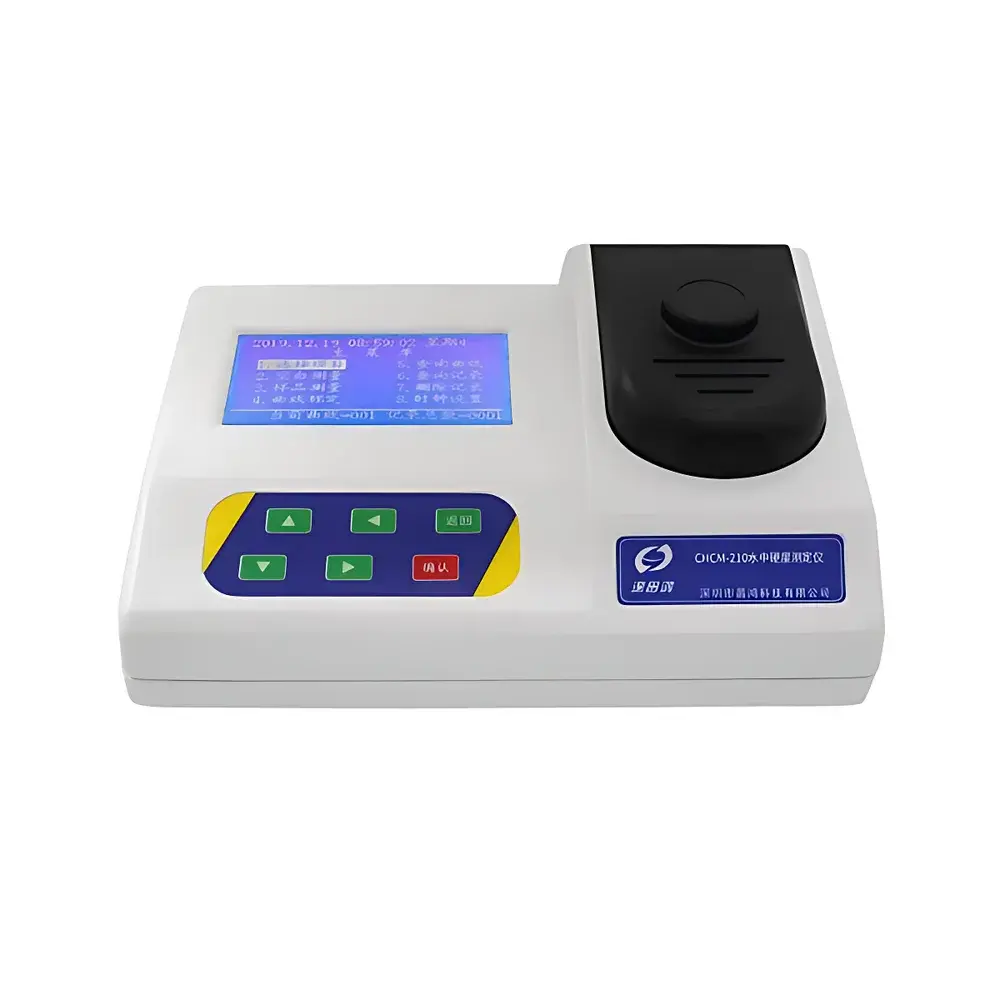
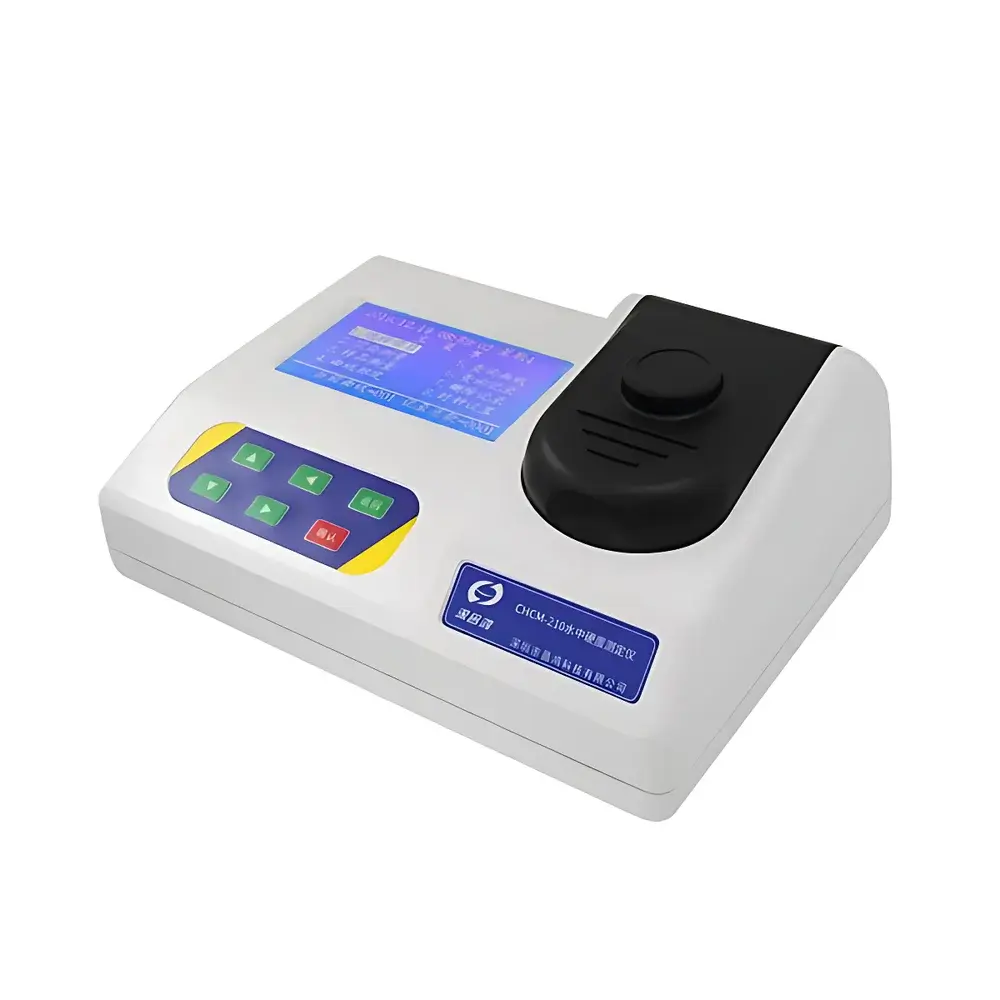
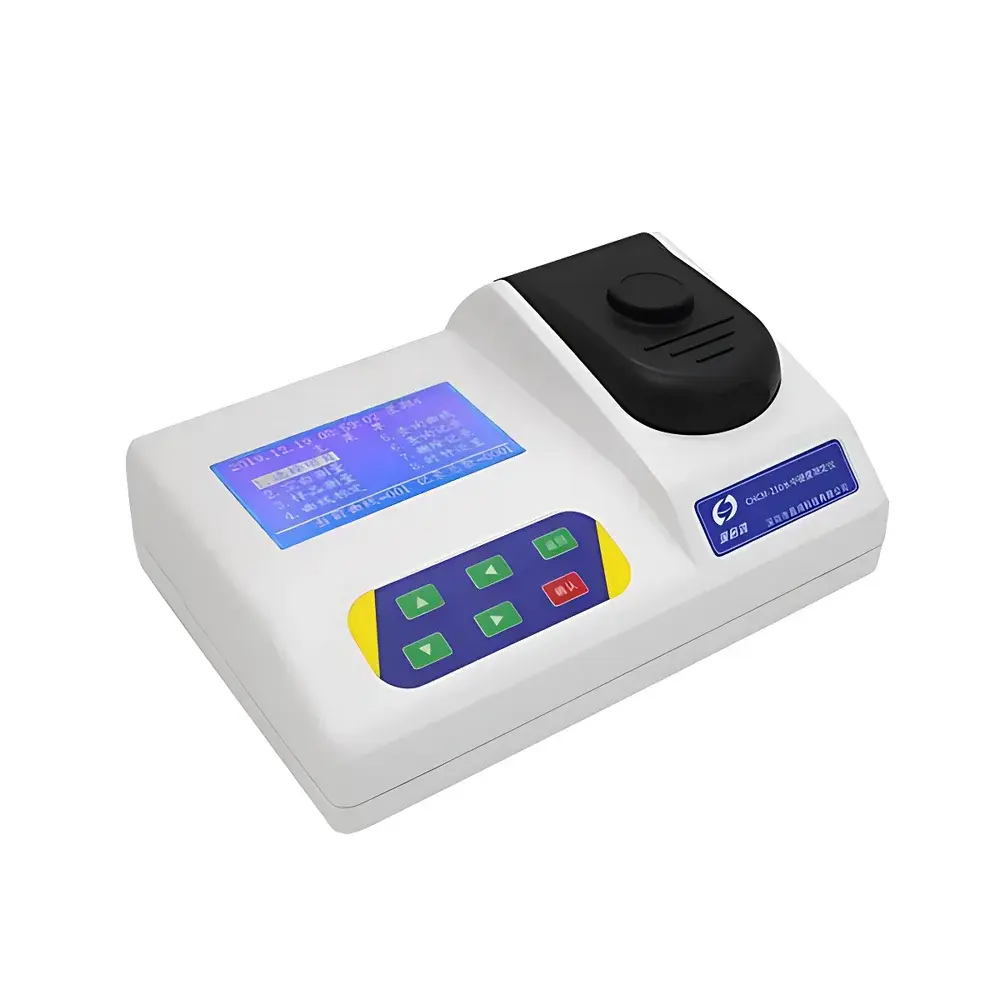
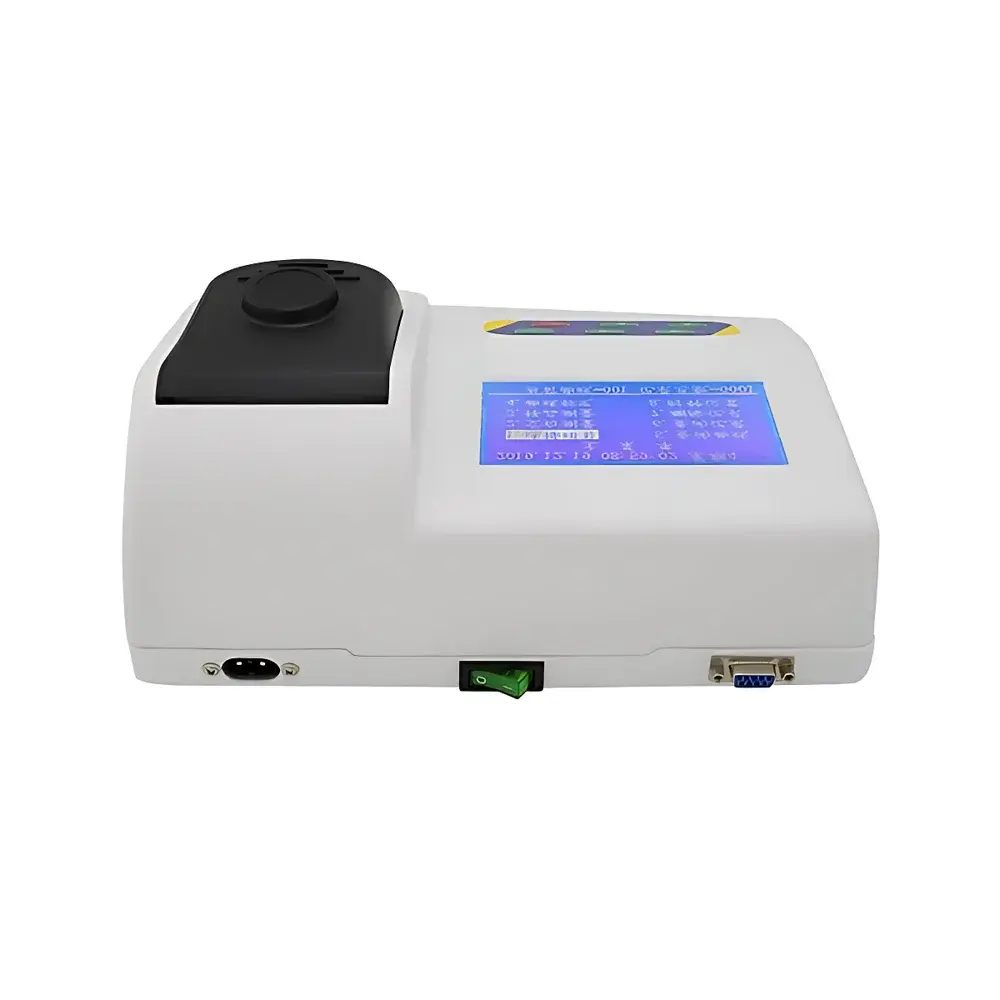
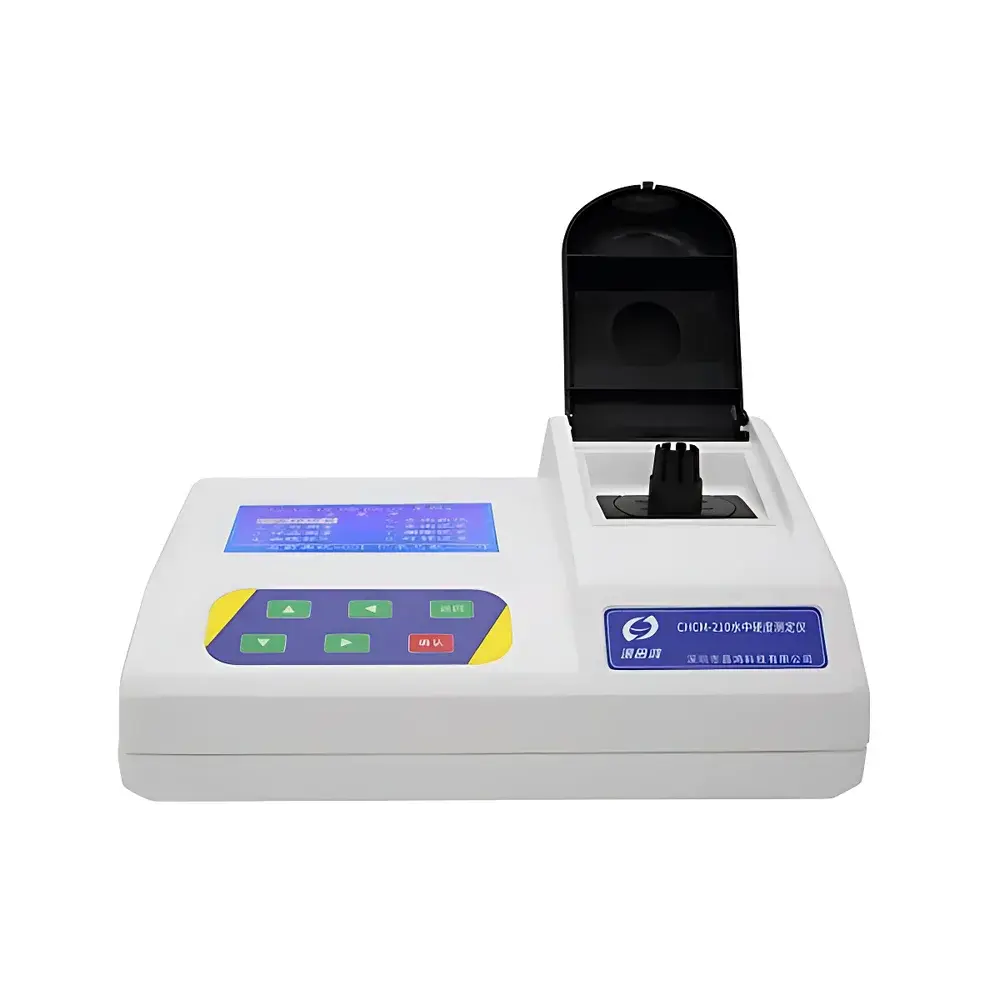
Shenchanghong CHCM-210 Total Hardness Analyzer for Water
| Brand | Shenchanghong |
|---|---|
| Origin | Guangdong, China |
| Manufacturer Type | Direct Manufacturer |
| Country of Origin | China |
| Model | CHCM-210 |
| Instrument Type | Laboratory Water Quality Analyzer |
| Measured Parameter | Total Hardness (as CaCO₃) |
| Measurement Range | 0–5.00 mg/L and 5–200 mg/L (CaCO₃ equivalent) |
| Accuracy | ±5% FS |
| Repeatability | ≤3% RSD |
| Optical Stability | ≤0.002 A/20 min |
| Dimensions (H×W×D) | 130 mm × 266 mm × 200 mm |
| Power Consumption | 30 W |
| Weight | <1 kg |
Overview
The Shenchanghong CHCM-210 Total Hardness Analyzer is a dedicated photometric benchtop instrument engineered for precise, routine quantification of total hardness in water samples—expressed as calcium carbonate (CaCO₃) equivalents. It operates on the principle of colorimetric analysis using a stable monochromatic cold light source and a high-selectivity narrow-band optical filter system. Upon addition of the standardized EDTA-based reagent (e.g., Calmagite or Eriochrome Black T), free Ca²⁺ and Mg²⁺ ions form colored complexes; the intensity of absorbance at a fixed wavelength (typically 525 nm or 620 nm, depending on indicator chemistry) is directly proportional to total hardness concentration. The integrated 16-bit microcontroller performs real-time signal acquisition, temperature-compensated calibration interpolation, and automatic range switching between low-range (0–5.00 mg/L) and extended-range (5–200 mg/L) modes. Designed for robust operation in municipal water labs, environmental monitoring stations, and industrial wastewater QA/QC facilities, the CHCM-210 delivers traceable, reproducible results without requiring spectrophotometric expertise.
Key Features
- High-stability cold LED light source with >100,000-hour operational lifetime and spectral bandwidth <10 nm—minimizing stray-light interference and drift.
- Dual-range auto-ranging photometry: seamless transition between 0–5.00 mg/L (0.1 mg/L resolution) and 5–200 mg/L (1 mg/L resolution) scales.
- Optical stability ≤0.002 A over 20 minutes—ensuring measurement integrity during batch analysis or extended calibration verification.
- Backlit LCD display with full Chinese-language interface and intuitive menu navigation—reducing operator training time and transcription errors.
- User-definable calibration curve storage: retains up to 5 custom calibration sets alongside factory-default curves, supporting method validation per ISO 8666 and ASTM D1126.
- ABS polymer housing with enhanced chemical resistance—suitable for humid lab environments and incidental exposure to common reagents (e.g., buffer solutions, EDTA titrants).
- Low-power embedded architecture (30 W max) compliant with IEC 61000-4 electromagnetic immunity standards for shared laboratory power circuits.
Sample Compatibility & Compliance
The CHCM-210 accepts clarified, non-turbid aqueous samples—including raw surface water, groundwater, treated drinking water, municipal sewage effluent, and industrial cooling water—provided suspended solids are removed via filtration (0.45 µm membrane) prior to analysis. It complies with core methodology references including ISO 6059 (water quality — determination of hardness — titrimetric method, adapted for photometric endpoint detection), EPA Method 130.1 (for hardness screening), and GB/T 7477–1987 (Chinese national standard for water hardness). While not a GLP-certified system, its data retention capability (internal memory for ≥500 test records), user-accessible calibration logs, and audit-ready parameter settings support alignment with ISO/IEC 17025 documentation requirements for accredited laboratories.
Software & Data Management
Data output is limited to on-device LCD display and non-volatile internal memory—no USB, Bluetooth, or PC connectivity is integrated. All measurements include timestamp, sample ID (user-entered), selected range, and calculated result (mg/L as CaCO₃). Calibration history—including date, standard concentrations used, slope/intercept values, and correlation coefficient (R²)—is viewable and exportable only via manual transcription. For regulatory environments requiring electronic records, external documentation workflows must be implemented per FDA 21 CFR Part 11 guidelines (e.g., controlled logbooks, secondary digital capture with reviewer sign-off). Firmware updates are performed exclusively by authorized service personnel using proprietary diagnostic tools.
Applications
- Regulatory compliance monitoring of drinking water hardness per WHO Guidelines (recommended limit: <500 mg/L) and local utility specifications.
- Boiler feedwater and cooling tower management—preventing scale formation in HVAC and power generation systems.
- Wastewater treatment plant influent/effluent characterization for lime softening process control.
- Educational laboratories conducting AP Environmental Science or undergraduate analytical chemistry experiments.
- Field-deployable use in mobile environmental units when paired with portable power supplies (12 V DC adapter optional).
FAQ
What hardness units does the CHCM-210 report?
It reports total hardness exclusively in mg/L as CaCO₃—internationally recognized for regulatory comparability and process engineering calculations.
Can the instrument measure calcium and magnesium separately?
No. It provides total hardness only. Individual ion quantification requires ICP-OES, AAS, or selective ion electrodes.
Is sample acidification required before analysis?
No. Samples should be analyzed at ambient pH (6.5–10.5); the included buffer reagent adjusts pH automatically during reaction.
How often must the optical path be cleaned?
The cuvette chamber and light path require wiping with lint-free tissue after every 20 analyses or if visible residue accumulates.
Does the CHCM-210 meet ISO/IEC 17025 traceability requirements?
It supports traceability through NIST-traceable hardness standards (e.g., 100 mg/L CaCO₃ certified reference material), but full accreditation requires documented SOPs, uncertainty budgets, and inter-laboratory verification—not inherent device features.
Related Products







