
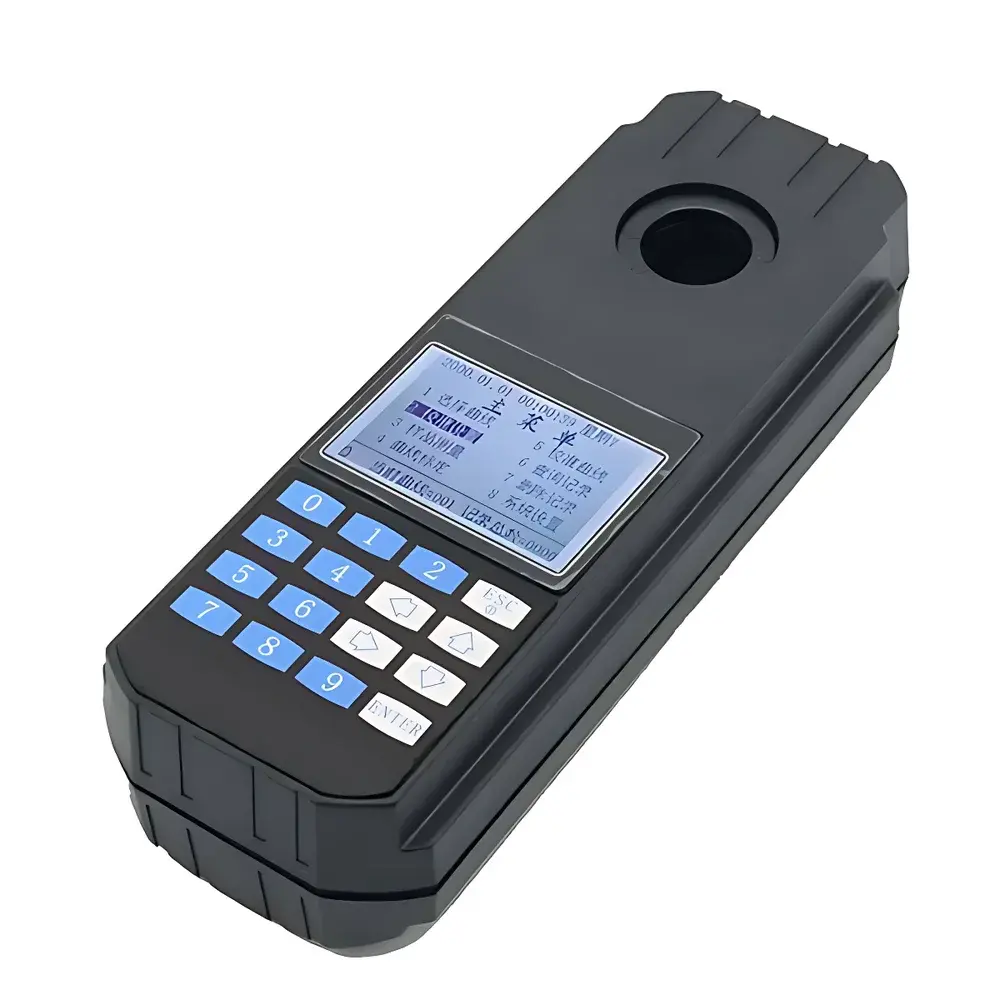
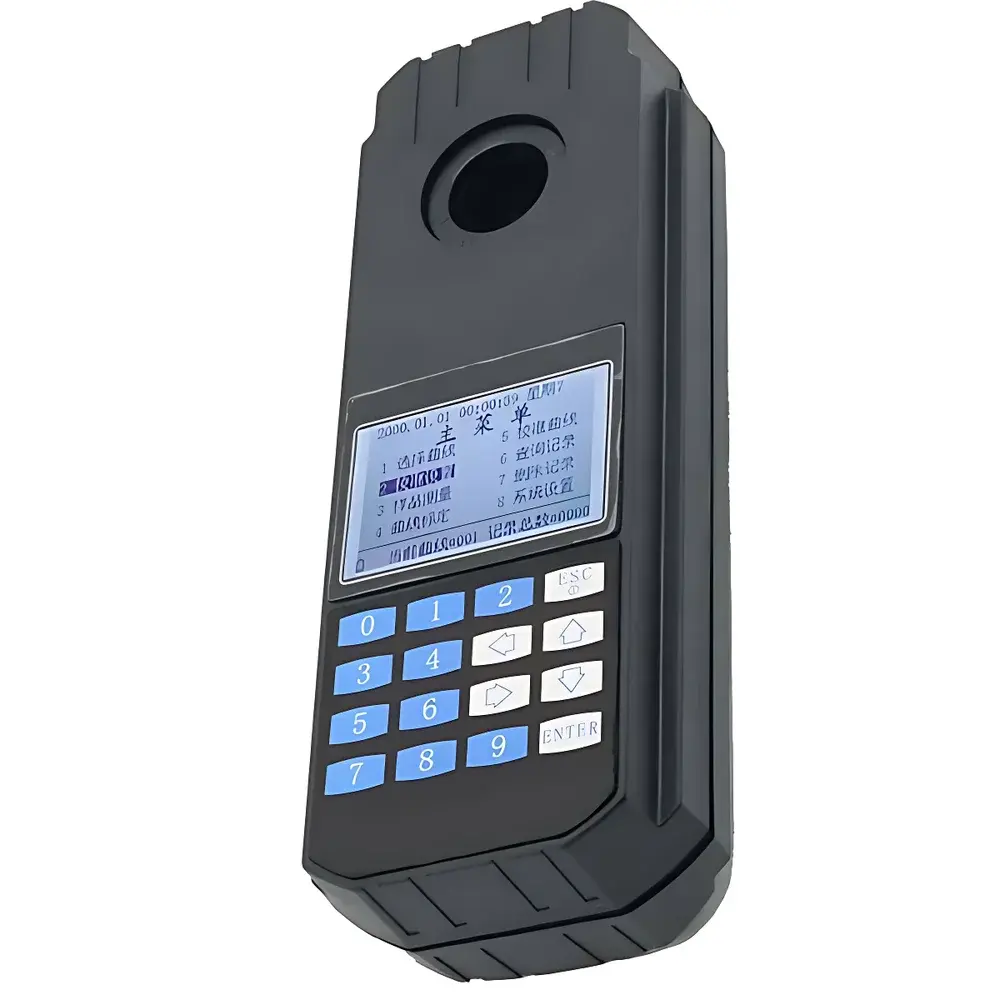
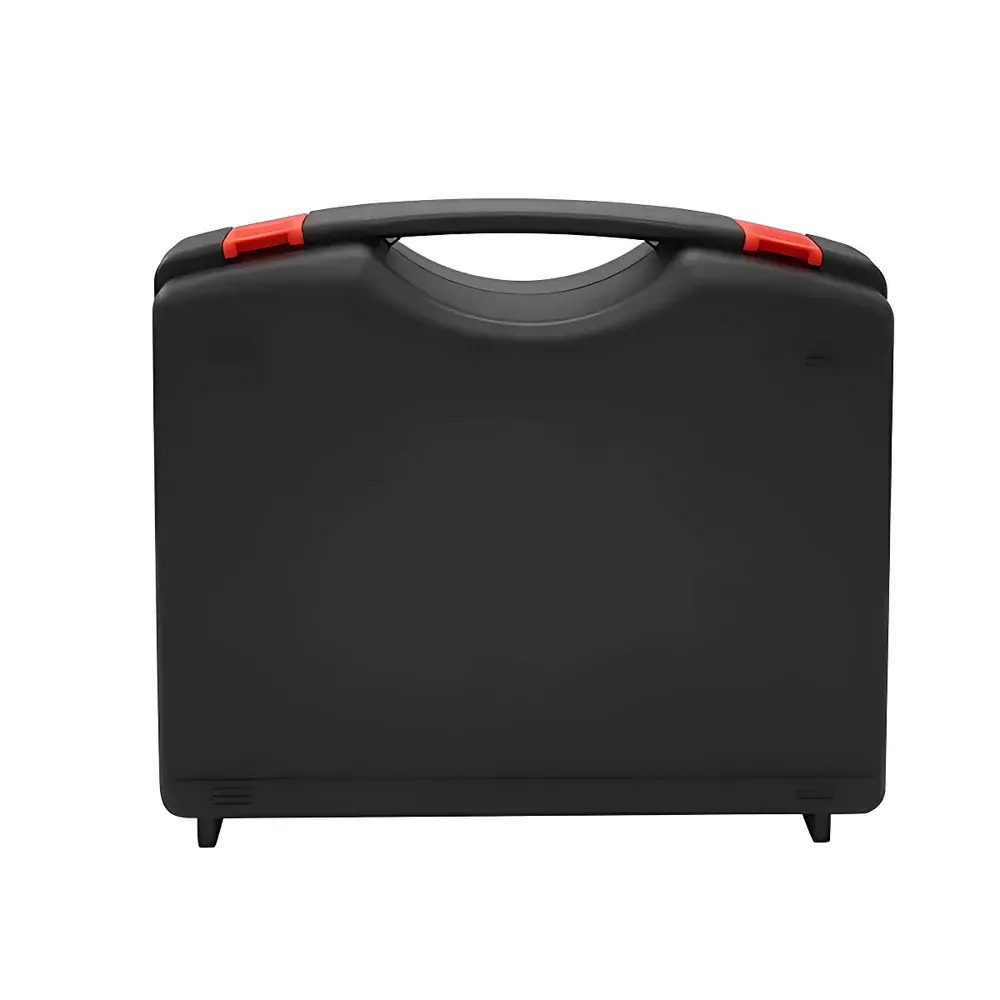
Shenchanghong PCHFH-308 Portable Formaldehyde Analyzer for Water
| Brand | Shenchanghong |
|---|---|
| Origin | Guangdong, China |
| Manufacturer Type | Manufacturer |
| Country of Origin | China |
| Model | PCHFH-308 |
| Price | Upon Request |
| Measurement Range | 0.05–2.50 mg/L |
| Resolution | 0.01 mg/L |
| Accuracy | ≤5% FS |
| Repeatability | ≤3% |
| Optical Stability | ≤0.002 A/20 min |
| Dimensions (H×W×D) | 266 × 200 × 130 mm |
| Power Consumption | 30 W |
| Weight | 500 g |
Overview
The Shenchanghong PCHFH-308 Portable Formaldehyde Analyzer for Water is a dedicated photometric instrument engineered for rapid, on-site quantification of formaldehyde concentration in aqueous samples. It operates on the principle of colorimetric analysis—specifically, the chromotropic acid (or acetylacetone-based) reaction, wherein formaldehyde in water reacts with reagents to form a stable colored complex. The intensity of the resulting color, measured at a defined wavelength (typically 412 nm or 415 nm depending on the assay chemistry), is directly proportional to formaldehyde concentration and quantified via calibrated absorbance measurement using a fixed-wavelength optical system. Designed for field deployment and routine laboratory use, the PCHFH-308 meets functional requirements for compliance monitoring under national drinking water standards (e.g., GB 5749–2022) and industrial effluent control protocols. Its compact form factor, integrated data logging, and robust mechanical construction support reliable operation in municipal water plants, industrial process control environments, environmental inspection agencies, and third-party testing laboratories.
Key Features
- High-stability optical architecture featuring imported long-life (100,000-hour) LED light source and narrow-band interference filter—minimizing spectral drift and ambient light interference for consistent photometric performance.
- Backlit LCD display with full Chinese-language interface and hierarchical menu navigation—enabling intuitive operation without external software or PC dependency.
- Onboard memory capacity for up to 10 user-defined calibration curves and 199 timestamped measurement records (including date, time, absorbance, transmittance, and calculated concentration).
- Durable housing fabricated from post-molded ABS polymer—exhibiting resistance to moisture, mild acids, alkalis, and common laboratory solvents encountered during routine handling and transport.
- Low-power 16-bit microcontroller platform optimized for precision analog signal acquisition, temperature-compensated photodiode readout, and real-time calculation of concentration values per Beer–Lambert law.
- Factory-calibrated against NIST-traceable formaldehyde reference standards; supports user-initiated recalibration using certified standard solutions.
Sample Compatibility & Compliance
The PCHFH-308 is validated for use with clarified, low-turbidity freshwater matrices—including drinking water, surface water, groundwater, and treated industrial process water. Samples containing suspended solids >5 NTU or strong oxidants (e.g., residual chlorine >0.5 mg/L) require pretreatment (filtration or quenching) prior to analysis to prevent interference. While not certified to ISO/IEC 17025 or EPA Method 400.1, the instrument’s performance specifications align with the methodological expectations of GB/T 5750.10–2006 (Standard Methods for Examination of Drinking Water – Organic Compounds) and supports documentation required for internal quality assurance programs. Data integrity is preserved via non-volatile memory—measurements remain retained after power loss, satisfying basic GLP record-keeping prerequisites for field-deployed instrumentation.
Software & Data Management
No proprietary PC software is required for core operation; all configuration, calibration, and reporting are performed directly on-device. Timestamped results (YYYY-MM-DD HH:MM:SS) are stored internally and can be exported manually via visual transcription or printed using optional thermal printers compatible with RS-232 output (not included). The unit does not feature USB connectivity, Bluetooth, or cloud synchronization—intentionally prioritizing operational simplicity, electromagnetic resilience, and data sovereignty in resource-constrained or regulated field settings. Audit trails are limited to chronological measurement logs; no electronic signature or 21 CFR Part 11-compliant user authentication layer is implemented.
Applications
- Routine surveillance of formaldehyde residuals in disinfection-byproduct (DBP) monitoring programs for municipal water distribution systems.
- Verification of formaldehyde removal efficiency in activated carbon or advanced oxidation process (AOP) units within wastewater treatment plants.
- Quality control of industrial cooling tower water where formaldehyde-based biocides are applied.
- Field screening of contaminated groundwater near resin manufacturing, plywood, or urea-formaldehyde foam insulation sites.
- Educational use in environmental science curricula for teaching fundamental principles of spectrophotometric analysis and water contaminant detection.
FAQ
What formaldehyde detection method does the PCHFH-308 employ?
It uses a standardized colorimetric reaction—typically the acetylacetone method (Hantzsch reaction)—which yields a yellow chromophore measurable at ~412 nm.
Can the instrument measure formaldehyde in seawater or high-salinity samples?
No—matrix effects from chloride ions and ionic strength may suppress color development; it is validated only for freshwater with TDS <1000 mg/L.
Is calibration verification traceable to national standards?
Yes—factory calibration utilizes formaldehyde reference materials certified to GBW(E) standards; users may verify accuracy using independently sourced CRM solutions.
Does the device support automatic dilution or range extension?
No—samples exceeding 2.50 mg/L must be manually diluted with deionized water prior to analysis, and the result multiplied by the dilution factor.
What maintenance is required for long-term reliability?
Annual verification of photometric zero and span using blank and mid-range standards is recommended; optical path should be cleaned with lint-free tissue and isopropyl alcohol if contamination is observed.
Related Products







