
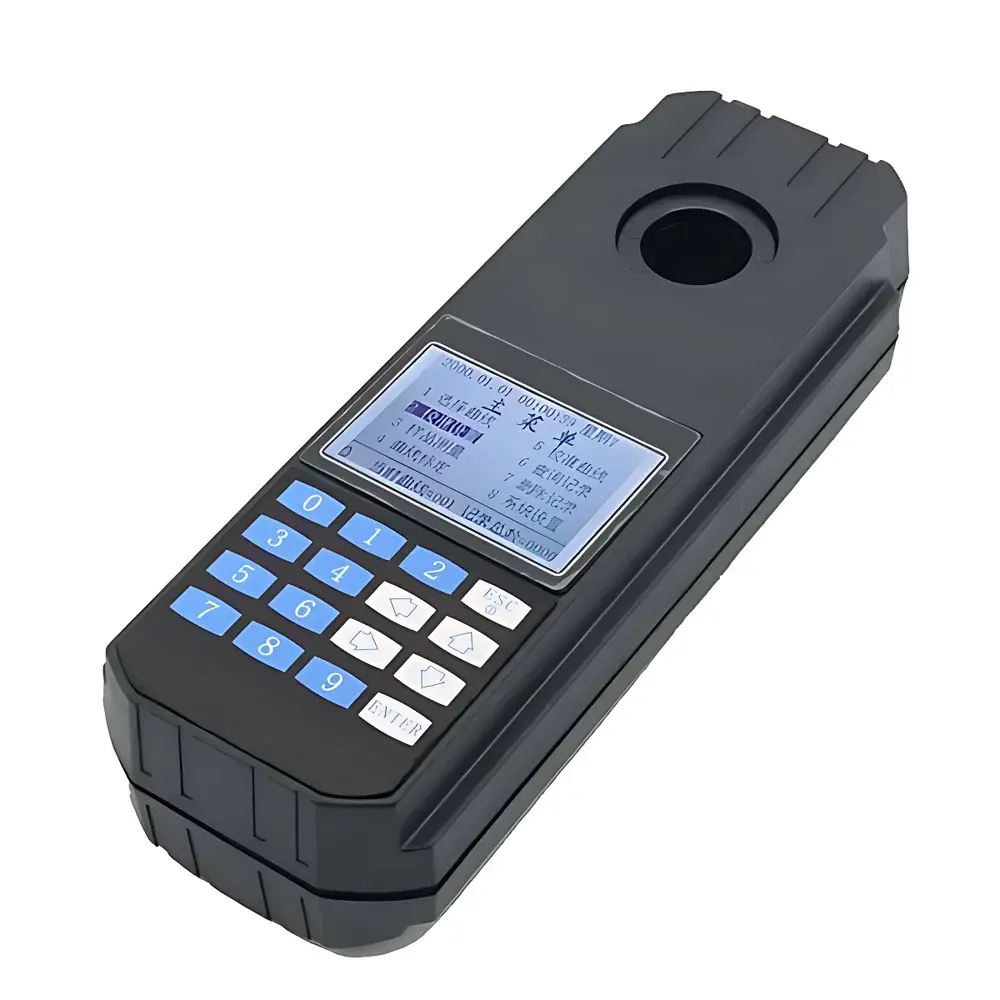
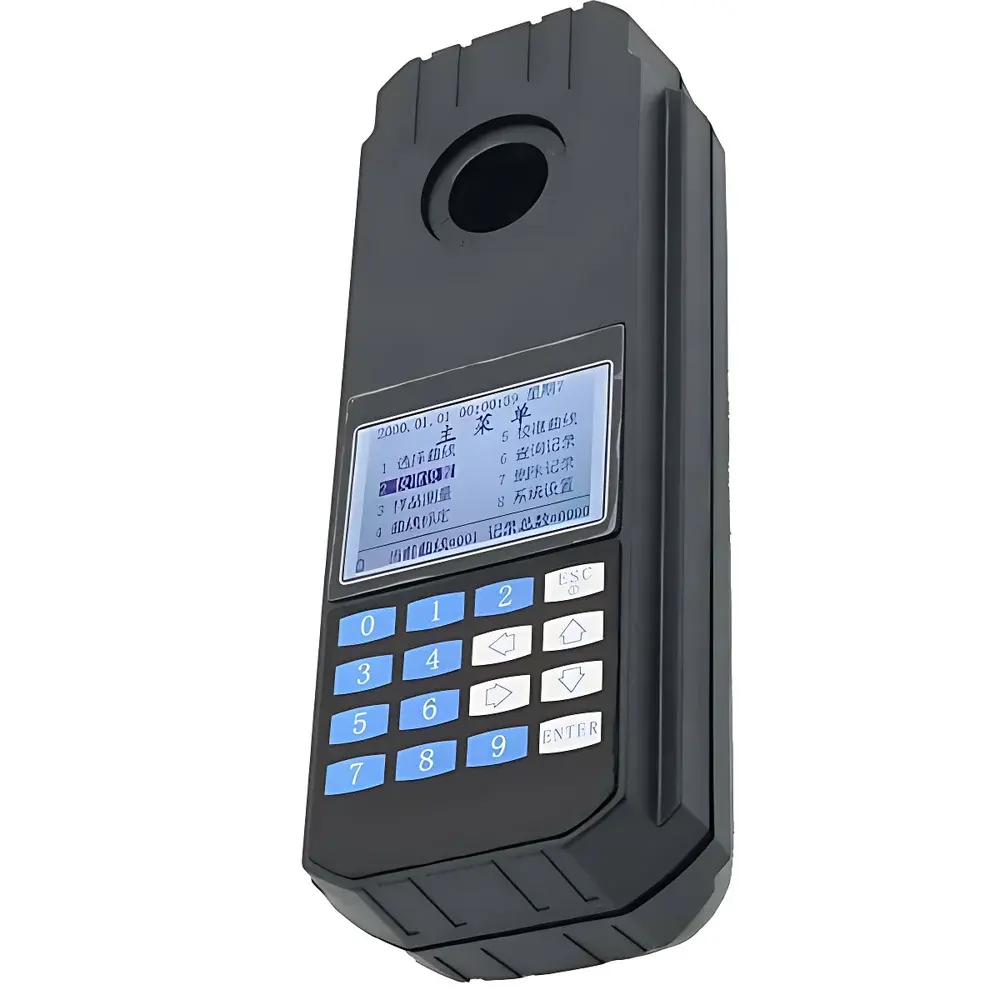
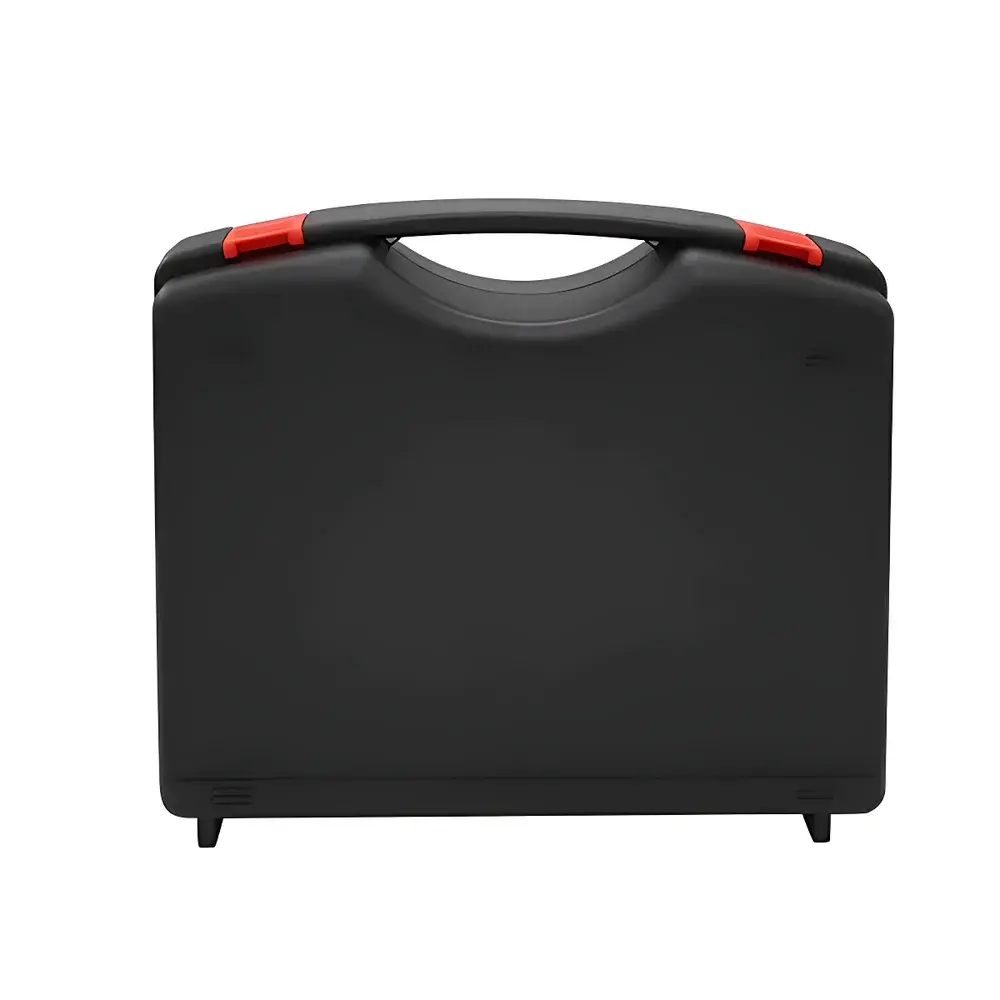
Shenchanghong PCHPB-150 Portable Lead Analyzer
| Brand | Shenchanghong |
|---|---|
| Origin | Guangdong, China |
| Manufacturer Type | Manufacturer |
| Country of Origin | Domestic (China) |
| Model | PCHPB-150 |
| Instrument Type | Portable |
| Detection Principle | Photometric Method (Colorimetric Absorption) |
| Target Analyte | Lead (Pb²⁺) |
| Analysis Time | 20 min |
| Accuracy | ±5% of Full Scale (F.S.) |
| Resolution | 0.01 mg/L |
| Measurement Range | 0.01–0.30 mg/L |
| Repeatability | ≤3% RSD |
| Dimensions | 80 × 230 × 55 mm |
| Weight | 500 g |
| Power Supply | 4 × AA batteries |
| Operating Temperature | 5–40 °C |
| Relative Humidity | ≤85% RH |
| Protection Rating | IP65 |
| Data Storage | 20 calibration curves + 199 measurement records with timestamp (YYYY-MM-DD HH:MM:SS), including concentration, absorbance, and transmittance values |
Overview
The Shenchanghong PCHPB-150 Portable Lead Analyzer is a field-deployable photometric instrument engineered for rapid, on-site quantification of dissolved lead (Pb²⁺) in water samples. It operates on the principle of colorimetric absorption photometry: lead ions in the sample react with a proprietary chromogenic reagent to form a stable colored complex, the absorbance of which is measured at a defined wavelength (typically 510–530 nm) using a high-stability optical path. The instrument employs a long-life (rated >100,000 hours), high-luminance imported LED light source coupled with a narrow-band interference filter system—minimizing spectral drift and ambient light interference. This architecture ensures consistent photometric performance across variable environmental conditions, supporting reliable field measurements compliant with standard methods for trace metal analysis in drinking water, surface water, groundwater, and wastewater effluents.
Key Features
- True handheld design: Compact dimensions (80 × 230 × 55 mm) and lightweight construction (500 g) enable one-handed operation and extended use during mobile surveys or emergency response.
- IP65-rated enclosure: Dust-tight and protected against low-pressure water jets—suitable for outdoor deployment in rain, dust, or humid environments without external housing.
- Low-power embedded control: Powered by four standard AA alkaline batteries; optimized firmware enables up to six months of standby time and >1,000 measurements per full charge cycle.
- Integrated data management: Stores 20 user-defined calibration curves and up to 199 timestamped measurement records—including concentration (mg/L), absorbance (A), and transmittance (%T)—all retained after power-off.
- Rugged ABS polymer housing: Chemically resistant, impact-absorbing, and ergonomically contoured for secure grip during field handling.
- Optical stability assurance: Factory-aligned LED source and fixed-wavelength optical train eliminate need for routine wavelength recalibration—reducing operational overhead in resource-constrained settings.
Sample Compatibility & Compliance
The PCHPB-150 is validated for use with clarified, non-turbid aqueous matrices including potable water, river/lake water, treated wastewater, and leachate. Sample pretreatment—such as filtration (0.45 µm membrane) and acidification (if required for preservation)—must follow established protocols (e.g., EPA Method 200.7, ISO 8288, or GB/T 5750.6–2023). While not certified to ISO/IEC 17025, the instrument’s ±5% F.S. accuracy and ≤3% repeatability align with performance criteria for screening-level compliance monitoring under national environmental standards. Its photometric methodology is traceable to NIST-traceable reference materials when used with certified lead standard solutions. No internal regulatory certification (e.g., EPA, UKAS, or DAkkS) is claimed; users are responsible for method validation per local QA/QC requirements.
Software & Data Management
Data export is supported via USB interface (micro-USB port) to standard Windows/macOS systems using included PC utility software. The software enables curve review, batch export to CSV/Excel, report generation with customizable headers (site ID, operator, date/time stamp), and audit-log viewing of calibration history. All stored measurements include full metadata: year-month-day hour-minute-second timestamp, raw absorbance, % transmittance, and calculated Pb concentration. Firmware supports GLP-style data integrity features—including immutable timestamps and write-once record storage—to facilitate internal quality audits. No cloud connectivity or remote firmware update capability is implemented; all configuration and calibration are performed locally via intuitive button navigation and LCD feedback.
Applications
- Field-based surveillance of lead contamination in municipal drinking water distribution systems—especially post-service line replacement verification.
- Rapid assessment of industrial discharge points and stormwater outfalls prior to laboratory confirmation.
- Environmental emergency response: On-the-spot evaluation following suspected lead spills or corrosion events in aging infrastructure.
- Educational and training use in environmental science laboratories where portable, low-cost instrumentation is prioritized for method demonstration.
- Community-led water safety initiatives in rural or underserved regions lacking access to centralized analytical labs.
FAQ
What sample volume is required for analysis?
A minimum of 5 mL of filtered, room-temperature water sample is required per test. Pre-measured reagent vials are supplied for single-use consistency.
Does the instrument require daily calibration?
No. Calibration is performed only when changing reagent lots or after extended storage (>30 days); factory-installed default curves remain stable under normal operating conditions.
Can the PCHPB-150 measure other heavy metals?
No. It is specifically configured for lead (Pb²⁺) detection using a dedicated chromogenic chemistry; no hardware or firmware support exists for cadmium, copper, zinc, or arsenic.
Is the device compatible with international standard methods?
Its photometric approach is functionally equivalent to ASTM D3559-18 (for Pb in water) and GB/T 5750.6–2023; however, formal method validation must be conducted by the end-user laboratory per ISO/IEC 17025 requirements.
How is battery life monitored?
The LCD displays real-time battery status (four-bar indicator) and triggers a low-battery warning icon 24 hours before depletion—ensuring uninterrupted field operation.
Related Products







