
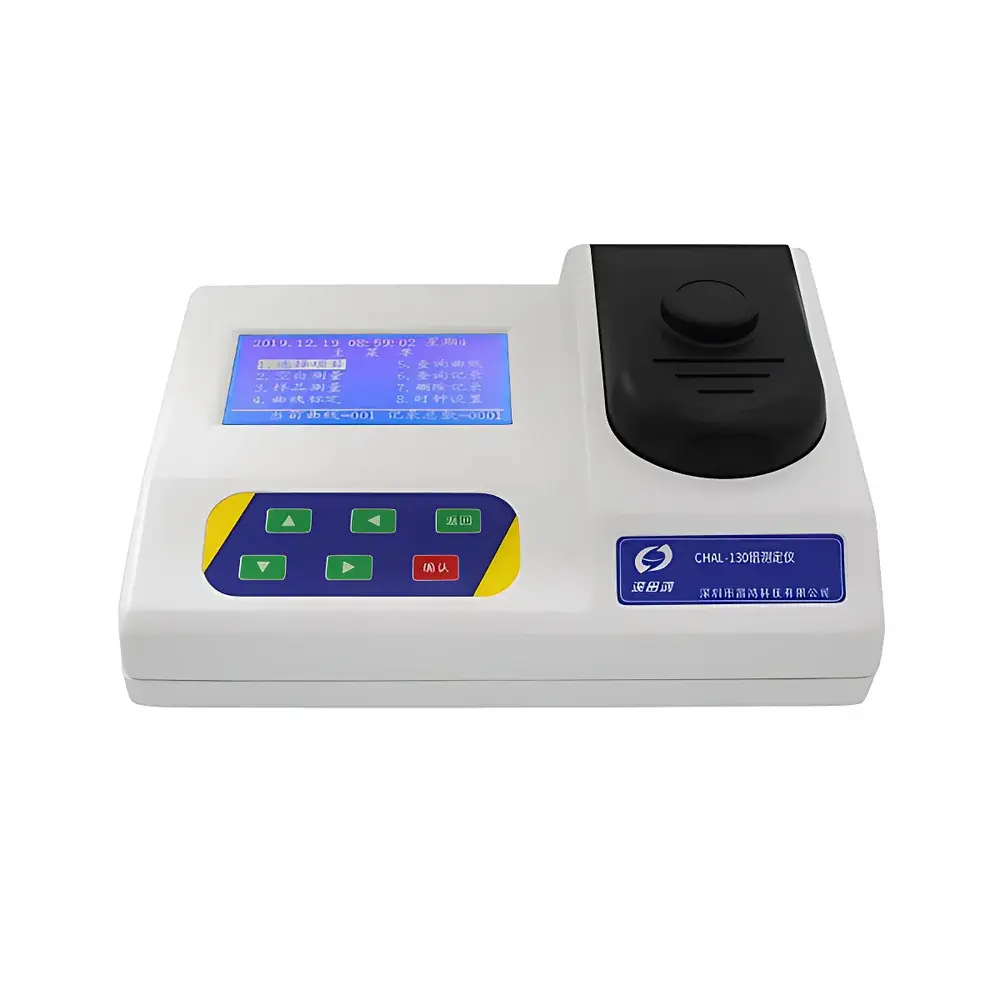
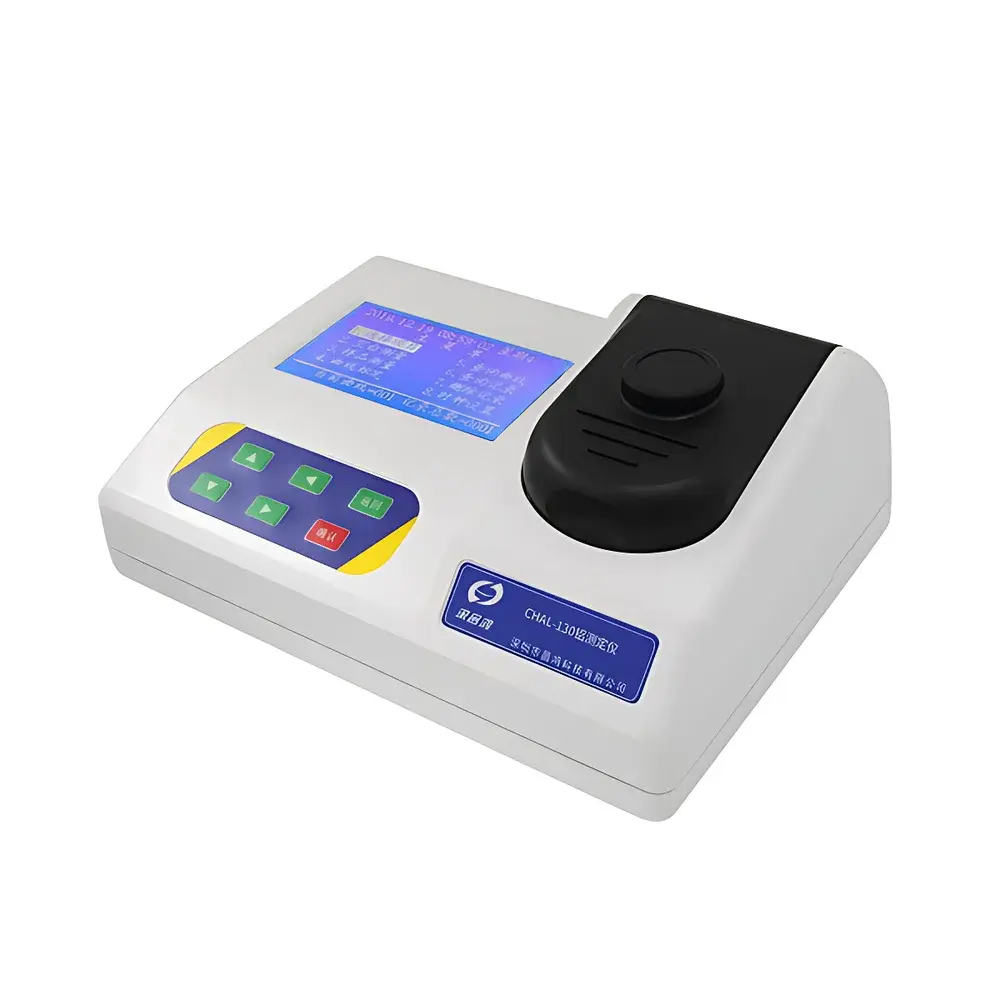
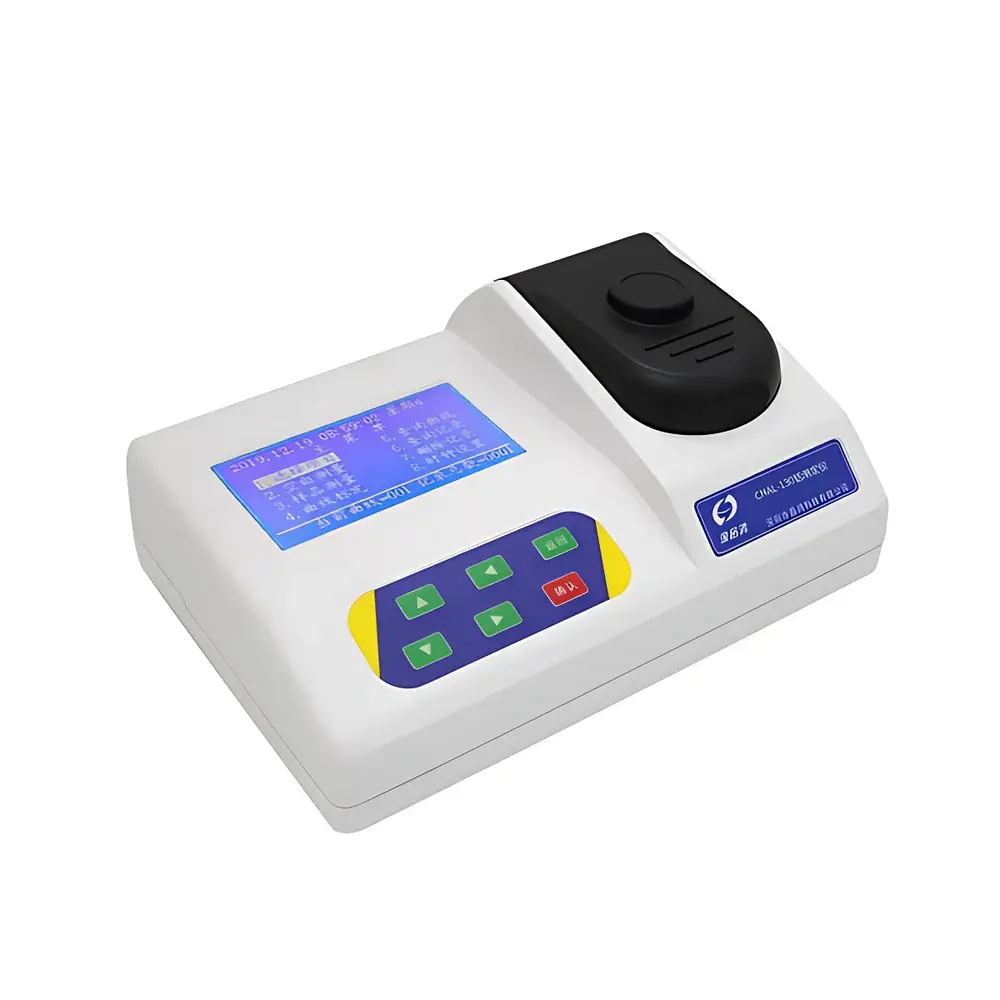
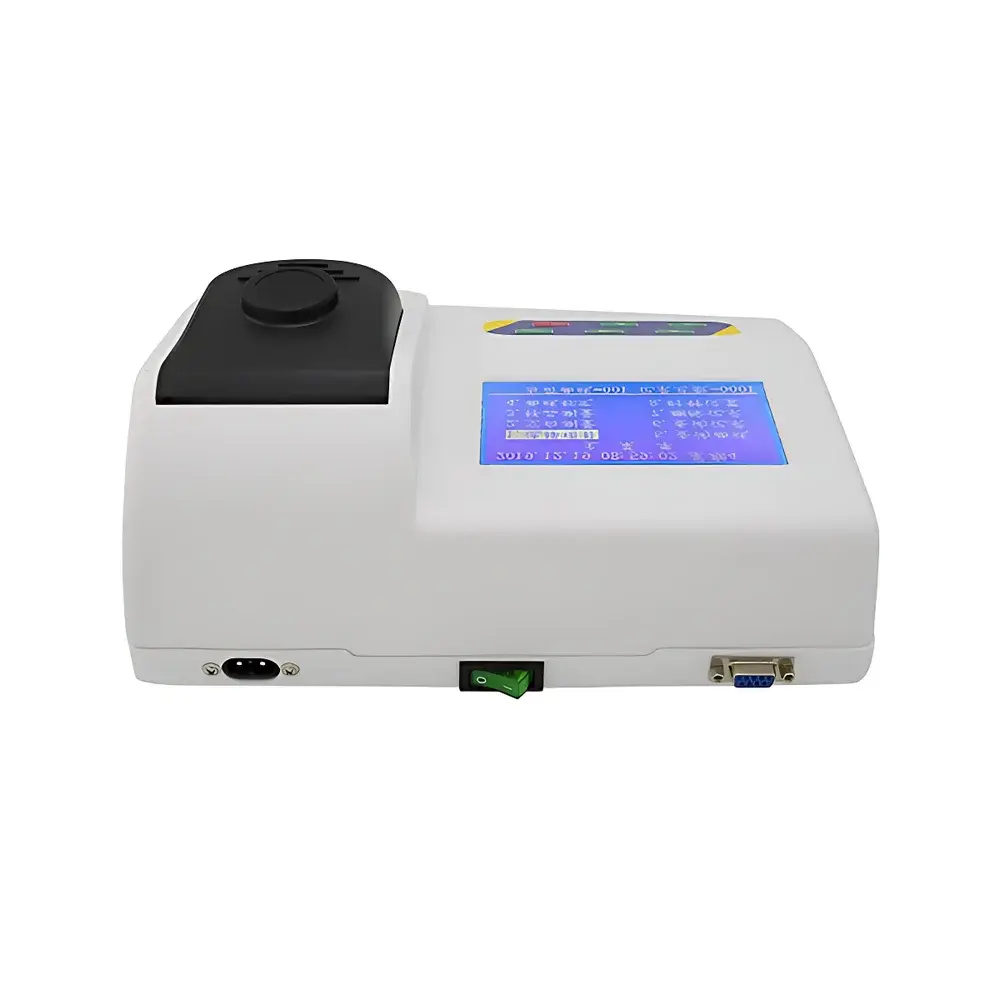
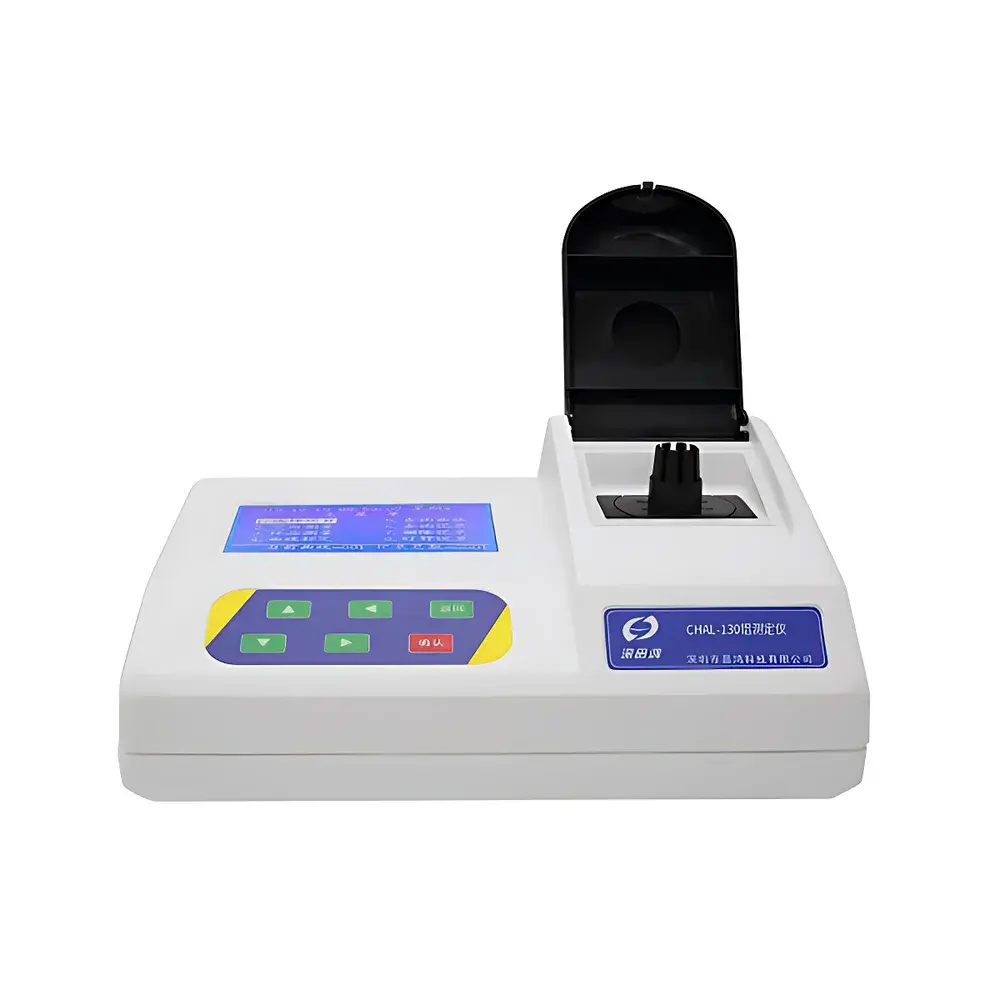
Shenchanghong CHAL-130 Aluminum Photometric Analyzer
| Brand | Shenchanghong |
|---|---|
| Origin | Guangdong, China |
| Manufacturer Type | Direct Manufacturer |
| Product Category | Domestic |
| Model | CHAL-130 |
| Instrument Type | Benchtop Laboratory Analyzer |
| Detection Principle | Photometry (Colorimetric Method) |
| Target Analyte | Aluminum (Al³⁺) in Water |
| Measurement Range | 0.01–4.00 mg/L |
| Accuracy (Max. Error) | ≤ ±5% FS |
| Repeatability (RSD) | ≤ 3% |
| Optical Stability | Absorbance Drift < 0.002 A within 20 min |
| Resolution | 0.01 mg/L |
| Dimensions (W×D×H) | 266 × 200 × 130 mm |
| Weight | < 1.0 kg |
| Operating Temperature | 5–40 °C |
| Relative Humidity | ≤ 85% RH |
| Power Supply | AC 220 V ± 10%, 50 Hz ± 0.5 Hz |
| Light Source | High-intensity, Long-life (100,000 h) Monochromatic Cold LED |
| Filter System | Precision Narrow-band Interference Filters |
| Display | Backlit LCD with Chinese Menu Interface |
| Data Storage | Up to 10 User-defined Calibration Curves + 199 Measurement Records (Non-volatile Memory) |
| Housing Material | Corrosion-resistant ABS Polymer |
| Microcontroller | Low-power 16-bit MCU Architecture |
| Compliance | Designed for routine compliance with GB/T 5750.6–2023 (Standard Methods for Examination of Drinking Water – Metals), ISO 8692:2012 (Water Quality – Fresh Water Algal Growth Inhibition Test), and applicable national environmental monitoring protocols |
Overview
The Shenchanghong CHAL-130 Aluminum Photometric Analyzer is a benchtop laboratory instrument engineered for accurate, reproducible quantification of dissolved aluminum (Al³⁺) in aqueous matrices using standardized colorimetric photometry. Based on the principle of Beer–Lambert law, the analyzer measures absorbance at a specific wavelength (typically 510–530 nm) after complexation of aluminum ions with a chromogenic reagent—commonly Eriochrome Cyanine R or Chromazurol S—under controlled pH conditions. This method delivers trace-level sensitivity (detection limit ~0.01 mg/L) and robust performance across variable water chemistries, including low-ionic-strength drinking water, high-turbidity surface water, municipal wastewater, and industrial effluents containing moderate levels of interfering cations (e.g., Fe³⁺, Cu²⁺) or organic matter. The system integrates a thermally stable monochromatic cold LED light source and precision narrow-band optical filters to minimize spectral interference and ensure long-term photometric fidelity—critical for regulatory reporting and inter-laboratory comparability.
Key Features
- High-stability optical architecture featuring a 100,000-hour lifetime monochromatic LED source and interference-filter-based wavelength selection, delivering absorbance drift < 0.002 A over 20 minutes—meeting ISO/IEC 17025 requirements for instrumental stability during calibration verification.
- Embedded 16-bit low-power microcontroller enabling real-time signal processing, automatic zeroing, and linear/nonlinear curve fitting without external PC dependency.
- Backlit LCD display with full Chinese menu navigation—designed for intuitive operation by technicians in municipal water labs, environmental monitoring stations, and third-party testing facilities where bilingual interface support enhances workflow efficiency.
- Non-volatile memory storage supporting up to 10 user-defined calibration curves and 199 individual measurement records, preserving audit trails for GLP-compliant documentation and internal quality control reviews.
- Corrosion-resistant ABS polymer housing rated IP20, suitable for humid laboratory environments and compliant with IEC 61010-1 safety standards for electrical equipment used in measurement, control, and laboratory applications.
- Compact footprint (266 × 200 × 130 mm) and sub-1 kg mass enable flexible placement on analytical benches, fume hoods, or mobile field lab carts without structural reinforcement.
Sample Compatibility & Compliance
The CHAL-130 is validated for direct analysis of filtered (0.45 µm membrane) liquid samples with minimal pretreatment: acidification to pH < 2 for preservation, optional digestion for particulate-bound aluminum (per EPA Method 200.7 or GB/T 5750.6–2023 Annex C), and masking agent addition (e.g., 1,10-phenanthroline) to suppress iron interference. It conforms to national standard methods for aluminum determination in drinking water (GB/T 5750.6–2023), surface water (HJ 485–2009), and industrial wastewater discharge monitoring (HJ/T 91–2002). While not FDA 21 CFR Part 11-certified out-of-the-box, its data logging architecture supports manual export to LIMS-compatible CSV formats and aligns with ALCOA+ principles (Attributable, Legible, Contemporaneous, Original, Accurate, Complete, Consistent, Enduring, Available) when deployed under documented SOPs.
Software & Data Management
No proprietary software installation is required; all operations—including calibration, measurement, and data recall—are executed via onboard firmware. Calibration curves may be generated using certified reference materials (CRMs) traceable to NIM (National Institute of Metrology, China) or NIST SRM 1643e. Each stored result includes timestamp, operator ID (manually entered), curve ID, and raw absorbance value. Data export requires manual transcription or USB-to-serial adapter connection (optional accessory); future firmware updates may introduce Bluetooth 5.0 support for wireless transfer to secure institutional networks—subject to IT security policy review per ISO/IEC 27001 guidelines.
Applications
- Routine surveillance of aluminum residuals in coagulation-flocculation-treated potable water (target: ≤0.2 mg/L per WHO Guidelines for Drinking-water Quality, 4th ed.)
- Compliance monitoring of aluminum discharge limits in electroplating, anodizing, and aluminum alloy manufacturing effluents (e.g., China’s Integrated Wastewater Discharge Standard GB 8978–1996)
- Research-grade quantification in limnological studies assessing aluminum toxicity thresholds in freshwater ecosystems (e.g., LC₅₀ for Daphnia magna at pH-dependent speciation)
- Verification of alum dosing efficacy in wastewater treatment plants and pilot-scale coagulant optimization trials
- Field-deployable verification tool for accredited environmental laboratories conducting CNAS (China National Accreditation Service) proficiency testing schemes
FAQ
What sample preparation steps are required prior to analysis?
Filtered (0.45 µm) samples should be acidified to pH < 2 with ultrapure HNO₃ and analyzed within 28 days. For total aluminum, microwave-assisted HNO₃/HF digestion per GB/T 5750.6–2023 is recommended.
Can the CHAL-130 measure other metals besides aluminum?
No—it is optically and chemically configured exclusively for aluminum via its dedicated reagent set and fixed-wavelength detection path. Cross-reactivity with Cr³⁺ or Fe³⁺ is mitigated but not eliminated; use of masking agents is advised for complex matrices.
Is third-party certification available for method validation?
Yes—Shenchanghong provides factory-issued calibration certificates traceable to NIM CRMs. Independent verification per ISO/IEC 17025 may be conducted by accredited labs using standard addition or recovery spike protocols.
How often must the instrument be recalibrated?
Daily zero-point verification is recommended; full multi-point calibration every 8 hours of continuous use or before each batch of samples, especially when switching between low- and high-range standards.
Does the device support GLP-compliant audit trails?
It maintains time-stamped measurement logs and curve metadata internally; however, full electronic signature and change-control functionality require integration with external LIMS or paper-based SOP documentation per local regulatory interpretation.







