
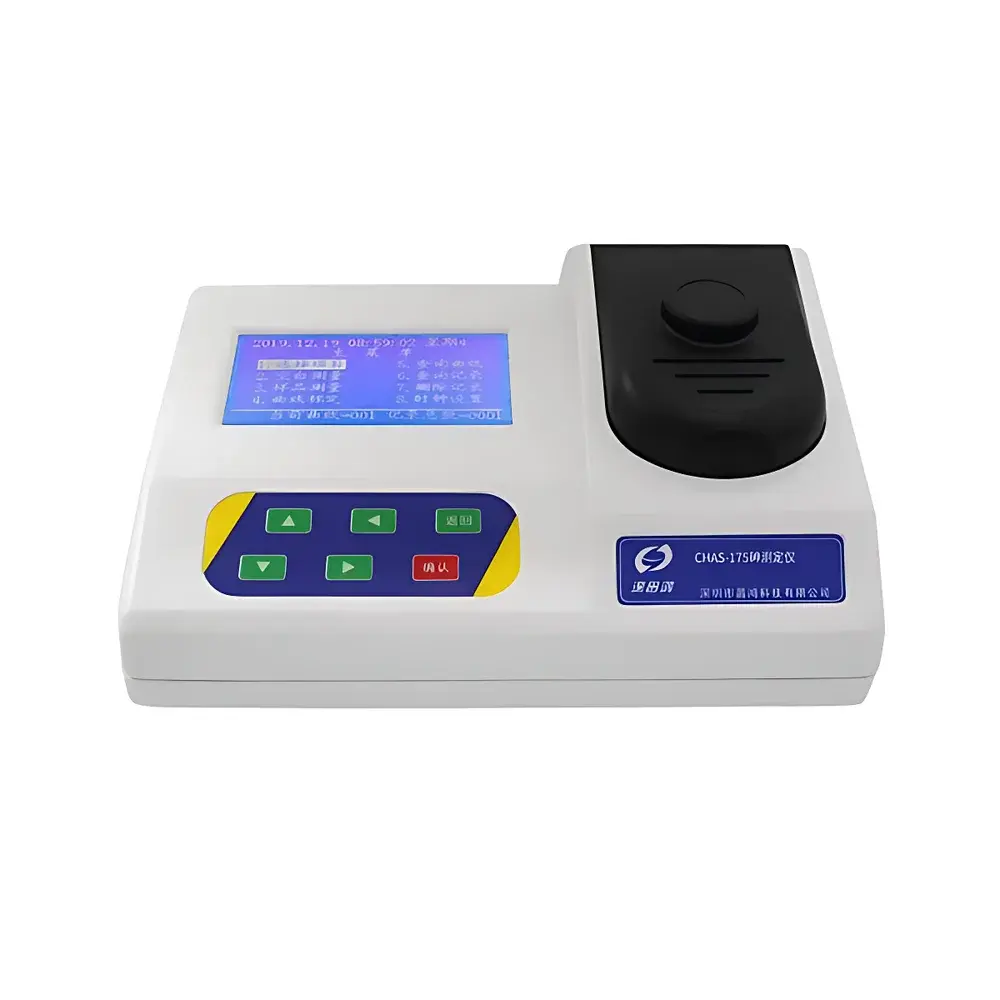
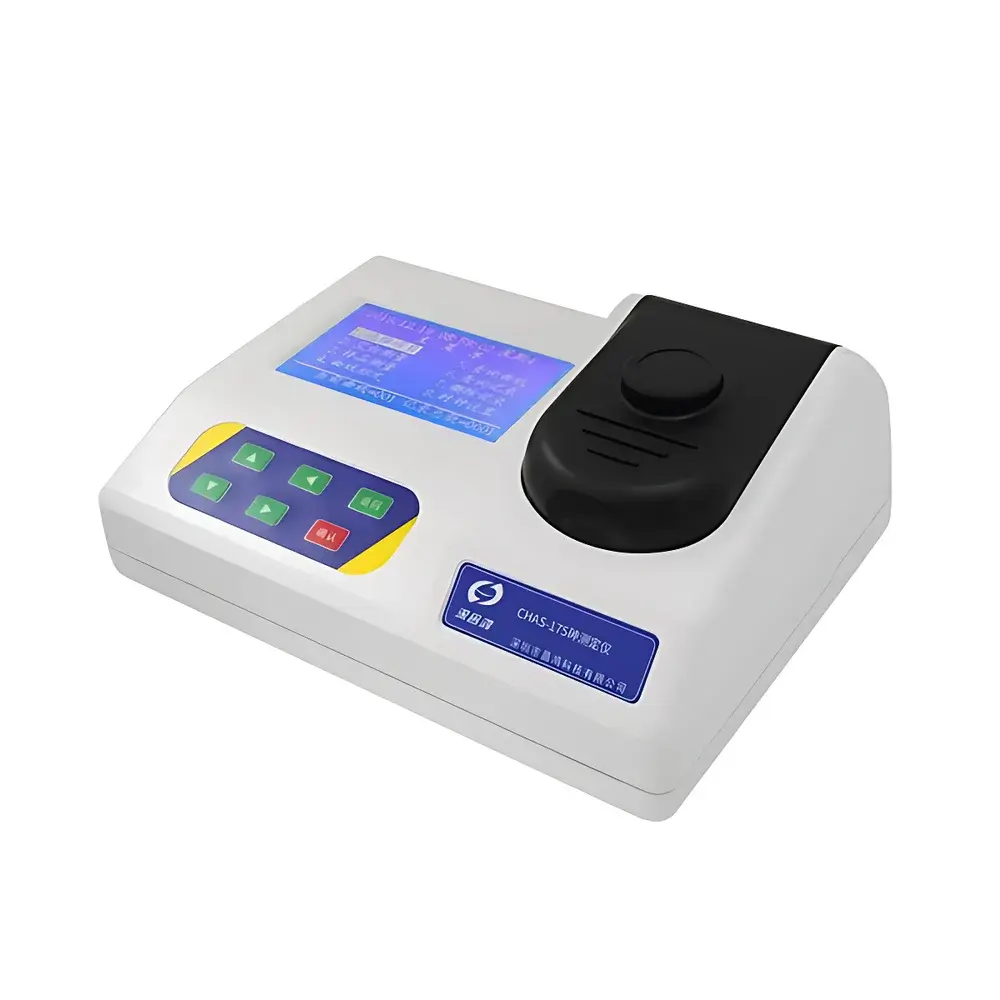
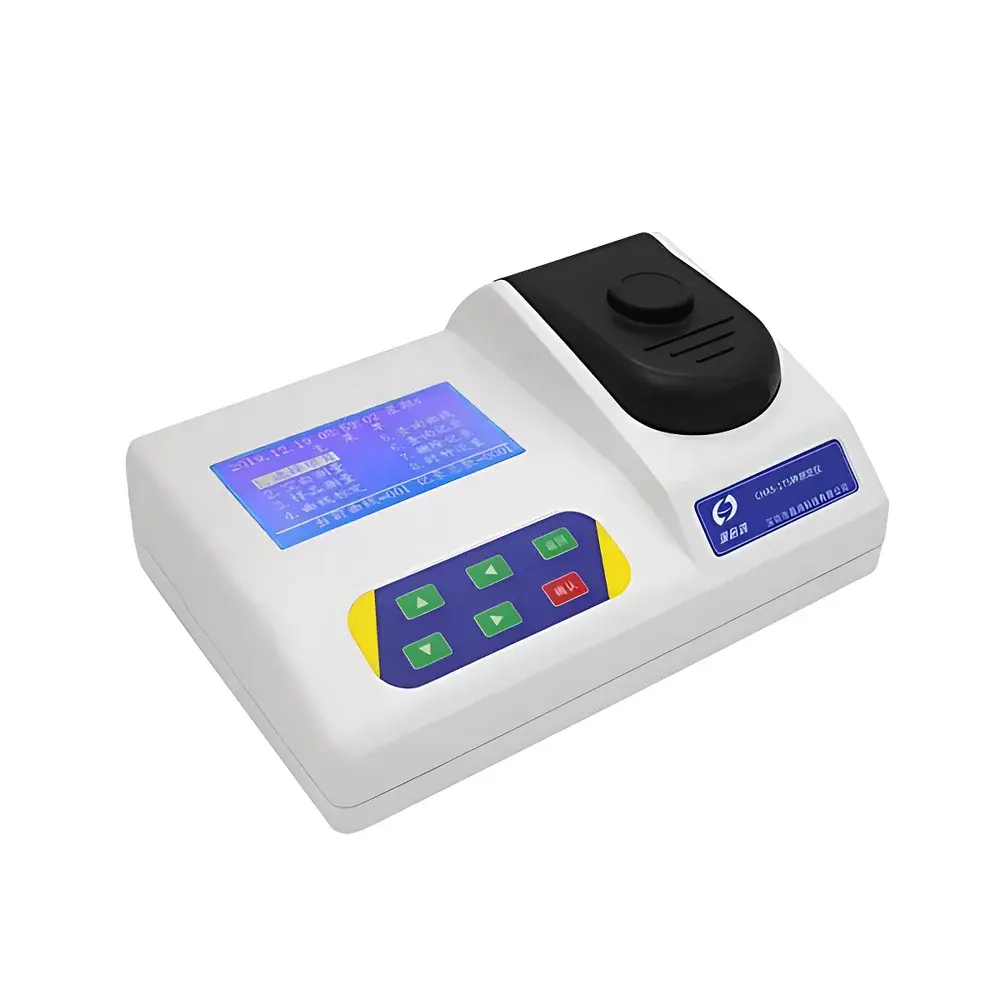
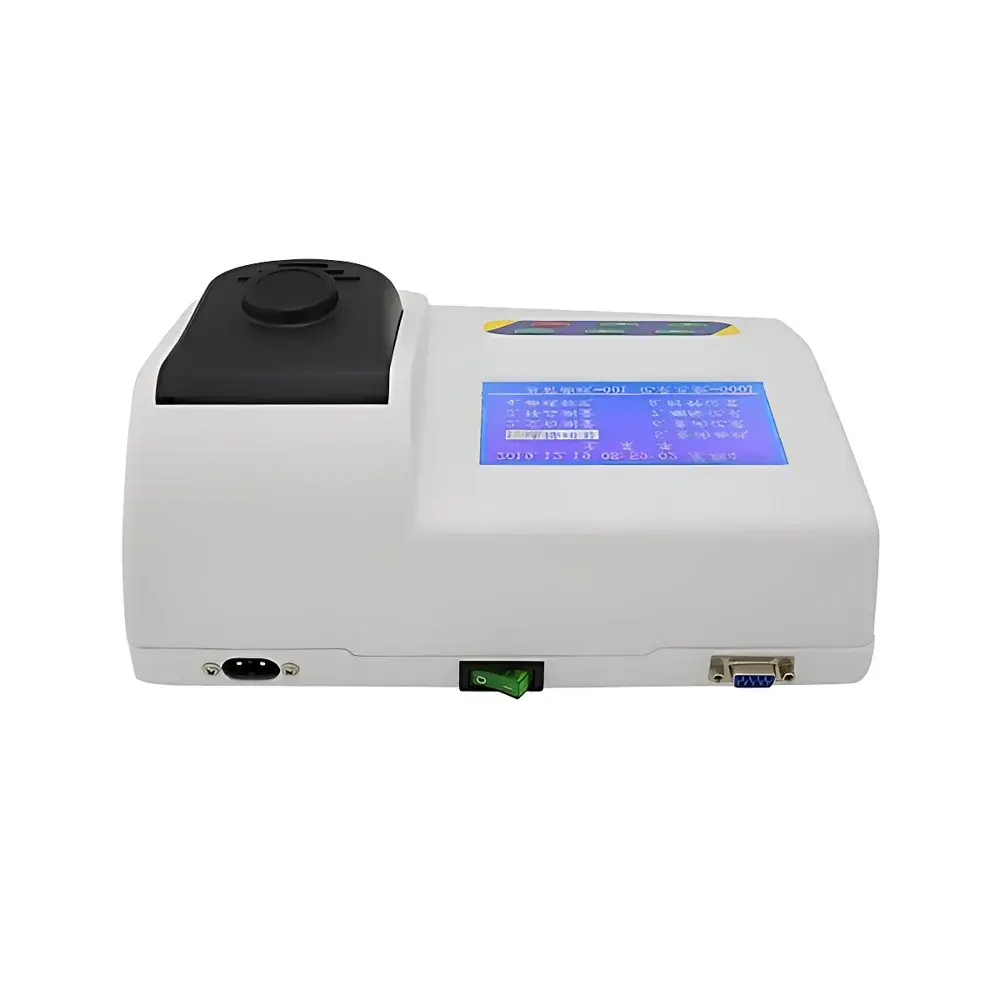
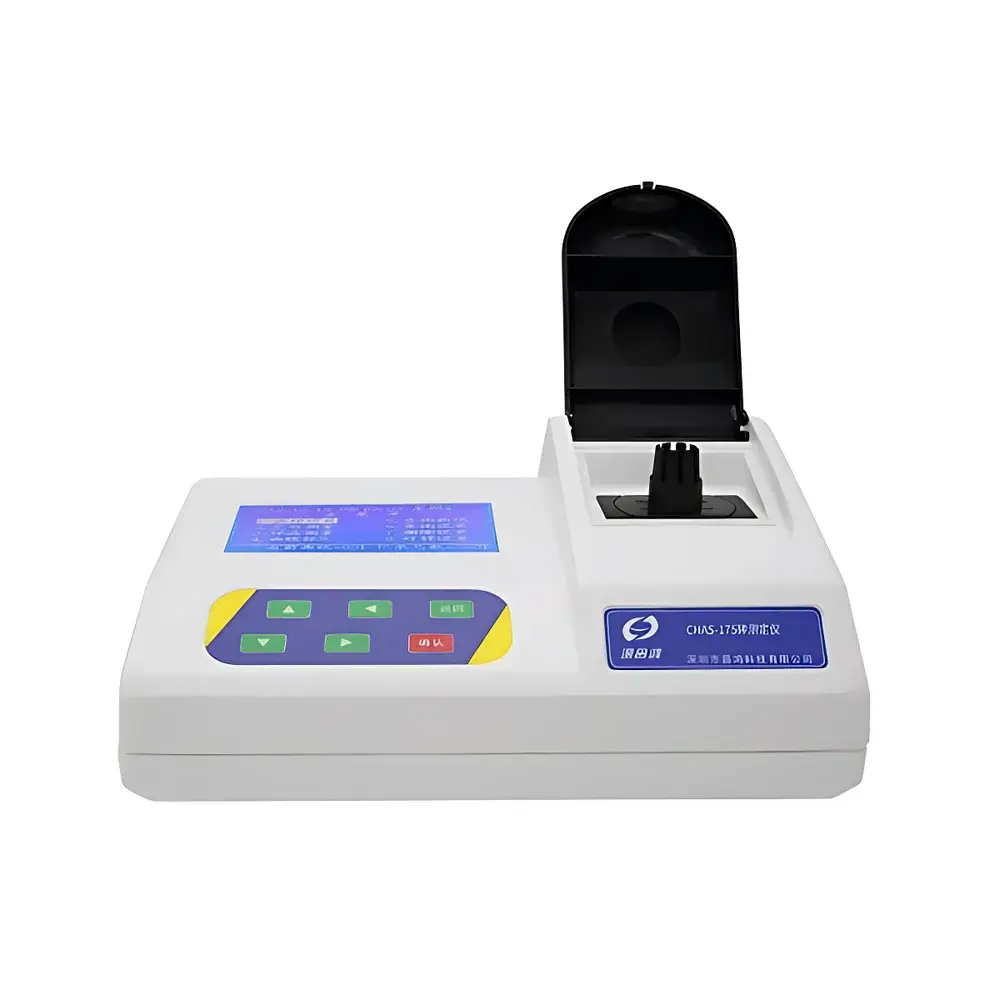
Shenchanghong CHAS-175 Arsenic Photometric Analyzer
| Brand | Shenchanghong |
|---|---|
| Origin | Guangdong, China |
| Manufacturer Type | Manufacturer |
| Origin Category | Domestic |
| Model | CHAS-175 |
| Instrument Type | Benchtop Laboratory Analyzer |
| Detection Principle | Photometry |
| Target Analyte | Arsenic (As) |
| Analysis Time | 20 min |
| Accuracy | ≤ ±5% for water samples |
| Precision (RSD) | ≤ 3% |
| Resolution | 0.01 mg/L |
| Measurement Range | 0.001–0.500 mg/L |
| Absorbance Drift | < 0.002 A within 20 min |
| Dimensions (W×D×H) | 266 × 200 × 130 mm |
| Weight | < 1 kg |
| Operating Temperature | 5–40 °C |
| Relative Humidity | ≤ 85% |
| Power Supply | AC (220 ± 22) V, (50 ± 0.5) Hz |
Overview
The Shenchanghong CHAS-175 Arsenic Photometric Analyzer is a dedicated benchtop instrument engineered for accurate, reproducible quantification of total inorganic arsenic (As(III) and As(V)) in drinking water, surface water, groundwater, and wastewater samples. It operates on the principle of photometric detection following colorimetric derivatization—specifically, the reaction of arsenic with potassium iodide and stannous chloride under acidic conditions to form a yellow-orange complex, whose absorbance is measured at 520 nm. This method aligns with established standard protocols including EPA Method 200.7 (ICP-OES reference), ISO 11969:2015 (water quality — determination of arsenic — spectrophotometric method), and GB/T 5750.6–2023 (Chinese national standard for drinking water quality). The analyzer integrates a high-brightness, long-life imported tungsten-halogen light source with a narrow-band interference filter optical system, delivering exceptional photometric stability (< 0.002 A drift over 20 minutes) and minimizing baseline drift during sequential analysis.
Key Features
- Optimized optical architecture: Precision-engineered dual-beam photometric path with temperature-stabilized light source and fixed-wavelength (520 nm) detection ensures consistent signal integrity across extended operation.
- High-resolution digital measurement: 0.01 mg/L resolution across the full 0.001–0.500 mg/L working range supports compliance with WHO guideline value (10 µg/L = 0.01 mg/L) and stringent regulatory thresholds such as US EPA MCL (10 µg/L) and EU Drinking Water Directive (10 µg/L).
- Embedded 16-bit microcontroller system: Delivers low-power, high-noise-immunity performance with real-time signal processing, automatic zero calibration, and built-in self-diagnostic routines.
- User-configurable calibration: Supports both factory-preloaded calibration curves and up to three user-defined calibration sets—enabling method validation, matrix-matched standards, and multi-laboratory traceability.
- Durability-focused design: Housing fabricated from post-molded ABS with enhanced chemical resistance to common reagents (e.g., HCl, KI, SnCl₂ solutions); compact footprint (266 × 200 × 130 mm) and sub-1 kg mass facilitate integration into ISO/IEC 17025-accredited lab workspaces.
Sample Compatibility & Compliance
The CHAS-175 is validated for use with clarified, non-turbid aqueous matrices meeting standard pretreatment requirements per ISO 5667-3:2018 (sampling preservation) and APHA Standard Methods 3113 B (arsenic speciation pre-reduction). Samples must be acid-preserved (HNO₃, pH < 2) and filtered (0.45 µm) prior to analysis. The instrument meets general electrical safety requirements per IEC 61010-1:2010 and electromagnetic compatibility per IEC 61326-1:2020. While not certified to GLP or FDA 21 CFR Part 11 out-of-the-box, its audit-ready data logging (timestamped results, calibration history, operator ID field) supports implementation within GxP-aligned workflows when paired with documented SOPs and external data backup protocols.
Software & Data Management
Data are displayed and stored locally via a backlit monochrome LCD interface with Chinese-language menu navigation (English firmware optional upon request). All measurements—including absorbance values, concentration outputs, calibration coefficients, and QC check results—are timestamped and retained in non-volatile memory for ≥10,000 records. Export is supported via USB port (CSV format) for integration with LIMS or Excel-based QA/QC review. Firmware allows password-protected access levels for operator, supervisor, and administrator roles—supporting segregation of duties in regulated environments.
Applications
- Routine monitoring of arsenic in municipal drinking water treatment plants and distribution systems.
- Field-deployable verification testing for NGOs and rural water safety programs (when used with portable power adapters).
- Environmental site assessment of groundwater contamination near mining or agricultural zones.
- Educational laboratories for teaching analytical chemistry principles including Beer-Lambert law, calibration curve construction, and method validation (LOD/LOQ, recovery, precision).
- Pre-screening tool prior to confirmatory analysis by ICP-MS or HG-AFS in accredited reference labs.
FAQ
What sample preparation is required before analysis?
Samples must be acidified to pH < 2 with nitric acid, filtered through a 0.45 µm membrane, and brought to room temperature. For high-iron or sulfide-rich matrices, optional digestion or masking agents may be applied per ISO 11969 guidelines.
Can the CHAS-175 measure arsenic speciation (As(III) vs. As(V))?
No—it quantifies total inorganic arsenic after pre-reduction. Speciation requires coupling with HPLC-ICP-MS or selective hydride generation techniques.
Is third-party certification available for this instrument?
The CHAS-175 complies with core photometer performance criteria in ISO 11969 and GB/T 5750.6; formal CNAS or UKAS accreditation is lab-specific and requires on-site validation per ISO/IEC 17025:2017.
How often must the optical system be recalibrated?
Factory calibration remains stable for ≥12 months under normal use; users should perform daily blank verification and monthly full-range calibration using NIST-traceable As standards.
Does the instrument support connectivity to laboratory information management systems (LIMS)?
Direct LIMS integration is not native, but CSV exports enable manual or scripted ingestion into most LIMS platforms supporting flat-file import protocols.
Related Products







