
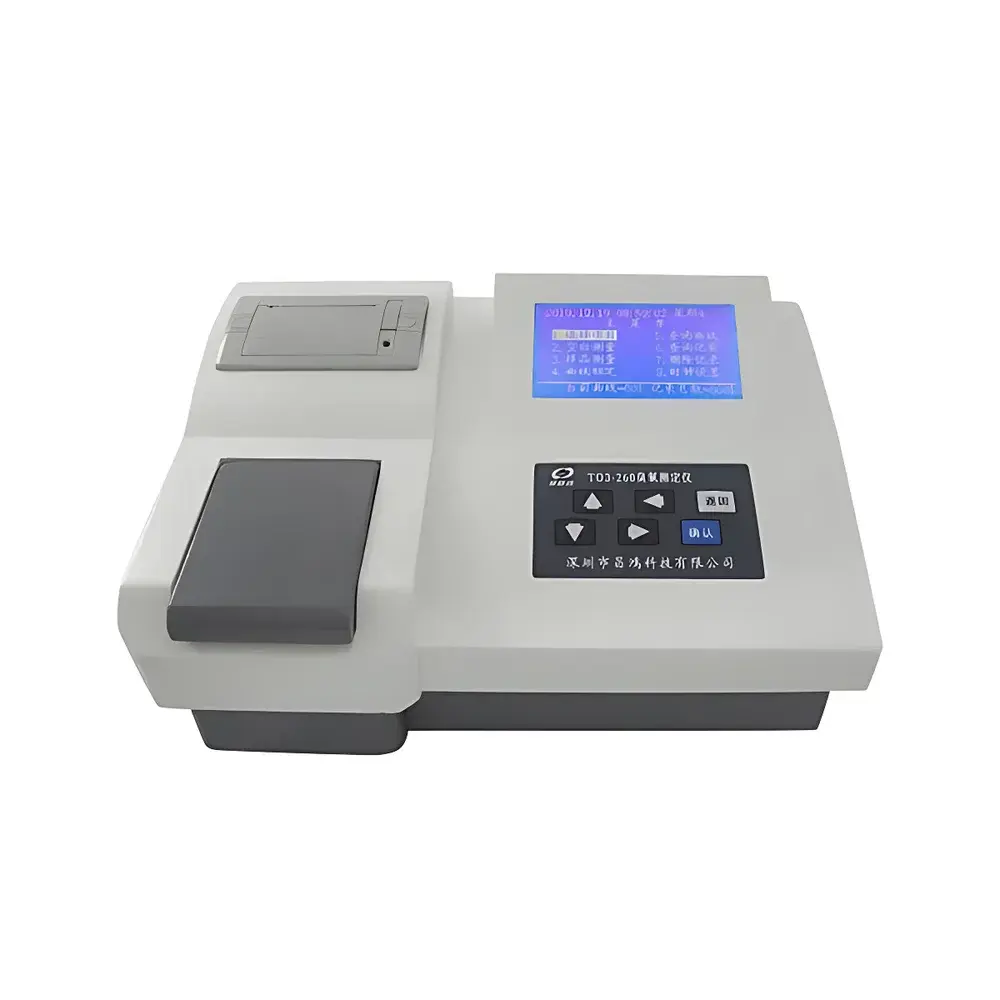
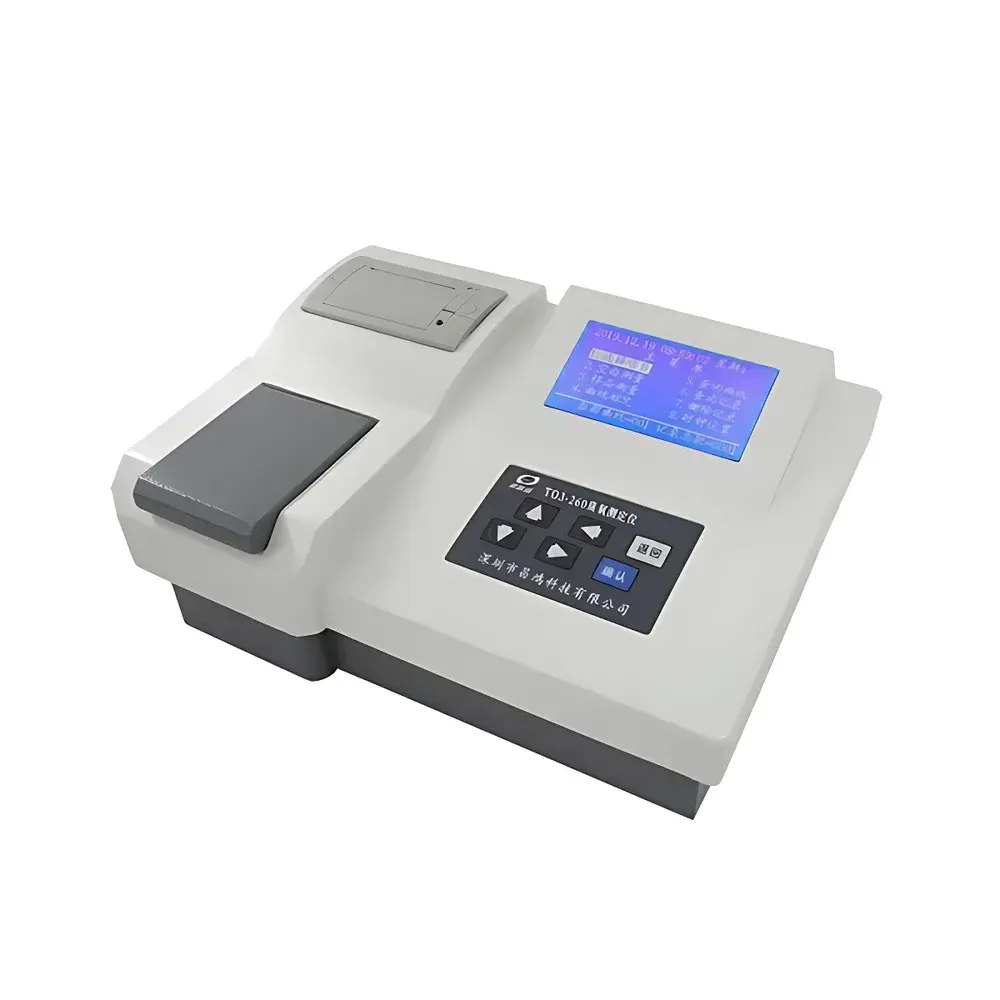
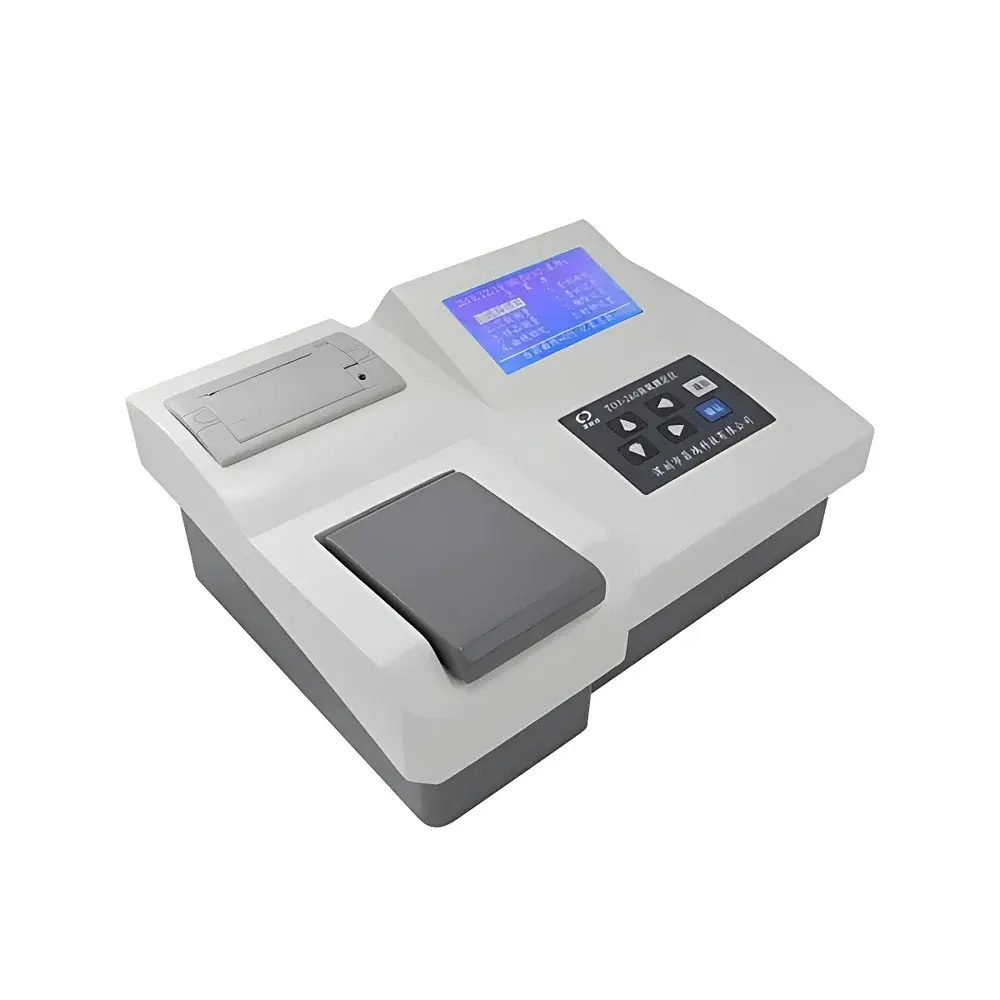
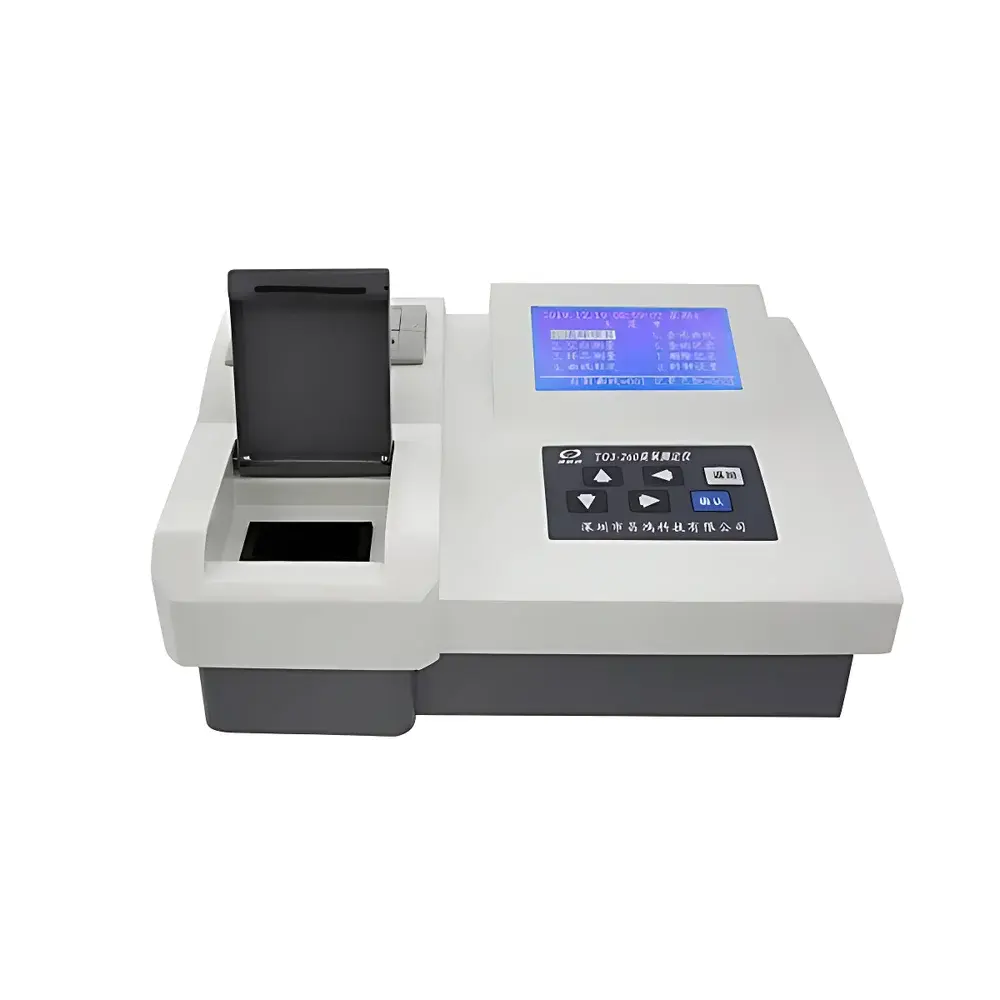
Shenchanghong TO3-260 Ozone Analyzer
| Brand | Shenchanghong |
|---|---|
| Model | TO3-260 |
| Measurement Range | 0.01–2.5 mg/L |
| Accuracy | ≤±5% FS |
| Repeatability | ≤3% RSD |
| Optical Drift | <0.002 A in 20 min |
| Dimensions (H×W×D) | 266 mm × 200 mm × 130 mm |
| Weight | 1 kg |
| Operating Temperature | 5–40 °C |
| Relative Humidity | ≤85% RH |
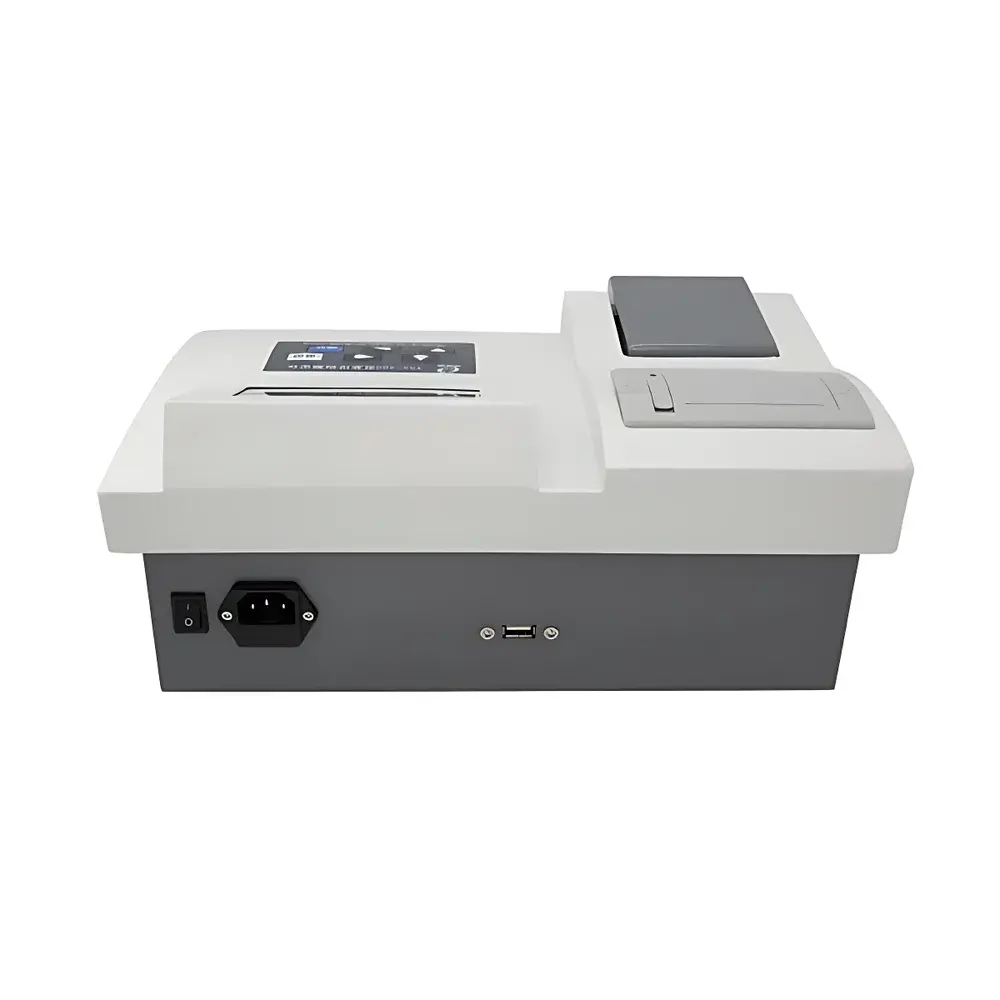
| Power Supply | AC 220 V ±10%, 50 Hz ±0.5 Hz |
| Light Source | High-brightness, long-life (100,000 h) monochromatic cold LED |
| Display | Backlit LCD with Chinese menu interface |
| Data Storage | 10 preloaded calibration curves + 500 measurement records (non-volatile memory) |
| Connectivity | USB port for data export |
| Printer | Integrated thermal printer |
| Compliance | Designed for routine water quality compliance testing per national and municipal drinking water and wastewater monitoring protocols |
Overview
The Shenchanghong TO3-260 Ozone Analyzer is a benchtop photometric instrument engineered for accurate, field-deployable quantification of dissolved ozone (O₃) in aqueous matrices. It operates on the principle of spectrophotometric detection using the indigo trisulfonate method—where ozone selectively decolorizes the indigo dye at 600 nm, generating a linear absorbance response proportional to ozone concentration. The analyzer integrates a precision monochromatic cold LED light source (center wavelength 600 nm ±2 nm), narrow-band optical filtering, and temperature-compensated photodetector electronics to minimize spectral interference and thermal drift. Its microprocessor-controlled architecture ensures stable baseline performance under variable ambient conditions, making it suitable for both laboratory-based QA/QC workflows and on-site environmental monitoring applications.
Key Features
- High-stability optical system featuring a 100,000-hour lifetime monochromatic LED source and optimized narrow-band interference filter—designed to reject ambient light and minimize stray-light-induced error.
- Integrated thermal printer for immediate hard-copy reporting of measurement results, calibration logs, and QC checks—supporting audit-ready documentation in regulated environments.
- Non-volatile memory stores up to 10 user-defined or factory-preloaded calibration curves and 500 individual measurement records, retaining data integrity during power interruption.
- Backlit graphical LCD with intuitive Chinese-language menu navigation—enabling rapid method selection, zeroing, calibration, and result review without external software dependency.
- USB 2.0 interface compliant with standard CDC/ACM class drivers—facilitating direct data transfer to Windows-based PCs for integration into LIMS or Excel-based reporting workflows.
- Rugged, compact housing (266 × 200 × 130 mm; 1 kg) with low-power 16-bit MCU architecture—optimized for extended operation in mobile labs, water treatment control rooms, and field stations.
Sample Compatibility & Compliance
The TO3-260 is validated for use with clarified, low-turbidity water samples—including potable water, surface water, groundwater, secondary effluent, and ozonated industrial process streams. Sample pretreatment is limited to filtration (≤0.45 µm) when particulate matter exceeds 1 NTU. The instrument conforms to fundamental operational requirements outlined in China’s HJ 506–2009 “Determination of Ozone in Water—Indigo Trisulfonate Spectrophotometric Method” and aligns with international methodological principles referenced in ISO 11257:2017 (Water quality—Determination of ozone—Spectrophotometric method). While not certified to GLP or FDA 21 CFR Part 11 out-of-the-box, its data logging structure—including timestamped measurements, operator ID fields (via manual entry), and calibration history—supports traceability necessary for internal QA programs and third-party audits.
Software & Data Management
No proprietary software installation is required for basic operation; all calibration, measurement, and storage functions are executed onboard. The included data acquisition CD provides a lightweight Windows application for bulk export, curve fitting (linear and polynomial), and report generation (PDF/CSV). USB communication follows standard HID protocols—enabling compatibility with custom Python or LabVIEW scripts for automated data ingestion. All stored entries include date/time stamps, measurement mode (e.g., “Standard”, “User Curve”), and associated calibration parameters—ensuring full reproducibility of analytical conditions. Memory management supports overwrite protection for critical calibration curves and selective deletion of measurement records.
Applications
- Verification of ozone dosage and residual decay kinetics in municipal drinking water disinfection systems.
- Performance validation of ozone contactors and advanced oxidation process (AOP) reactors.
- Monitoring ozone breakthrough in membrane filtration or GAC polishing stages.
- QC testing of ozone generator output stability across varying flow rates and concentrations.
- Educational laboratories requiring robust, maintenance-minimal instrumentation for environmental chemistry coursework.
- Regulatory compliance sampling for local environmental protection bureaus conducting routine surface water quality surveillance.
FAQ
What ozone measurement method does the TO3-260 employ?
It uses the standardized indigo trisulfonate colorimetric method (HJ 506–2009), measuring absorbance loss at 600 nm.
Can the instrument be used for seawater or high-salinity samples?
Not without matrix-specific validation; chloride interference may occur above 500 mg/L Cl⁻—dilution or alternative methods (e.g., iodometric titration) are recommended.
Is the calibration curve editable by the user?
Yes—up to 10 user-defined curves can be created, saved, and recalled via the onboard interface.
Does the device support automatic temperature compensation?
No—it assumes sample temperature equilibration to ambient lab conditions (5–40 °C); no integrated thermistor or Peltier element is present.
How often must the optical path be cleaned or maintained?
The sealed cuvette compartment requires cleaning only if visible residue accumulates; routine wiping of the quartz window with lint-free tissue and ethanol is advised every 50 measurements.







