
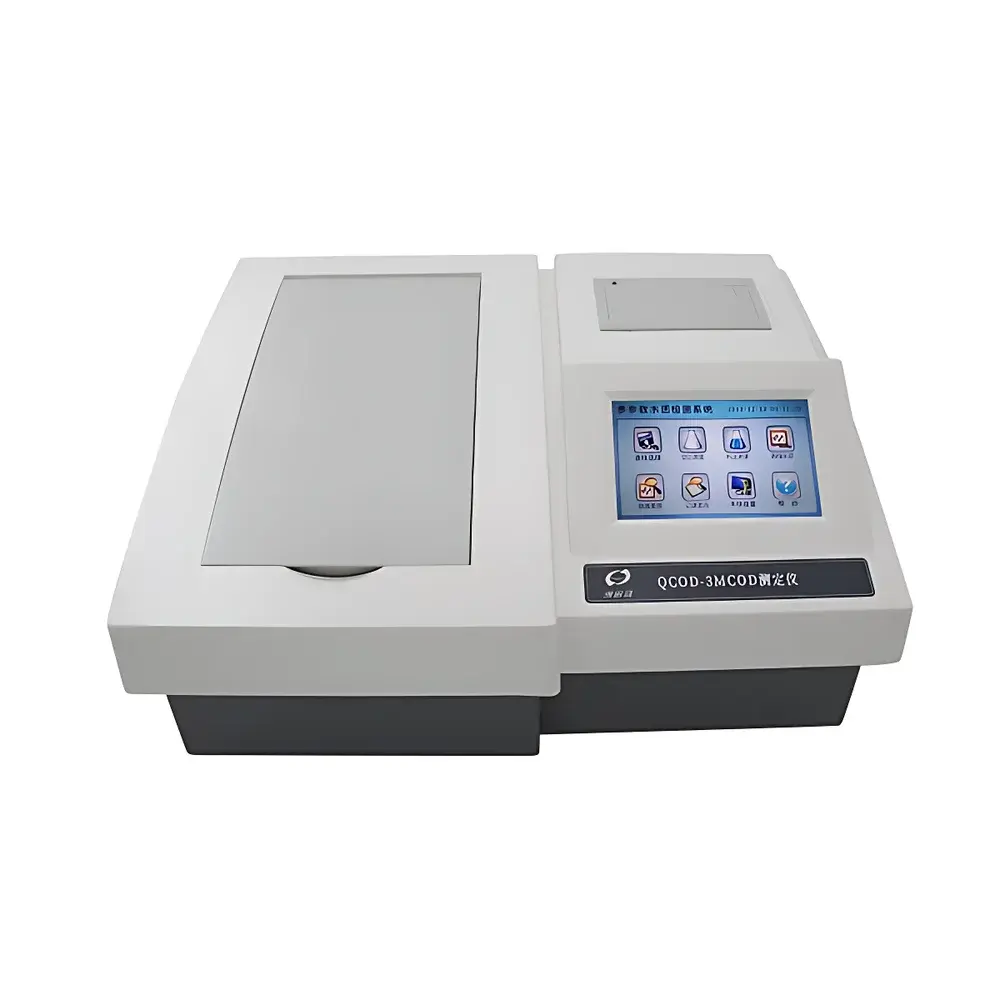
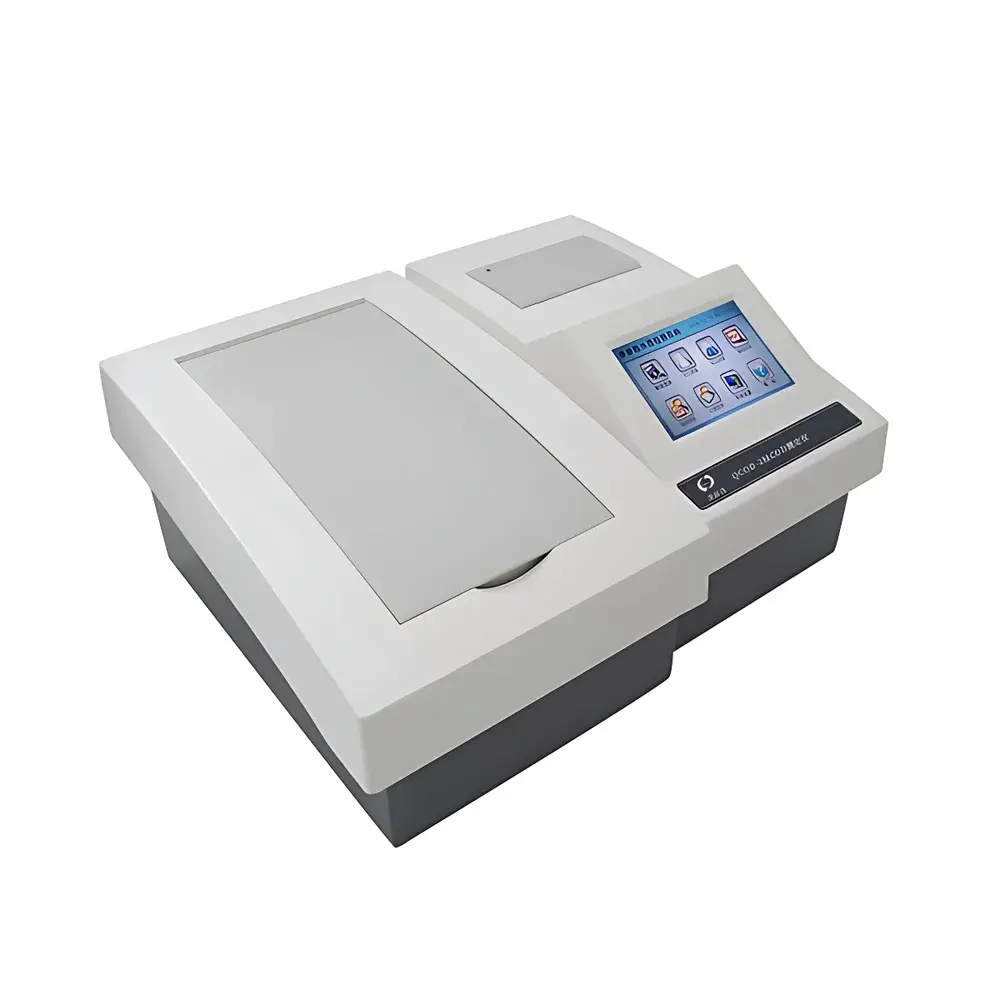
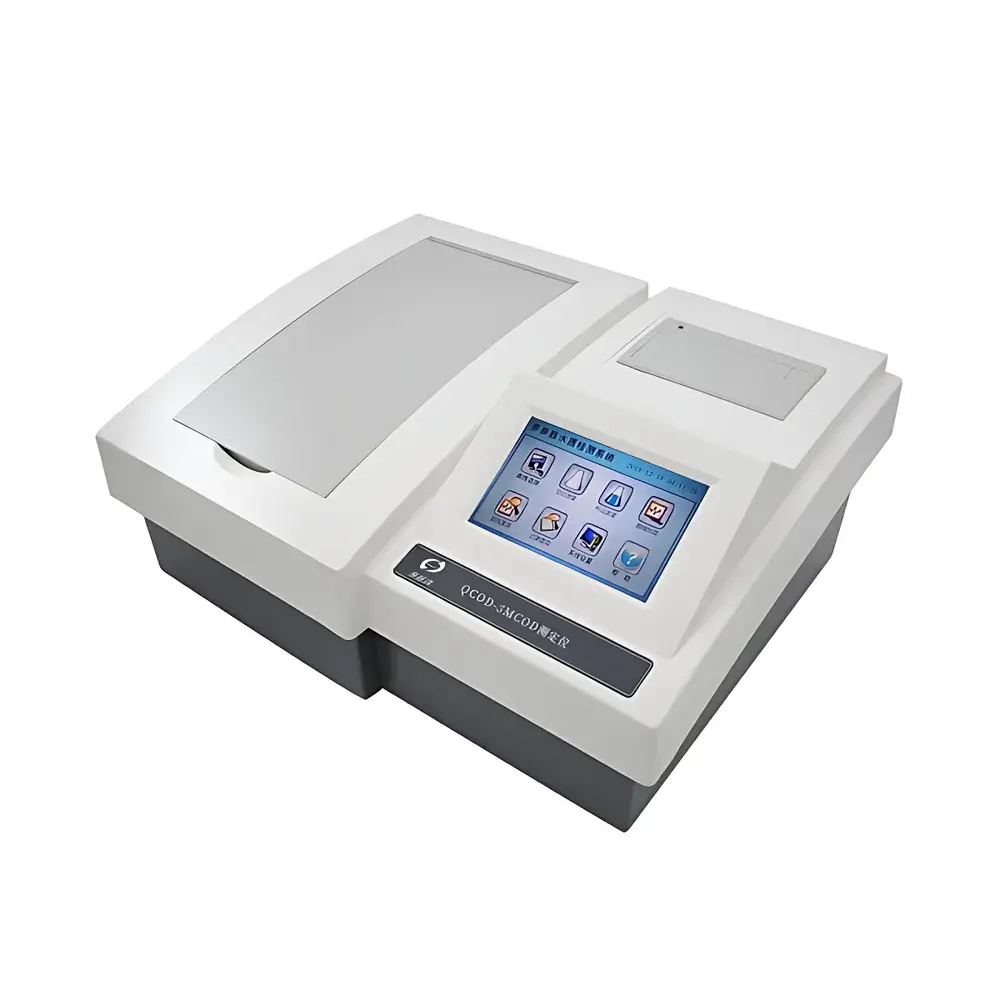
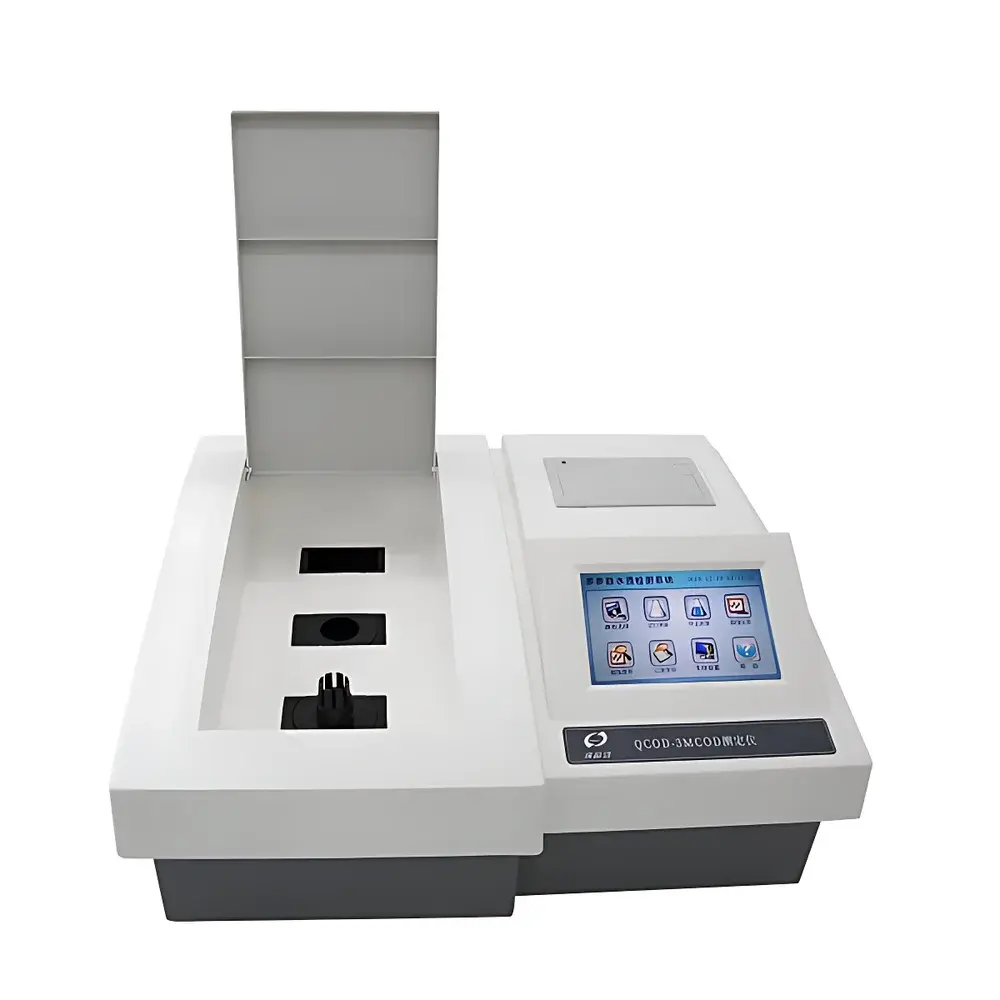
Shenchanghong QCOD-3M Chemical Oxygen Demand (COD) Analyzer
| Brand | Shenchanghong |
|---|---|
| Origin | Guangdong, China |
| Manufacturer Type | Direct Manufacturer |
| Regional Classification | Domestic (China) |
| Model | QCOD-3M |
| Instrument Type | Benchtop Laboratory Analyzer |
| Measurement Principle | Rapid Sealed Catalytic Digestion followed by Spectrophotometric Detection |
| Wavelength(s) | Dual-wavelength optical system (optimized for low-range and high-range COD determination per HJ/T 399–2007) |
| Measurement Range | 5–2000 mg/L COD (dilutable for samples exceeding upper limit) |
| Accuracy | ≤ ±5 % of reading |
| Repeatability | ≤ 3 % RSD |
| Limit of Detection (LOD) | 0.1 mg/L COD |
| Digestion Time | 15 min |
| Batch Capacity | 16 samples per run |
| Temperature Control Range | Ambient to 200 °C |
| Temperature Accuracy | ±0.5 °C |
| Timer Range | 1–9999 min (adjustable) |
| Optical Stability | Absorbance drift < 0.002 A over 20 min |
| Dimensions (Analyzer) | 400 × 310 × 158 mm |
| Dimensions (Digestion Unit DIS-16B, without shield) | 355 × 260 × 135 mm |
| Weight (Analyzer) | 5 kg |
| Weight (Digestion Unit) | 5.5 kg |
| Power Consumption | < 500 W |
| Operating Environment | 5–40 °C ambient temperature |
Overview
The Shenchanghong QCOD-3M Chemical Oxygen Demand (COD) Analyzer is a benchtop laboratory instrument engineered for precise, reproducible, and compliant quantification of chemical oxygen demand in aqueous samples—primarily wastewater, surface water, industrial effluents, and treated influents. It implements the rapid sealed catalytic digestion method, aligned with the Chinese Environmental Protection Industry Standard HJ/T 399–2007, which specifies dichromate oxidation under acidic, high-temperature conditions in a closed vial system. Following digestion, the instrument performs spectrophotometric measurement using dual-wavelength narrow-band interference optics and a stabilized cold light source. The resulting absorbance change—proportional to Cr³⁺ formation—is automatically converted to COD concentration (mg/L) via pre-calibrated calibration curves stored internally. Unlike open-reflux methods, this sealed approach minimizes reagent loss, operator exposure, and inter-laboratory variability while enabling consistent 15-minute digestion cycles across all 16 sample positions.
Key Features
- Compliance-driven design: Fully conforms to HJ/T 399–2007, supporting both low-range (e.g., 5–150 mg/L) and high-range (150–2000 mg/L) COD quantification through wavelength-selective detection.
- Integrated dual-module architecture: Combines a dedicated 16-position digestion unit (DIS-16B) with a standalone spectrophotometric analyzer—both controlled via a unified 7-inch color touchscreen interface with bilingual (English/Chinese) UI support.
- Precision thermal management: PID-controlled heating system maintains ±0.5 °C stability from ambient up to 200 °C; digestion time is programmable from 1 to 9999 minutes, permitting method adaptation beyond standard COD protocols (e.g., total phosphorus or heavy metal digestion).
- Optical integrity assurance: Uses imported long-life LED light sources and thermally compensated optical path design; absorbance drift remains below 0.002 A over 20 minutes—ensuring measurement consistency during batch analysis.
- Robust data handling: Stores up to 300 calibration curves and 1000 test records with timestamping; all memory retains data during power interruption. One-touch system recovery restores default configurations without firmware reinstallation.
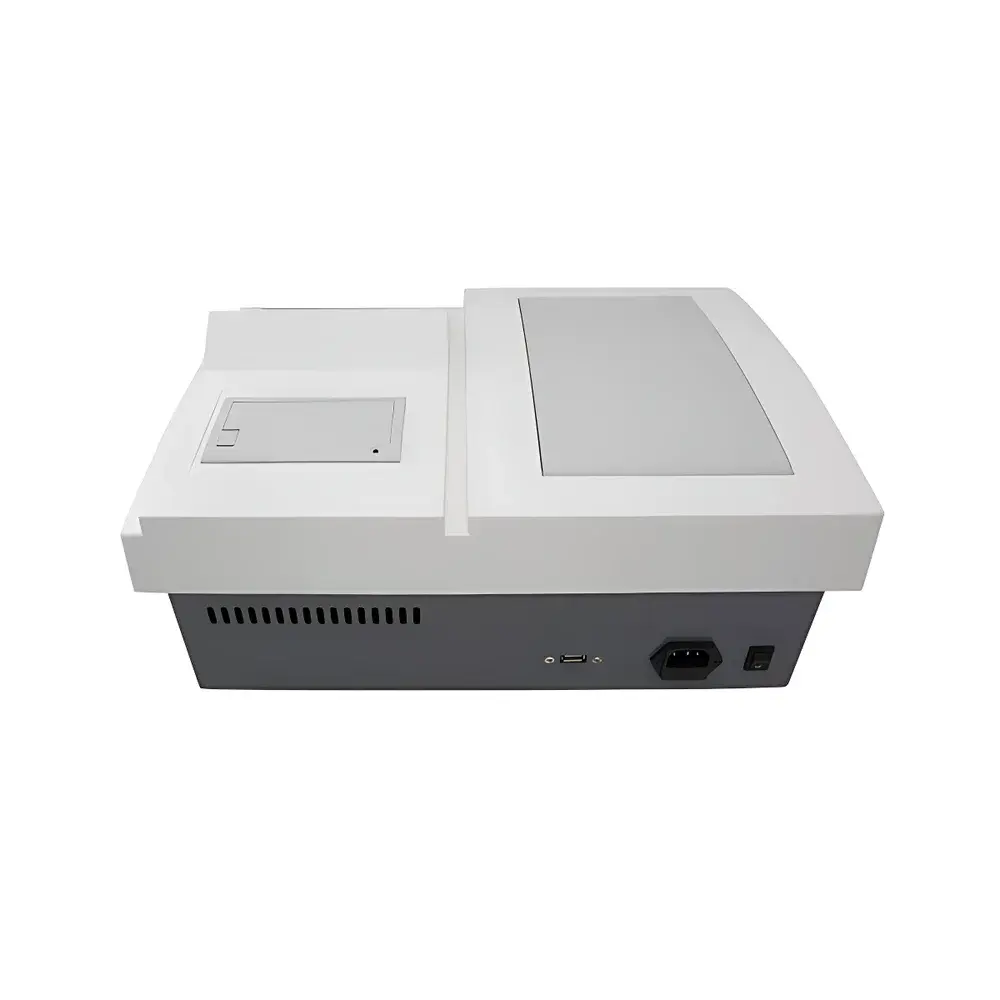
- Regulatory-ready connectivity: Equipped with USB 2.0 port for secure data export to external PCs and built-in thermal printer for immediate hard-copy reporting—supporting audit trails required under GLP and internal QA/QC documentation practices.
Sample Compatibility & Compliance
The QCOD-3M accepts standard 16-mm glass or quartz digestion vials (15 mL capacity), compatible with common potassium dichromate–silver sulfate–sulfuric acid reagent kits. Its anti-chloride interference capability (up to 2000 mg/L Cl⁻) enables reliable COD determination in saline or chlorinated wastewater matrices without prior masking—reducing procedural complexity and reagent consumption. While not certified to ISO 6060 or ASTM D1252, its operational methodology and performance specifications align with the technical intent of these international standards. The instrument’s accuracy (≤±5 %) and repeatability (≤3 % RSD) meet typical requirements for Class II environmental monitoring laboratories operating under China’s MEP guidelines and are suitable for routine compliance reporting to local ecological environment bureaus.
Software & Data Management
The embedded microprocessor runs a real-time operating system optimized for analytical workflows. Calibration curves are generated using NIST-traceable COD standards (e.g., potassium hydrogen phthalate), and users may import or edit multi-point curves via USB. All measurements include metadata: date/time stamp, operator ID (optional), digestion temperature/duration, and selected wavelength mode. Audit logs record parameter changes, calibration events, and print actions—facilitating internal traceability. Though not FDA 21 CFR Part 11-compliant out-of-the-box, the system supports manual signature verification protocols and can be integrated into validated LIMS environments via CSV export. Firmware updates are delivered via USB stick with version-controlled release notes.
Applications
- Wastewater treatment plant (WWTP) process control: Monitoring influent, activated sludge, and effluent COD to optimize aeration, chemical dosing, and sludge retention time.
- Industrial pretreatment verification: Assessing discharge compliance for electroplating, food processing, textile dyeing, and pharmaceutical manufacturing facilities.
- Environmental monitoring stations: Field-deployable in fixed labs for river, lake, and reservoir quality assessment programs.
- Academic and research laboratories: Teaching standardized COD methodology; supporting method development studies involving alternative oxidants or digestion catalysts.
- Third-party testing laboratories: Performing contract analyses under CNAS accreditation scopes referencing HJ/T 399–2007.
FAQ
Does the QCOD-3M require external calibration standards for daily use?
No—preloaded calibration curves are provided, but users must verify accuracy at least once per shift using certified reference materials (e.g., 50 mg/L and 500 mg/L COD standards).
Can the digestion unit be used independently for other tests?
Yes—the DIS-16B module supports customizable temperature/time profiles and is routinely adapted for total phosphorus (HJ 535–2009) and hexavalent chromium (HJ 636–2012) digestion protocols.
Is the instrument compatible with LIMS integration?
Direct API integration is not supported, but CSV-formatted reports exported via USB can be parsed by most LIMS platforms using standard import modules.
What maintenance is required for long-term optical stability?
Annual verification of light source output and cuvette holder alignment is recommended; cleaning of optical windows with spectroscopic-grade methanol every 200 runs maintains baseline integrity.
How does the instrument handle high-chloride samples?
It applies an internal correction algorithm based on chloride concentration input (manually entered or measured separately), reducing bias without requiring mercury-based reagents.







