
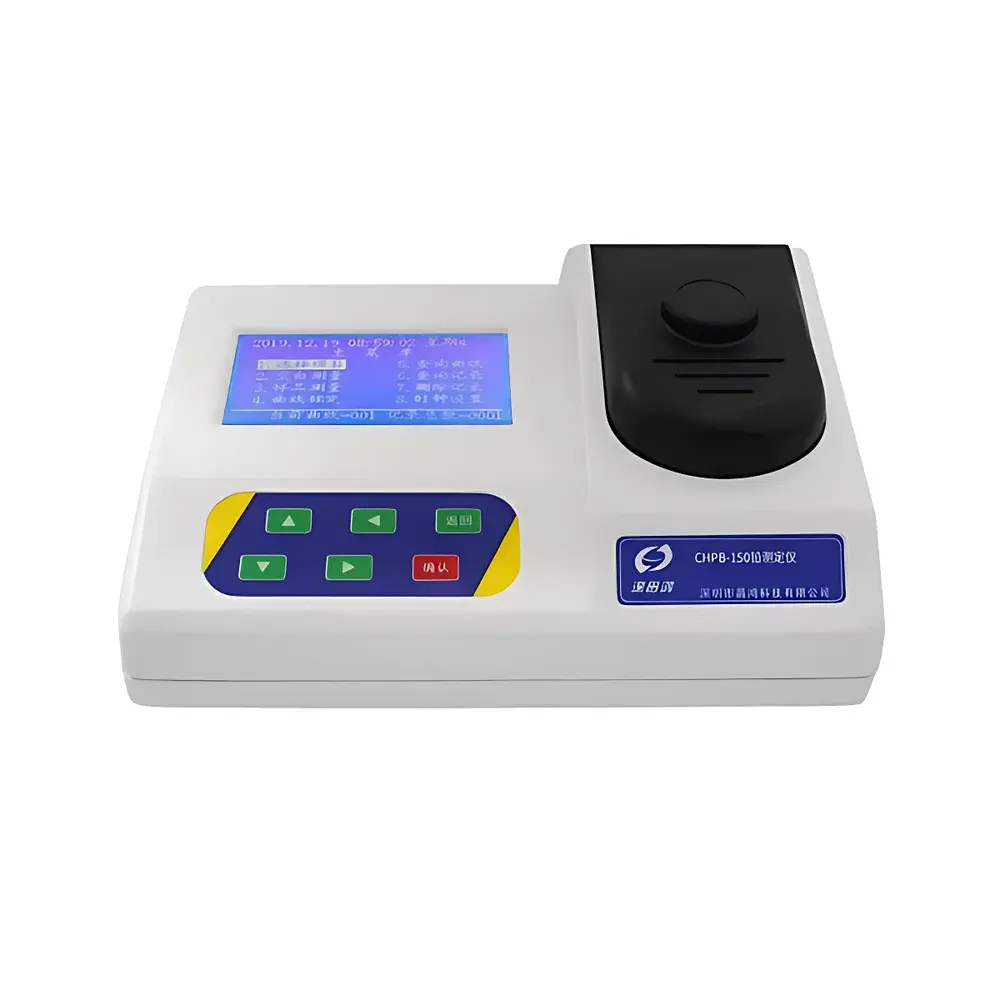
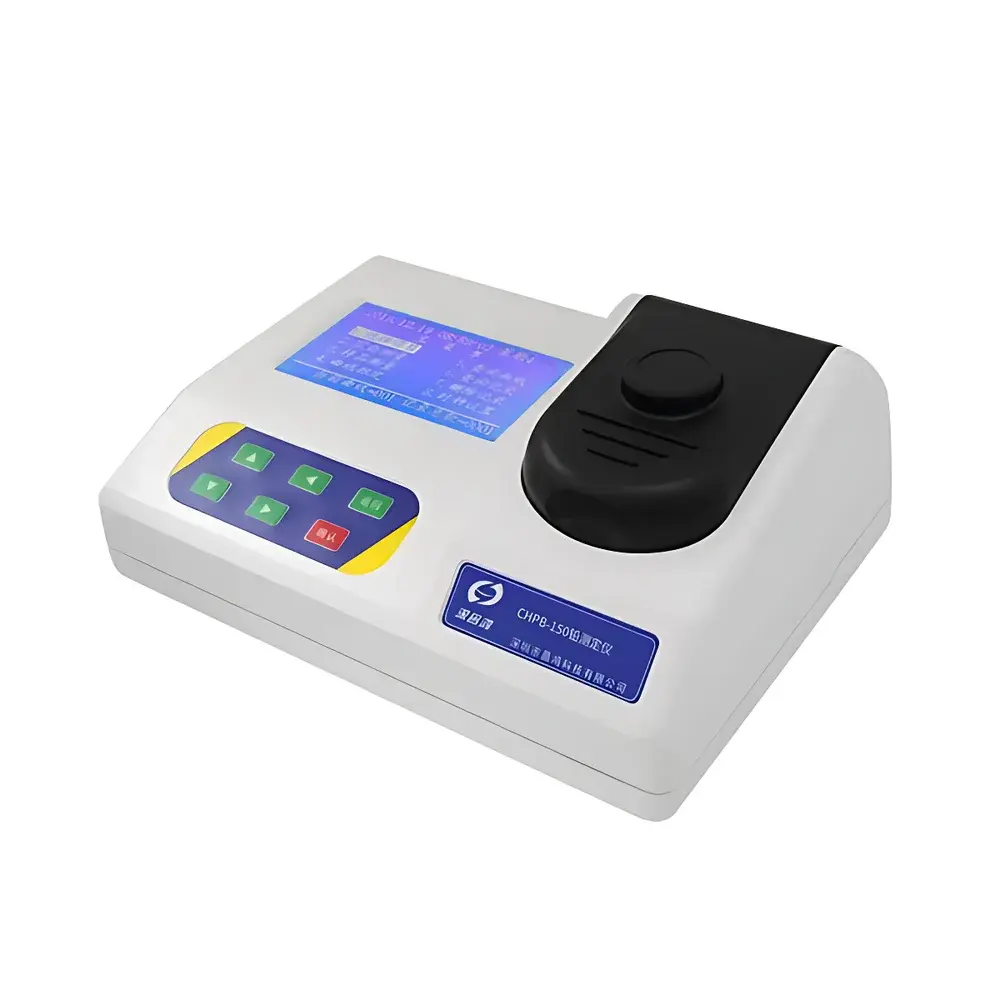
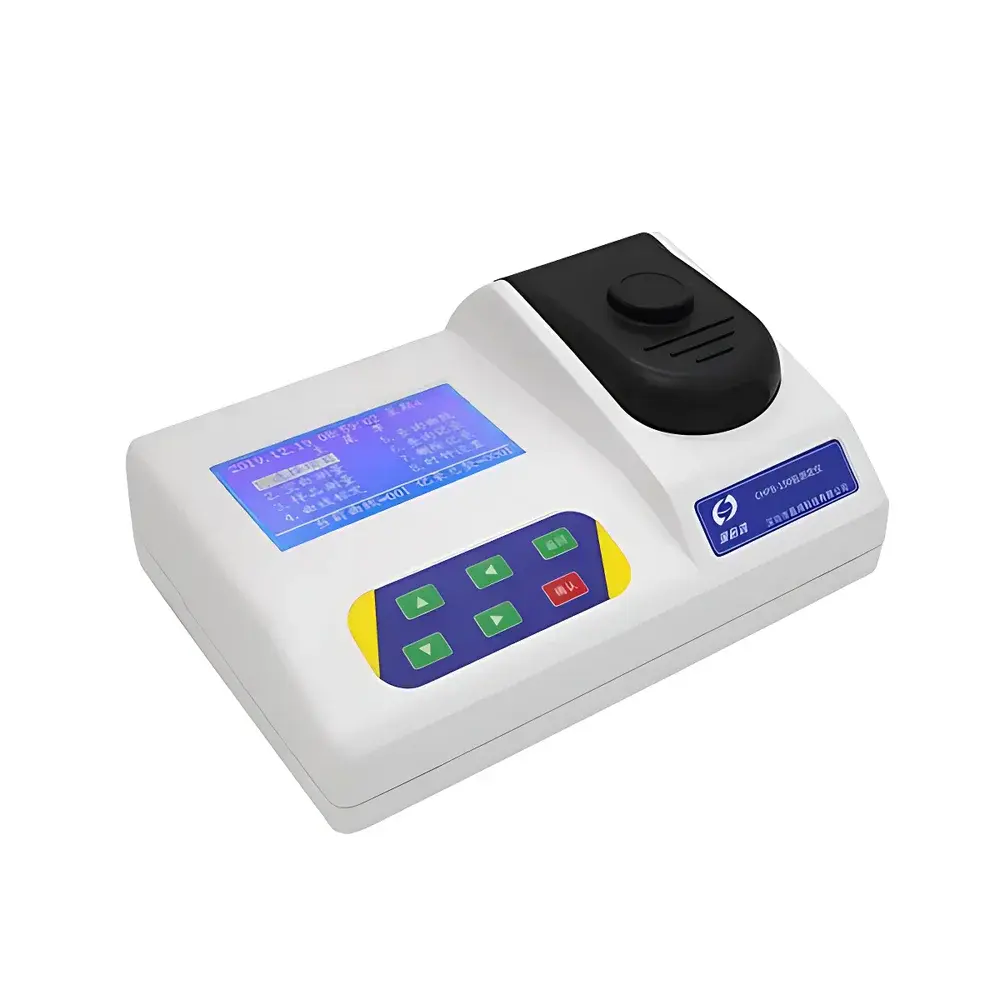
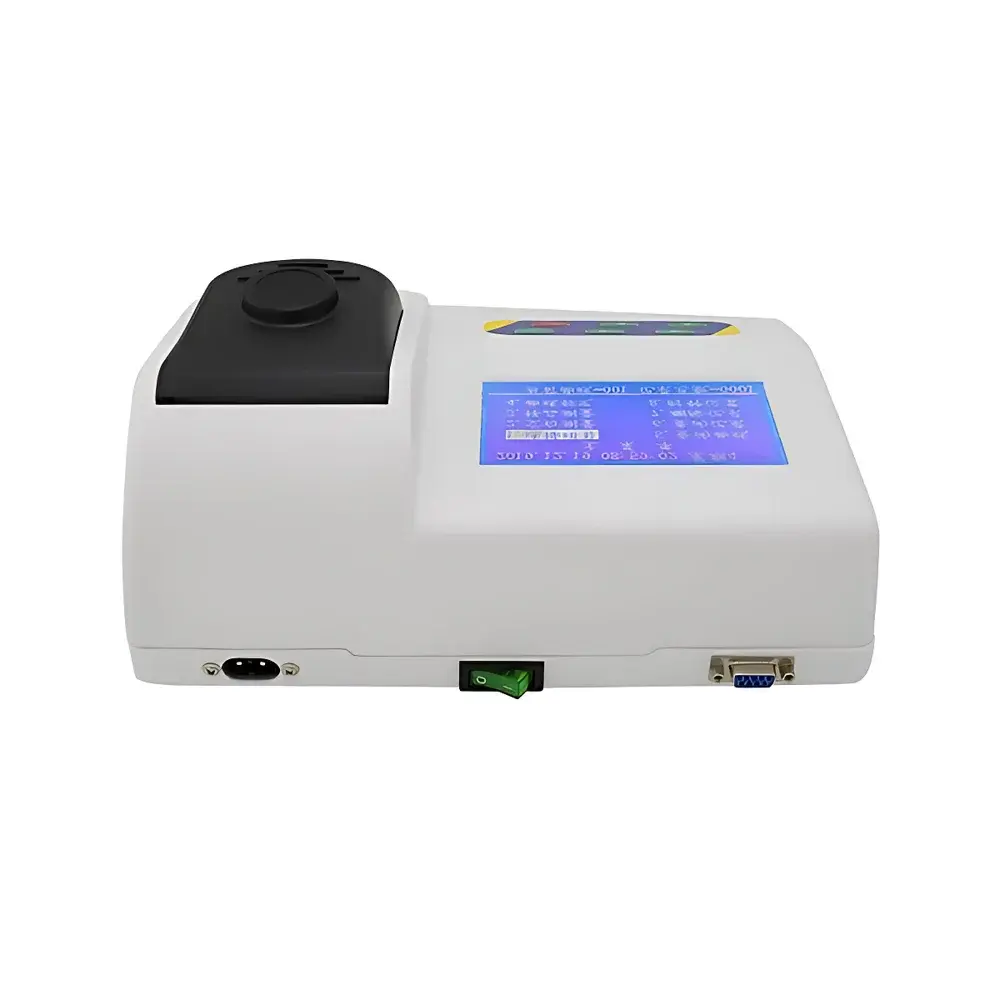
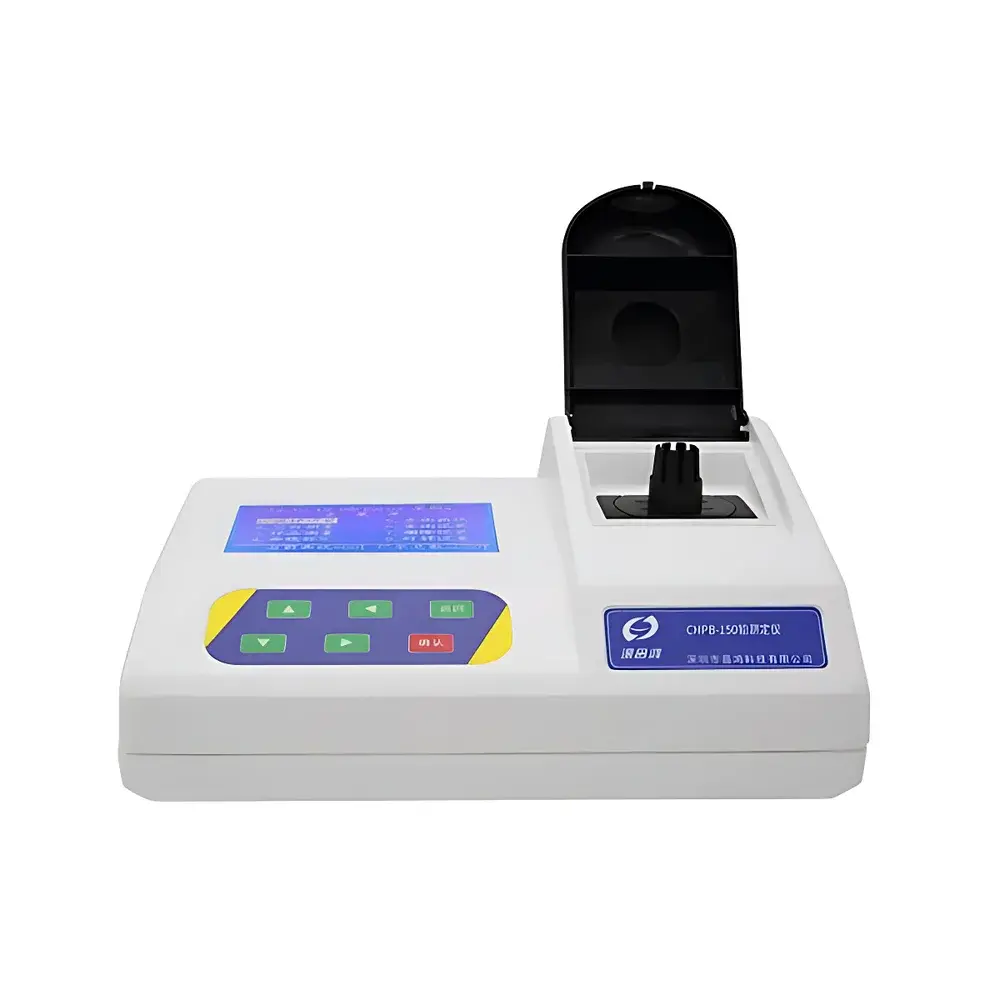
Shenchanghong CHPB-150 Lead Analyzer
| Brand | Shenchanghong |
|---|---|
| Origin | Guangdong, China |
| Manufacturer Type | Direct Manufacturer |
| Country of Origin | China |
| Model | CHPB-150 |
| Instrument Type | Benchtop Laboratory Analyzer |
| Detection Principle | Photometric Method (Colorimetric) |
| Target Analyte | Lead (Pb) |
| Analysis Time | 20 min |
| Accuracy | ≤ ±5% for aqueous samples |
| Precision (Repeatability) | ≤ 3% RSD |
| Resolution | 0.01 mg/L |
| Measurement Range | 0.01–0.50 mg/L |
| Absorbance Drift | < 0.002 A within 20 min |
| Dimensions (W×D×H) | 266 × 200 × 130 mm |
| Weight | < 1 kg |
| Operating Temperature | 5–40 °C |
| Relative Humidity | ≤ 85% RH |
| Power Supply | AC 220 V ± 10%, 50 Hz ± 0.5 Hz |
| Environmental Requirements | Low vibration, minimal electromagnetic interference, no direct sunlight |
Overview
The Shenchanghong CHPB-150 Lead Analyzer is a benchtop photometric instrument engineered for precise, routine quantification of dissolved lead (Pb²⁺) in potable water, surface water, wastewater, and treated effluent. It operates on the principle of colorimetric photometry—specifically, the reaction between lead ions and a proprietary chromogenic reagent under controlled pH and temperature conditions to form a stable colored complex. Absorbance is measured at a defined wavelength using a high-stability optical path, and concentration is calculated via Beer–Lambert law-based calibration. Designed for compliance with standard methods including EPA Method 200.7 (ICP-OES reference), ISO 8692:2022 (water quality — determination of lead by spectrophotometry), and GB/T 5750.6–2023 (Chinese national standard for drinking water analysis), the CHPB-150 delivers trace-level detection capability within a validated linear range of 0.01–0.50 mg/L—covering regulatory thresholds such as the WHO guideline value (0.01 mg/L) and US EPA action level (0.015 mg/L).
Key Features
- High-performance imported light source paired with narrow-band interference filters ensures optical stability (<0.002 A drift over 20 min) and long-term repeatability (≤3% RSD).
- Built-in 16-bit low-power microcontroller architecture enables deterministic response timing, real-time signal processing, and robust environmental tolerance.
- Large backlit LCD display with intuitive Chinese-language menu interface supports operator-guided workflow—from reagent addition prompts to calibration validation checks.
- Dual-curve storage capability: pre-loaded factory calibration curve plus user-definable curve space for method adaptation or matrix-matched standardization.
- Chemically resistant ABS housing provides mechanical durability and corrosion resistance against common laboratory reagents and humid ambient conditions.
- Compact footprint (266 × 200 × 130 mm) and sub-kilogram mass (<1 kg) facilitate integration into constrained lab spaces or mobile field laboratories equipped with stable power supply.
Sample Compatibility & Compliance
The CHPB-150 is optimized for aqueous matrices requiring minimal pretreatment: clarified tap water, filtered surface water, and neutralized industrial effluents. Turbid or highly colored samples must undergo centrifugation or filtration (0.45 µm membrane) prior to analysis. Acid digestion is not required for soluble lead species; however, total recoverable lead assessment may necessitate EPA Method 200.2 (acid digestion) followed by dilution into the instrument’s dynamic range. The analyzer conforms to key regulatory frameworks governing environmental testing laboratories—including ISO/IEC 17025:2017 (general requirements for competence), CNAS accreditation criteria for water testing, and GLP-aligned documentation practices. While not FDA 21 CFR Part 11–certified out-of-the-box, audit-ready data logs (time-stamped absorbance values, calibration history, operator ID) support internal validation for QA/QC reporting.
Software & Data Management
Data handling is performed locally via non-volatile memory capable of storing ≥500 test records with full metadata: sample ID, date/time stamp, calibration curve used, raw absorbance, computed concentration, and operator annotation. Export is supported through USB 2.0 interface to CSV-compatible spreadsheets for further statistical evaluation (e.g., control charting per ASTM D3370). No cloud connectivity or proprietary software installation is required—ensuring data sovereignty and minimizing IT infrastructure dependencies. All firmware updates are delivered via signed binary packages verified against SHA-256 checksums, preserving system integrity during maintenance cycles.
Applications
- Routine monitoring of lead in municipal drinking water distribution systems per national regulatory mandates.
- Pre-compliance screening for industrial discharge permits (e.g., NPDES in the U.S., EU Industrial Emissions Directive).
- Field-deployable verification at remediation sites following lead pipe replacement programs.
- Educational use in university environmental chemistry labs for teaching spectrophotometric assay development and method validation principles.
- Supporting ISO 14001-certified facilities in maintaining environmental aspect registers related to heavy metal emissions.
FAQ
What sample volume is required for one analysis?
A minimum of 10 mL of prepared sample is required per test cycle, including reagent blank and calibration standards.
Can the CHPB-150 measure other metals besides lead?
No—it is purpose-built for lead-specific colorimetry. Cross-reactivity with cadmium, zinc, or copper is minimized via selective chelation chemistry but not eliminated; simultaneous multi-metal analysis requires ICP-MS or AAS instrumentation.
Is digestion required for total lead analysis?
Yes. For total recoverable lead (TR-Pb), samples must first undergo hotplate or microwave-assisted acid digestion per EPA Method 200.2 or ISO 11047 before measurement on the CHPB-150.
How often must the calibration curve be renewed?
Factory calibration remains valid for 12 months under proper storage; however, daily verification using a mid-range check standard (e.g., 0.25 mg/L Pb) is recommended per ISO/IEC 17025 Clause 7.7.
Does the instrument support LIMS integration?
Direct LIMS interfacing is not embedded, but exported CSV files contain structured fields compatible with most laboratory information management systems via batch import protocols.
Related Products







