
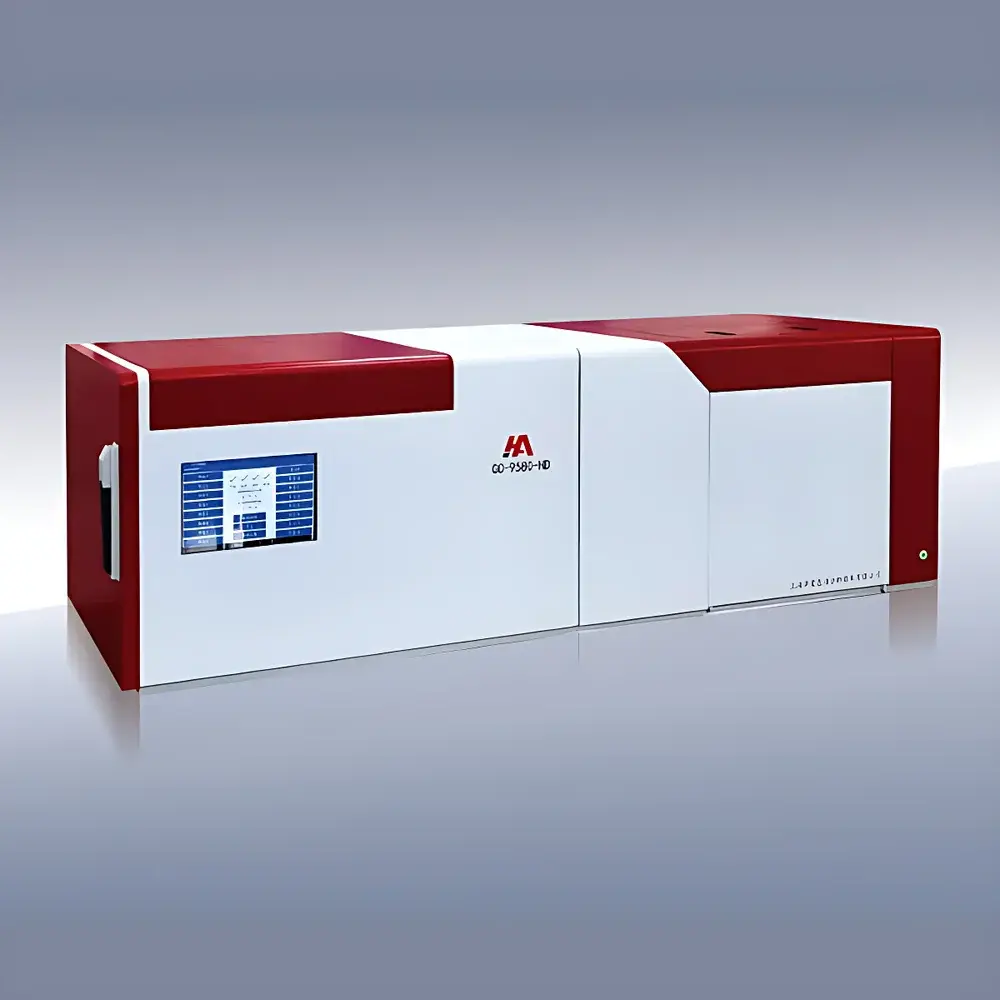
HuaiAi GC-9580-HD Fully Automated Transformer Oil Gas Chromatograph
| Brand | HuaiAi |
|---|---|
| Origin | Shanghai, China |
| Manufacturer Type | Manufacturer |
| Product Origin | Domestic (China) |
| Model | GC-9580-HD |
| Instrument Type | Laboratory Gas Chromatograph |
| Application Field | Power Industry Dedicated |
| Temperature Control Range | 8 °C above ambient to 400 °C |
| Oven Ramp Rate | 1–40 °C/min |
| Oven Cool-down Time | ≤7 min (from 350 °C to 50 °C) |
| Carrier Gas Flow Range & Control | 0–1000 mL/min |
| Carrier Gas Pressure Range & Control | 0–500 kPa |
| Injector Maximum Operating Temperature | 400 °C |
| Injector Pressure Setting Range | 0–500 kPa |
| Injector Total Flow Setting Range | 0–1000 mL/min |
Overview
The HuaiAi GC-9580-HD Fully Automated Transformer Oil Gas Chromatograph is a purpose-built analytical system engineered for the precise, high-throughput quantification of dissolved gases in insulating mineral oils used in power transformers. It implements gas chromatography (GC) with flame ionization detection (FID) and thermal conductivity detection (TCD) to separate and quantify key fault-gas species—H₂, CO, CO₂, CH₄, C₂H₄, C₂H₆, and C₂H₂—in accordance with IEC 60567 and ASTM D3612 methodologies. Unlike general-purpose GC systems, the GC-9580-HD integrates an automated oil sampling module with a dedicated three-detector chromatographic flow path, enabling complete unattended operation from sample vial loading to diagnostic reporting. Its design addresses the critical requirements of electrical utilities and third-party testing laboratories: reproducible gas extraction, minimal carryover, robust temperature programming, and compliance-ready data handling.
Key Features
- Fully integrated automatic oil sampler: accommodates multiple sealed oil vials; auto-reads barcode or RFID identifiers; performs quantitative headspace sampling without manual syringe transfer or mechanical shaking.
- Dedicated triple-detector configuration: one TCD optimized for H₂ detection; two independent FIDs—one calibrated for CO/CO₂, the other for hydrocarbon gases—to eliminate matrix interference and improve C₂H₂ sensitivity and resolution.
- High-stability oven system: temperature programmable from 8 °C above ambient to 400 °C, with ramp rates adjustable between 1 and 40 °C/min and rapid cool-down (≤7 min from 350 °C to 50 °C), ensuring cycle time consistency across multi-sample batches.
- Precision gas control: digitally regulated carrier gas pressure (0–500 kPa) and flow (0–1000 mL/min) at both column inlet and detector zones, supporting helium, hydrogen, or nitrogen carrier options with consistent retention time stability.
- Intelligent cleaning protocol: built-in solvent flush sequence activated via single-button command; includes post-run bake-out and blank injection validation to ensure <0.05% carryover between samples of differing gas concentrations.
- One-touch operational workflow: automated startup, calibration verification, sample analysis, and report generation—all initiated from the instrument control interface without manual intervention.
Sample Compatibility & Compliance
The GC-9580-HD is validated for use with standard 10–20 mL glass vials containing transformer oil samples collected per IEC 60599 guidelines. It supports both manual and automated headspace equilibration (via heated agitator module, optional). All hardware and software components meet CE marking requirements for electromagnetic compatibility (EMC) and low-voltage directive compliance. Data acquisition and processing adhere to principles outlined in ISO/IEC 17025:2017 for testing laboratories. Audit trails, user access levels, electronic signatures, and raw-data integrity are maintained in alignment with FDA 21 CFR Part 11 expectations when configured with compliant software settings.
Software & Data Management
The instrument is operated via HuaiAi ChromaSuite™ v4.x workstation software—a Windows-based platform supporting method development, sequence scheduling, real-time chromatogram visualization, peak integration using adaptive baseline algorithms, and automated fault-gas ratio interpretation (Duval Triangle, Rogers Ratio, IEC 60599 classification). All raw chromatographic data (including detector voltage traces, temperature logs, and valve timing events) are stored in vendor-neutral .cdf format. The software supports export to CSV, PDF, and LIMS-compatible XML templates. Calibration curves, QC check standards, and instrument performance logs are version-controlled and timestamped for GLP/GMP traceability.
Applications
- Routine dissolved gas analysis (DGA) for predictive maintenance of oil-immersed power transformers, reactors, and bushings.
- Commissioning and acceptance testing of new or refurbished equipment prior to energization.
- Root-cause failure investigation following abnormal relay operations or thermal events.
- Long-term trend monitoring of gas evolution profiles to assess insulation aging mechanisms (e.g., cellulose degradation vs. oil oxidation).
- Verification of degassing efficiency after on-site oil reclamation or vacuum treatment procedures.
- Support for regulatory reporting under national grid codes requiring periodic DGA submission (e.g., State Grid Corporation of China, ENTSO-E member protocols).
FAQ
What standards does the GC-9580-HD support for transformer oil DGA?
It complies with IEC 60567 (sampling and analysis), IEC 60599 (interpretation), ASTM D3612 (Type C method), and GB/T 7252 (Chinese national standard).
Can the system analyze non-hydrocarbon gases such as O₂ and N₂?
No—the current configuration is optimized exclusively for the seven key fault gases specified in IEC 60599. Expansion to permanent gases requires hardware modification and additional column/detector modules.
Is remote monitoring and control supported?
Yes—ChromaSuite™ includes secure TCP/IP communication capability, allowing supervised remote operation and real-time alarm notification via SNMP or email gateway integration.
What maintenance intervals are recommended for routine operation?
Column conditioning every 200 injections; injector liner replacement every 500 injections; FID jet cleaning every 1000 injections; annual full system performance verification including retention time stability, sensitivity, and precision checks.
Does the system support LIMS integration?
Yes—via HL7 or ASTM E1384-compliant data export interfaces, supporting bidirectional sample ID exchange and result ingestion into enterprise laboratory information management systems.
Related Products






