
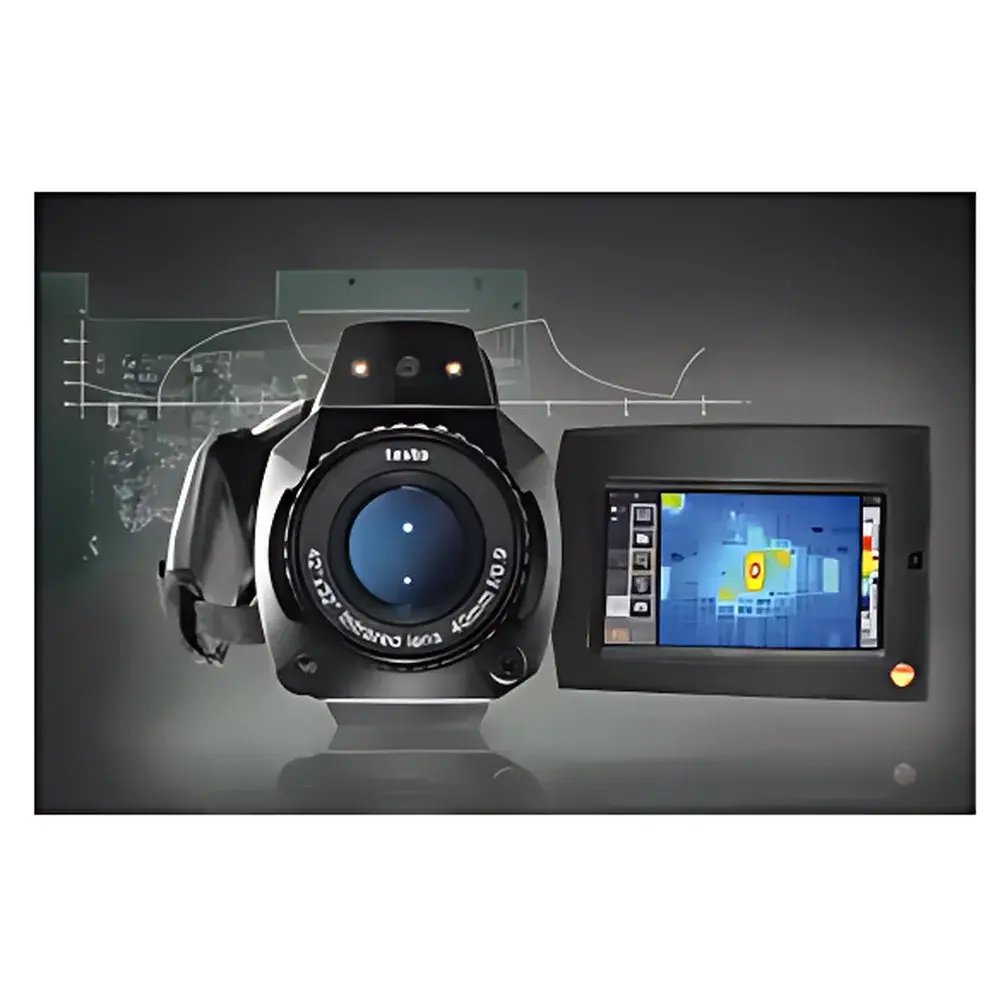
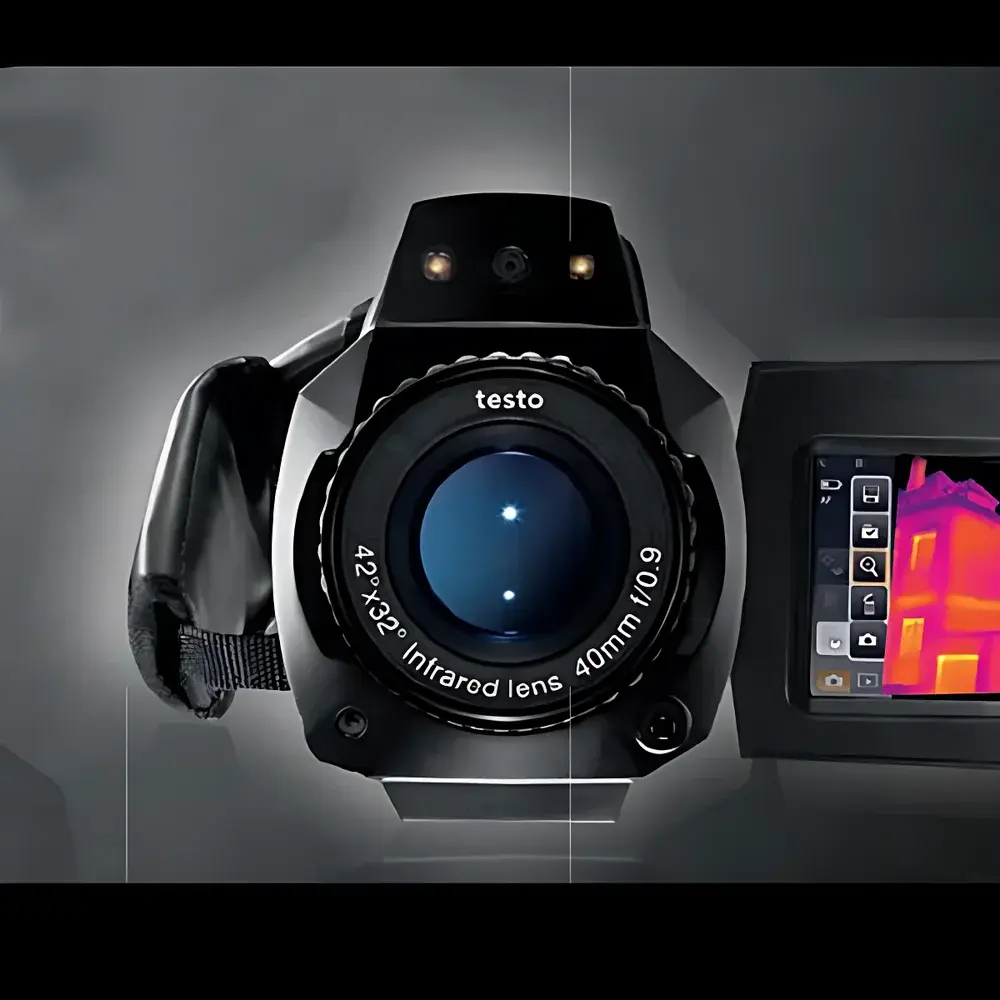
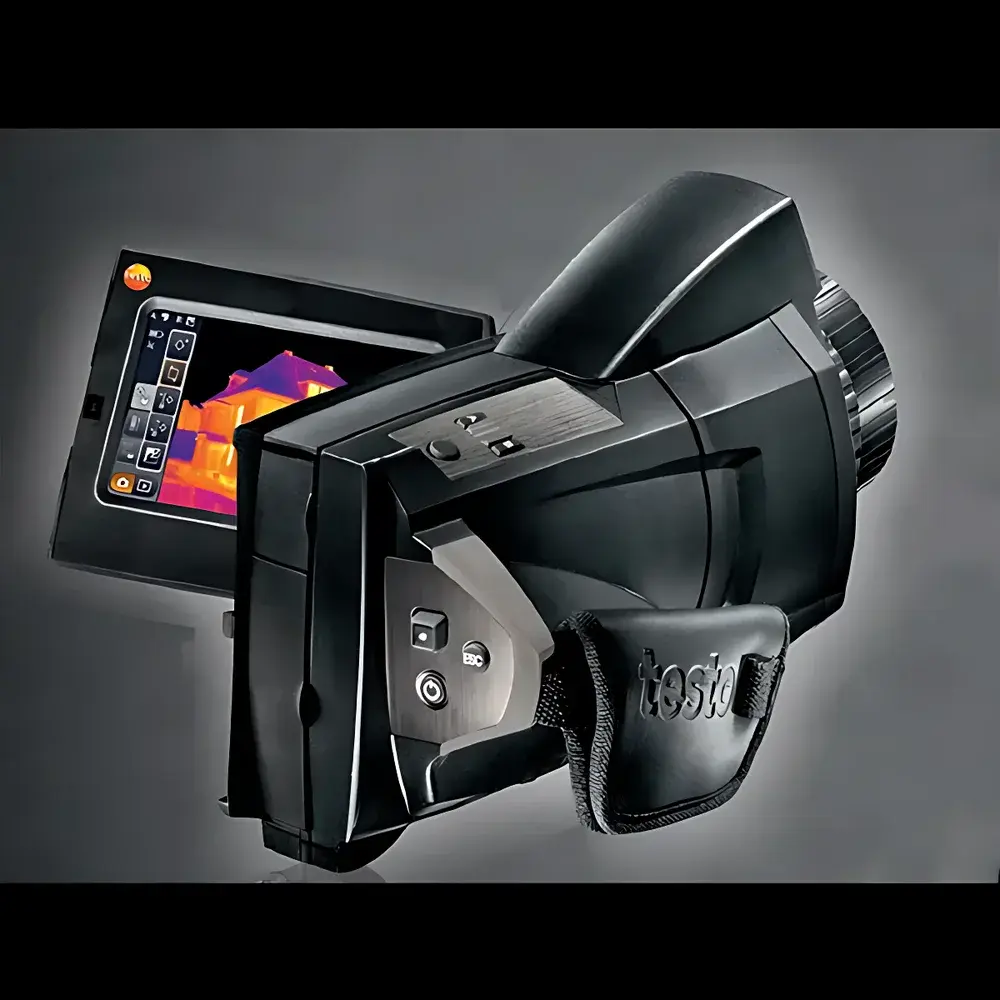
testo 885 Advanced Infrared Thermal Imaging Camera
| Brand | testo |
|---|---|
| Origin | Germany |
| Model | 885 |
| Measurement Method | Non-contact |
| Detector Type | Uncooled Microbolometer |
| Spectral Range | 7.5–14 µm |
| IR Resolution | 320 × 240 pixels |
| SuperResolution Output | 640 × 480 pixels (via software interpolation) |
| Thermal Sensitivity (NETD) | < 30 mK |
| Temperature Range | –50 °C to +650 °C (extendable to +1200 °C with optional high-temp module) |
| Accuracy | ±2 °C or ±2% of reading (whichever is greater) |
| Frame Rate | 9 Hz / 33 Hz (selectable) |
| Focus | Motorized autofocus, minimum focus distance 10 cm |
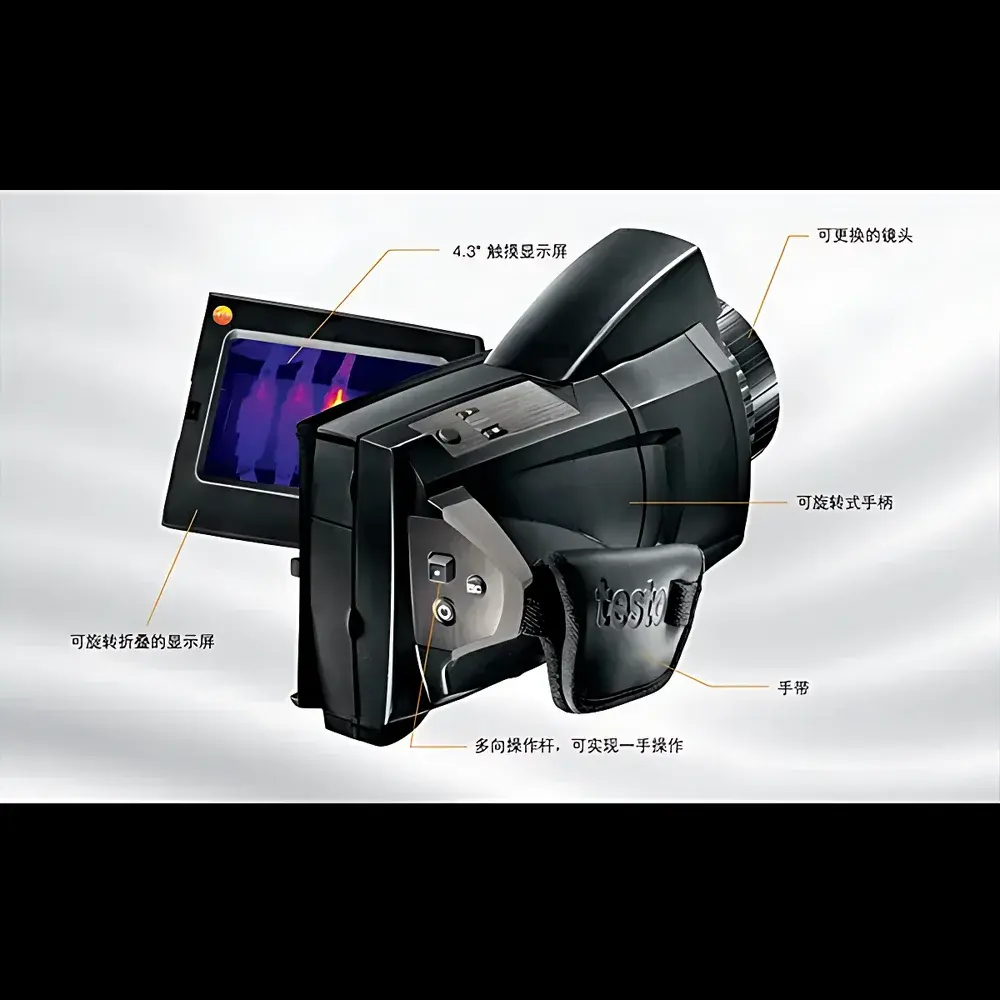
| Display | Articulating foldable LCD with ergonomic rotating handle |
| Image Format | JPEG (radiometric) + embedded visible-light image |
| Video Recording | Full radiometric infrared video (MP4) |
| Optional Modules | PTA Process Trend Analysis, Panoramic Image Stitching, QR Code Auto-Tagging, Surface Moisture Risk Imaging, Fever Screening Mode, High-Temp Measurement Kit, Voice Annotation via headset |
Overview
The testo 885 Advanced Infrared Thermal Imaging Camera is an engineered solution for precision non-contact thermography in industrial maintenance, energy auditing, building diagnostics, and R&D environments. Based on uncooled microbolometer detector technology operating within the long-wave infrared (LWIR) spectral band (7.5–14 µm), the instrument delivers high-fidelity thermal data without cryogenic cooling—ensuring operational reliability, low power consumption, and rapid startup. Its native 320 × 240 pixel infrared resolution provides 76,800 independent temperature measurement points per frame, enhanced by testo’s proprietary SuperResolution algorithm to yield a synthetic 640 × 480 pixel thermal image—improving edge definition and spatial discrimination while preserving radiometric integrity. Designed for field-deployed professionals—including electrical inspectors, HVAC engineers, facility managers, and quality assurance technicians—the testo 885 meets the functional and ergonomic demands of real-world thermographic workflows under variable lighting, ambient temperature, and access constraints.
Key Features
- Motorized autofocus with 10 cm minimum focusing distance—enabling sharp thermal imaging of small components, circuit traces, or insulation gaps.
- Ergonomic rotating handle and fully articulating foldable display—supporting one-handed operation and optimal viewing angles in confined or elevated positions.
- Integrated 5-megapixel visible-light camera with LED illumination—capturing synchronized optical reference images aligned with each radiometric thermal frame for unambiguous asset identification and reporting.
- Selectable frame rates (9 Hz for general diagnostics; 33 Hz for dynamic thermal events such as switching transients or convective airflow analysis).
- Radiometric JPEG export—retaining full temperature data per pixel for post-processing, enabling quantitative analysis in third-party software or testo IRSoft.
- Onboard voice annotation support via standard 3.5 mm headset—allowing contextual verbal notes directly linked to captured thermal images.
Sample Compatibility & Compliance
The testo 885 is designed for non-destructive, non-invasive surface temperature assessment across electrically live equipment, building envelopes, mechanical systems, photovoltaic arrays, and process infrastructure. It complies with IEC 62471 (photobiological safety), EN 61000-6-3 (EMC emissions), and EN 61000-6-2 (EMC immunity). While not certified for medical diagnostic use, its optional Fever Screening mode operates in accordance with ISO/TR 13154:2017 for preliminary elevated skin temperature detection in controlled screening environments (e.g., transit hubs, manufacturing entrances), requiring environmental stabilization and operator training per local public health guidance. The instrument supports audit-ready documentation workflows compatible with ISO 50001 energy management systems and ASTM C1060/C1153 standards for infrared inspection of building thermal envelopes.
Software & Data Management
testo IRSoft is a Windows-based desktop application that enables full radiometric analysis, emissivity correction, isotherm mapping, delta-T calculations, and comparative overlay of thermal sequences. It supports automated report generation compliant with ISO/IEC 17020 and ASTM E1934 requirements—including metadata stamping (time, GPS, user ID, lens type, emissivity setting), customizable templates, and digital signature fields. Optional QR code auto-tagging integrates with facility asset management systems: scanning a pre-assigned QR label triggers automatic geotagging, naming, and folder-based archival of thermal images. Panoramic stitching functionality exports geo-referenced wide-field thermal composites suitable for façade heat loss quantification or solar farm hotspot mapping. All measurement data—including time-series PTA logs and full radiometric video—is stored in vendor-neutral formats (JPEG + CSV, MP4 + XML metadata) ensuring long-term interoperability and GLP-aligned traceability.
Applications
- Electrical Infrastructure Maintenance: Detection of loose connections, overloaded circuits, and failing breakers in switchgear, transformers, and busbars—prioritizing interventions before catastrophic failure.
- Photovoltaic System Diagnostics: Identification of hot spots indicative of cell cracking, solder bond failures, bypass diode malfunction, or soiling-induced mismatch losses across utility-scale or rooftop arrays.
- Building Energy Auditing: Quantitative evaluation of insulation defects, thermal bridging, air leakage paths, and moisture accumulation behind cladding or roofing membranes.
- Mechanical & Process Monitoring: Bearing temperature trending, steam trap functionality verification, refractory lining integrity checks, and heat exchanger fouling assessment.
- R&D Thermal Characterization: Time-resolved thermal profiling of PCBs, battery cells, LED arrays, and additive-manufactured components under controlled thermal load cycles.
FAQ
What is the effective thermal resolution after applying SuperResolution?
SuperResolution does not increase the native detector count but applies a sub-pixel shift algorithm during multi-frame capture to reconstruct a higher apparent resolution (640 × 480) while maintaining calibrated radiometric accuracy across all interpolated pixels.
Can the testo 885 be used for predictive maintenance in hazardous areas?
Yes—its non-contact measurement capability and IP54-rated enclosure permit safe thermal inspection of energized assets in Class I Division 2 or ATEX Zone 2 environments when operated outside the hazardous boundary per NFPA 70E arc-flash risk assessment protocols.
Is radiometric video recording compliant with FDA 21 CFR Part 11?
Raw video files are not inherently Part 11-compliant; however, when exported and archived via testo IRSoft with enabled electronic signatures, audit trails, and secure user authentication, the resulting analytical reports meet predicate rule requirements for regulated industries.
Does the surface moisture imaging function provide quantitative moisture content?
No—it calculates surface condensation risk by comparing measured surface temperature against calculated dew point (derived from manually entered ambient T/RH), displaying risk level via color-coded visual indicators (green/yellow/red) per DIN 4108-3 Annex B guidelines.
How is calibration maintained over time?
The instrument includes internal reference sources for drift compensation and supports annual factory recalibration traceable to PTB (Physikalisch-Technische Bundesanstalt) standards, documented per ISO/IEC 17025.



