
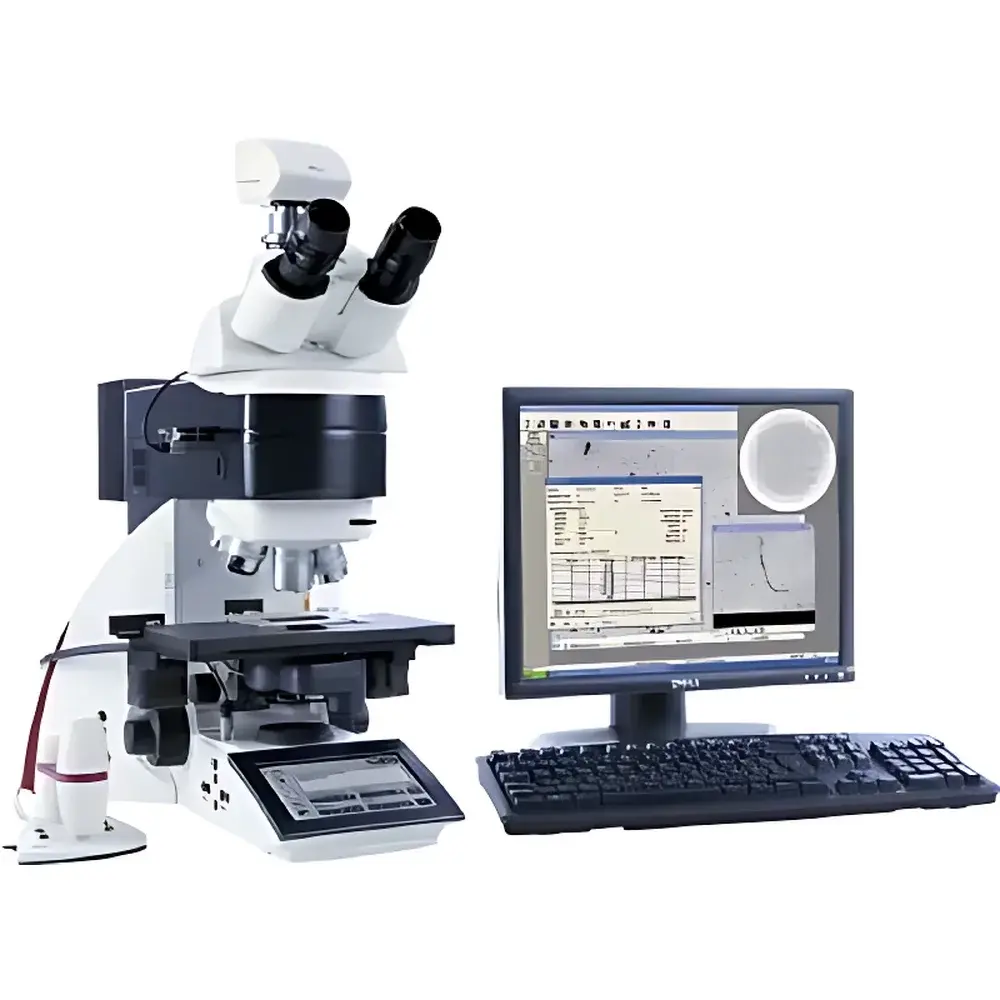
Leica Cleanliness Expert Automated Particle Contamination Analysis System
| Brand | Leica |
|---|---|
| Origin | Germany |
| Manufacturer Type | Authorized Distributor |
| Import Status | Imported |
| Model | Cleanliness Expert |
| Pricing | Available Upon Request |
Overview
The Leica Cleanliness Expert is a fully automated, high-precision particle contamination analysis system engineered specifically for compliance-driven quality control in automotive, aerospace, hydraulic, and precision manufacturing industries. Built upon Leica Microsystems’ decades of expertise in optical metrology and integrated with industry-validated image analysis algorithms, the system implements standardized light microscopy combined with advanced digital image processing to quantify particulate contamination on filter membranes (e.g., polycarbonate or mixed-cellulose ester filters) according to ISO 16232, VDA 19.1, and ISO 4406. Its core measurement principle relies on brightfield and darkfield illumination modes coupled with high-resolution stereo and upright microscope optics, enabling consistent, operator-independent detection and classification of particles ≥5 µm across entire filter surfaces — without manual stage navigation or subjective thresholding.
Key Features
- Fully automated scanning workflow: motorized XYZ stage with auto-focus and dynamic edge detection ensures complete, repeatable coverage of standard 47 mm or 90 mm filter membranes in under 10 minutes per sample.
- Intelligent particle classification engine: distinguishes metallic vs. non-metallic particles, reflective vs. non-reflective contaminants, and organic fibers using multi-spectral contrast analysis and morphological feature extraction — achieving >90% classification accuracy validated against reference standards.
- Coordinate-mapped imaging architecture: every detected particle is assigned precise X-Y-Z spatial coordinates and timestamped metadata; raw images and coordinate data are retained for full traceability and retrospective re-analysis.
- Dual-illumination capability: configurable brightfield (for general morphology and size distribution) and coaxial darkfield (for enhanced detection of transparent, low-contrast particles such as glass shards or polymer fragments).
- Robust mechanical design: German-engineered optical path stability, temperature-compensated focus mechanism, and vibration-damped stage ensure long-term measurement reproducibility across shifts and laboratories.
Sample Compatibility & Compliance
The Cleanliness Expert supports standard filtration media used in component cleanliness testing, including membrane filters with pore sizes from 0.45 µm to 5.0 µm, as well as depth filters compliant with ISO 16232 Annex A. It accommodates filters mounted on standard Petri dishes or aluminum sample holders. The system’s analytical output conforms to reporting requirements defined in ISO 16232-8 (particle counting and sizing), VDA 19.1 (automotive cleanliness inspection), and USP (for pharmaceutical fluid pathway validation where applicable). Audit trails, user access logs, and electronic signatures comply with FDA 21 CFR Part 11 and EU Annex 11 when deployed in regulated environments under appropriate IT validation protocols.
Software & Data Management
The embedded Cleanliness Expert software (v5.x or later) provides a secure, role-based interface with configurable user permissions, method templates, and customizable reporting modules. All image data, particle tables, and calibration records are stored in an ACID-compliant SQLite database with optional export to CSV, PDF, or XML formats for LIMS integration. Software features include GLP-compliant audit trail logging (recording all parameter changes, user actions, and result modifications), automatic backup scheduling, and encrypted data-at-rest protection. Method validation packages—including repeatability studies, limit-of-detection verification, and inter-laboratory comparison reports—are available to support IQ/OQ/PQ documentation.
Applications
This system is routinely deployed in supplier quality labs and OEM technical centers for evaluating cleanliness of fuel injectors, brake calipers, transmission valves, electric motor stators, battery cooling plates, and high-pressure common rail components. It supports root cause analysis of wear debris, verification of washing process efficacy, qualification of cleaning equipment (e.g., ultrasonic tanks, spray jets), and ongoing monitoring of production line contamination control. Beyond automotive, it serves hydraulic system manufacturers (ISO 4406 code assignment), semiconductor equipment suppliers (particle shedding assessment), and medical device firms validating fluid-path sterilization cycles.
FAQ
What filter types and diameters does the Cleanliness Expert support?
Standard 47 mm and 90 mm circular filters — including PC, MCE, PTFE, and nylon membranes — mounted on flat carriers or Petri dishes.
Can the system be integrated into an existing LIMS or MES environment?
Yes, via configurable CSV/XML export, RESTful API endpoints (available under extended license), and direct database query access for validated installations.
Is the software compliant with FDA 21 CFR Part 11 requirements?
When configured with electronic signatures, audit trail enforcement, and appropriate system administration controls, it meets Part 11 technical and procedural criteria for use in regulated quality systems.
How is calibration and performance verification performed?
Using NIST-traceable particle size standards (e.g., Duke Scientific microspheres) and certified reference filters; annual verification protocols align with ISO/IEC 17025 laboratory accreditation requirements.
Does the system require dedicated environmental conditions?
Operational specifications require ambient temperature stability (20–25°C ±2°C), relative humidity ≤60%, and minimal airborne particulate levels — consistent with Class 8 (ISO 14644-1) cleanroom-adjacent lab spaces.




