
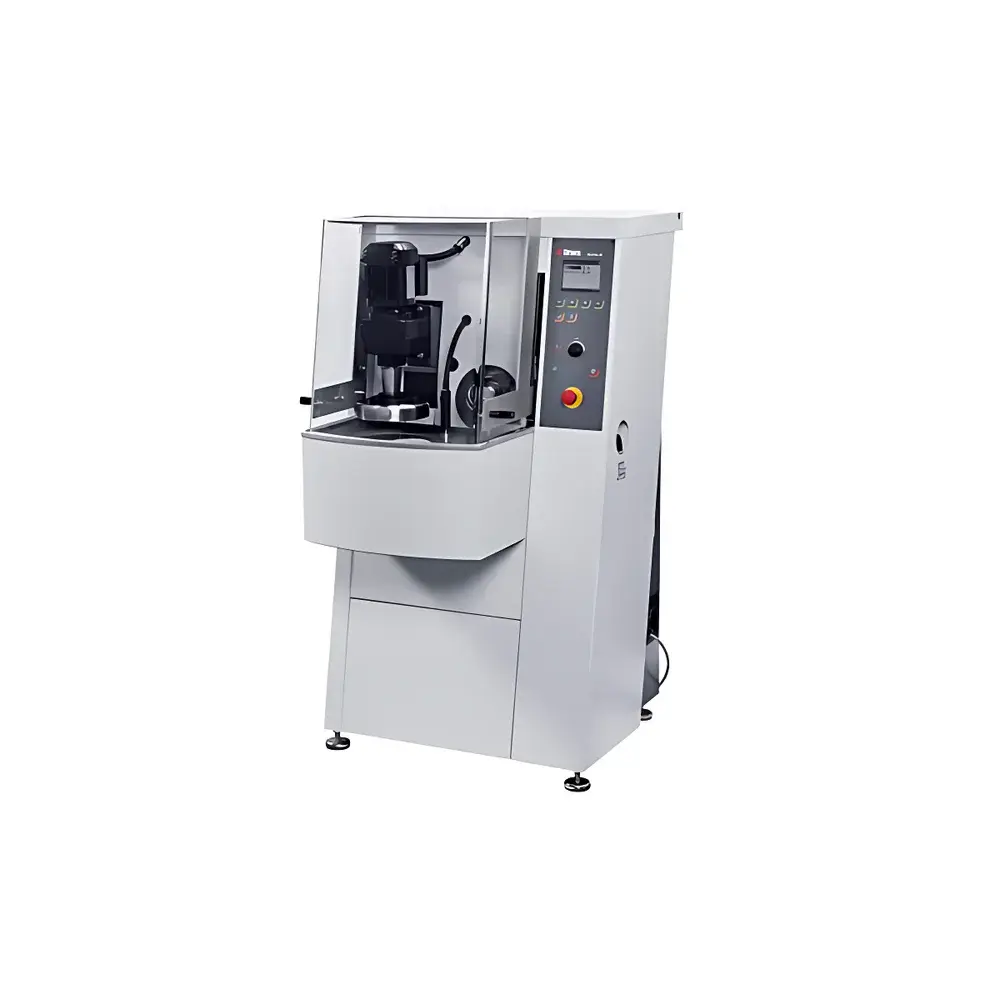
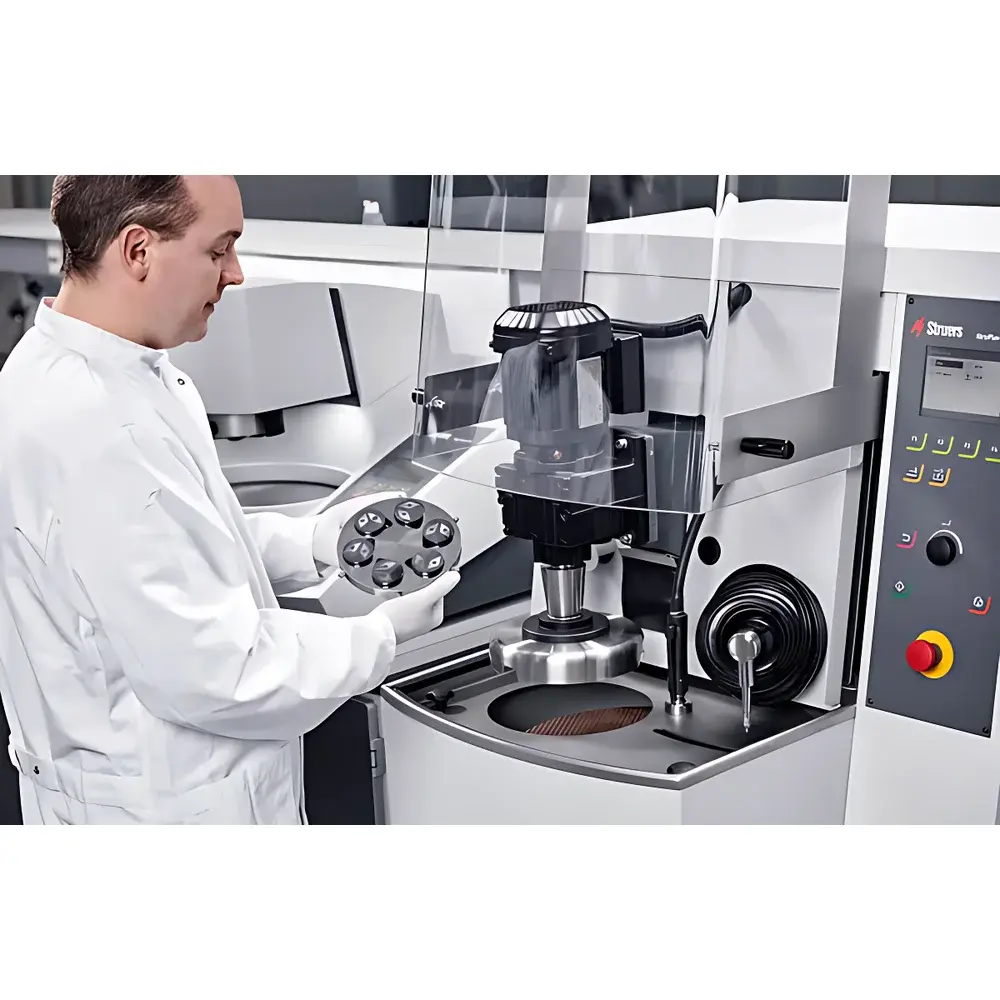
Struers AbraPlan-30 High-Capacity Metallographic Rough Grinding Machine
| Brand | Struers |
|---|---|
| Origin | Denmark |
| Model | AbraPlan-30 |
| Dimensions (L×W×D) | 1560 × 840 × 980 mm |
| Grinding Plate Count | 1 |
| Grinding Plate Diameter | 356 mm |
| Rotational Speed | 1450 rpm |
Overview
The Struers AbraPlan-30 is a high-capacity, semi-automatic rough grinding machine engineered for precision metallographic sample preparation in industrial laboratories and quality control environments. It operates on the principle of controlled planar abrasive grinding using a rotating 356 mm diameter grinding plate, delivering consistent material removal across large or multiple specimens—up to 200 mm (8″) in diameter—mounted in standard specimen holders. Designed for robustness and long-term operational stability, the AbraPlan-30 integrates mechanical rigidity with intelligent process monitoring to support reproducible, traceable, and scalable metallographic workflows. Its structural architecture minimizes vibration transmission during high-torque operation, ensuring dimensional integrity of both specimen surfaces and grinding media. As a purpose-built solution for demanding pre-polishing stages, it bridges the gap between manual coarse grinding and fully automated preparation systems—offering deterministic process control without sacrificing throughput.
Key Features
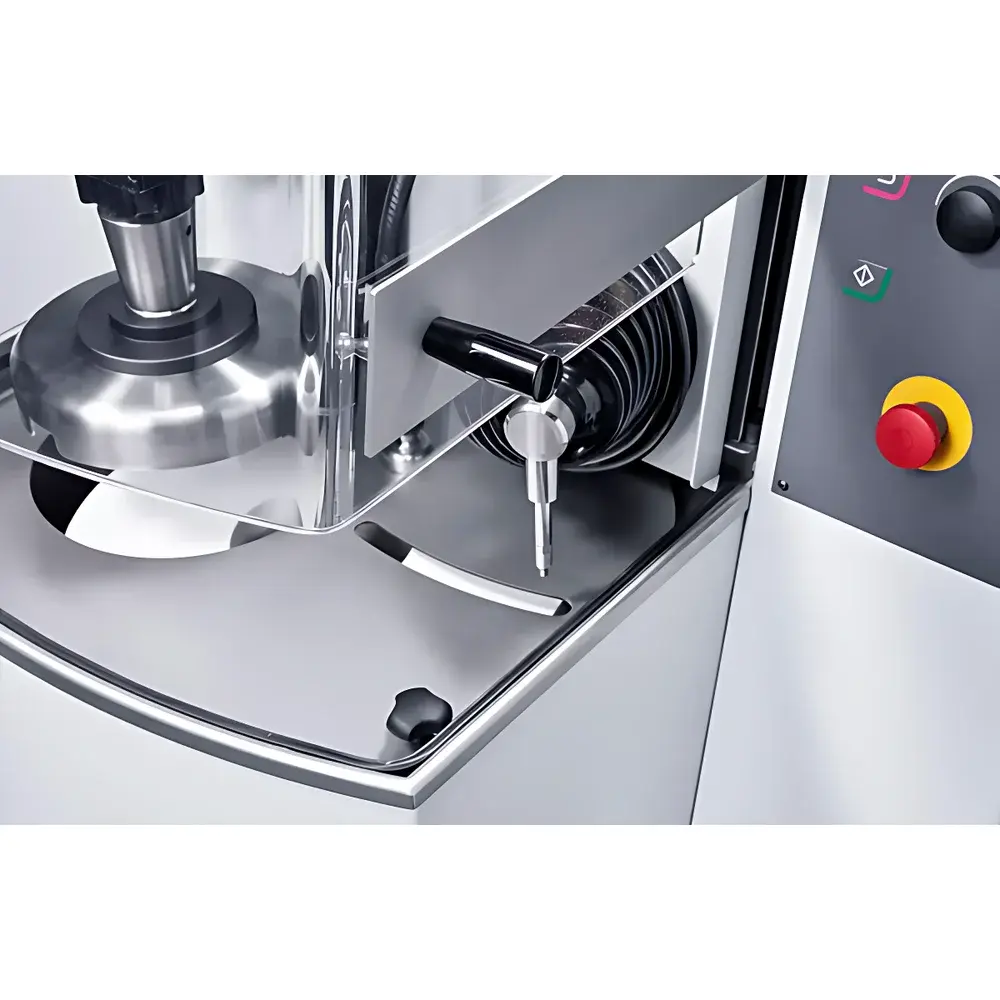
- Automated diamond dresser with real-time wear monitoring: detects grinding wheel thickness depletion and triggers user alerts prior to performance degradation.
- Surface-search functionality: dynamically locates specimen topography to optimize initial contact pressure and reduce manual alignment time.
- Dedicated front-panel dressing control button for immediate, one-touch activation of the diamond dresser—bypassing menu navigation.
- Integrated material removal rate (MRR) sensor: continuously tracks volumetric abraded mass per unit time and visualizes trends via on-device color display graphs.
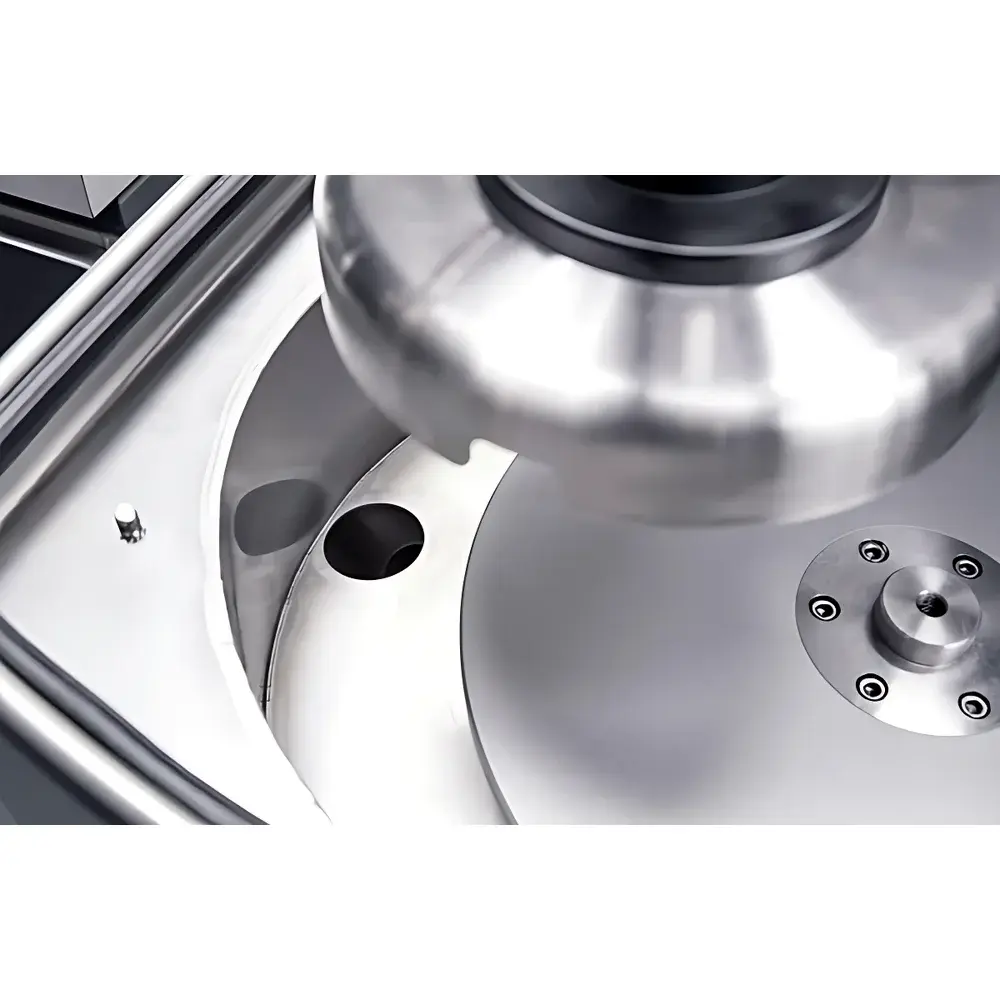
- Corrosion-resistant stainless-steel grinding bowl with lifetime warranty against pitting or structural failure under normal laboratory use conditions.
- Ergonomic HMI featuring intuitive icon-based navigation, large touch-responsive interface, and multilingual software support compliant with ISO/IEC 62366-1 usability standards.
- Vibration-damped cast-iron frame coupled with a high-efficiency 1450 rpm motor ensures thermal and mechanical stability during extended duty cycles.
Sample Compatibility & Compliance
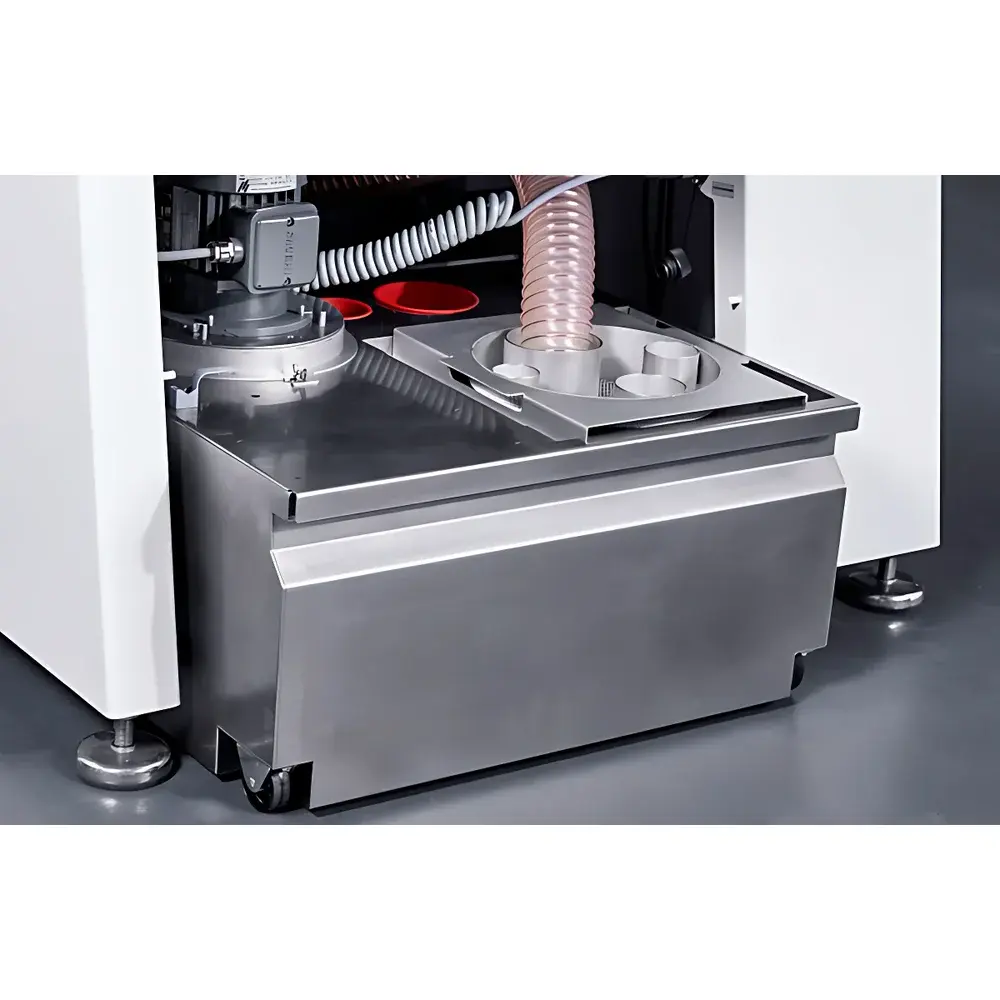
The AbraPlan-30 accommodates standard metallographic specimen holders—including universal, multi-position, and custom-machined fixtures—for specimens up to 200 mm in diameter. It supports common abrasive media such as silicon carbide, aluminum oxide, and diamond-impregnated grinding discs (356 mm diameter), compatible with both wet and semi-dry grinding protocols. The system meets essential safety and electromagnetic compatibility requirements per EN 61000-6-2 (immunity) and EN 61000-6-4 (emission), and conforms to EN 61000-3-2 (harmonic current limits). While not inherently GLP/GMP-certified, its data logging capabilities—including timestamped MRR profiles and dresser actuation events—support audit-ready documentation when integrated into validated laboratory information management systems (LIMS). Optional accessories—including recirculating coolant tanks, filtration units, and temperature-controlled pumps—enable compliance with ASTM E3-22 and ISO 14577–1 procedural guidelines for standardized metallographic sectioning and grinding.
Software & Data Management
The AbraPlan-30 does not rely on external PC-based software; all operational logic, calibration routines, and data acquisition are embedded within its firmware. Real-time MRR metrics, dresser cycle history, and cumulative grinding time are stored locally in non-volatile memory with automatic timestamping. Export is supported via USB port (FAT32-formatted drives) in CSV format for post-processing in Excel or statistical analysis platforms. Audit trail functionality includes operator ID tagging (via optional RFID badge integration), session start/stop logs, and event-driven notifications (e.g., “dressing initiated”, “wheel thickness below threshold”). Though not FDA 21 CFR Part 11 compliant out-of-the-box, the system’s deterministic behavior and immutable local log structure facilitate validation under internal QA protocols aligned with ISO/IEC 17025 clause 7.7 (result reporting) and ISO 9001:2015 clause 8.5.2 (identification and traceability).
Applications
- Rapid rough grinding of large-section ferrous and non-ferrous alloys (e.g., turbine blades, rail steel, weld joints) prior to fine grinding and polishing.
- High-throughput preparation of batched specimens in foundry QC labs where dimensional consistency and inter-laboratory reproducibility are critical.
- Preparation of ceramic composites, cemented carbides, and additively manufactured parts requiring controlled subsurface damage mitigation.
- Standardized grinding for ASTM E3-22-compliant microstructural evaluation in failure analysis and metallurgical R&D settings.
- Integration into automated sample prep lines via dry-contact I/O signals (start/stop, ready/busy, error) for synchronized workflow orchestration.
FAQ
What specimen sizes can the AbraPlan-30 accommodate?
It supports specimens mounted in standard holders up to 200 mm (8 inches) in diameter.
Is the grinding bowl truly corrosion-proof?
Yes—the stainless-steel bowl carries a lifetime warranty against corrosion-related structural failure under routine laboratory use with aqueous coolants.
Can the AbraPlan-30 operate without external cooling systems?
It is designed for use with recirculating coolant; standalone operation without fluid delivery is not recommended and voids process reliability guarantees.
Does the system store historical grinding data?
Yes—cumulative operating time, dresser usage count, MRR trend logs, and event timestamps are retained internally and exportable via USB.
Is remote monitoring or network connectivity supported?
No native Ethernet or Wi-Fi capability is included; integration with facility SCADA or LIMS requires third-party hardware gateways and protocol translation.



