
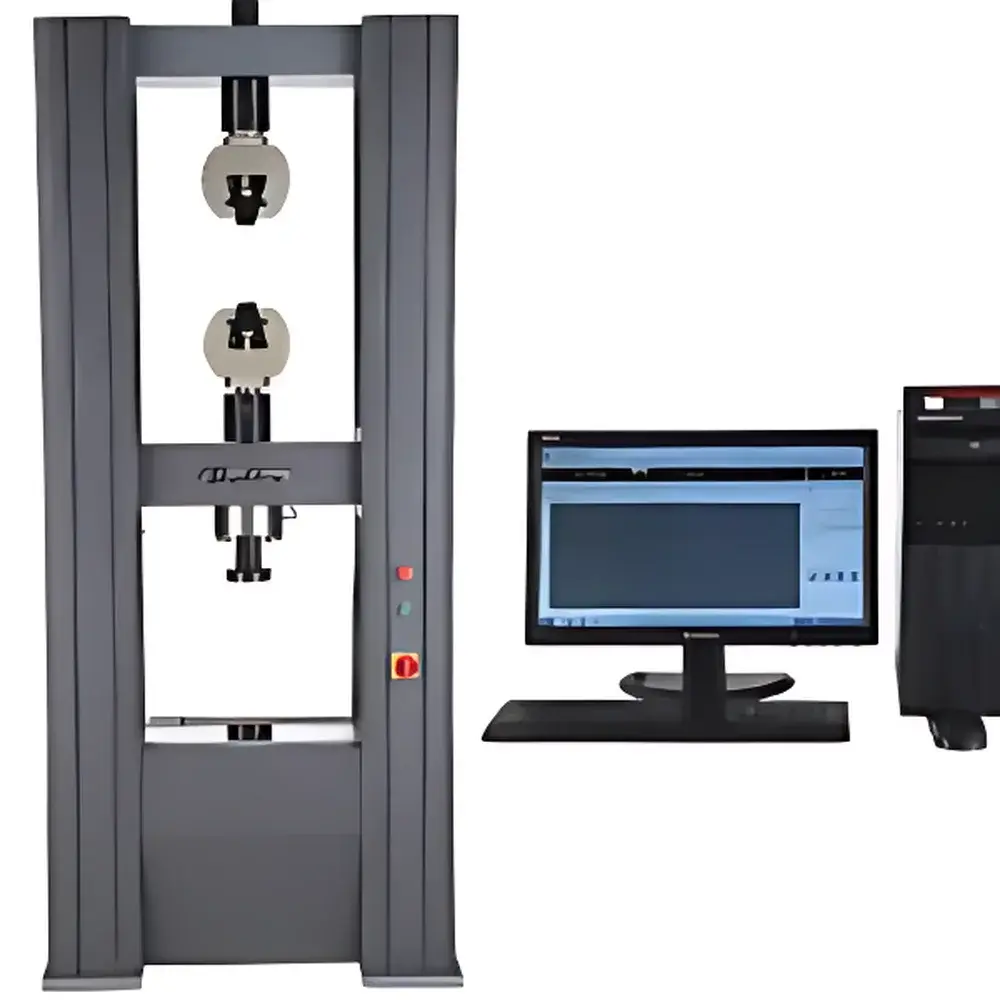
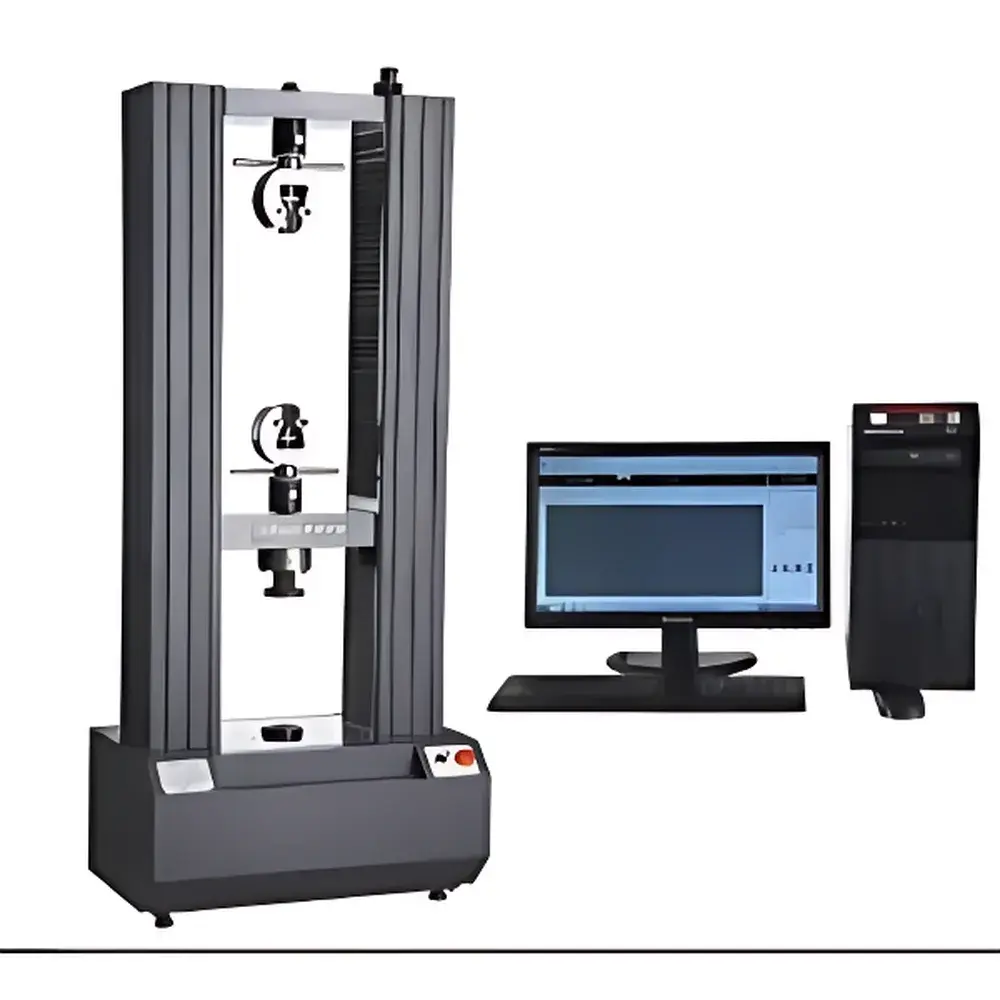
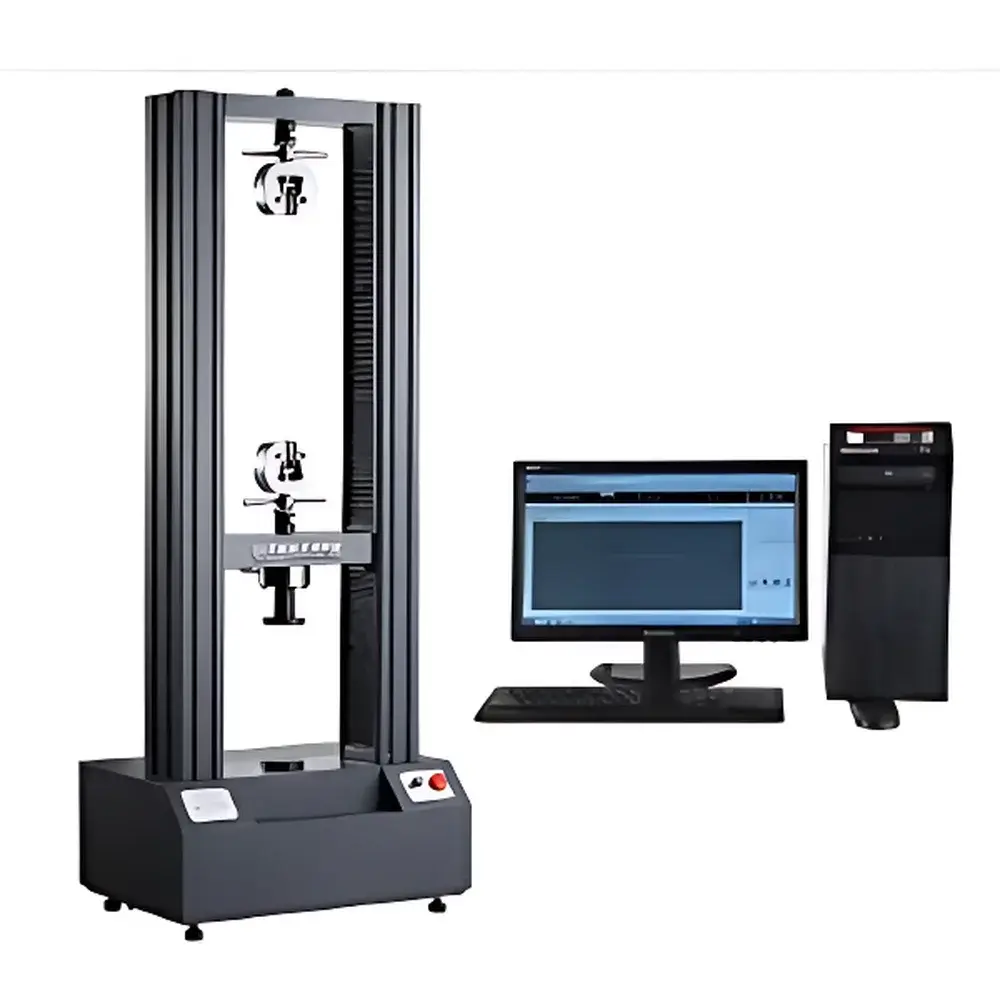
Tuofeng TFW-123 Microcomputer-Controlled Electromechanical Universal Tensile Testing Machine
| Brand | Tuofeng |
|---|---|
| Origin | Shanghai, China |
| Manufacturer Type | Direct Manufacturer |
| Model | TFW-123 |
| Instrument Type | Electromechanical Universal Testing Machine |
| Max Test Load | 200 kN |
| Force Measurement Range | 0.2%–100% of Full Scale (FS) |
| Force Accuracy | ±0.5% of reading |
| Crosshead Travel | 1000 mm |
| Displacement Resolution | 0.001 mm |
| Control System | Windows-based PC Interface with Multi-Mode Closed-Loop Control |
| Compliance | GB/T 16491–2008, JJG 475–2008, ASTM E4, ASTM E8, ISO 6892-1, ISO 7500-1, DIN 51221, JIS Z2241, BS EN 10002-1 |
Overview
The Tuofeng TFW-123 is a high-precision, microcomputer-controlled electromechanical universal testing machine engineered for static mechanical property evaluation of metallic, non-metallic, and composite materials under tension, compression, bending, shear, tear, peel, and puncture loading conditions. It operates on the principle of closed-loop servo control, where an imported AC servo motor drives a high-accuracy preloaded ball screw assembly to deliver precise crosshead motion across a wide speed range (0.001–500 mm/min). Force is measured via a calibrated load cell with dual-range capability and verified traceability to national standards; displacement is acquired via high-resolution optical encoder feedback (0.001 mm resolution), ensuring metrological integrity throughout the full 1000 mm stroke. Designed in accordance with GB/T 16491–2008 and JJG 475–2008, and validated against international benchmarks including ASTM E4 (load verification), ASTM E8/E21 (tensile testing of metals), ISO 6892-1 (metallic materials – tensile testing), and ISO 7500-1 (static calibration of force-proving instruments), the TFW-123 delivers Class 0.5 accuracy per ISO 7500-1 — suitable for R&D laboratories, quality control departments, and third-party certification bodies requiring GLP-compliant, auditable test data.
Key Features
- High-stiffness dual-column frame with reinforced base and crosshead structure, optimized for minimal deflection during high-load (200 kN) testing.
- Imported AC servo drive system coupled with precision worm-gear reducer and ground ball screw — enabling smooth, low-noise, backlash-free motion and long-term repeatability.
- Full-scale force measurement from 0.2% to 100% FS without range switching; internal resolution up to 1 part in 500,000 codes ensures consistent sensitivity across all load levels.
- Dual-speed automatic crosshead adjustment (fast/slow modes) with jog functionality and programmable return-to-start post-test.
- Integrated safety architecture: electronic limit switches, emergency stop button, overload protection (auto-shutdown at >110% of rated capacity), and software-enforced operational boundaries.
- Modular fixture interface compatible with standardized wedge-action grips, compression platens, bend fixtures, peel jigs, and custom tooling per ASTM D638, D790, D1876, D903, and ISO 11339.
Sample Compatibility & Compliance
The TFW-123 accommodates specimens ranging from thin polymer films (via extensometer or video-based strain measurement) to structural steel coupons (up to 600 mm wide and 1000 mm gage length). Standard test widths are configurable at 400 mm, 500 mm, or 600 mm; vertical clearance supports extended-height configurations. The system meets mandatory regulatory and industry-standard requirements for mechanical testing instrumentation, including conformity with ISO/IEC 17025 documentation practices when paired with validated procedures. Calibration certificates are traceable to CNAS-accredited reference standards. Software audit trails, user access controls, and electronic signature support align with FDA 21 CFR Part 11 readiness for regulated environments — particularly relevant in aerospace component qualification (e.g., AMS 2300), medical device material validation (ISO 14801), and automotive supplier PPAP submissions.
Software & Data Management
The proprietary Windows-based testing platform supports multilingual UI (English, Simplified/Traditional Chinese), customizable unit systems (N/kN/lbf, mm/in, MPa/psi), and real-time display of up to four synchronized curves: load–time, load–displacement, stress–strain, and displacement–time. Advanced analysis modules compute standard mechanical properties — ultimate tensile strength (UTS), yield strength (0.2% offset), Young’s modulus, elongation at break, reduction in area, compressive strength, flexural modulus, tear strength, peel adhesion, and puncture resistance — directly from raw sensor data. Batch processing enables statistical comparison of up to 100 curves with overlay visualization, deviation mapping, and automated report generation (PDF/Excel). All test files include embedded metadata: operator ID, timestamp, environmental conditions (optional sensor input), calibration status, and instrument configuration. Data export complies with ASTM E1434 and ISO 10360-5 for interoperability with LIMS and enterprise QA systems.
Applications
This system serves as a core mechanical characterization platform across diverse sectors: tensile and fatigue property mapping of aerospace alloys (Ti-6Al-4V, AA7075); compressive yield evaluation of concrete and ceramic composites; peel strength quantification of laminated battery separators; tear propagation analysis of elastomeric seals; flexural rigidity testing of 3D-printed thermoplastics (e.g., PA12, PEEK); and tensile performance validation of textile reinforcements used in ballistic armor. In academic settings, it supports fracture mechanics studies (KIc estimation via ASTM E399), creep behavior modeling under constant load, and viscoelastic parameter extraction using time–temperature superposition protocols. Its modular design allows seamless integration with environmental chambers (−70°C to +300°C), digital image correlation (DIC) systems, and acoustic emission sensors for multimodal failure analysis.
FAQ
What standards does the TFW-123 support out-of-the-box?
It natively implements test methods per GB/T 228.1, ASTM E8/E21, ISO 6892-1, ISO 7438 (bend), ISO 14130 (short-beam shear), and JIS Z2241 — with configurable parameters for strain rate, hold duration, and data sampling frequency.
Can the system be integrated into an existing laboratory network?
Yes — Ethernet connectivity enables remote monitoring, centralized calibration management, and secure data transfer via TLS-encrypted HTTP(S) or FTPS protocols; optional OPC UA server module supports Industry 4.0 MES/SCADA integration.
Is third-party calibration and certification available?
Tuofeng provides factory calibration with NIST-traceable documentation; CNAS-accredited field calibration and ISO/IEC 17025 certification services are available through authorized regional partners.
What is the warranty and service coverage?
Standard coverage includes 24 months parts-and-labor warranty, lifetime software updates, and priority technical support via web portal, email, and phone — with optional extended service contracts covering preventive maintenance and on-site engineer dispatch.
Does the software support audit trail and electronic signatures for regulated industries?
Yes — full 21 CFR Part 11 compliance mode is enabled by default, including role-based access control, immutable audit logs, biometric or PKI-based e-signature capture, and tamper-evident file hashing.



