
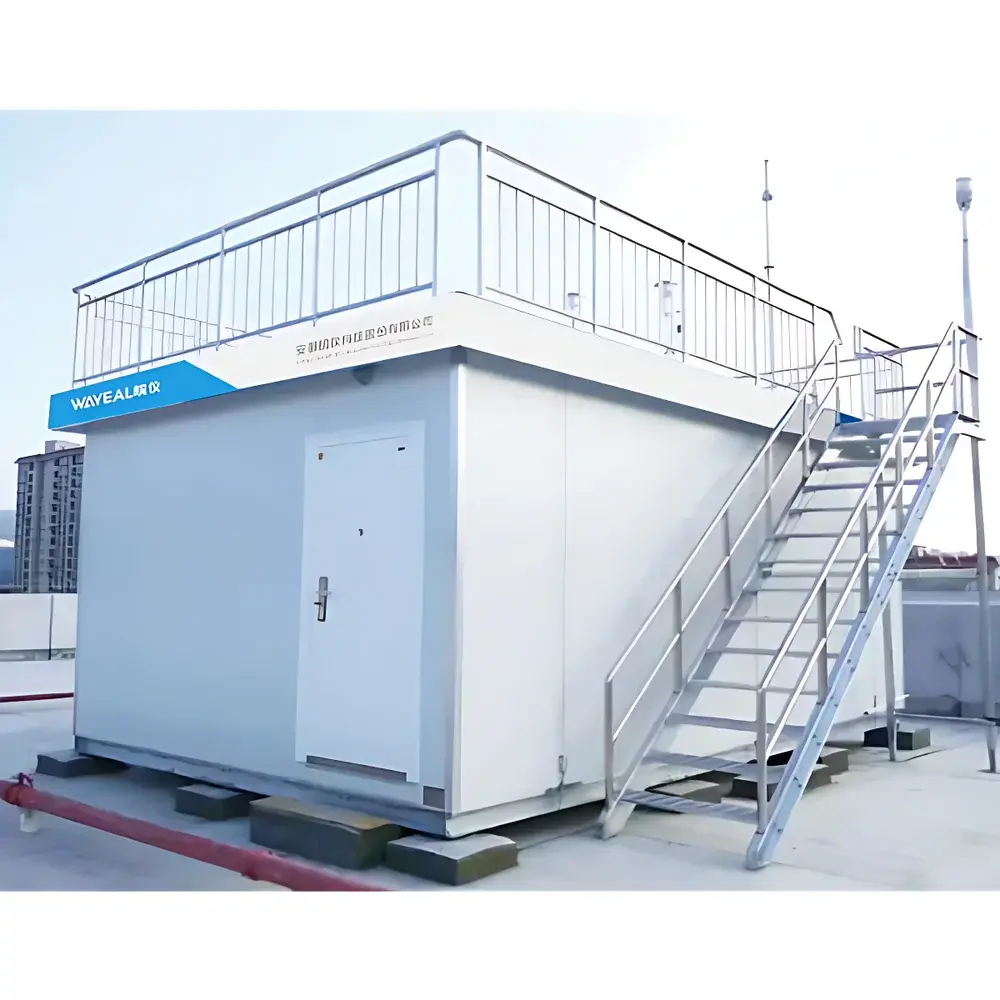
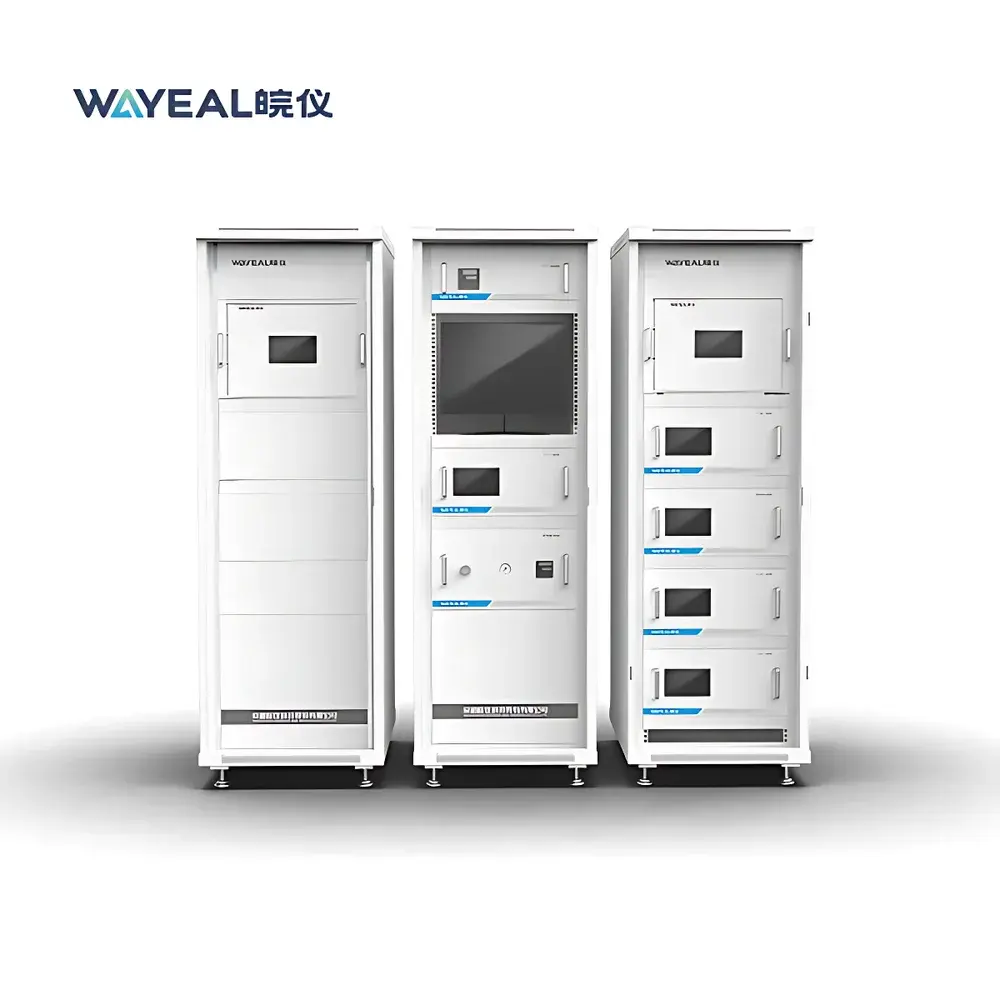
WAYEAL AQ7000 Automatic Air Quality Monitoring System
| Brand | WAYEAL |
|---|---|
| Origin | Anhui, China |
| Manufacturer Type | Direct Manufacturer |
| Origin Category | Domestic (China) |
| Model | AQ7000 |
| Quotation | Upon Request |
| Monitored Pollutants | SO₂, NO, NOₓ, CO, O₃, PM₂.₅, PM₁₀ |
| Meteorological Parameters | Wind Speed, Wind Direction, Temperature, Relative Humidity, Atmospheric Pressure |
| Optional Add-ons | Rainfall, Noise Level, Solar Radiation |
| Data Acquisition | Integrated Substation Data Logger with Standardized Digital Interfaces |
| Calibration System | Dynamic Calibrator and Zero Air Generator |
| Compliance Framework | Designed for alignment with HJ 653–2013, HJ 654–2013, ISO 20815, EPA Reference Methods (e.g., EQOA-0017 for PM₂.₅), and GLP/GMP-aligned data integrity practices |
Overview
The WAYEAL AQ7000 Automatic Air Quality Monitoring System is a fully integrated, modular environmental monitoring platform engineered for continuous, unattended operation in ambient air quality surveillance networks. Built upon a distributed architecture of functionally independent subsystems—including gaseous pollutant analyzers, particulate matter (PM) measurement units, meteorological sensor suites, dynamic calibration modules, and centralized data acquisition infrastructure—the system adheres to the fundamental principles of traceable, metrologically sound environmental measurement. Each analytical module operates on internationally recognized physical detection methods: UV fluorescence for SO₂, chemiluminescence for NO/NOₓ, non-dispersive infrared (NDIR) absorption for CO, UV photometry for O₃, and β-ray attenuation combined with tapered element oscillating microbalance (TEOM) or laser scattering for PM₂.₅ and PM₁₀ quantification. The system supports 24/7 real-time acquisition at one-minute temporal resolution, delivering validated concentration data compliant with national and international regulatory frameworks governing ambient air quality assessment.
Key Features
- Modular, unitized design with standardized digital interfaces (RS-485, Modbus TCP, Ethernet/IP) ensuring interoperability, fault isolation, and field-upgradeability
- Embedded substation data logger with local storage capacity ≥180 days of high-resolution time-series data (hourly averages, 1-min raw values, diagnostic logs)
- Automated quality control integration: certified dynamic calibrator with NIST-traceable gas standards and zero air generator meeting EPA Method 205 specifications
- Redundant communication protocols: GPRS/4G LTE fallback, fiber-optic backbone support, and dual-mode secure TLS 1.2 + MQTT v5.0 transmission to central server
- Environmental resilience: IP65-rated outdoor enclosures, temperature-controlled analyzer compartments (−20 °C to +50 °C operational range), and anti-condensation heating for PM sensors
- Comprehensive diagnostics: real-time health monitoring of optical paths, flow rates, pressure differentials, lamp intensity decay, and filter saturation status
Sample Compatibility & Compliance
The AQ7000 is validated for ambient air sampling under variable climatic conditions across urban, industrial, and rural receptor sites. It meets the technical requirements of China’s HJ 653–2013 (specifications for gaseous pollutant analyzers) and HJ 654–2013 (for PM analyzers), and its measurement methodologies align with ISO 20815:2004 (petroleum and natural gas industries—guidance on air quality monitoring), US EPA Reference Methods (e.g., EQOA-0017 for PM₂.₅ beta attenuation), and EU Directive 2008/50/EC Annex III. All data streams are timestamped with GPS-synchronized UTC and support audit trails required under GLP and GMP-aligned environmental data management practices. Calibration certificates, maintenance logs, and instrument validation reports are automatically archived with digital signatures per FDA 21 CFR Part 11 Annex 11 principles.
Software & Data Management
The AQ7000 integrates with WAYEAL’s AQCloud™ Environmental Intelligence Platform—a web-based, role-based SaaS application supporting multi-tier access (field technician, QA officer, municipal administrator, provincial regulator). The platform provides GIS-enabled real-time mapping of up to 500+ stations, displaying AQI indices, primary pollutants, health advisories, and spatial interpolation heatmaps. Statistical engines generate automated daily, weekly, seasonal, and annual reports—including year-on-year trend comparisons, percentile exceedance analysis (e.g., 98th percentile O₃), and source contribution modeling readiness. All historical datasets are stored in ISO/IEC 27001-certified cloud infrastructure with immutable backups, granular user permissions, and full revision history for every data point modification. Raw and processed data exports comply with WMO GAW and EEA Eionet metadata standards (ISO 19115).
Applications
- Municipal and provincial ambient air quality monitoring networks mandated under China’s “Blue Sky Defense Campaign”
- Industrial fenceline monitoring for petrochemical, thermal power, cement, and metallurgical facilities
- Research-grade long-term exposure studies requiring high-temporal-resolution PM₂.₅/PM₁₀ mass concentration data
- Urban planning support via correlation analysis between traffic density, meteorology, and NOₓ/O₃ diurnal cycles
- Emergency response deployment during wildfire smoke events or industrial accidents requiring rapid PM and VOC precursor tracking
- International development projects requiring WHO Air Quality Guideline-compliant monitoring infrastructure
FAQ
What regulatory standards does the AQ7000 meet for gaseous pollutant measurement?
It complies with HJ 653–2013, US EPA Reference Methods (e.g., Method 6C for SO₂), and ISO 12039 for CO, with documented uncertainty budgets traceable to national metrology institutes.
Can the system operate reliably in high-humidity or coastal environments?
Yes—its PM modules include heated inlet systems and condensation traps; all electronics are conformally coated and housed in climate-controlled enclosures rated for 95% RH non-condensing operation.
Is remote firmware update and diagnostic troubleshooting supported?
Yes—via secure OTA (over-the-air) updates through TLS-encrypted channels; embedded VNC and SNMPv3 enable tiered remote maintenance without onsite visits.
How is data integrity ensured during network outages?
Local edge storage retains ≥180 days of second-level raw data; upon reconnection, gap-free resynchronization occurs with SHA-256 hash verification of each transmitted packet.
Does the platform support third-party API integration for smart city dashboards?
Yes—RESTful JSON APIs and OGC SensorThings API v1.1 endpoints are available for integration with municipal IoT platforms, SCADA systems, and public health alerting services.







