
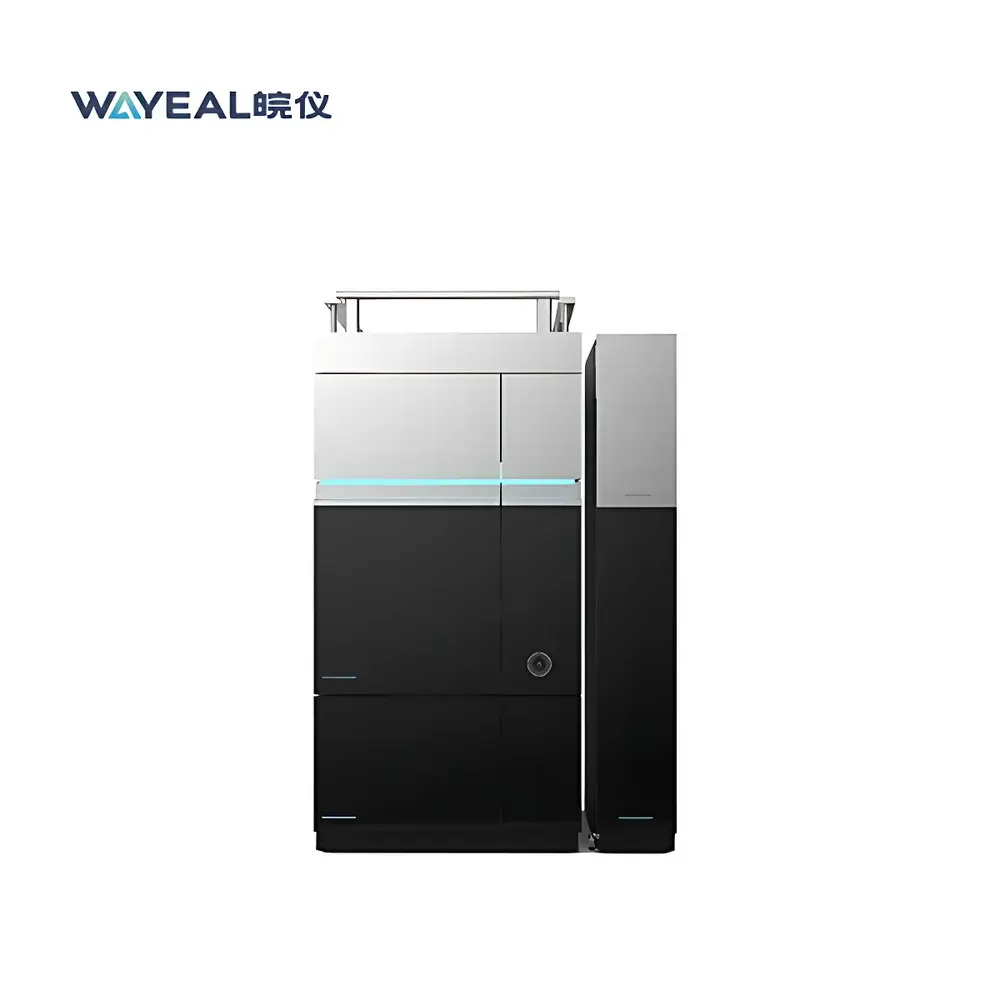
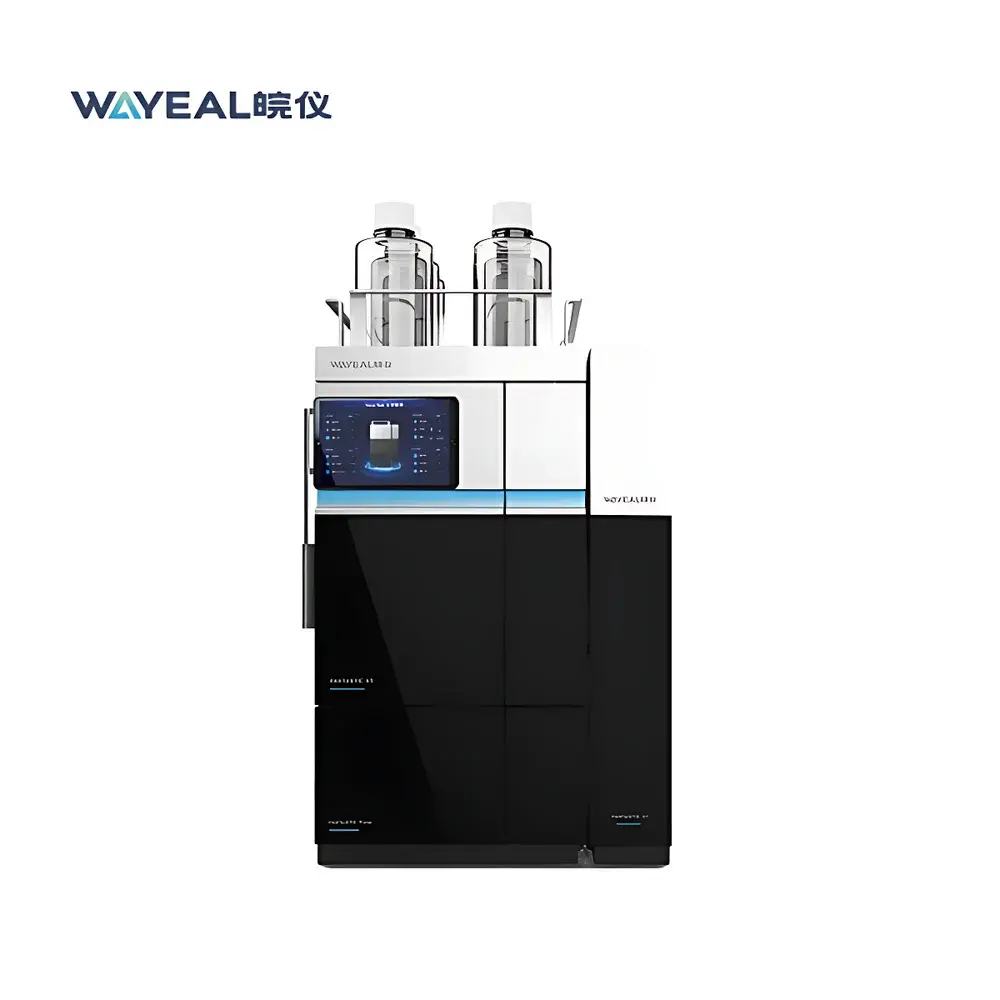
WAYEAL LC3500 Plus Ultra-High-Performance / High-Performance Liquid Chromatograph
| Brand | WAYEAL |
|---|---|
| Origin | Anhui, China |
| Manufacturer Type | Original Equipment Manufacturer (OEM) |
| Regional Classification | Domestic (China) |
| Model | LC3500 Plus |
| Instrument Type | Conventional HPLC System |
| Application Scope | General-purpose analytical chromatography |
| Compliance | Designed for GLP/GMP-aligned laboratory environments |
| Software Compatibility | Native support for WAYEAL ChromNav CDS (Chromatography Data System), compliant with FDA 21 CFR Part 11 audit trail requirements |
Overview
The WAYEAL LC3500 Plus is a modular, high-reproducibility high-performance liquid chromatograph engineered for routine and method-development applications in pharmaceutical QC, environmental testing, food safety, and academic research laboratories. Built upon a robust dual-pump gradient architecture with integrated solvent degassing, precise flow control (±0.1% RSD at 1.0 mL/min), and temperature-stabilized optical detection, the system implements classical reversed-phase, normal-phase, ion-exchange, and size-exclusion chromatographic separations. Its core design adheres to ISO/IEC 17025 traceability principles and supports method validation per ICH Q2(R2) guidelines. The system’s open fluidic architecture enables seamless integration with third-party detectors (e.g., MS, CAD, ELSD) and column switching valves—facilitating multi-dimensional LC workflows without hardware modification.
Key Features
- Triple-temperature-controlled DAD3500 Diode Array Detector: Active thermal regulation of optical bench, lamp housing, and flow cell ensures baseline stability (<0.5 mAU/h drift) and wavelength accuracy (±0.5 nm) across 190–800 nm.
- AS3500 Plus Autosampler: 216-position (2 mL vial) capacity with compatibility for 96-well and 384-well microplates; Peltier-cooled sample compartment (4–40 °C ±0.5 °C); dual-needle configuration with independent wash ports and hard-object collision detection.
- P3500 Plus Binary Solvent Delivery System: Dual high-pressure reciprocating pumps with integrated six-channel solvent selection valve; active degassing module (membrane-based, <5% residual O₂); 400 µL low-dead-volume mixer; real-time pressure monitoring at both primary and secondary pump heads.
- CT3500 Column Compartment: Thermally insulated oven with passive pre-heating zone and optional active pre-heater (field-installable); supports column switching via upper/lower high-pressure valves (2×6-port, 2×10-port, or 6×7-port configurations); integrated gas leak sensor and condensate management.
- Modular Intelligence Architecture: RFID-tagged consumables (lamps, flow cells, valves); QR-code-based sample rack identification; firmware-upgradable modules with embedded diagnostics and predictive maintenance alerts.
Sample Compatibility & Compliance
The LC3500 Plus accommodates standard 4.6 mm × 150 mm analytical columns (including sub-2 µm particle-packed UHPLC columns up to 600 bar), as well as narrow-bore, capillary, and preparative formats via optional fittings. It complies with ASTM D7594 (determination of hydrocarbon types in gasoline), USP (chromatography), and ISO 17025 clause 6.4.4 (equipment verification). All fluidic surfaces contact stainless steel 316L or PEEK, ensuring chemical resistance to acetonitrile, methanol, and aqueous buffers (pH 1.5–10.5). The system meets CE marking requirements (2014/30/EU EMC Directive, 2014/35/EU LVD Directive) and supports full electronic records retention per FDA 21 CFR Part 11 Subpart B.
Software & Data Management
ChromNav CDS v3.x provides method building, sequence scheduling, peak integration (with baseline correction algorithms per USP ), and report generation (PDF, CSV, XML). Audit trail functionality logs all user actions—including method edits, injection events, and calibration changes—with immutable timestamps and operator ID binding. Data integrity safeguards include role-based access control (RBAC), electronic signatures, and automatic backup to network-attached storage (NAS) or cloud repositories via SFTP. Raw data files adhere to ANDI/NetCDF format for cross-platform interoperability with third-party analysis tools (e.g., OpenLab CDS, Chromeleon).
Applications
The LC3500 Plus delivers validated performance in small-molecule quantification (e.g., residual solvents per ICH Q3C), peptide mapping (tryptic digests under denaturing conditions), natural product profiling (flavonoids, alkaloids), pesticide residue screening (multi-residue methods per EN 15662), and polymer additive analysis (antioxidants, UV stabilizers). Its flexible valve routing supports heart-cutting 2D-LC for complex matrices and post-column derivatization (e.g., o-phthalaldehyde for amino acids). Method transfer from legacy Agilent 1260 or Waters e2695 platforms is supported via gradient delay volume compensation and dwell volume calibration utilities.
FAQ
Does the LC3500 Plus support GMP-compliant electronic signatures?
Yes—ChromNav CDS implements full 21 CFR Part 11 compliance, including biometric or token-based electronic signature capture, signature justification fields, and tamper-evident audit logs.
Can the autosampler accommodate 1.5 mL conical vials?
Yes—the AS3500 Plus accepts standard 12 × 32 mm screw-thread vials and features adjustable vial height detection to prevent needle crash during insertion.
Is column oven pre-heating mandatory for method transfer from older HPLC systems?
No—passive pre-heating is optional; however, active pre-heating (via CT3500 C3 module) is recommended when transferring methods requiring strict thermal equilibration, such as those involving viscous mobile phases or temperature-sensitive analytes.
What is the maximum backpressure tolerance of the DAD3500 flow cell?
The standard 10 mm pathlength flow cell is rated to 600 bar; a 60 mm high-sensitivity cell (optional) is rated to 400 bar.
How does the system handle carryover in high-concentration sample sequences?
The triple-wash system (B4) combines metering-pump-driven solvent rinsing, needle seat purge, and external port wash—achieving <0.005% carryover for caffeine at 1 mg/mL concentration.
Related Products






