
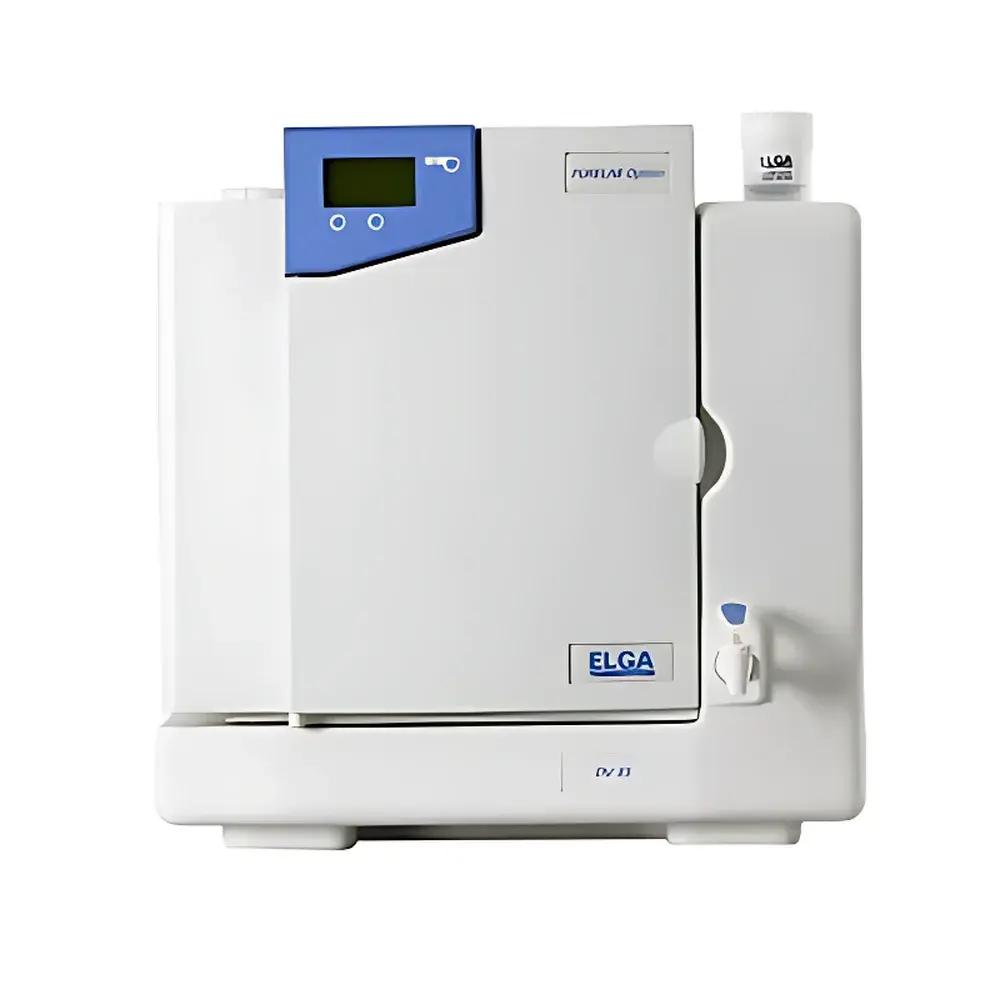
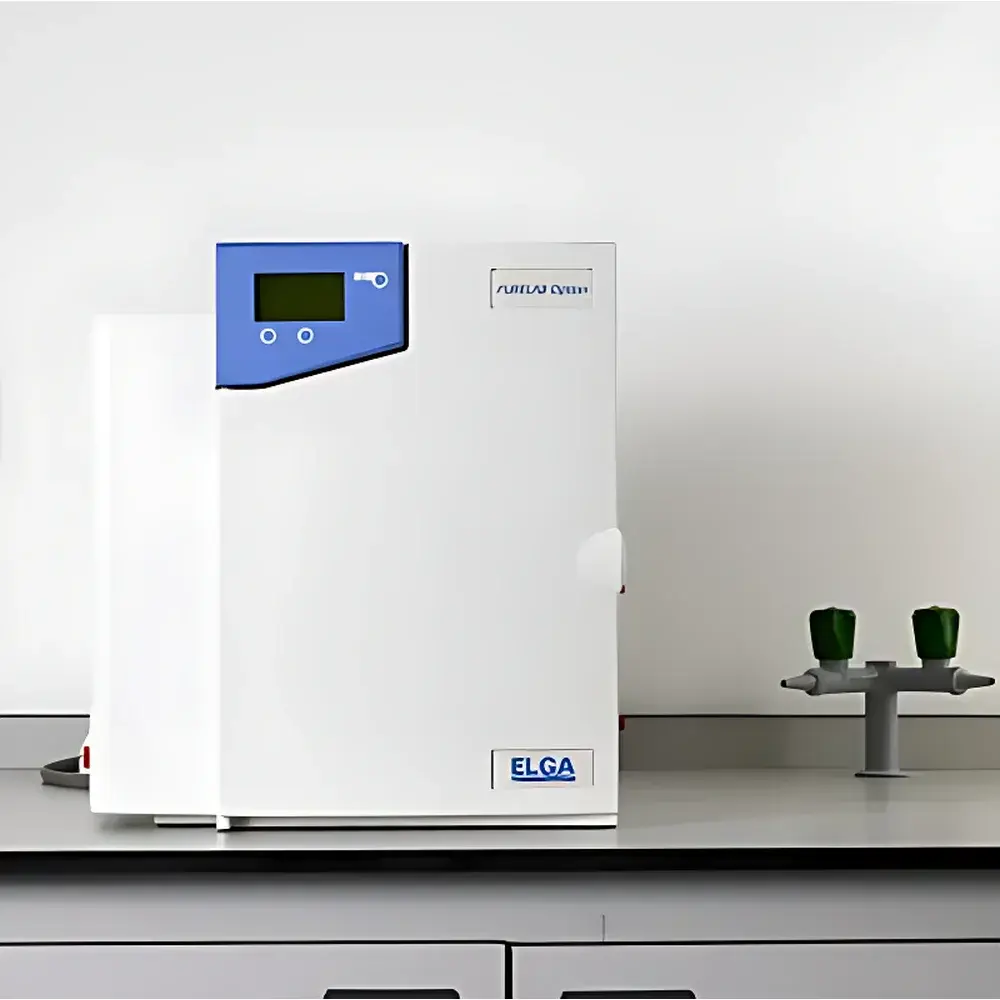
ELGA PURELAB Option-S Ultra Pure Water System
| Brand | ELGA (Veolia) |
|---|---|
| Origin | United Kingdom |
| Manufacturer | Veolia Water Technologies |
| Product Type | Imported Laboratory Ultra-Pure Water System |
| Model | PURELAB Option-S |
| Pure Water Grade | ASTM Type II / ISO 3696 Grade 2 |
| Resistivity | 5–15 MΩ·cm @ 25 °C |
| Heavy Metals & Soluble Silica | <0.1 ppb |
| Total Organic Carbon (TOC) | <20 ppb (typical range: 10–30 ppb) |
| Microbial Count | <0.1 CFU/mL |
| Endotoxin | <0.001 EU/mL |
| Particles (>0.1 µm) | <0.2 particles/mL |
Overview
The ELGA PURELAB Option-S is a discontinued yet fully supported ultra-pure water system engineered for laboratories requiring consistent, high-reliability Type II (ASTM D1193 / ISO 3696 Grade 2) laboratory water. Designed and originally manufactured in the UK by Veolia Water Technologies (formerly ELGA LabWater), this system integrates three-stage purification—pre-treatment (activated carbon + softening), reverse osmosis (RO), and mixed-bed ion exchange—to deliver water meeting stringent international standards for routine analytical and preparative applications. While production ceased at the UK facility, the PURELAB Option-S remains operationally viable in existing installations due to continued technical support, validated spare parts availability, and consumable supply through 2026. Its dual-output flow rates (7 L/hr base mode; 15 L/hr high-flow mode) ensure flexibility across varying demand profiles without compromising water quality stability or system longevity.
Key Features
- Triple-stage purification architecture: Integrated pre-filtration (particulate removal, chlorine adsorption, hardness reduction), high-rejection RO membrane, and final polishing via regenerated mixed-bed deionization resin.
- Real-time resistivity monitoring with temperature compensation (25 °C), ensuring continuous verification of inorganic purity against ASTM Type II specifications (5–15 MΩ·cm).
- Low-TOC design with UV oxidation (185/254 nm) and post-polish carbon filtration, consistently delivering TOC <20 ppb—critical for HPLC mobile phase preparation and trace metal analysis.
- Endotoxin- and microbe-controlled distribution path: 0.2 µm final filter, recirculating loop with periodic thermal sanitization capability (when integrated with optional loop kit), and non-leaching wetted materials compliant with USP Class VI plastics.
- Modular cabinet design enabling benchtop or under-bench installation; all service points accessible from front panel with tool-free cartridge replacement.
Sample Compatibility & Compliance
The PURELAB Option-S is validated for use with standard municipal feedwater (subject to local pre-treatment assessment) and compatible with downstream applications requiring ISO 3696 Grade 2 or CLSI EP21-A2-compliant water. It meets key regulatory benchmarks for routine lab operations including ASTM D1193 Type II, CLSI GP30-A3, and EU Pharmacopoeia Chapter 2.2.44 for purified water. While not certified for USP Purified Water or WFI, its output serves as qualified feedwater for subsequent ultra-pure (Type I) systems. All critical components—including RO membranes, ion exchange resins, and final filters—are supplied with full traceability documentation supporting GLP/GMP audit readiness. The system supports 21 CFR Part 11-compliant data logging when paired with ELGA’s optional DataTrace software module.
Software & Data Management
The PURELAB Option-S operates via an intuitive front-panel interface with LED status indicators for each purification stage, resistivity trend display, and maintenance alerts (e.g., cartridge saturation, RO pressure drop). Though it lacks embedded Ethernet or cloud connectivity, its analog/digital I/O ports allow integration into centralized building management systems (BMS) or third-party SCADA platforms. Optional DataTrace firmware enables time-stamped event logging (resistivity excursions, alarm triggers, service interventions) stored locally on removable SD card—satisfying basic ALCOA+ data integrity principles for non-GxP environments. Full service history, calibration records, and consumable lot traceability are maintained manually per laboratory SOPs, aligning with ISO/IEC 17025 Clause 7.7 requirements for equipment management.
Applications
- Glassware rinsing and final wash cycles where residual ions or organics could interfere with spectrophotometric or gravimetric assays.
- Feedwater for Type I ultra-pure water systems (e.g., PURELAB Ultra, PURELAB Chorus), minimizing upstream fouling and extending downstream cartridge life.
- Preparation of buffers, cell culture media, and reagent dilutions for general biochemistry and molecular biology workflows.
- Mobile phase preparation for HPLC and LC-MS where low TOC and silica content prevent column degradation and baseline drift.
- Environmental chamber humidification and cooling circuits requiring low-conductivity, non-corrosive water.
- Qualitative chemical testing, titration standards, and educational lab instruction where Type II water suffices per method requirements (e.g., APHA Standard Methods 4500).
FAQ
Is the PURELAB Option-S still in active production?
No—manufacturing was discontinued at Veolia’s UK facility. However, authorized distributors maintain limited legacy inventory, and full technical support—including spare parts and consumables—is guaranteed until December 31, 2026.
Can this system produce USP Purified Water or WFI?
No. It is designed and validated exclusively for ASTM Type II / ISO 3696 Grade 2 water. For USP Purified Water or Water for Injection (WFI), a dedicated distillation or multi-effect evaporation system is required.
What feedwater quality is required for optimal performance?
Municipal tap water with ≤500 ppm total dissolved solids (TDS), free chlorine <2 ppm, and iron <0.1 ppm is recommended. Pre-treatment (e.g., sediment filter, carbon block) may be necessary depending on local supply conditions.
How often must consumables be replaced?
Pre-filters: every 3–6 months; RO membrane: 2–3 years (dependent on feedwater quality); mixed-bed cartridge: 6–12 months (monitored via resistivity decay and TOC rise). Exact intervals are logged in the system’s maintenance register.
Does the system include remote monitoring capabilities?
Not natively. Remote access requires integration via optional analog outputs or third-party BMS gateways. ELGA does not offer native Wi-Fi or IoT modules for this legacy platform.



