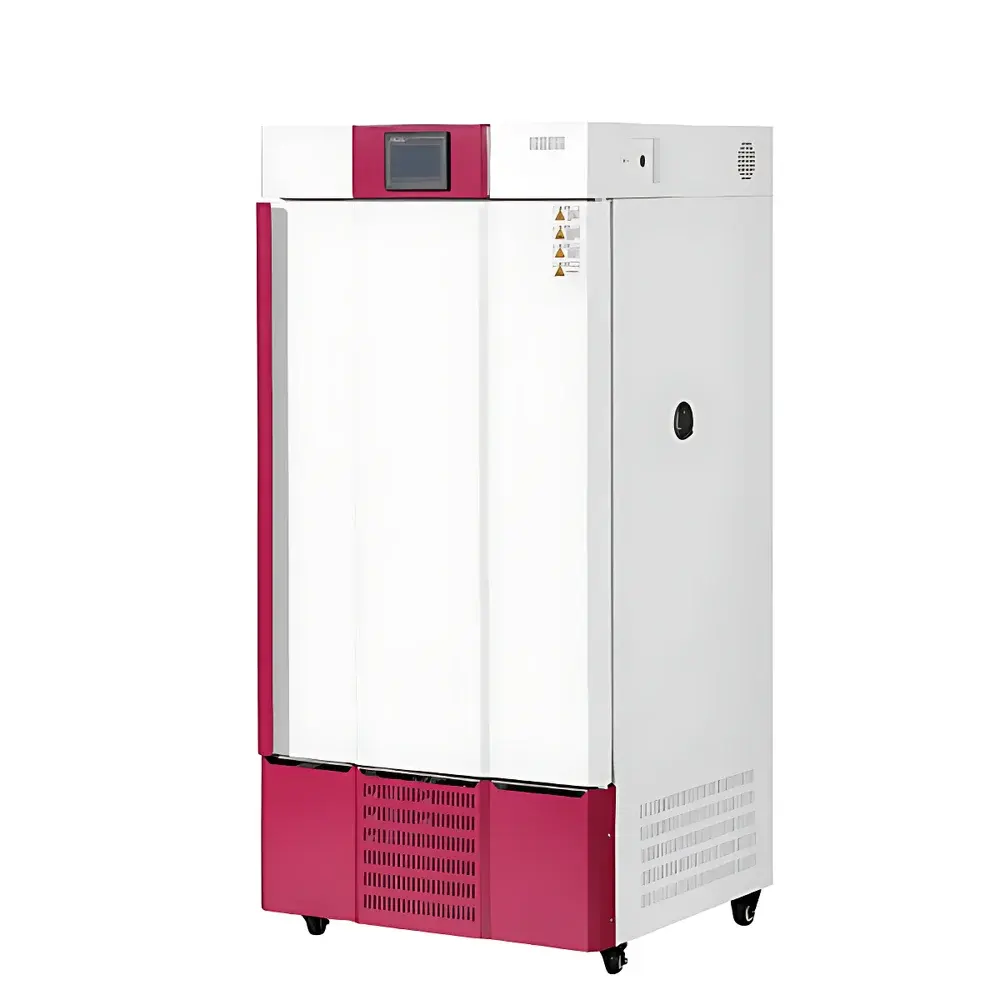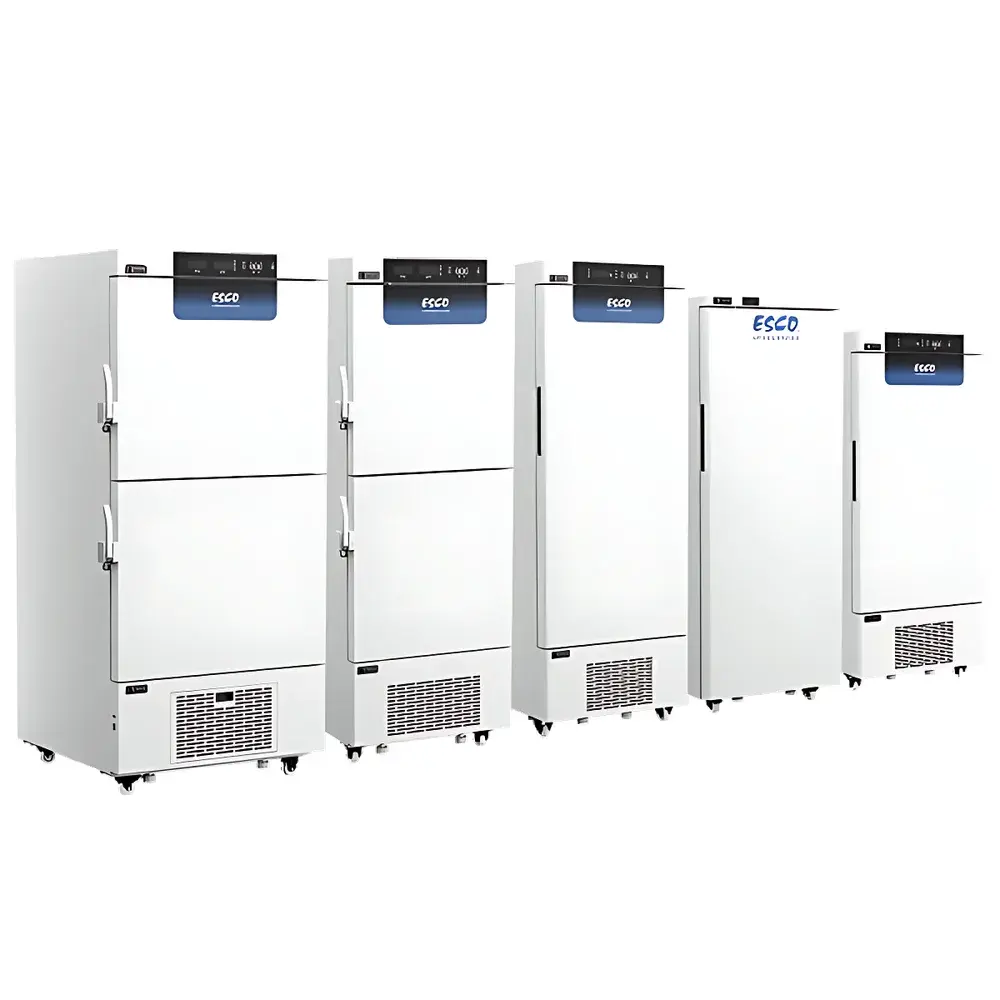
ESCO LF Series Laboratory Freezer
| Brand | ESCO |
|---|---|
| Origin | Shanghai, China |
| Manufacturer Type | Manufacturer |
| Origin Category | Domestic |
| Model | LF |
| Pricing | Upon Request |
Overview
The ESCO LF Series Laboratory Freezer is a purpose-built low-temperature storage solution engineered for life science laboratories requiring stable, reliable, and compliant cold chain management. Designed around dual independent refrigeration systems based on hydrocarbon (HC) refrigerants—R290 and R600a—the unit delivers precise temperature control across two distinct operating ranges: –10 °C to –25 °C and –20 °C to –40 °C. This dual-range capability supports diverse sample preservation needs—from routine reagent storage to long-term cryopreservation of sensitive biological materials such as cell lines, primary tissues, nucleic acids, and protein standards. The freezer employs forced-air circulation with optimized airflow distribution to ensure uniform temperature stability (±1.5 °C typical uniformity across working volume) and rapid thermal recovery after door openings. Its microprocessor-based controller features real-time monitoring of chamber temperature, compressor status, fan operation, and system diagnostics—providing continuous assurance of environmental integrity.
Key Features
- Dual independent chambers with separate digital displays and independent temperature setpoints—enabling simultaneous storage at two distinct setpoints without cross-contamination or thermal interference
- Hydrocarbon (HC) refrigeration system—R290/R600a blend—offering significantly lower global warming potential (GWP < 10) compared to traditional HFC refrigerants, fully aligned with EU F-Gas Regulation and EPA SNAP program requirements
- Electromechanical pressure-relief door handles on dual-door configuration—designed to prevent vacuum lock during frequent access while maintaining structural integrity and seal performance
- Embedded ergonomic door handles with integrated anti-slip texture—reducing operator fatigue during high-frequency use in core facilities and biobanks
- Multi-level security architecture: programmable user-access PIN code lock, configurable alarm thresholds, and tamper-evident event logging
- User-friendly graphical interface with intuitive icon-driven navigation, backlight LCD display, and real-time status indicators for power, compressor, fan, and door-open events
- Comprehensive alarm system with audible buzzer and visual LED alerts for high/low temperature deviation, door ajar, power failure, sensor fault, and refrigerant circuit anomaly
Sample Compatibility & Compliance
The LF Series accommodates a broad spectrum of laboratory consumables—including polypropylene cryovials (1.0–2.0 mL), cardboard or plastic cryoboxes (10×10 format), aluminum canisters, and standard-sized tissue culture flasks (T25/T75). Internal shelving is adjustable and compatible with ISO-standard rack systems (e.g., Nunc, Thermo Fisher, Corning). From a regulatory standpoint, the unit meets IEC 61010-1:2010 (Safety Requirements for Electrical Equipment for Measurement, Control, and Laboratory Use) and complies with EN 60335-2-89:2015 (Particular Requirements for Refrigerating Appliances). While not certified as a medical device under FDA 21 CFR Part 820, its design supports GLP/GMP-aligned workflows through audit-ready event logs, password-protected parameter changes, and non-volatile memory retention of critical settings during power interruption.
Software & Data Management
The LF Series includes built-in data logging functionality with internal memory capable of storing up to 30 days of 10-minute interval temperature readings per chamber. Logged data is exportable via USB port in CSV format for integration into LIMS or electronic lab notebook (ELN) platforms. Optional Ethernet connectivity (via accessory module) enables remote monitoring through ESCO’s LabConnect™ web interface—supporting SNMP v3, TLS 1.2 encryption, and role-based user authentication. All system events—including door open duration, temperature excursions exceeding user-defined limits, and alarm acknowledgments—are timestamped and retained with ISO/IEC 17025-compliant traceability. Audit trail records satisfy basic 21 CFR Part 11 requirements for electronic records when deployed with validated IT infrastructure.
Applications
- Long-term archival storage of clinical biospecimens in biorepositories accredited to ISBER Best Practices or CAP Biorepository Standards
- Stabilization of thermolabile enzymes, antibodies, and diagnostic reagents prior to QC/QA testing
- Intermediate cold storage of samples awaiting downstream processing in genomics, proteomics, and metabolomics workflows
- Backup cold storage for ultra-low temperature freezers (–80 °C) during maintenance cycles or power contingency planning
- Controlled-temperature staging for sample preparation in regulated environments (e.g., pharmacokinetic studies, vaccine stability trials)
FAQ
What temperature ranges are supported by the LF Series?
The LF Series operates in two configurable modes: –10 °C to –25 °C and –20 °C to –40 °C—each chamber independently adjustable within its designated range.
Is remote monitoring available out of the box?
Remote monitoring requires optional Ethernet module installation and LabConnect™ software licensing; basic local data logging is standard.
Does the unit support 21 CFR Part 11 compliance?
Yes—when deployed with validated network infrastructure and configured with audit trail logging enabled, it meets foundational electronic record requirements for identity verification, data integrity, and change control.
Can the freezer be installed in a built-in cabinetry setup?
Yes—the LF Series is designed for freestanding or front-ventilated built-in installation; minimum rear clearance of 100 mm is required for condenser airflow.
What refrigerant type is used, and how does it impact environmental compliance?
It uses R290 (propane) and R600a (isobutane)—natural hydrocarbons with GWP values of 3 and 4 respectively—ensuring full compliance with global phase-down mandates including EU F-Gas Regulation Annex III and U.S. EPA SNAP Rule 23.