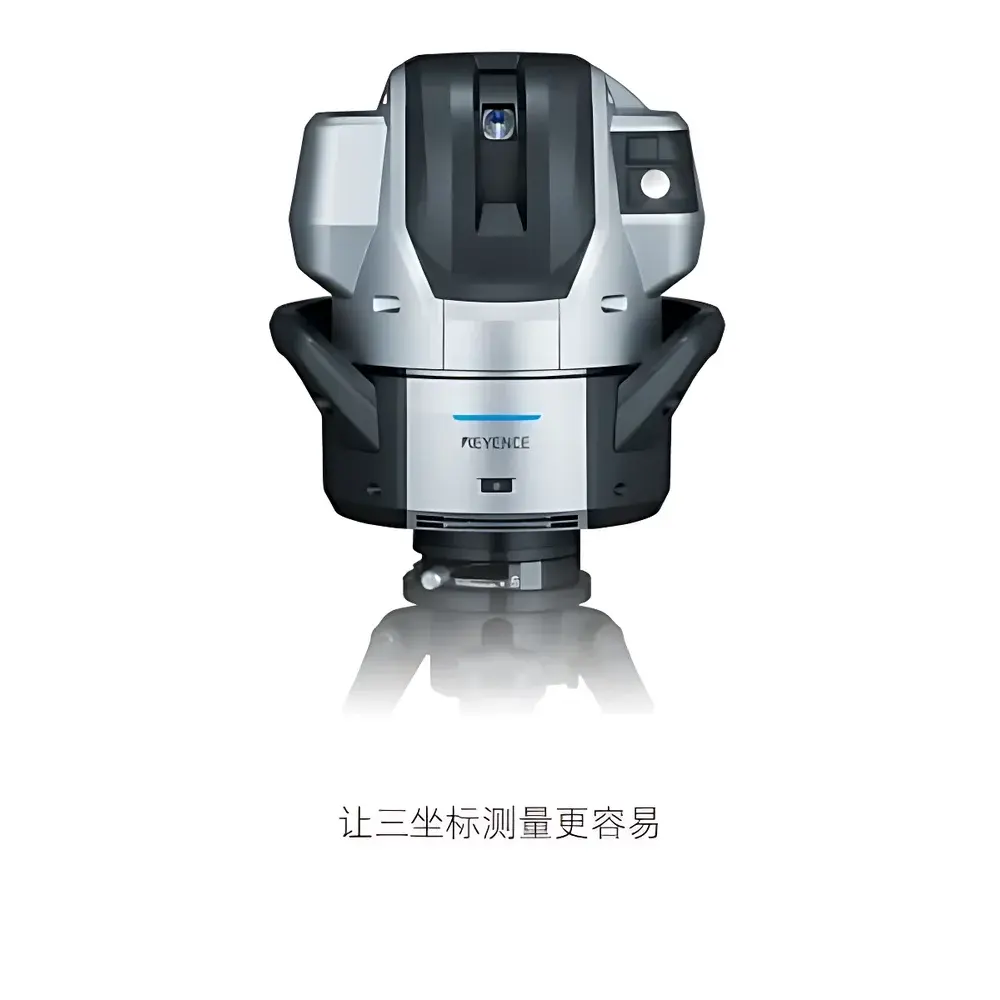
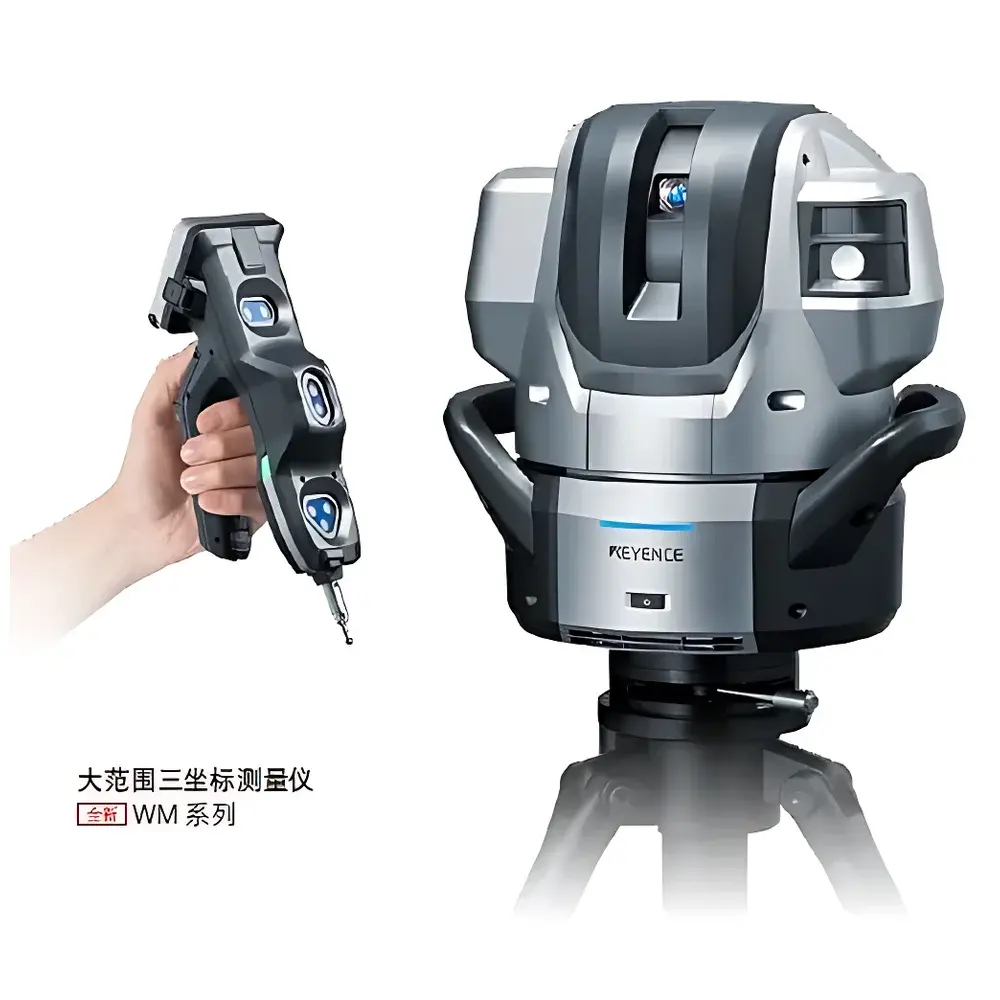
KEYENCE WM-S3000 Portable Articulated Arm Coordinate Measuring Machine
| Brand | KEYENCE |
|---|---|
| Origin | Japan |
| Manufacturer Type | Manufacturer |
| Origin Category | Imported |
| Model | WM-S3000 |
| Configuration | Hybrid CMM |
| Operation Mode | Manual |
| Instrument Type | Portable |
| Measurement Range | 10 m (spherical envelope) |
| Measurement Accuracy | ±0.028 mm (ISO 10360-2 compliant) |
| Standard Operating Temperature | 10–35 °C |
Overview
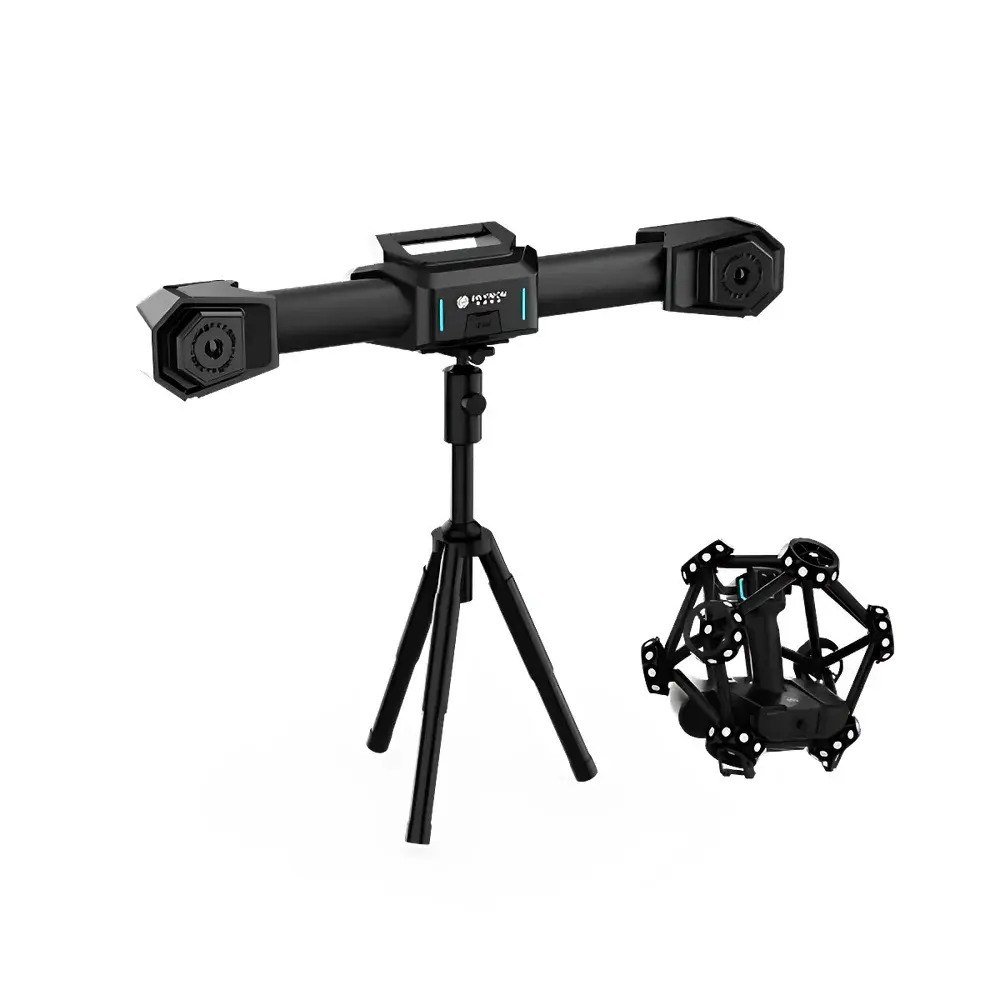
The KEYENCE WM-S3000 is a portable, manually operated articulated arm coordinate measuring machine (CMM) engineered for high-accuracy geometric metrology in non-laboratory environments. Unlike traditional bridge or gantry CMMs, the WM-S3000 employs a kinematic 6-axis serial linkage architecture with integrated absolute rotary encoders at each joint, enabling real-time, drift-free spatial position calculation without homing or referencing. Its measurement principle relies on forward kinematics modeling—where the Cartesian coordinates (X, Y, Z) of the probe tip are computed from calibrated joint angles and link lengths—ensuring traceable dimensional verification across large volumes. Designed for industrial metrology applications where part size, accessibility, or facility constraints preclude fixed-installation systems, the WM-S3000 delivers ISO 10360-2 certified volumetric accuracy of ±0.028 mm within a 10-meter spherical measurement envelope—making it suitable for first-article inspection, tooling validation, reverse engineering, and in-process alignment of large-scale components such as aerospace subassemblies, automotive body-in-white structures, and heavy machinery frames.
Key Features
- Portable articulated arm architecture with lightweight carbon-fiber construction and ergonomic handle-mounted probe interface
- True wireless operation: integrated rechargeable battery supports >8 hours of continuous measurement; no tethered data or power cables required
- Real-time 3D visualization and on-device reporting via built-in 7-inch capacitive touchscreen display
- Integrated temperature compensation algorithm calibrated across 10–35 °C ambient range to maintain metrological stability under variable shop-floor conditions
- Hybrid functionality: supports both contact probing (via interchangeable tactile styli) and optional non-contact laser line scanner attachments for surface topology capture
- IP54-rated enclosure for resistance to dust ingress and incidental water splashing during field deployment
- Quick-deploy magnetic base and tripod-compatible mounting options for rapid setup on fixtures, machine tools, or structural surfaces
Sample Compatibility & Compliance
The WM-S3000 accommodates geometrically complex parts ranging from small machined components (<50 mm) to large assembled structures (up to 10 m in diameter), including castings, weldments, composites, and sheet-metal assemblies. Its manual articulation allows access to deep cavities, undercuts, and confined geometries inaccessible to optical trackers or fixed CMMs. The system complies with ISO 10360-2 for CMM performance verification and meets the mechanical and environmental requirements of ISO 17025-accredited calibration laboratories when used with traceable artifacts. It supports GLP/GMP-aligned workflows through configurable audit trails, user authentication, and electronic signature capability—fully compatible with FDA 21 CFR Part 11 requirements when deployed with validated software configurations.
Software & Data Management
The WM-S3000 operates with KEYENCE’s proprietary Metrology Suite software, installed on an external Windows-based host PC or embedded tablet. The software provides full GD&T evaluation per ASME Y14.5 and ISO 1101 standards—including position, profile, orientation, runout, and concentricity tolerancing—with automated report generation in PDF, CSV, and STEP AP242 formats. All measurement sessions include timestamped, user-attributed records with full parameter history and probe calibration logs. Data export supports integration into PLM platforms (e.g., Teamcenter, Windchill) and statistical process control (SPC) systems via OPC UA or RESTful API interfaces. Software updates are delivered through secure, digitally signed firmware packages with version-controlled release notes and change documentation.
Applications
- First-article inspection and FAI report generation for aerospace OEM suppliers (AS9102 compliant)
- In-situ verification of CNC machine tool positioning accuracy and thermal drift compensation validation
- Tooling and fixture certification—including die-set alignment, jig repeatability assessment, and robotic cell calibration
- Reverse engineering of legacy parts lacking CAD models, with point-cloud-to-surface reconstruction support
- Weld seam inspection and distortion analysis on large welded fabrications
- Dimensional validation of composite layup molds and autoclave tooling prior to production ramp-up
FAQ
Is the WM-S3000 certified to international metrology standards?
Yes—the system conforms to ISO 10360-2 for CMM performance verification, and its accuracy specification (±0.028 mm) is validated using certified step gauges and ball bars traceable to NMIJ/AIST standards.
Can the WM-S3000 be used in temperature-uncontrolled production environments?
It is rated for operation between 10–35 °C; built-in thermal drift compensation mitigates errors from ambient fluctuations, though optimal accuracy is achieved within 20 ±2 °C per ISO 1.000 recommendations.
Does the system support automated measurement routines?
No—it is manually operated; however, measurement sequences can be scripted and replayed via Metrology Suite for operator-guided consistency and reduced training dependency.
What probe types are supported?
Standard configuration includes a 3D touch-trigger probe with interchangeable ruby-tipped styli (0.5–5 mm diameter); optional analog scanning probes and laser line scanners are available for surface digitization.
Is calibration required before each use?
No—absolute encoders eliminate the need for daily homing; however, periodic verification using certified artifacts (e.g., sphere plate, step gauge) is recommended per ISO/IEC 17025 calibration intervals.