ISOTECH Model 17725 Mercury Triple-Point Cell Storage Bath
| Brand | ISOTECH |
|---|---|
| Origin | United Kingdom |
| Model | 17725 |
| Temperature Setpoint Range | −36 °C to −42 °C |
| Cooling Time to Setpoint | ≤60 min |
| Cooling Rate | up to 1 K/min |
| Heating Rate | up to 2 K/min |
| Construction | Laboratory-grade stainless steel housing with insulated cryogenic chamber |
| Control System | Digital PID temperature controller with ±0.01 °C stability (at setpoint) |
| Compliance | Designed for use with ITS-90 traceable mercury triple-point cells (234.3156 K) |
Overview
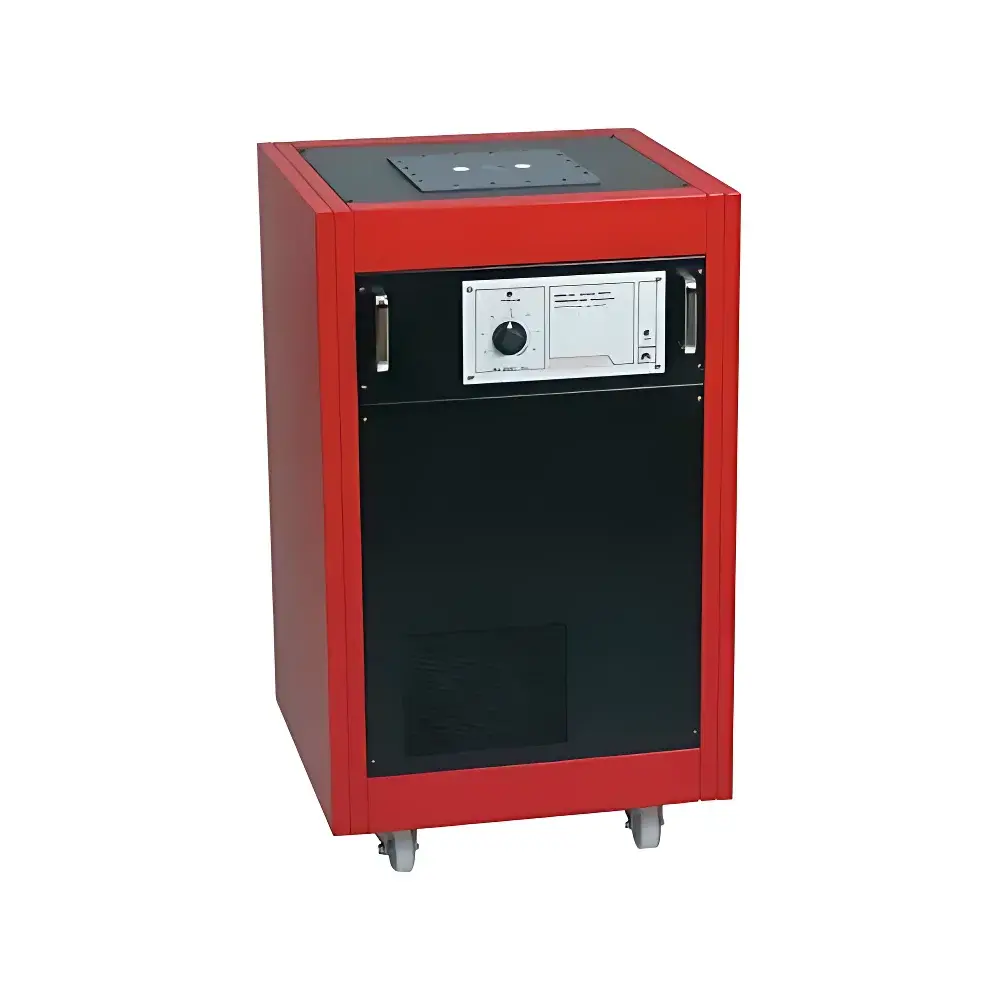
The ISOTECH Model 17725 Mercury Triple-Point Cell Storage Bath is a precision temperature-controlled environment specifically engineered for the long-term stabilization and operational readiness of sealed mercury triple-point cells (Hg-TPC), which serve as primary reference standards in national metrology institutes and high-accuracy calibration laboratories. Operating within the narrow, thermodynamically defined range of −36 °C to −42 °C, the bath maintains thermal conditions required to hold mercury at its triple-point temperature of 234.3156 K (−38.8344 °C) — a fixed point defined under the International Temperature Scale of 1990 (ITS-90). Unlike general-purpose refrigerated baths, the Model 17725 integrates a dedicated thermal architecture optimized for minimal thermal gradient (<±0.005 K across cell volume), low vibration transmission, and exceptional short-term stability (±0.01 °C over 1 hour), ensuring metrological integrity during cell conditioning, transport preparation, or standby storage.
Key Features
- Application-specific design for ISOTECH-certified mercury triple-point cells (e.g., ISOTECH Hg-TPC Type M3), including mechanical alignment fixtures and thermal contact optimization
- Dual-mode thermal control system featuring high-efficiency cascade refrigeration combined with resistive heating elements for precise bidirectional temperature regulation
- Rapid thermal response: achieves full stabilization at any setpoint within the −36 °C to −42 °C range in ≤60 minutes; cooling rate up to 1 K/min, heating rate up to 2 K/min
- Digital PID controller with real-time temperature logging, user-defined ramp profiles, and programmable hold durations
- Stainless steel vacuum-insulated chamber with low-thermal-conductivity support structure to minimize ambient heat load and improve energy efficiency
- Integrated safety interlocks including overtemperature cut-off, refrigerant pressure monitoring, and door-open detection to prevent unintended cell exposure
Sample Compatibility & Compliance
The Model 17725 is validated exclusively for use with sealed, quartz-encapsulated mercury triple-point cells conforming to ISO/IEC 17025:2017 requirements for reference material handling. It supports standard ISOTECH cell geometries (diameter: 25 mm, length: 120–150 mm) and accommodates optional cell rotation mounts for uniform thermal equilibration. The unit complies with IEC 61000-6-3 (EMC emissions) and IEC 61000-6-2 (immunity), and its operational protocol aligns with EURAMET cg-18 (Guidelines on the Realization and Use of Fixed Points) and BIPM CCT-WG-TP recommendations. While not itself a calibration artifact, it meets the environmental control criteria specified in ISO/IEC 17025 Clause 6.4.3 for equipment used in the maintenance of reference standards.
Software & Data Management
The embedded controller provides local setpoint configuration, real-time temperature display, and event-triggered data capture (e.g., start/end of ramp, deviation alerts). Optional RS-232 or USB-C interface enables integration with laboratory information management systems (LIMS) or custom scripting environments (Python, LabVIEW). All temperature logs include timestamp, setpoint, actual reading, and status flags — supporting audit-ready records compliant with GLP and FDA 21 CFR Part 11 when paired with validated third-party software. Data export is supported in CSV format with UTC timestamps and metadata tags (operator ID, cell serial number, session ID).
Applications
- Pre-conditioning of mercury triple-point cells prior to ITS-90 realization in primary thermometer calibration labs
- Intermediate storage between calibration cycles to maintain cell thermal history and reduce thermal shock during insertion into comparison wells
- Supporting secondary standard dissemination workflows in NMIs and accredited calibration service providers
- Facilitating inter-laboratory comparisons where identical thermal pre-treatment protocols are required across participating institutes
- Enabling controlled thermal cycling studies to assess long-term cell stability and seal integrity under repeated thermal stress
FAQ
What is the purpose of storing a mercury triple-point cell at −38.8344 °C?
Mercury’s triple point (234.3156 K) is a defining fixed point of the ITS-90. Storing the cell near this temperature minimizes thermal hysteresis and ensures rapid attainment of equilibrium when inserted into a comparison well — critical for minimizing uncertainty in SPRT calibrations.
Can the Model 17725 be used with non-ISOTECH mercury cells?
It is mechanically and thermally optimized for ISOTECH Hg-TPCs. Use with other manufacturers’ cells requires verification of dimensional compatibility, thermal mass, and immersion depth specifications — and is not covered under warranty or metrological validation.
Does the unit provide traceable temperature calibration?
The bath itself is not a calibrated instrument; however, its controller accepts external Pt100 sensor inputs for in-situ verification against NIST-traceable references. Routine calibration of the internal sensor is recommended annually per ISO/IEC 17025 Clause 6.5.
Is remote monitoring supported?
Yes — via optional Ethernet module (not included), enabling SNMP-based status polling, email alerts on deviation events, and secure HTTPS access to logged data.
What maintenance is required?
Annual inspection of refrigerant charge, condenser coil cleaning, and verification of door gasket integrity. No user-serviceable parts require replacement under normal operation.