
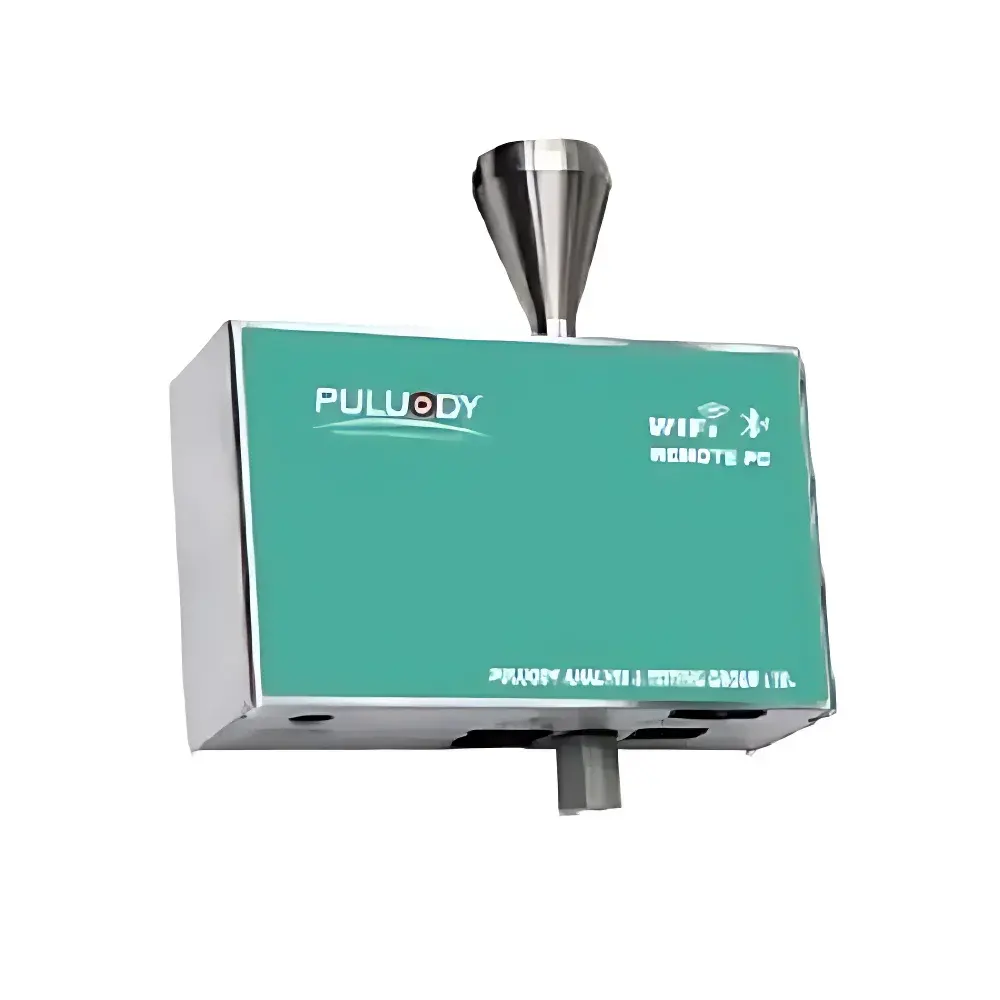
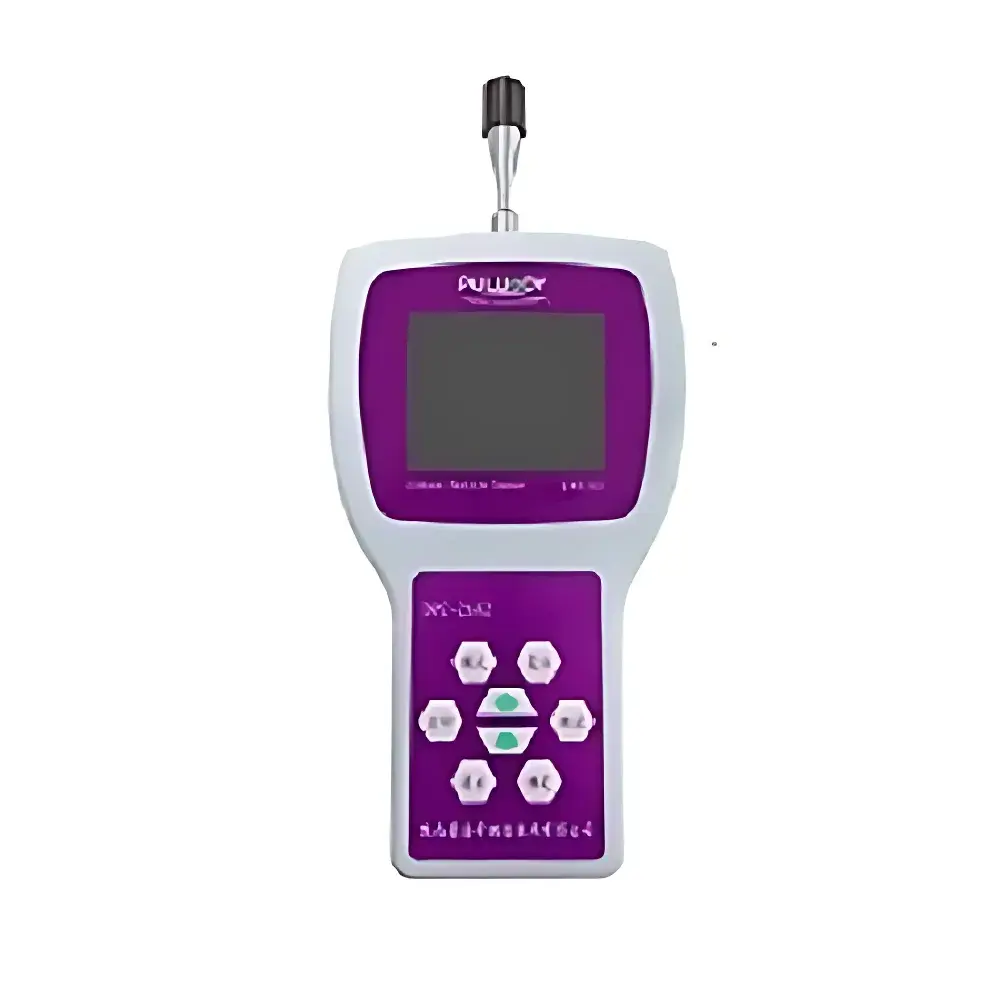
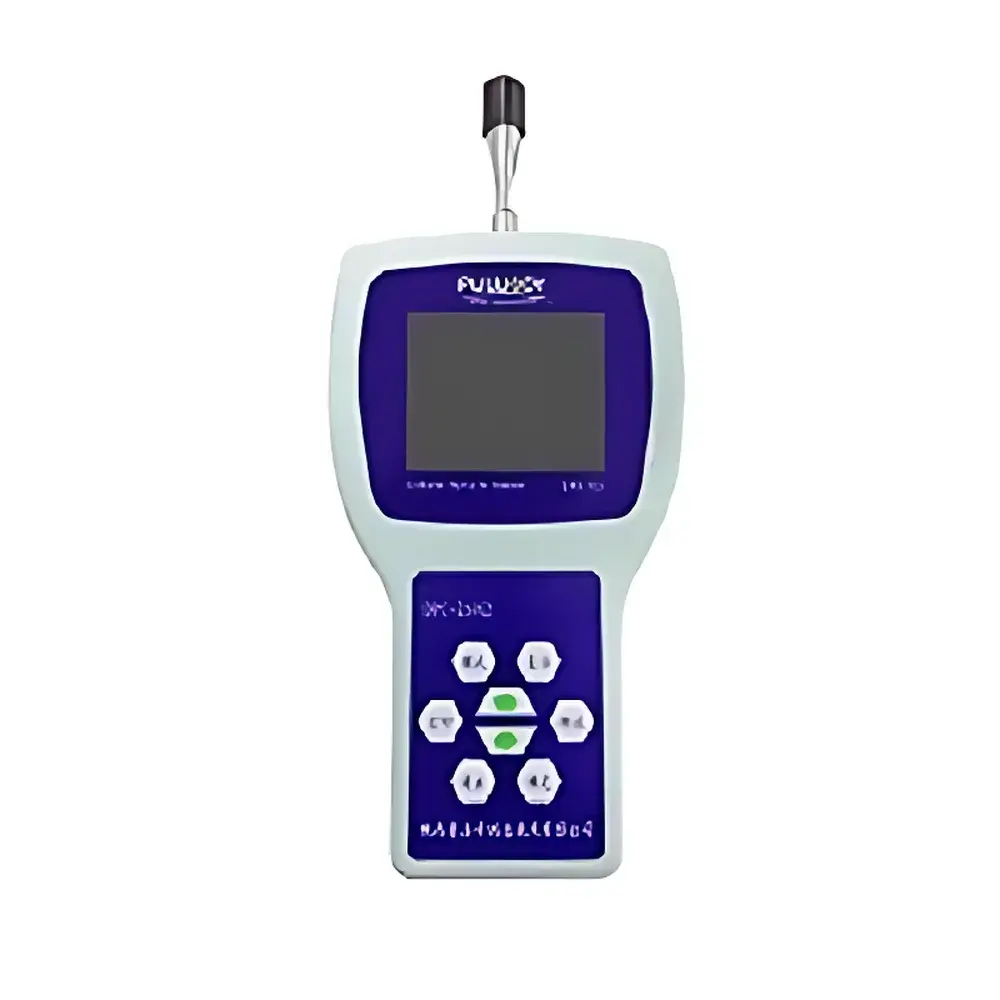
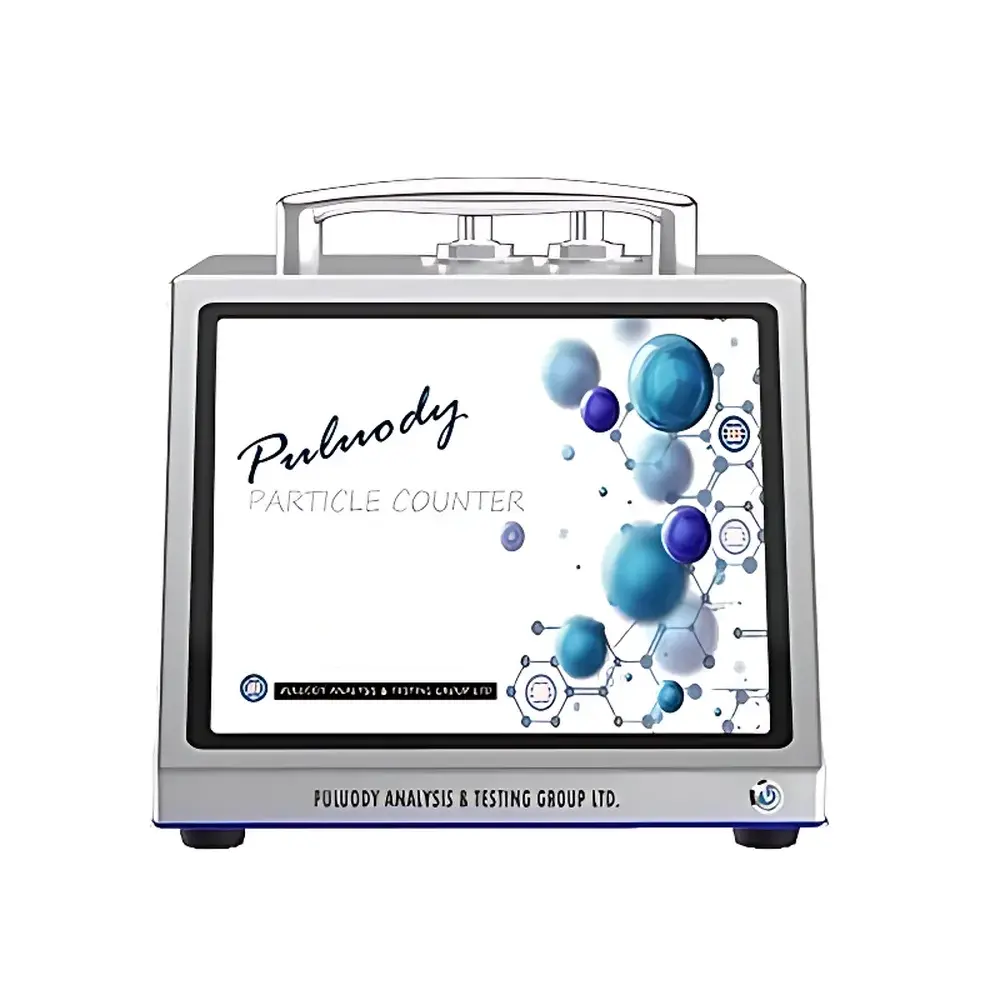
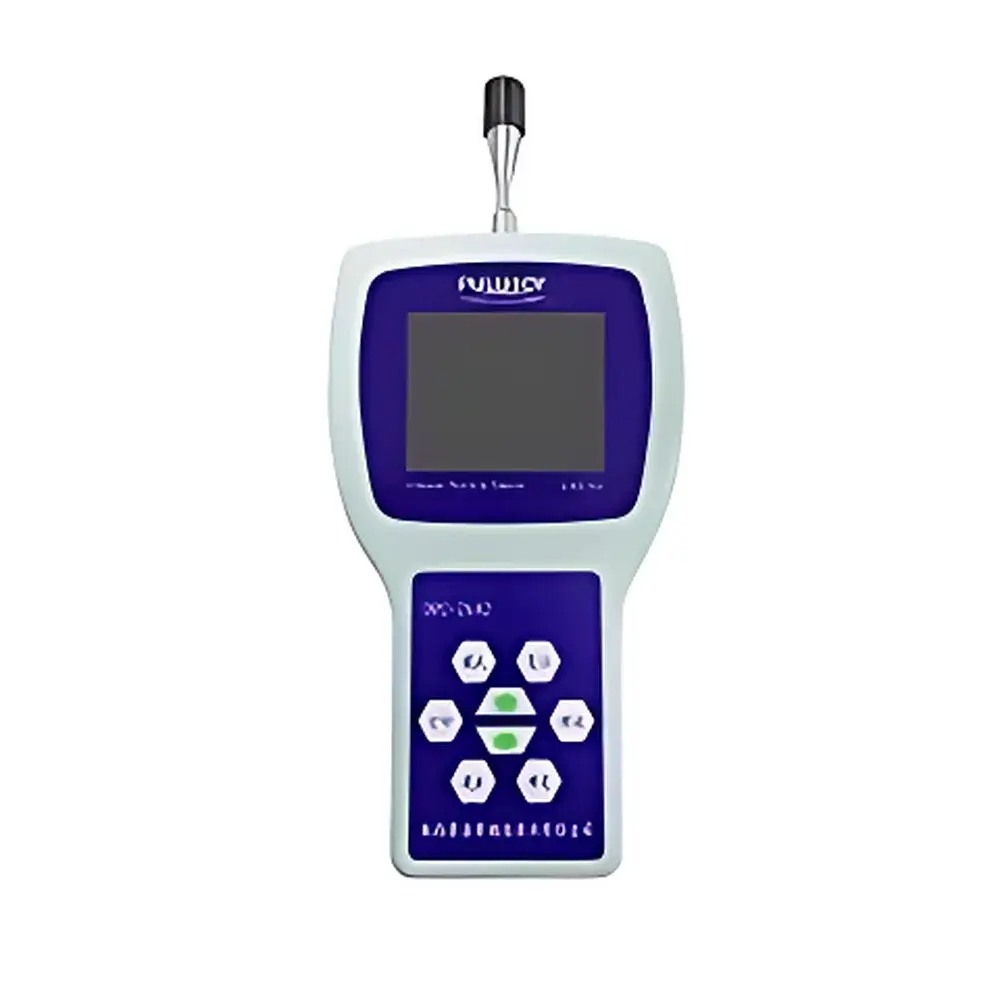
PULUODY DPC-2623 Online Laser Particle Counter
| Brand | PULUODY |
|---|---|
| Model | DPC-2623 |
| Instrument Type | Optical Particle Counter |
| Detection Principle | Laser Light Scattering (Narrow-Beam Dual-Laser Sensor) |
| Particle Size Range | 0.1 µm to 25.0 µm (configurable channels across 6 channel sets) |
| Channel Count | 20 adjustable size bins |
| Size Resolution Error | ≤ ±30% |
| Concentration Accuracy | ≤ ±30% |
| Repeatability | ≤ ±10% FS |
| Coincidence Loss | <5% at 2×10⁶ particles/ft³ |
| Flow Rate | 2.83 L/min (0.1 cfm) |
| Sampling Time | 60 s default |
| Operating Temperature | 5–45 °C |
| Storage Temperature | –40–120 °C |
| Humidity Range | 0–100% RH (non-condensing) |
| IP Rating | IP66 |
| Explosion Protection | Exd II CT4 (intrinsic safety) |
| Compliance | ISO 14644-1, ISO 21501-4, JJF 1190, GMP Annex 1 (2022), USP <788>, FDA 21 CFR Part 11 (software audit trail capable) |
| Data Storage | Local 10,001 records + remote cloud/archive via USB/RS232 |
| Display | 3.45″ industrial TFT LCD |
| Power | 4100 mAh polymer rechargeable battery (optional) |
| Multi-parameter Capability | Integrated temperature/humidity/dew point |
Overview
The PULUODY DPC-2623 Online Laser Particle Counter is an industrial-grade, real-time airborne particulate monitoring system engineered for continuous, unattended operation in regulated and critical environments. It employs a proprietary dual-laser narrow-beam scattering detection architecture—PULUODY Group’s 7th-generation optical sensor platform—designed to deliver high-fidelity particle counting across a broad dynamic range (0.1 µm to 25.0 µm). Unlike conventional single-wavelength counters, the DPC-2623 utilizes orthogonal laser alignment and optimized photodetector geometry to minimize Mie scattering distortion and improve sizing resolution at sub-micron thresholds. Its measurement principle conforms to ISO 21501-4 (Determination of particle size distribution — Single particle light interaction methods) and supports traceable calibration per ISO 14644-1 Annex B and JJF 1190 (Calibration Specification for Airborne Particle Counters). The instrument operates at a certified volumetric flow rate of 2.83 L/min (0.1 cfm), ensuring compatibility with international cleanroom certification protocols including FS209E and ISO 14644-1 Class 1–9 (or equivalent 100–300,000 classification).
Key Features
- Modular multi-channel sizing configuration: Six pre-defined channel sets (A–F) support application-specific binning—from ultrafine aerosols (0.1 µm) in semiconductor fab environments to coarse particulates (25.0 µm) in HVAC duct monitoring.
- Simultaneous multi-parameter acquisition: Integrated temperature, relative humidity, and dew point calculation; optional plug-in gas sensor modules for CO, HCHO, NO₂, or VOCs (1–3 channels expandable).
- Triple operational modes: Particle number concentration (particles/L), mass concentration (µg/m³), and filtration efficiency (%)—each mode fully configurable with user-defined alarm thresholds and reporting units.
- Robust industrial interface: 3.45-inch wide-view TFT display with full English/Chinese bilingual menu navigation; tactile keypad with glove-compatible operation.
- Comprehensive electrical protection: Overvoltage, overcharge, short-circuit, ESD (±15 kV air discharge), and EMI shielding compliant with IEC 61326-1 for electromagnetic immunity in industrial settings.
- Secure data integrity: Local storage for ≥10,001 timestamped records; USB and RS232 interfaces enable encrypted export; firmware supports audit-trail logging aligned with FDA 21 CFR Part 11 requirements.
Sample Compatibility & Compliance
The DPC-2623 is validated for continuous sampling of ambient air, compressed gases (oil-free, dry), and recirculated HVAC airstreams. Its inlet design meets ISO 14644-1 sampling probe specifications for isokinetic aspiration in laminar and turbulent flows. The instrument satisfies regulatory requirements for GMP-compliant facilities (EU Annex 1, PIC/S PI 007, WHO TRS 961), including mandatory periodic verification under GLP/GMP quality systems. Calibration traceability is maintained through NIM-accredited third-party laboratories, with lifetime calibration support and annual recalibration assistance provided. All firmware and data management functions comply with ISO/IEC 17025 documentation standards for measurement uncertainty reporting.
Software & Data Management
The embedded firmware supports scheduled sampling (interval: 1–3600 seconds), cyclic burst mode, and event-triggered capture. Raw data are stored with UTC timestamps, sensor health flags, and environmental metadata (T/RH/dew point). USB mass storage mode enables direct .CSV export compatible with LIMS platforms (e.g., LabWare, STARLIMS) and statistical process control (SPC) tools. Optional cloud gateway integration supports MQTT/HTTPS-based telemetry for centralized dashboards (e.g., Grafana, SCADA). Audit logs record all configuration changes, user logins, and calibration events—retained for ≥18 months as required under FDA 21 CFR Part 11 Subpart C.
Applications
- Cleanroom environmental monitoring (ISO Class 5–8, EU GMP Grade A–D)
- HVAC system validation and filter integrity testing (DOP/PAO upstream-downstream comparison)
- Biological safety cabinet and laminar flow workstation qualification
- Pharmaceutical aseptic processing line monitoring (fill-finish, isolator, RABS)
- Semiconductor wafer fabrication clean zones (particle shedding analysis)
- Medical device packaging environment surveillance (Class 100–10,000)
- Aerospace composite layup and paint booth contamination control
- Food & beverage filling room particulate baseline establishment
FAQ
Does the DPC-2623 meet ISO 14644-1 certification requirements for cleanroom classification?
Yes—it is designed and verified per ISO 14644-1:2015 Annex B and ISO 21501-4:2018, with documented uncertainty budgets for particle size and concentration measurements.
Can the instrument be integrated into a Building Management System (BMS)?
Yes—via Modbus RTU over RS232 or optional Ethernet module; register mapping documentation is supplied for seamless SCADA integration.
Is factory calibration traceable to national metrology institutes?
All units ship with a NIM-traceable calibration certificate (Certificate No. prefixed “PULUODY-CAL”), valid for 12 months under standard operating conditions.
What is the maximum allowable particle concentration before coincidence error exceeds specification?
Coincidence loss remains ≤5% up to 2×10⁶ particles per cubic foot (7.1×10⁷ particles/m³) at 0.3 µm threshold, per ISO 21501-4 Clause 6.4.3.
How is data security ensured during remote transmission?
Data exported via USB is unencrypted but digitally signed; cloud transmission uses TLS 1.2+ with device-authenticated MQTT sessions and role-based access control (RBAC) on the server side.



