
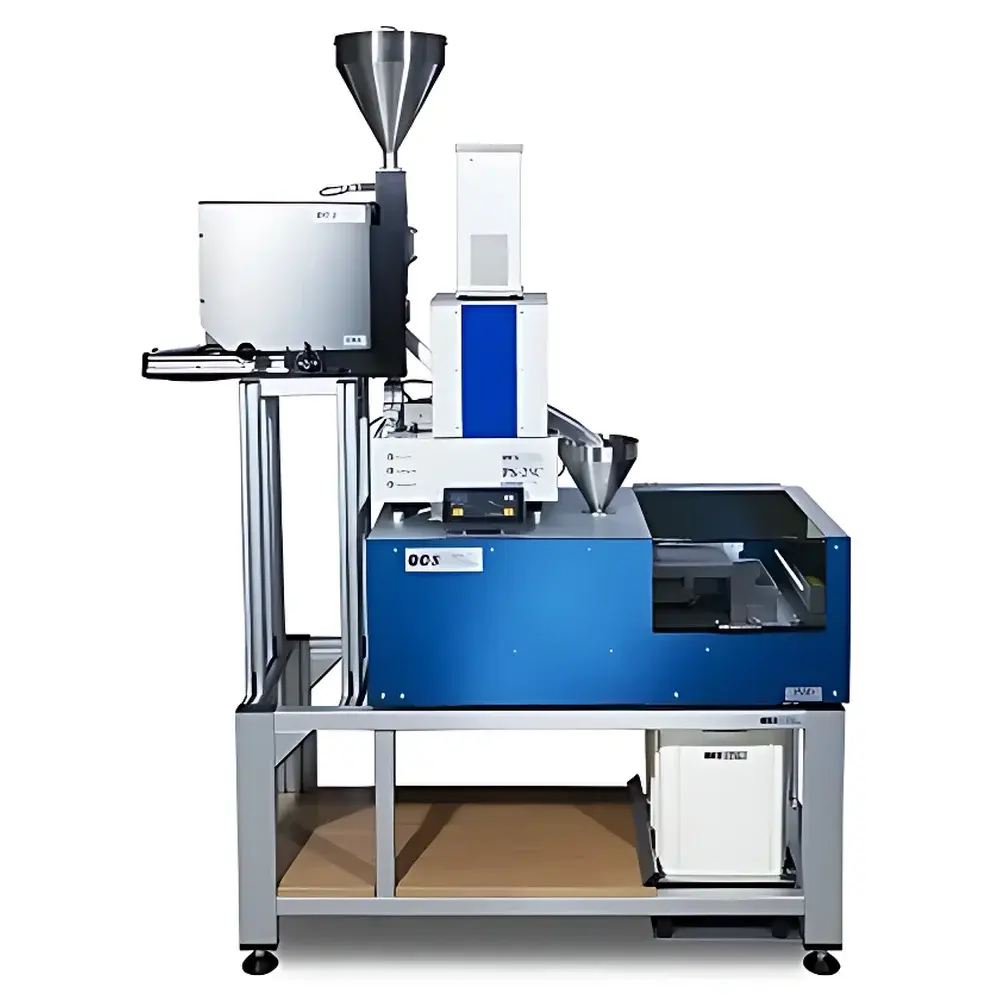
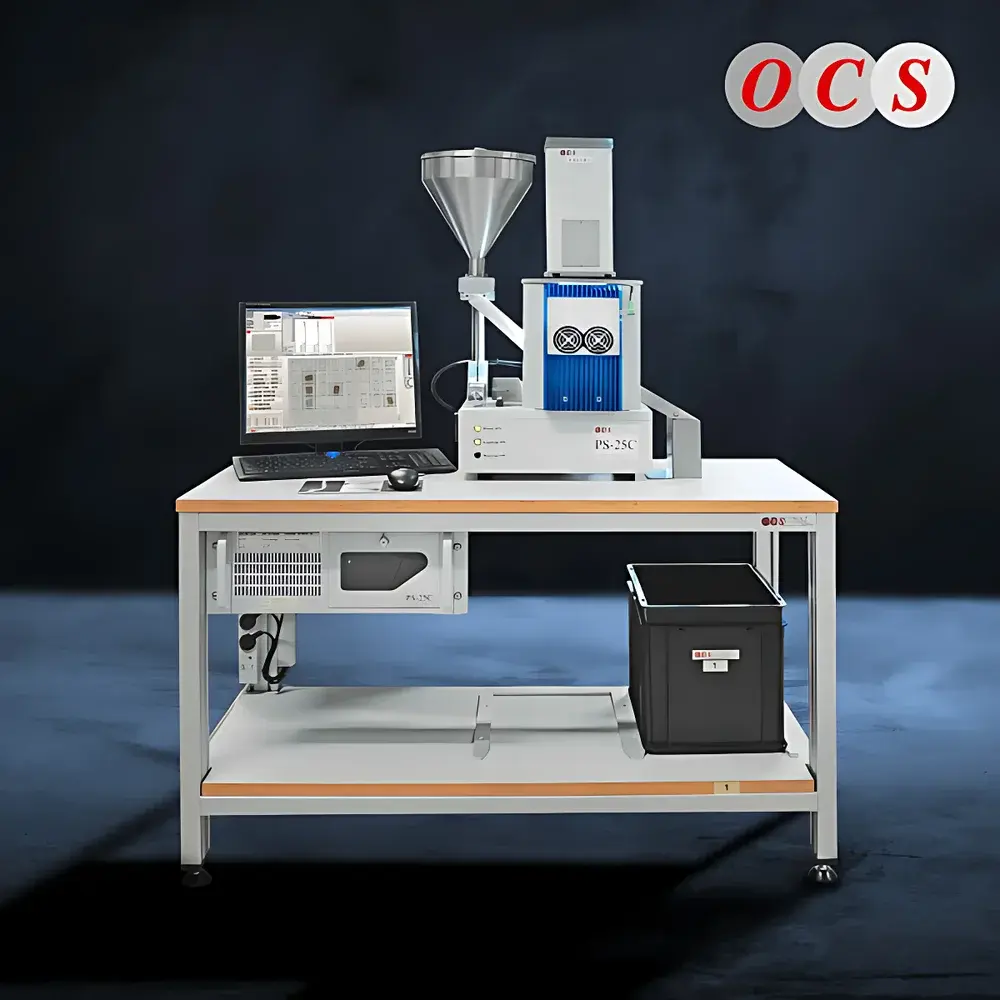
OCS PS25C Polyolefin Particle Impurity Detection System
| Brand | OCS |
|---|---|
| Origin | Germany |
| Model | PS25C |
| Camera | 3-CMOS Color Imaging Sensor |
| Minimum Detectable Particle Size | ≥20 µm |
| System Dimensions (Main Unit) | 900 × 500 × 450 mm |
| Weight (Main Unit) | ~30 kg |
| Image Processing Unit Dimensions | 190 × 450 × 600 mm |
| Weight (IPU) | ~12 kg |
| Video Output | Composite (1 V p-p, 75 Ω) & RGB (0.7 V p-p, 75 Ω) |
| SNR | 58 dB |
| Line Frequency | 15.625 kHz |
| Power Consumption | 5.6 W |
Overview
The OCS PS25C Polyolefin Particle Impurity Detection System is a high-precision, optically based inline and laboratory-grade inspection platform engineered specifically for the polyolefin and thermoplastic resin industry. It operates on the principle of high-resolution color imaging combined with real-time digital image analysis to identify, classify, and quantify foreign particles—including black specks, gel particles, oxidized residues, metal contaminants, and color-mismatched polymer agglomerates—in granular or pelletized polyolefin feedstock. Unlike conventional sieve-based or manual visual inspection methods, the PS25C employs a calibrated 3-CMOS color camera system with controlled illumination geometry to capture spectral reflectance differences at micron-scale resolution—enabling discrimination not only by size and shape but critically by chromatic deviation relative to the base resin matrix. This capability supports root-cause analysis in quality assurance workflows where trace-level contamination directly impacts melt flow stability, extrusion die performance, and final product aesthetics or mechanical integrity.
Key Features
- Modular industrial architecture designed for integration into both R&D laboratories and continuous production lines via bypass sampling.
- 3-CMOS color imaging sensor with ≥20 µm minimum detectable particle size under standard configuration; adjustable optical magnification and illumination intensity for material-specific optimization.
- Real-time image processing unit featuring dedicated frame capture hardware and embedded bit-processor architecture for deterministic latency (<50 ms per frame).
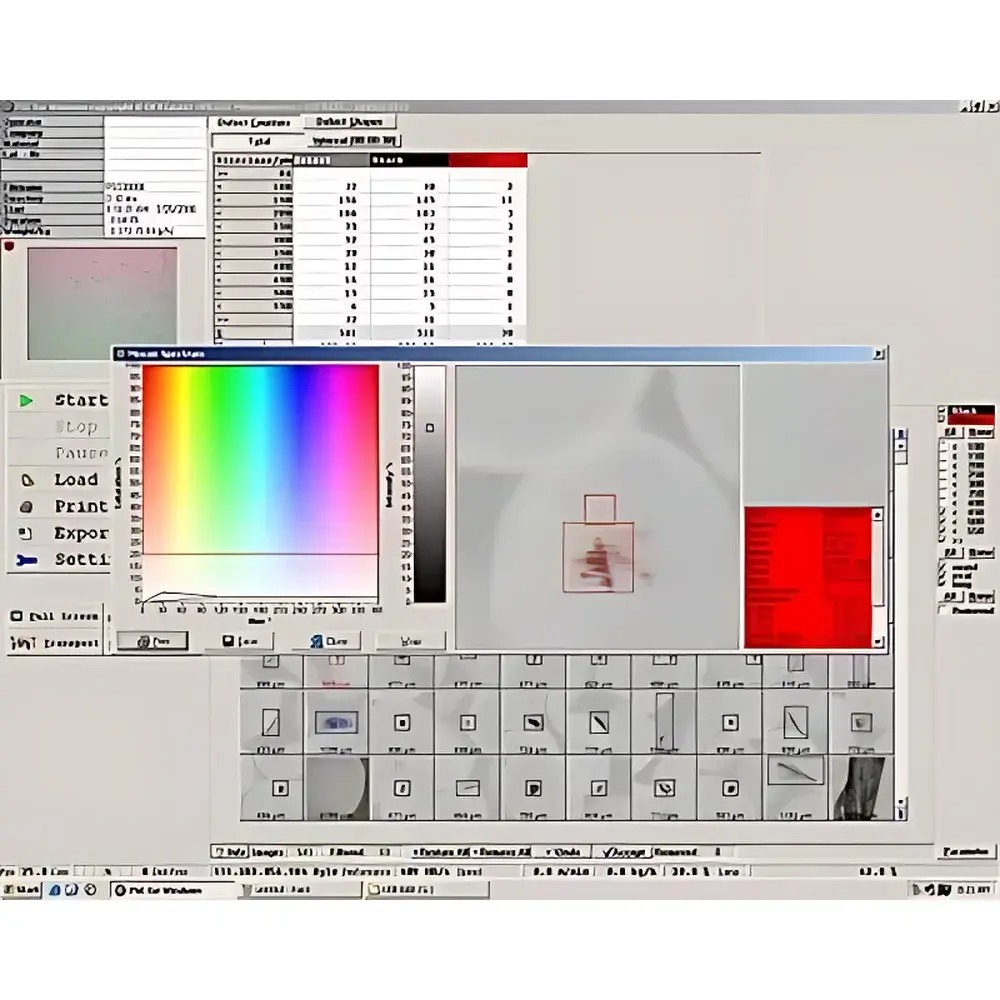
- “Teaching”-based color thresholding engine: users define reference hue/saturation/value (HSV) ranges for clean resin and train the system to flag deviations—enabling robust detection of yellowing, carbonized gels, or metallic inclusions without pre-programmed templates.
- Configurable alarm logic with programmable thresholds for particle count, cumulative area, or size distribution skew; output via dry-contact relay for process interlock or PLC signaling.
- Integrated pneumatic self-cleaning subsystem with programmable cycle intervals—automatically purges feed chute and optical chamber to maintain long-term measurement repeatability across shifts.
- Ethernet-enabled communication interface compliant with TCP/IP and Modbus TCP protocols, supporting direct integration into MES, LIMS, or SCADA environments for audit-trail generation and SPC charting.
Sample Compatibility & Compliance
The PS25C accommodates both transparent (e.g., PP homopolymer, HDPE) and opaque (e.g., filled PP, pigment-loaded LDPE) resin pellets within standard size ranges (2–5 mm diameter). Sample introduction is compatible with gravity-fed hopper systems or pressurized pneumatic conveying loops. The system conforms to CE marking requirements for industrial machinery (2006/42/EC) and electromagnetic compatibility (2014/30/EU). Its data handling architecture supports ALCOA+ principles (Attributable, Legible, Contemporaneous, Original, Accurate, Complete, Consistent, Enduring, Available) and enables compliance with FDA 21 CFR Part 11 when deployed with validated user access controls and electronic signature workflows. Routine operation meets ISO 17025-relevant traceability standards when paired with NIST-traceable calibration references for color and size metrics.
Software & Data Management
The proprietary OCS VisionSuite software provides a role-based interface with three operational tiers: operator (run-time monitoring), technician (parameter tuning and cleaning scheduling), and QA manager (report generation and trend analysis). All image acquisitions are timestamped and stored with full metadata—including camera settings, lighting profile, and alarm status. Quantitative outputs include histogram-based size distribution plots, color deviation heatmaps, cumulative contamination index (CCI) time-series charts, and tabular export in CSV or XLSX format. Audit logs record every parameter change, user login, and system event—supporting GLP/GMP documentation requirements. Software updates are delivered via secure HTTPS channel with SHA-256 signature verification.
Applications
- Raw material release testing at polymer compounding facilities and resin suppliers.
- In-process monitoring during pelletizing or drying stages to detect thermal degradation onset.
- Root-cause investigation of extrusion line stoppages linked to screen pack clogging or die lip buildup.
- Supplier qualification and incoming inspection against ASTM D1603 (Standard Test Method for Carbon Black Content) and ISO 1874-1 (Plastics – Polyolefins – Part 1: Designation System).
- Supporting IATF 16949 clause 8.5.1.5 (Statistical Process Control) through automated defect rate trending over time.
- Validation of cleaning efficacy following reactor changeovers or grade transitions in polypropylene production lines.
FAQ
Can the PS25C distinguish between carbonized polymer gels and metallic contaminants?
Yes—the 3-CMOS color sensor captures spectral reflectance profiles across visible wavelengths; metallic particles typically exhibit specular highlights and narrow-band reflectivity distinct from organic carbonization, which shows diffuse broadband absorption. Classification rules can be trained separately for each class.
Is offline calibration required before each test run?
No—system self-calibration occurs automatically during startup using internal reference targets; however, periodic verification with certified particle size/color standards (e.g., NIST SRM 2800 series) is recommended per ISO/IEC 17025 clause 7.7.
Does the system support automatic particle ejection?
An optional air-jet rejection module is available as a factory-installed add-on; it interfaces with the alarm output to physically divert contaminated fractions downstream of the inspection zone.
What maintenance intervals are specified for optical components?
The integrated self-cleaning cycle runs every 2–8 hours (user-configurable); annual replacement of LED illumination units and quarterly inspection of CMOS sensor window coating are outlined in the maintenance manual.
Can historical data be exported for statistical process control (SPC)?
Yes—trend reports are exportable in XLSX with embedded formulas; raw data streams can also be forwarded via OPC UA or MQTT to external SPC platforms such as Minitab Workspace or InfinityQS Enact.




