
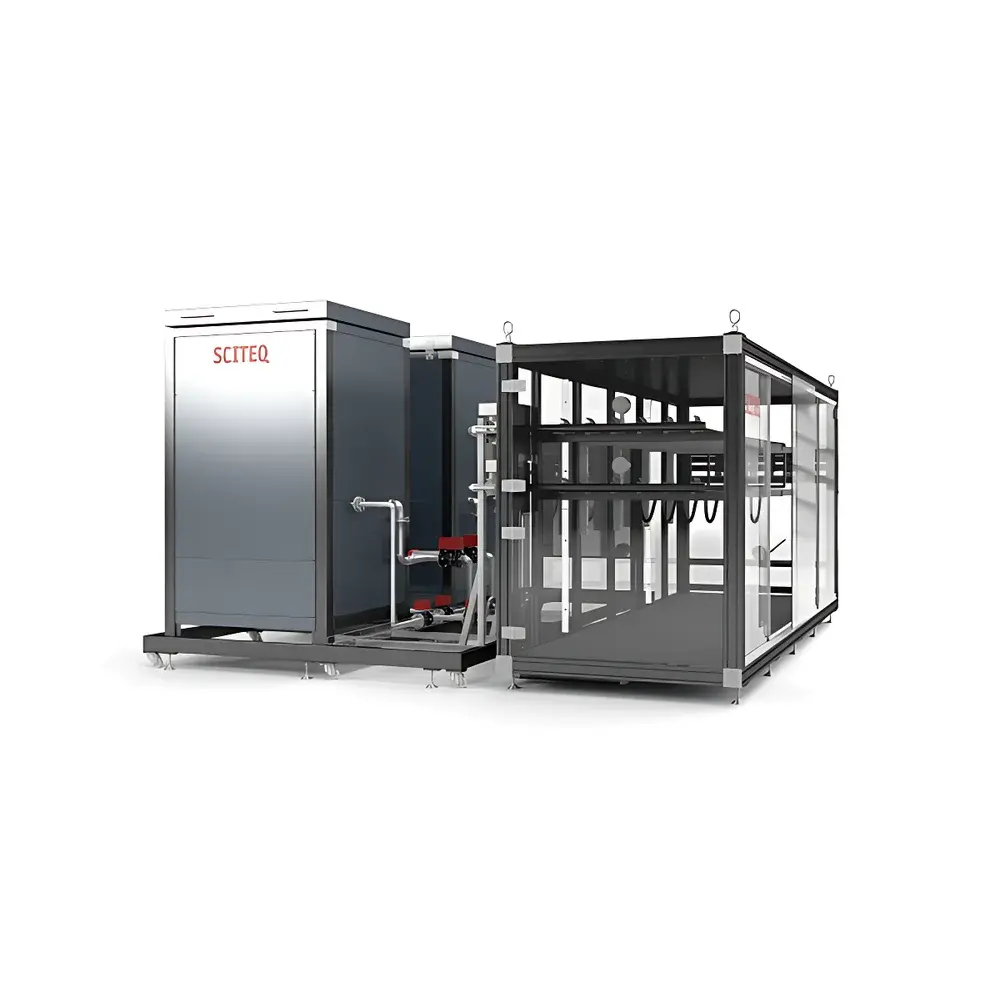
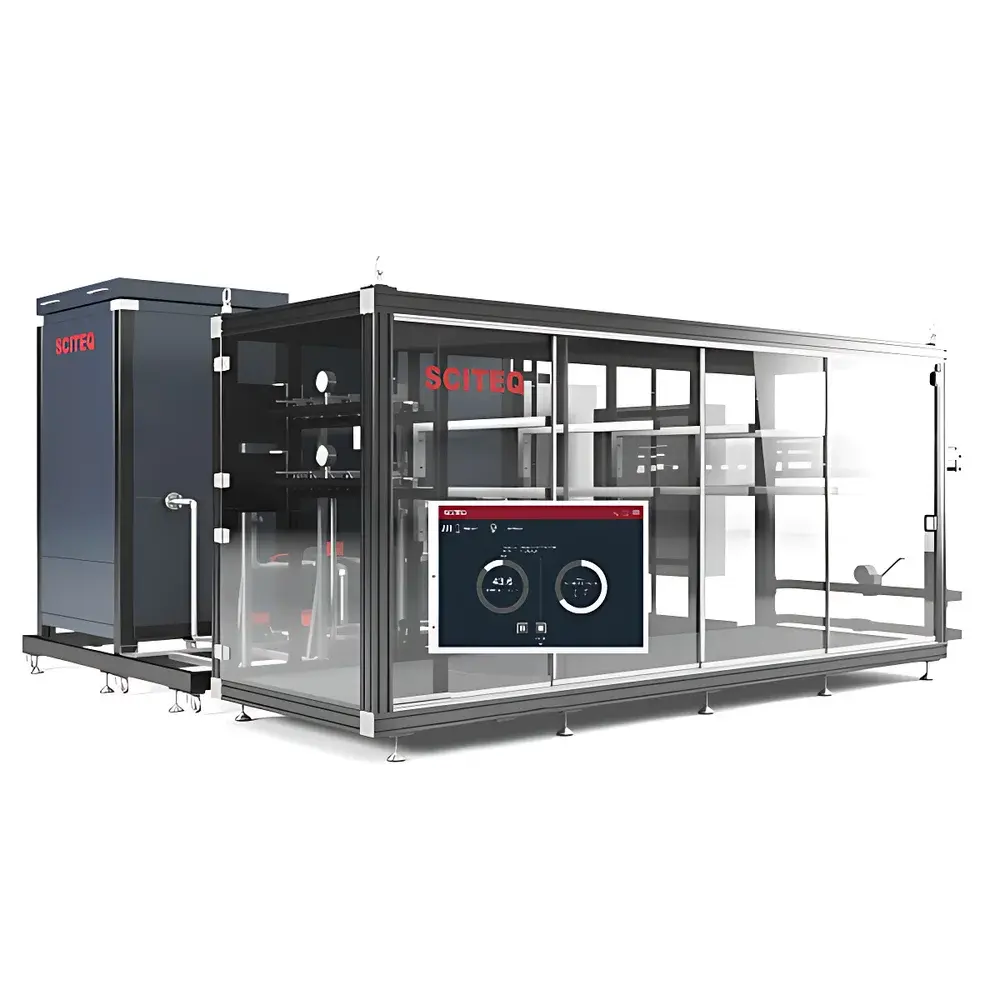
Sciteq TC-micro Cold-Hot Water Cycling Impact Tester
| Brand | Sciteq |
|---|---|
| Origin | Denmark |
| Model | TC-micro |
| Configuration Options | TC50 (2×Ø50 mm or 4×Ø32 mm) / TC63 (2×Ø63 mm or 4×Ø32 mm) |
| Pressure Control | Constant-pressure hydraulic circuit |
| Thermal Range | 5–95 °C (adjustable setpoints) |
| Water Reservoirs | Dual 500 L pressurized tanks (hot & cold) |
| Flow Monitoring | Integrated inline flow sensors per test channel |
| Minimum Flow Velocity | ≥0.5 m/s (automatically maintained) |
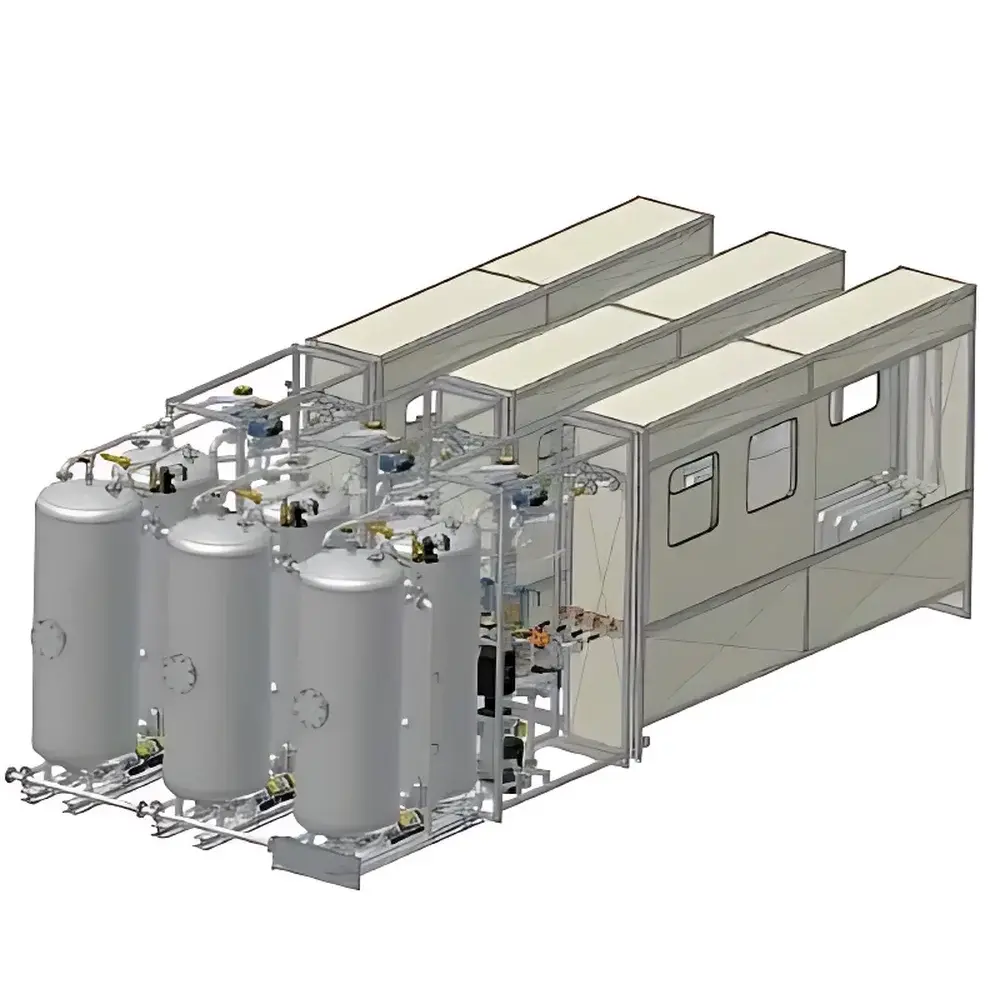
| Test Chamber Architecture | Four independent, sealed micro-chambers with individual leak detection |
| Control Interface | 15-inch industrial touchscreen HMI with PLC-based logic |
| Safety Compliance | EN 61000-6-2/6-4, EN ISO 13857, integrated emergency stop circuits |
Overview
The Sciteq TC-micro Cold-Hot Water Cycling Impact Tester is an engineered solution for accelerated lifetime validation of thermoplastic and composite piping systems under dynamic thermal-mechanical stress. It operates on the principle of controlled, pressure-sustained thermal cycling—alternating between defined hot and cold water phases while maintaining constant internal hydrostatic pressure in each test specimen. This methodology replicates real-world service conditions encountered in domestic hot/cold water distribution networks, radiant floor heating loops, and plumbing assemblies subject to repeated thermal expansion/contraction and hydraulic fatigue. Unlike open-loop bath-style testers, the TC-micro employs a closed, pressurized dual-reservoir architecture—each holding 500 L of temperature-regulated water—to eliminate evaporative loss, reduce energy consumption, and ensure reproducible thermal transition kinetics. The system is designed in accordance with ISO 1167-1:2022 (Plastics pipes and fittings — Resistance to internal pressure — Part 1: General method) and aligns with ASTM F2023 (Standard Practice for Evaluating the Thermal Cycling Performance of Crosslinked Polyethylene (PEX) Tubing Systems), supporting both R&D validation and quality assurance workflows in pipe manufacturing and certification laboratories.
Key Features
- Four independently controlled micro-test chambers enable parallel evaluation of up to four specimens—configurable for Ø32 mm (full capacity), Ø50 mm (TC50 variant), or Ø63 mm (TC63 variant)—with full isolation of thermal, pressure, and leakage domains.
- Dual 500 L pressurized reservoirs (hot: up to 95 °C; cold: down to 5 °C) fed by external chiller and electric heater modules ensure stable setpoint accuracy ±0.5 °C across extended cycles.
- Inline electromagnetic flow sensors monitor real-time velocity in each specimen conduit; closed-loop PID regulation maintains minimum flow velocity ≥0.5 m/s at all times—critical for simulating turbulent flow regimes and avoiding stagnation-induced degradation artifacts.
- Intelligent thermal cross-contamination mitigation: PLC-controlled valve sequencing delays hot water ingress into the cold tank (and vice versa) during phase transitions, minimizing thermal mixing and preserving reservoir temperature integrity over thousands of cycles.
- Integrated leak detection per chamber via conductive moisture sensors positioned at critical joint interfaces—triggering immediate pressure hold and event logging upon anomaly detection.
- 15-inch industrial-grade touchscreen HMI provides intuitive navigation through test setup, real-time parameter visualization (pressure, temperature, flow, cycle count), and post-test report generation compliant with GLP documentation requirements.
Sample Compatibility & Compliance
The TC-micro accommodates rigid and flexible thermoplastic pipes (e.g., PE-RT, PEX-a/b/c, PP-R, multilayer composites) and associated fittings (compression, crimp, push-fit, electrofusion). Specimen lengths are standardized per ISO 1167-2, with end-caps and sealing fixtures supplied for common diameters. All mechanical and electrical subsystems conform to CE marking directives (2014/30/EU EMC, 2014/35/EU LVD), EN 61000-6-2 (immunity) and EN 61000-6-4 (emission), and EN ISO 13857 (safety distances). The control architecture supports audit-ready data integrity per FDA 21 CFR Part 11 when paired with optional electronic signature and user access management modules.
Software & Data Management
Test execution, parameter logging, and alarm handling are managed by embedded firmware running on a deterministic real-time PLC platform. Raw data—including timestamped pressure, temperature, flow, and leak status per channel—is stored locally on an industrial SSD with redundant backup capability. Export formats include CSV and PDF reports containing cycle statistics, failure timestamps, and pass/fail assessment against preconfigured acceptance criteria. Optional Sciteq DataLink software enables secure remote monitoring, centralized fleet management, and integration with LIMS platforms via OPC UA or Modbus TCP protocols.
Applications
- Accelerated aging validation of plastic piping systems per ISO 1167, ISO 21003 (multilayer pipes), and EN ISO 22391 (PEX systems).
- Joint integrity verification for heat-fused, mechanical, and adhesive connections under combined thermal and hydraulic stress.
- Material formulation benchmarking—comparing crack initiation resistance, creep rupture behavior, and interfacial delamination thresholds across polymer grades.
- Third-party certification testing for WRAS, KIWA, DVGW, and NSF/ANSI 61 compliance programs.
- Root cause analysis of field failures linked to thermal cycling fatigue or improper installation practices.
FAQ
What standards does the TC-micro comply with for pipe certification testing?
It is configured to meet ISO 1167-1:2022, ASTM F2023, EN ISO 22391, and DVGW W534 requirements for thermal cycling endurance evaluation.
Can test parameters be customized beyond default profiles?
Yes—users may define custom cycle sequences (duration, dwell time, ramp rates), pressure setpoints (up to 16 bar), and temperature bounds within operational limits.
Is remote diagnostics supported?
With optional DataLink software and Ethernet connectivity, real-time health monitoring, firmware updates, and diagnostic log retrieval are available.
How is water quality maintained during long-duration tests?
The closed-loop design minimizes evaporation and contamination; optional deionized water circulation kits and periodic reservoir filtration protocols are recommended for >10,000-cycle campaigns.
What safety certifications apply to the TC-micro’s electrical architecture?
Full compliance with EN 61000-6-2/6-4 (EMC), EN 60204-1 (machine safety), and EN ISO 13857 (safe positioning of guards) is documented in the EU Declaration of Conformity.



