
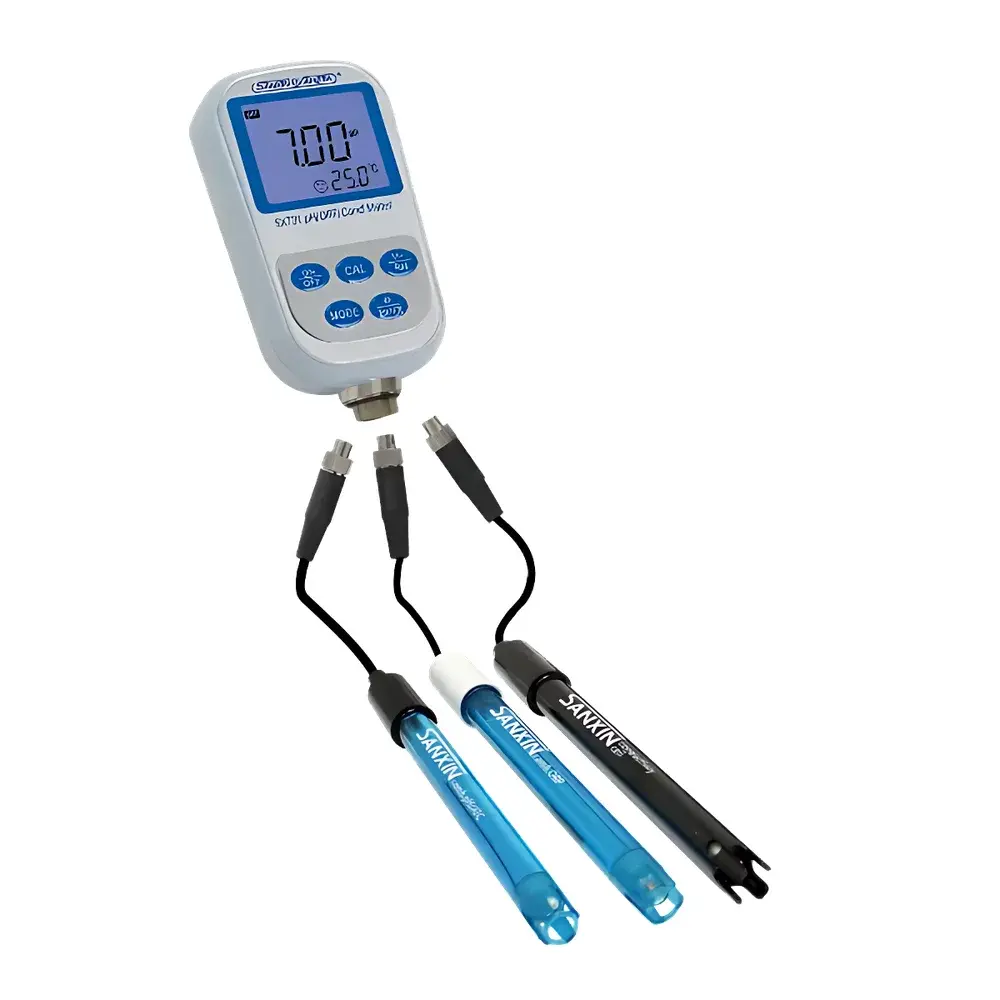
Sanxin SX731 Portable pH/ORP/Conductivity Meter
| Brand | Sanxin |
|---|---|
| Origin | Shanghai, China |
| Manufacturer Type | OEM Manufacturer |
| Instrument Type | Portable Water Quality Analyzer |
| Measurement Principle | Electrochemical Potentiometry & Conductometry |
| Measured Parameters | pH, ORP (Redox Potential), Electrical Conductivity, TDS, Salinity, Resistivity, Temperature |
| pH Range | −2.00 to 19.99 pH |
| ORP Range | −1999 to +1999 mV |
| Conductivity Ranges | 0.00–19.99 μS/cm, 20.0–199.9 μS/cm, 200–1999 μS/cm, 2.00–19.99 mS/cm, 20.0–199.9 mS/cm |
| TDS Range | 0–100 g/L |
| Salinity Range | 0–100 ppt |
| Resistivity Range | 0–100 MΩ·cm |
| pH Accuracy (Meter) | ±0.01 pH |
| (System w/ Electrode) | ±0.02 pH |
| ORP Accuracy | ±0.1% FS |
| Conductivity Accuracy (Meter) | ±1.0% FS |
| (System w/ Electrode) | ±1.5% FS |
| Temperature Compensation | Automatic (0–100 °C for pH |
| Electrode Constants | 0.1 / 1 / 10 cm⁻¹ |
| Reference Temperatures | 18 °C, 20 °C, 25 °C |
| Data Storage | 400 sets (ID, value, unit, temperature) |
| Power | 2 × AA batteries (1.5 V) |
| Dimensions (Instrument) | 65 × 120 × 31 mm |
| Weight (Instrument) | 180 g |
| IP Rating | IP57 |
| Operating Environment | 5–35 °C, ≤85% RH |
| Certifications | ISO 9001:2015, CE, RoHS, CMC |
Overview
The Sanxin SX731 Portable pH/ORP/Conductivity Meter is an integrated electrochemical analyzer engineered for field-deployable, multi-parameter water quality assessment. It operates on standardized potentiometric principles for pH and ORP measurement—relying on Nernstian response of ion-selective glass membranes and noble-metal redox electrodes—and employs four-electrode or two-electrode AC conductometric methods for electrical conductivity determination. The instrument implements automatic temperature compensation (ATC) using integrated Pt1000 or thermistor-based sensors embedded in each probe, ensuring traceable correction per ISO 7888 and ASTM D1125. Designed for compliance with routine environmental monitoring workflows, the SX731 meets functional requirements for grab-sample analysis in wastewater discharge verification, drinking water distribution system validation, surface water surveillance, and industrial process effluent screening—without reliance on mains power or laboratory infrastructure.
Key Features
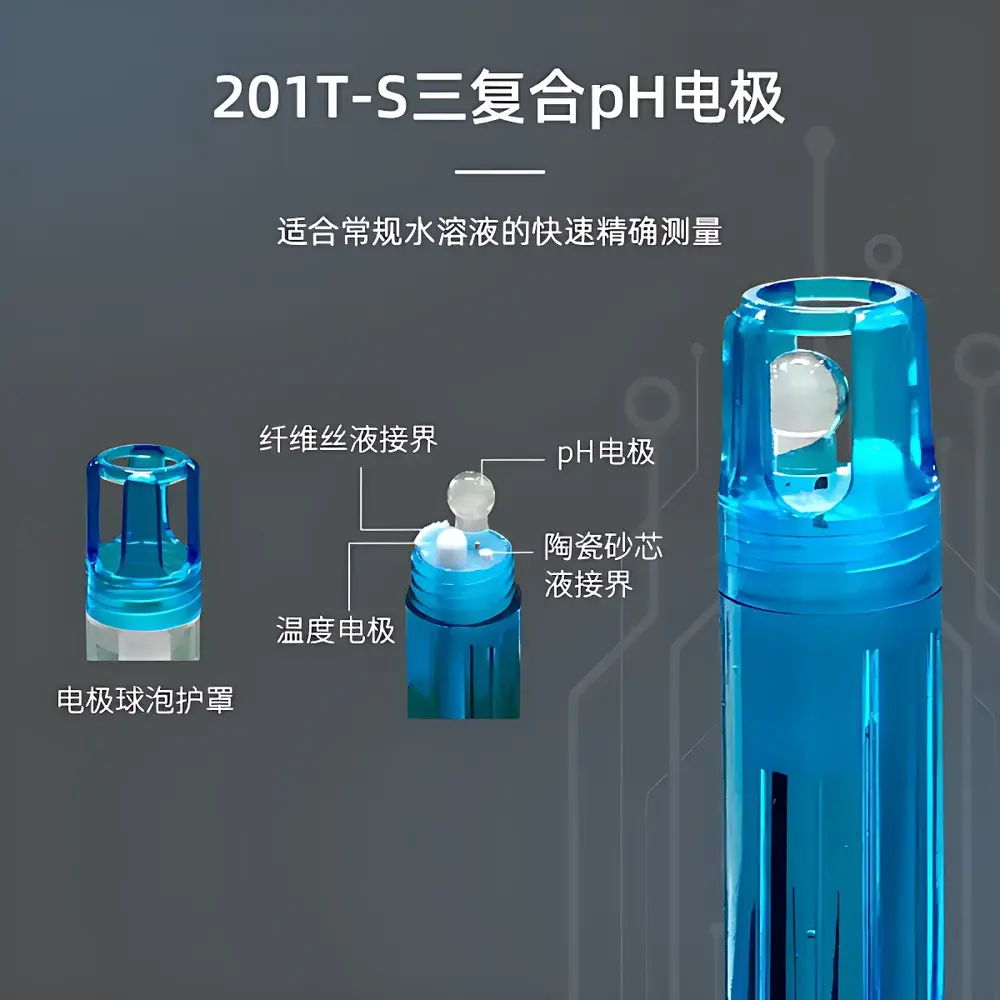
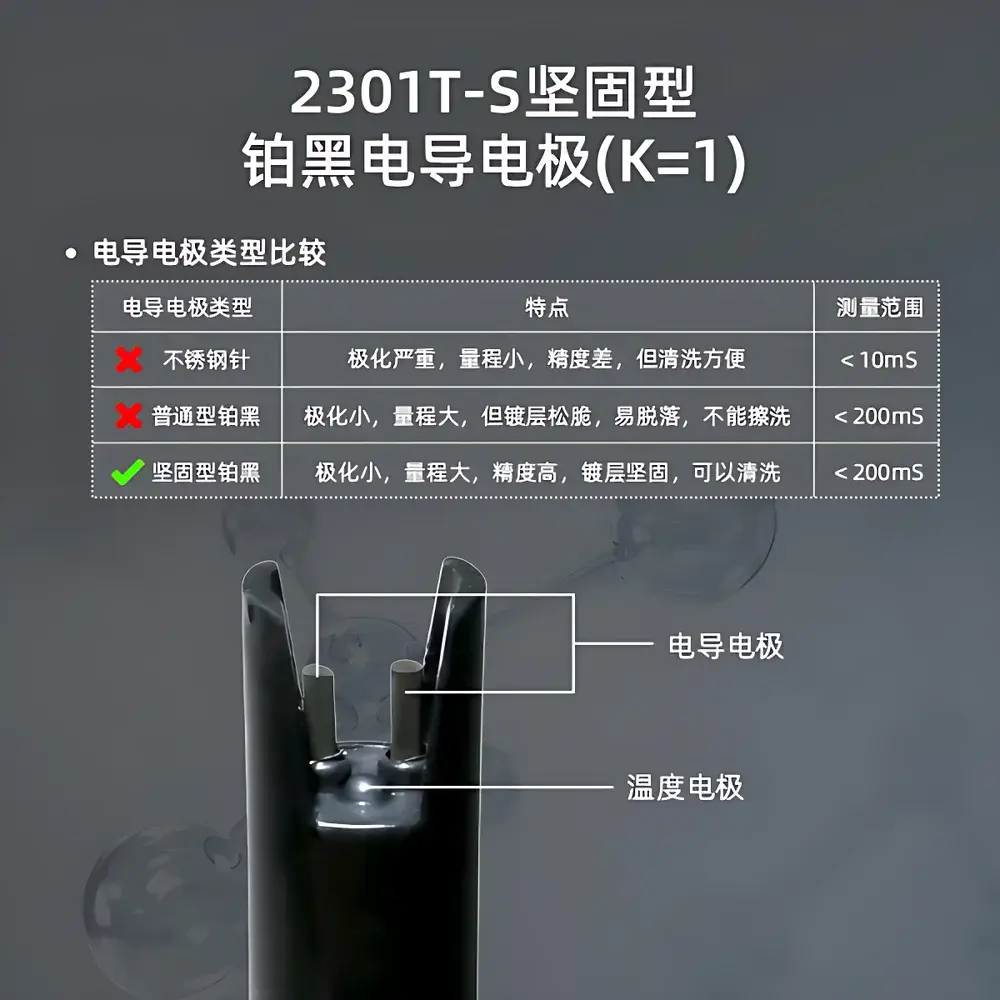
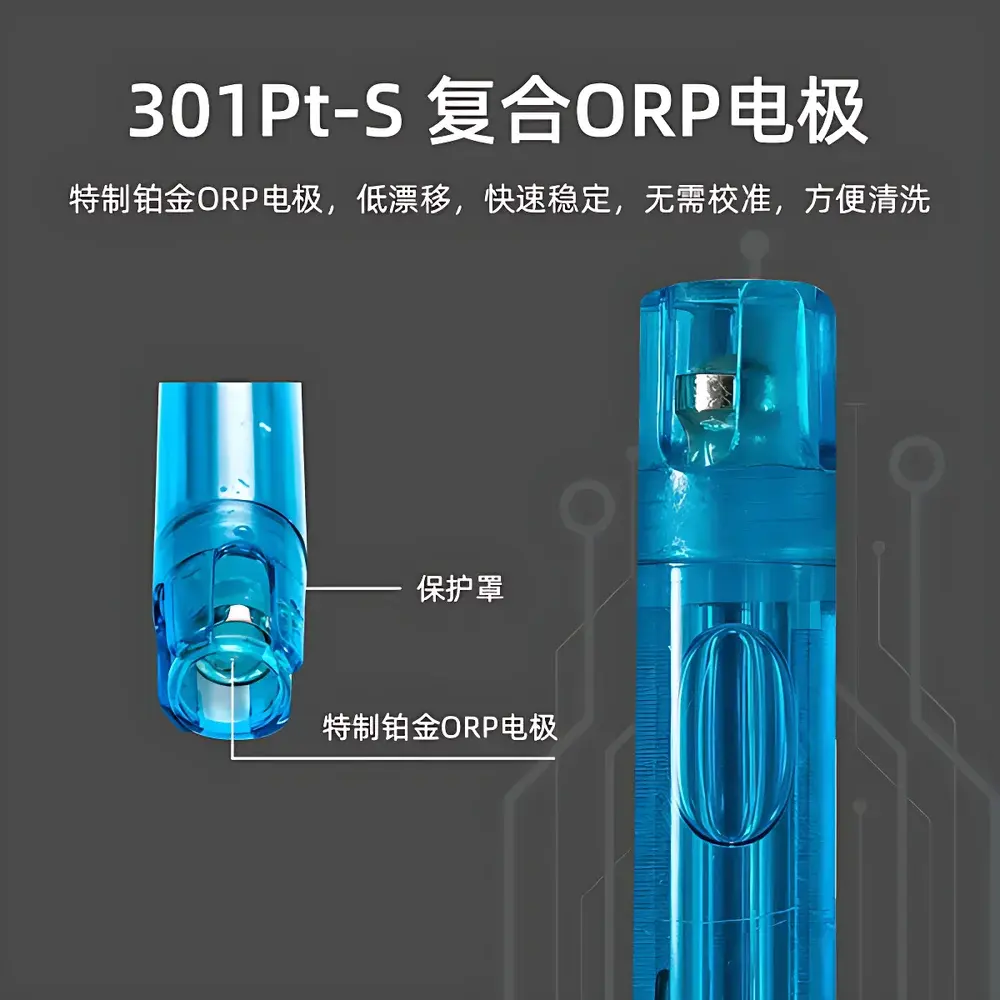
- Triple-sensor auto-recognition architecture: Upon electrode insertion, the meter detects and configures calibration parameters for the connected 201T-S pH/ATC composite electrode, 301Pt-S ORP electrode, and 2301T-S platinum black conductivity cell—eliminating manual setup errors.
- Intelligent measurement stabilization algorithm: Combines digital filtering and sliding average processing to suppress transient noise; displays a “smiley face” icon when readings meet stability criteria defined by IUPAC-recommended drift thresholds (<0.01 pH/3 h; <0.5 mV/min for ORP).
- Multi-standard buffer recognition: Automatically identifies 13 pH standard solutions across three metrological series—NIST-traceable (e.g., pH 4.005, 6.865, 9.180 at 25 °C), European Pharmacopoeia (EP), and Chinese National Standards (GB)—enabling audit-ready calibration logs.
- Adaptive conductivity calibration: Single-point K=1.0 cell calibration covers full range (0–200 mS/cm) via auto-ranging frequency modulation (10 Hz–10 kHz) and voltage optimization—validated per ISO 7888 Annex B procedures.
- Specialized pure-water mode: Applies non-linear temperature compensation algorithms optimized for low-conductivity samples (<10 μS/cm), conforming to USP guidance for pharmaceutical water systems.
- Ruggedized field deployment: IP57-rated enclosure withstands dust ingress and immersion up to 1 m for 30 min; supplied with impact-resistant carrying case containing all calibrated electrodes, standards, tools, and documentation.
Sample Compatibility & Compliance
The SX731 supports aqueous matrices across regulatory sampling domains—including raw surface water, treated potable water, cooling tower fluids, leachate, and municipal wastewater—with validated performance under EPA Method 150.1 (conductivity), ASTM D1293 (pH), and ASTM D3223 (ORP). Its electrode configuration complies with GLP data integrity expectations: all measurements embed timestamped metadata (sample ID, operator code, ambient temperature, electrode serial number) into stored records. The device satisfies essential requirements of ISO/IEC 17025:2017 Clause 6.4.7 for portable instrumentation used in accredited testing laboratories, including documented uncertainty budgets for each parameter based on electrode manufacturer specifications and in-field verification protocols.
Software & Data Management
Data export occurs via USB-C interface (optional adapter) to CSV-formatted files compatible with LIMS platforms and statistical software (e.g., JMP, Minitab). Internal memory retains 400 measurement events with full traceability: sequence number, measured value, unit, ATC-corrected temperature, electrode type, and calibration status flag. Audit trail functionality logs all user-initiated actions—including calibration events, range changes, and factory reset—aligned with FDA 21 CFR Part 11 electronic record controls when paired with validated third-party data aggregation software. No cloud connectivity or proprietary drivers are required; raw files are human-readable and platform-agnostic.
Applications
- Environmental field surveys: Rapid profiling of pH gradients in riverine sediments, ORP mapping in anaerobic wetlands, and conductivity-driven salinity estimation in estuarine transects.
- Industrial pretreatment verification: On-site confirmation of neutralization efficiency prior to discharge, real-time tracking of membrane fouling indicators via resistivity shifts in ultrapure water loops.
- Drinking water safety checks: Field validation of disinfectant residual stability (via ORP correlation with free chlorine), and detection of leaching-induced pH excursions in aging pipe networks.
- Educational laboratory instruction: Pedagogical tool for demonstrating Nernst equation behavior, Debye-Hückel limiting law deviations in high-ionic-strength solutions, and temperature-dependent conductivity anomalies.
- Aquaculture management: Simultaneous monitoring of pH buffering capacity, redox potential as proxy for organic load, and conductivity-derived total dissolved solids to optimize feeding regimes.
FAQ
Does the SX731 support GLP-compliant calibration documentation?
Yes—the instrument stores calibration date, standard IDs used, slope/mV offset values, and electrode condition flags for each session. When exported, these records include ISO 8601 timestamps and are structured for direct import into ELN or LIMS systems.
Can the conductivity electrode measure ultrapure water accurately?
Yes—its dedicated low-conductivity mode applies non-linear ATC per ASTM D5391 and includes air bubble detection logic to prevent false low-resistivity readings caused by electrode surface contamination.
Is electrode certification included with purchase?
Each 201T-S, 301Pt-S, and 2301T-S probe ships with individual CoA referencing batch-specific slope, asymmetry potential, and cell constant tolerances traceable to NIM (China National Institute of Metrology).
What maintenance intervals are recommended for field use?
Electrodes require weekly cleaning with mild detergent and storage in 3 M KCl solution; conductivity cells should undergo periodic polarization reversal cycles every 200 hours of operation to maintain platinum black integrity.
How does the SX731 handle temperature discrepancies between sample and electrode?
The integrated ATC sensor measures temperature at the electrode tip—not ambient air—ensuring compensation reflects actual interfacial conditions, minimizing systematic error per ISO 15839 Annex C guidelines.







