
Sanxin MP517 Sodium Ion Concentration Meter
| Brand | Sanxin Peirui |
|---|---|
| Origin | Shanghai, China |
| Manufacturer Type | Direct Manufacturer |
| Instrument Type | Benchtop Sodium Ion Analyzer |
| Measurement Range (Meter) | 0.00–9.00 pNa |
| (with配套 electrode system) | 1.00–7.00 pNa |
| Accuracy (Meter) | ±0.01 pX |
| (System) | ±0.02 pX |
| Temperature Range | −10 °C to 110 °C |
| Detection Limit (Static) | ≥2 ppb Na⁺ |
| (Dynamic) | ≥0.2 ppb Na⁺ |
| Units | pNa, mol/L, mg/L, ppm |
| Temperature Compensation | 0–50 °C |
| mV Range | ±1999.9 mV |
| Resolution | 0.1 mV |
| Accuracy | ±0.1% FS |
| Temp Accuracy | ±0.5 °C (5–60 °C), ±1.0 °C (elsewhere) |
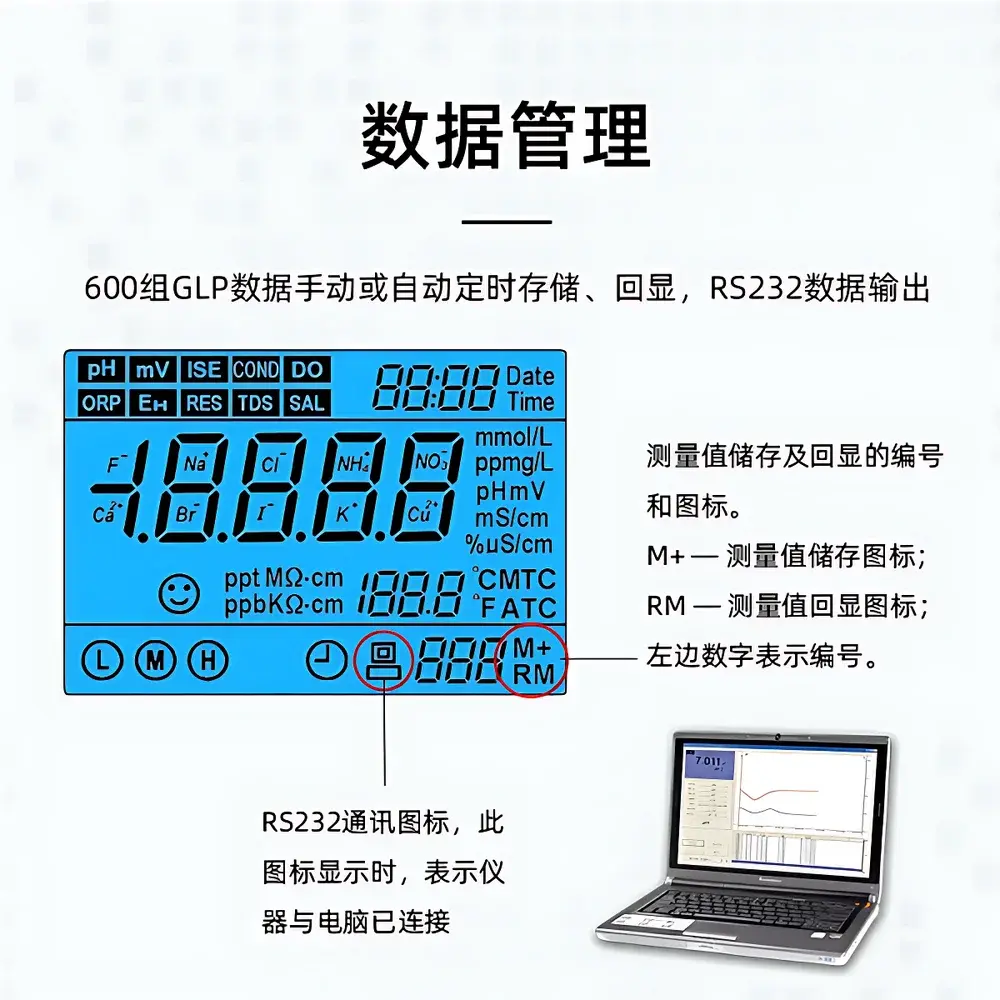
| Data Storage | 600 entries |
| Interface | RS232 |
| Power | DC 9 V / 300 mA |
| Dimensions | 160 × 190 × 70 mm |
| Weight | 880 g |
| IP Rating | IP54 |
| Compliance | GLP-compliant architecture, supports audit-ready data logging |
Overview
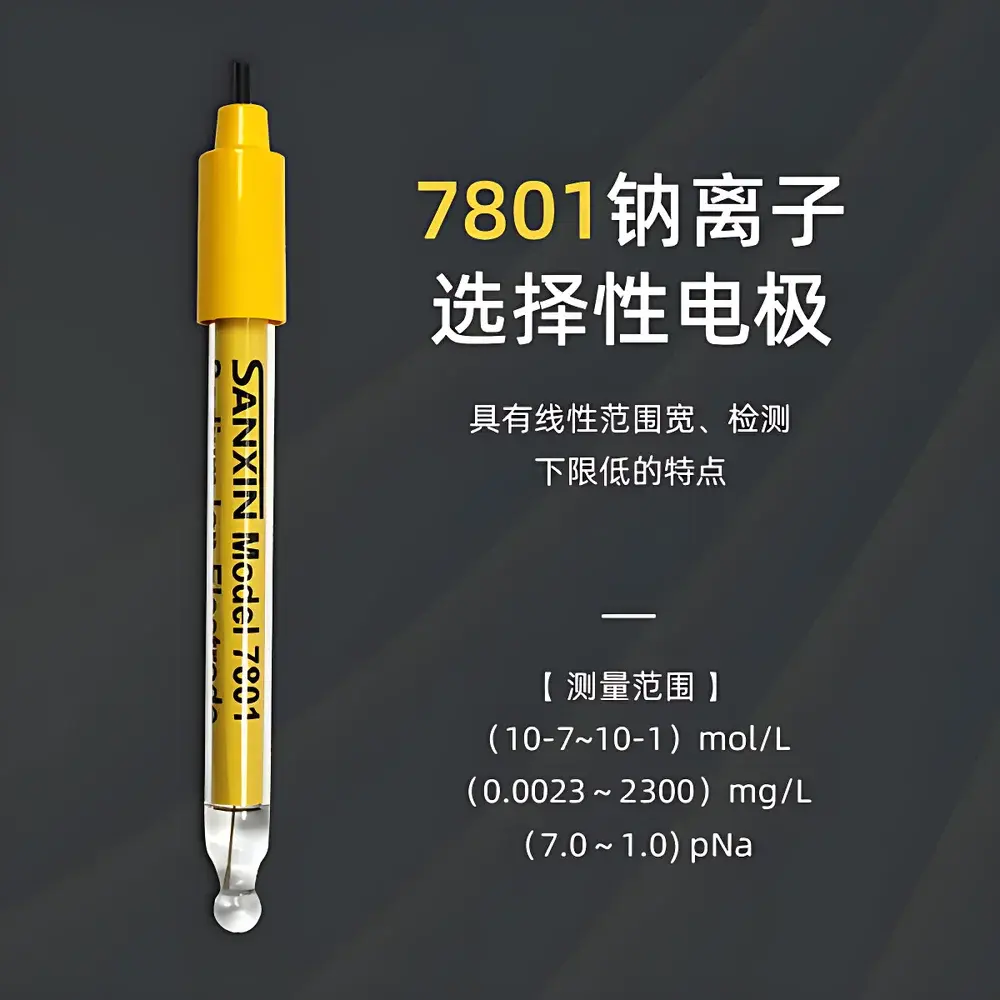
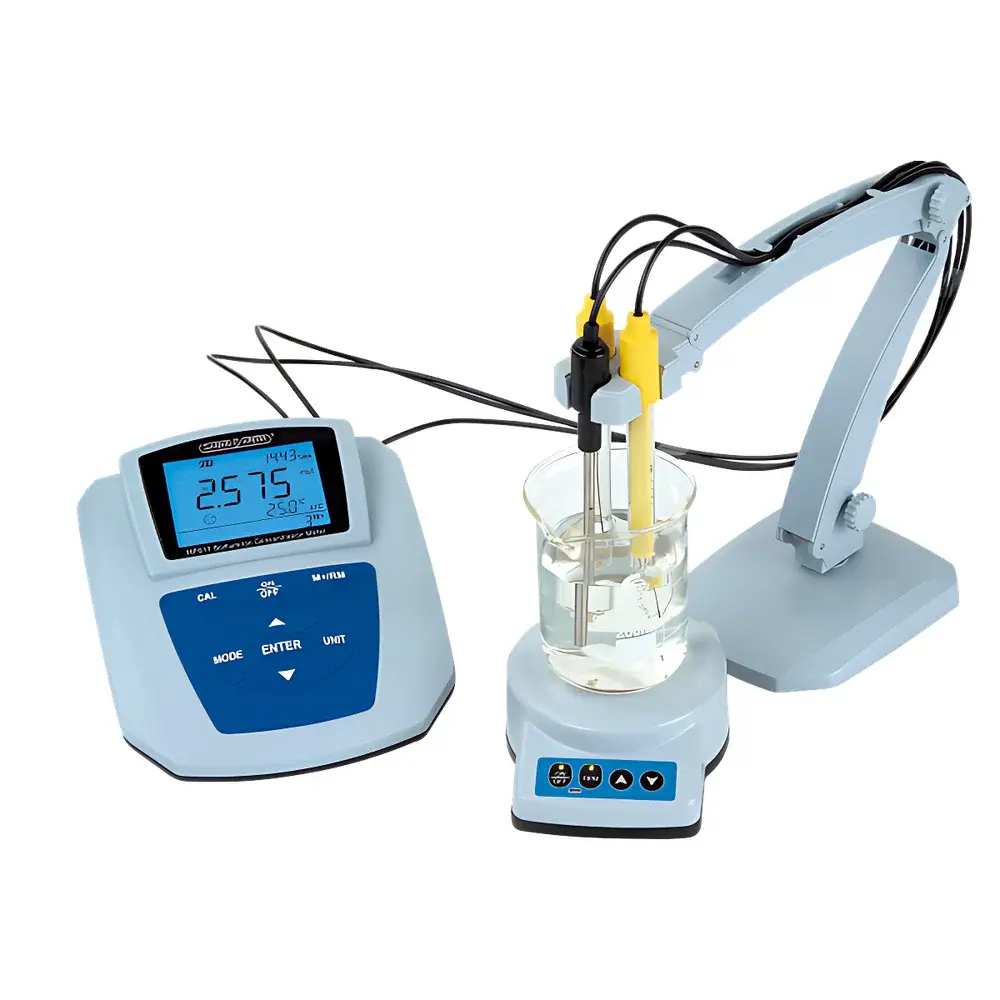
The Sanxin MP517 Sodium Ion Concentration Meter is a benchtop potentiometric analyzer engineered for high-precision quantification of sodium ion activity in ultra-pure water, boiler feedwater, condensate, and low-conductivity aqueous matrices. It operates on the principle of ion-selective electrode (ISE) potentiometry—utilizing a solid-state sodium-selective membrane electrode (model 7801) paired with a double-junction reference electrode (6212-M) to generate a Nernstian response proportional to log[Na⁺]. The instrument implements rigorous temperature compensation (via integrated MP500 thermistor) across −10 °C to 110 °C, ensuring thermodynamic consistency in measurements conducted under variable thermal conditions. Designed specifically for power generation, semiconductor ultrapure water (UPW) monitoring, and pharmaceutical water system validation, the MP517 achieves a static detection limit of ≥2 ppb and dynamic limit of ≥0.2 ppb—meeting the sensitivity requirements for ASTM D4582 (Standard Practice for Measuring Sodium in High-Purity Water) and IEC 60404-8-11 (magnetic materials — specifications for electrical steels). Its GLP-aligned firmware architecture enables traceable measurement workflows essential for ISO/IEC 17025-accredited laboratories.
Key Features
- Four configurable concentration units—pNa, mol/L, mg/L, and ppm—switchable during calibration and real-time measurement without recalibration
- Dual-point calibration using certified Na⁺ standard solutions (e.g., pNa1.00), enabling direct concentration readout without manual slope calculation
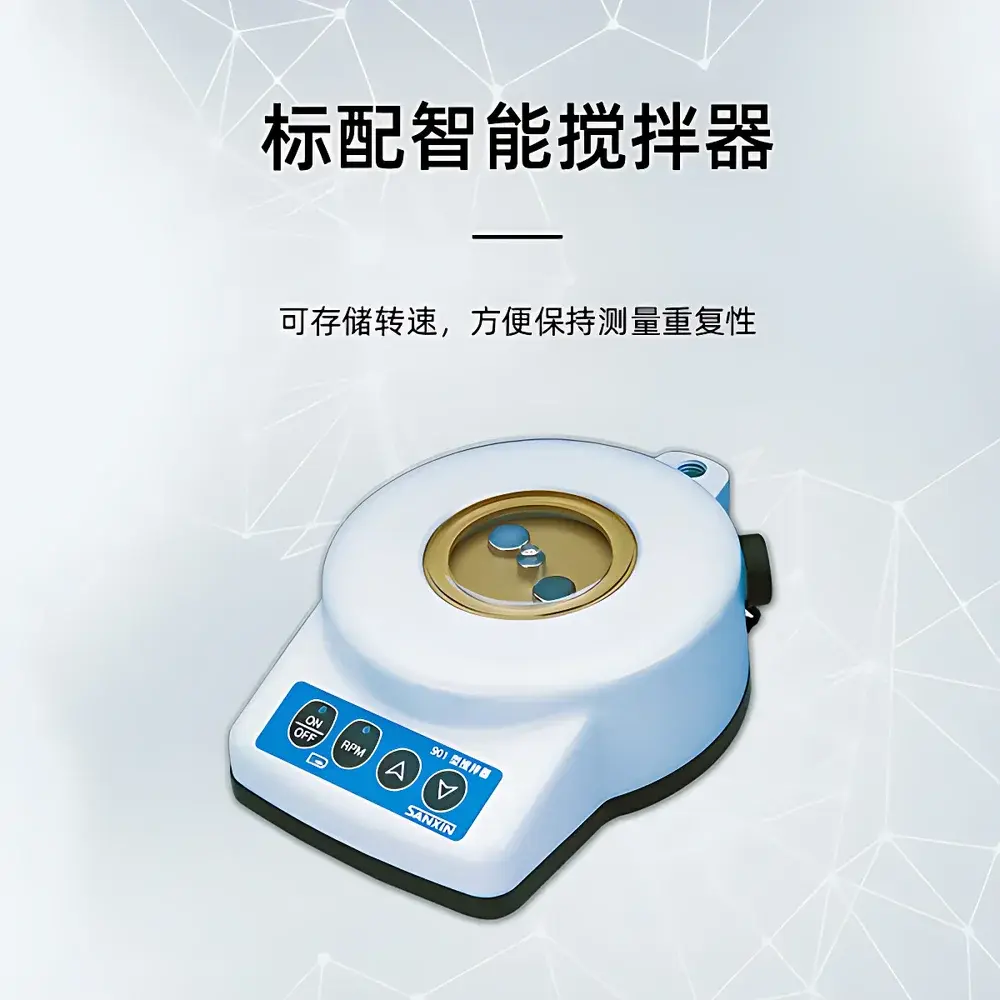
- Integrated 901 Smart Stirrer with fixed-speed motor control—eliminates variability from manual stirring and ensures hydrodynamic reproducibility across replicate analyses
- Auto-calibration and auto-temperature compensation algorithms compliant with ISO 17025 Clause 5.9.1 for method validation integrity
- Stability indicator flag triggered when potential drift falls below 0.1 mV/min, confirming thermodynamic equilibrium prior to result capture
- IP54-rated enclosure with silicone-sealed electrode and RS232 ports—suitable for humid laboratory or on-site utility room deployment
- Comprehensive self-diagnostic suite including electrode impedance check, junction potential verification, and battery voltage monitoring
Sample Compatibility & Compliance
The MP517 is validated for use with low-ionic-strength samples (conductivity < 1 µS/cm), including turbine condensate, nuclear reactor coolant, and USP Purified Water. Its 7801 sodium electrode exhibits minimal interference from K⁺ (selectivity coefficient log KNa,K ≈ −3.2), Li⁺, and Ca²⁺ under typical power plant pH conditions (pH 9–10.5). All measurement records include timestamp, operator ID, electrode ID, calibration history, and environmental temperature—supporting full traceability per FDA 21 CFR Part 11 Annex 11 requirements for electronic records. Data export via RS232 enables integration into LIMS platforms compliant with ISO/IEC 17025:2017 Section 7.7.1.
Software & Data Management
The included MP517 Communication Software (Windows-compatible) provides secure, encrypted data transfer and structured CSV/Excel export. Each stored entry (up to 600) retains raw mV, compensated pNa, temperature, date/time stamp, and calibration parameters. Audit trail functionality logs all user-initiated actions—including unit changes, calibration edits, and data deletions—with immutable timestamps. Firmware supports configurable data retention policies and password-protected administrator mode for method locking—fulfilling GLP Annex 15 and EU GMP Chapter 4 documentation expectations.
Applications
- Real-time sodium monitoring in thermal power plant steam-water cycles per ASME PTC 19.11 guidelines
- Validation of mixed-bed deionizer breakthrough in semiconductor UPW distribution systems
- Leak detection in sodium-cooled fast reactors (SFRs) via primary coolant sampling
- Quality control of injectable saline solutions per USP Conductivity and Sodium Chloride Assay
- Research-grade kinetic studies of Na⁺ transport across synthetic membranes
FAQ
What is the minimum detectable sodium concentration in dynamic flow mode?
The MP517 achieves ≥0.2 ppb Na⁺ under continuous-flow conditions when used with the 7801 electrode and optimized sample conditioning (e.g., degassing, pH stabilization at 10.2 ± 0.1).
Does the instrument support automatic electrode slope verification?
Yes—the built-in diagnostics perform real-time Nernst slope evaluation during calibration and flag deviations exceeding ±2 mV/pNa unit from theoretical 59.2 mV at 25 °C.
Can the RS232 interface be used for remote control and automated reporting?
The protocol supports SCPI-like command sets for triggering measurements, retrieving stored data, and initiating calibration sequences—enabling integration with PLC-based process analyzers.
Is the temperature electrode (MP500) interchangeable with other Sanxin meters?
Yes—it conforms to DIN 38404-3 pinout and resistance-temperature characteristics (Pt1000, α = 0.00385), ensuring cross-platform compatibility across Sanxin’s MP5xx series.
How does the MP517 meet GLP requirements for data integrity?
All measurements are digitally signed upon acquisition, with cryptographic hashing applied to metadata; exported files contain embedded SHA-256 checksums verifiable by third-party audit tools.







