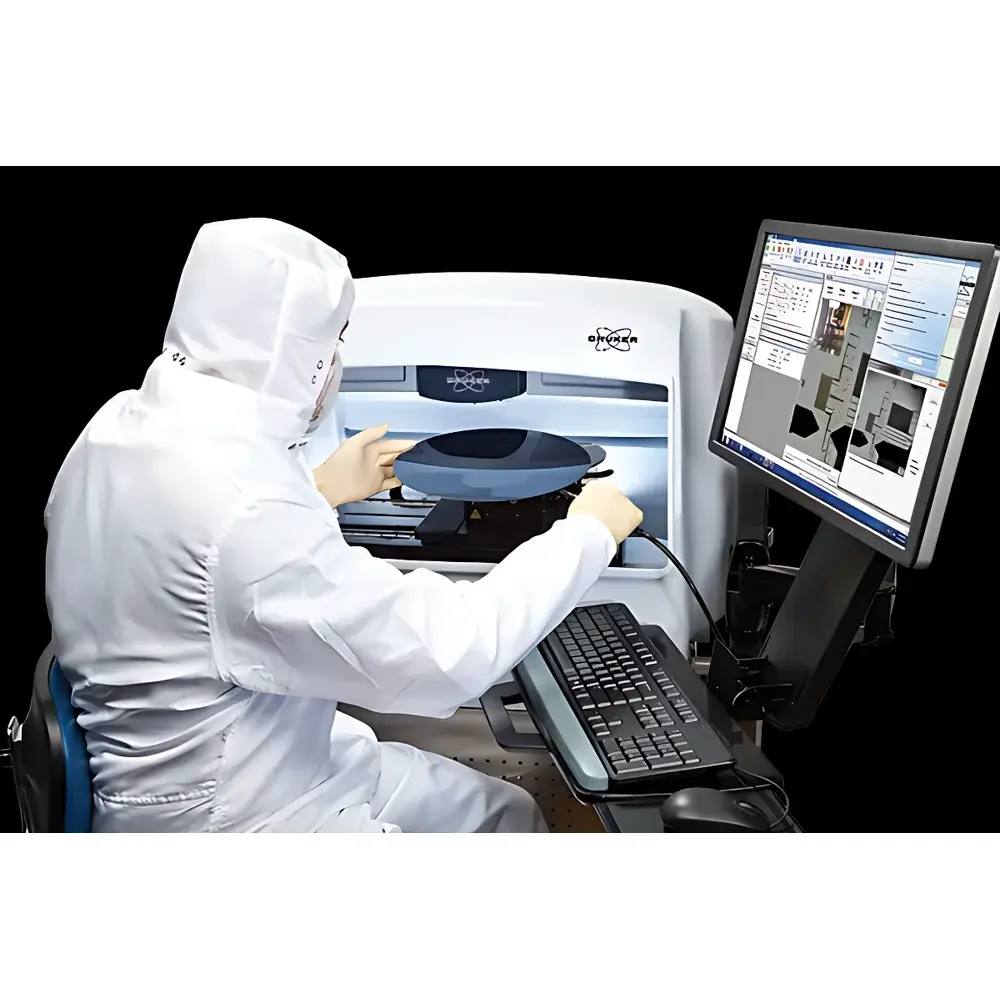
Bruker Dektak XTL Stylus Profilometer
| Brand | Bruker |
|---|---|
| Origin | Germany |
| Manufacturer Type | Authorized Distributor |
| Origin Category | Imported |
| Model | Dektak XTL |
| Price Range | USD 95,000 – 135,000 (FOB Hamburg) |
| Measurement Principle | Capacitive Transduction |
| Measurement Capability | 2D Surface Profiling (Optional 3D Reconstruction) |
| Accuracy | ±0.5% of measured step height |
| Probe Tip Radius | 50 nm – 25 µm (interchangeable stylus options) |
| Normal Force Range | 0.3 – 15 mg (motorized force control) |
| Maximum Scan Length | 55 µm (standard) |
| Step Height Repeatability | 5 Å (1σ) on 1 µm step |
| Vertical Resolution | ≤1 Å (at full 6.55 µm vertical range) |
| Maximum Sample Size | Ø300 mm (flat wafers or rectangular substrates up to 300 × 300 mm) |
Overview
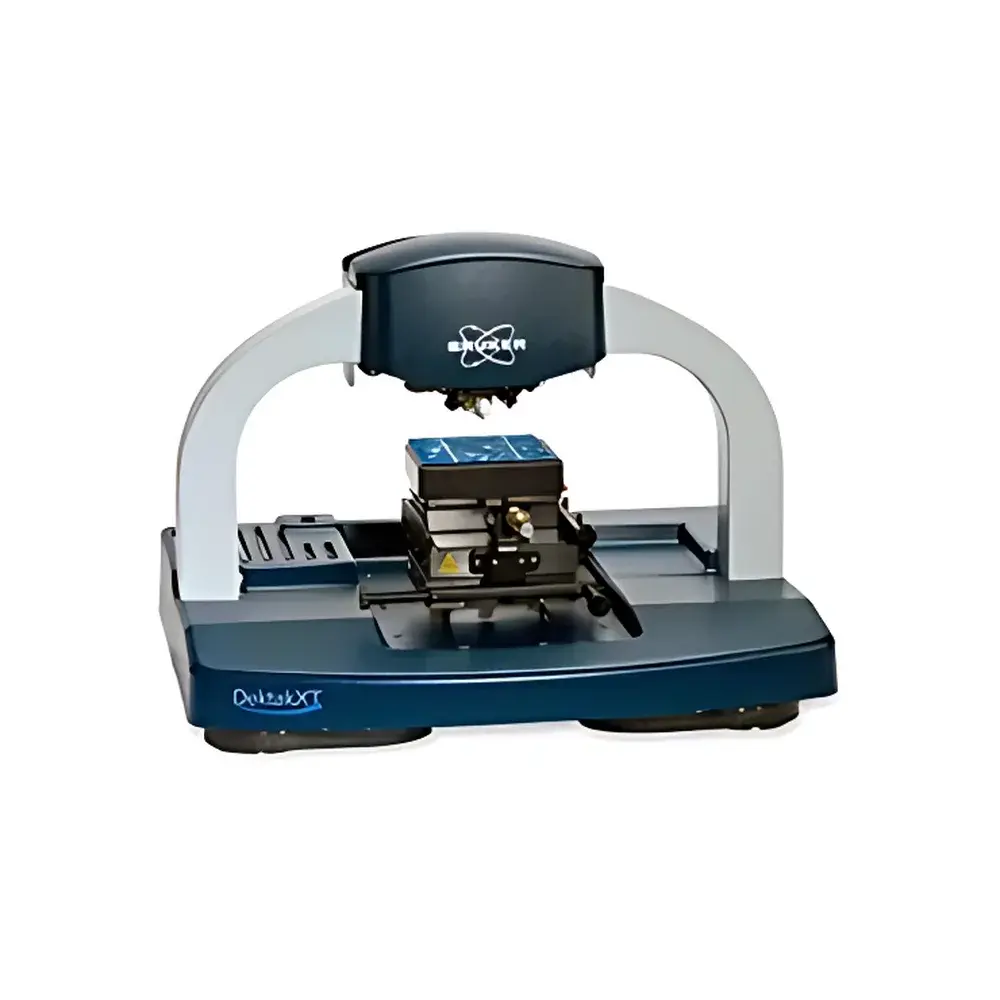
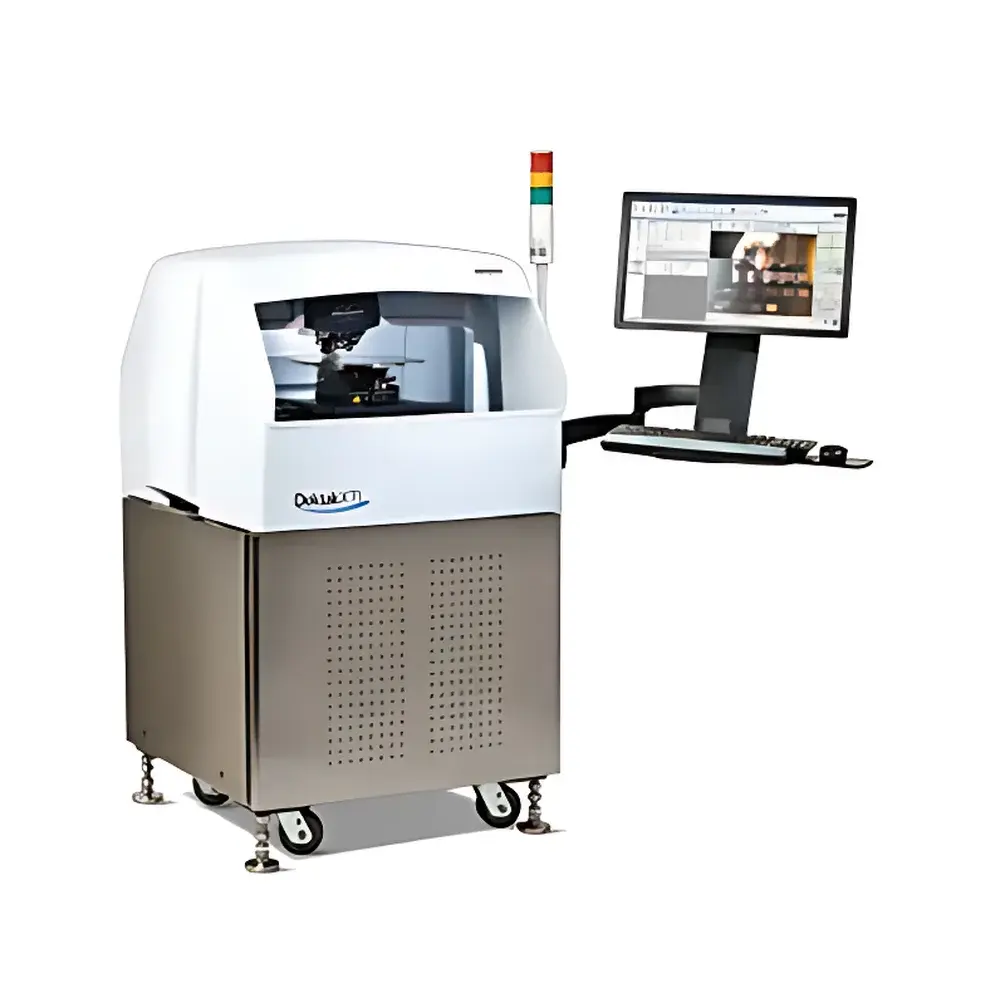
The Bruker Dektak XTL is a high-precision, motorized stylus profilometer engineered for nanoscale step height and surface topography characterization in semiconductor fabrication, flat panel display (FPD) manufacturing, and advanced thin-film R&D. It operates on capacitive transduction—where vertical displacement of a diamond-tipped probe induces a proportional change in capacitance between the probe and a fixed electrode—enabling sub-angstrom vertical resolution and exceptional long-term stability. Unlike optical interferometric or confocal systems, the Dektak XTL delivers traceable, direct-contact metrology with minimal dependence on optical properties (e.g., reflectivity, transparency, or surface roughness), making it uniquely suited for measuring opaque, multilayered, or low-contrast structures such as metal interconnects, photoresist profiles, and etched silicon trenches. Its robust mechanical architecture—including integrated pneumatic isolation, fully enclosed measurement chamber, and interlocked safety door—ensures operational consistency in Class 1000 cleanrooms and high-vibration production environments.
Key Features
- Dual-camera navigation system with real-time video overlay: Enables intuitive point-and-click positioning, automatic sample leveling via two-point alignment, and rapid scan path definition directly on live imagery.
- Motorized 300 mm encoded XY stage with 360° continuous rotation: Supports programmable multi-site mapping across large-area substrates without manual repositioning.
- Vision64 software platform: Fully compatible with Bruker’s optical profilers (e.g., ContourGT series); provides unified workflow for 2D line profiling, stitched 3D reconstruction, and automated feature extraction.
- Graphical pattern recognition engine: Reduces operator-induced placement error by >70% compared to manual alignment; supports fiducial-based registration for wafer-level process monitoring.
- Automated analysis scripting: Enables repeatable execution of custom protocols—including step height, roughness (Sa, Sq), curvature radius (via VisionMicroform module), and film thickness derivation from edge profiles.
- Comprehensive metadata integration: User-defined prompts, process IDs, lot numbers, and calibration logs are embedded into each measurement record and stored in SQL-backed database schema compliant with ISO/IEC 17025 audit requirements.
Sample Compatibility & Compliance
The Dektak XTL accommodates rigid planar substrates up to 300 mm in diameter or 300 × 300 mm square format—including silicon wafers, fused silica masks, glass TFT backplanes, and ceramic substrates. Its low-force scanning mode (0.3–15 mg) ensures non-destructive profiling of soft materials such as photoresists, polymer dielectrics, and organic semiconductor layers. All hardware and firmware comply with CE, UL 61010-1, and RoHS directives. The Vision64 software includes optional 21 CFR Part 11 compliance modules—supporting electronic signatures, audit trails, role-based access control, and data integrity validation per FDA and EU GMP Annex 11 guidelines. Calibration certificates are NIST-traceable and issued per ISO/IEC 17025-accredited procedures.
Software & Data Management
Vision64 serves as the unified analytical interface, supporting Windows 10/11 (64-bit) and offering native integration with Bruker’s broader metrology ecosystem. It enables batch processing of hundreds of measurements using customizable templates, export to ASTM E1378-compliant ASCII or HDF5 formats, and direct linkage to MES/SPC platforms via OPC UA or REST API. The embedded reporting engine generates PDF/HTML reports with embedded traceability metadata, statistical summaries (Cp/Cpk), and annotated 2D/3D visualizations. Raw data files retain full sensor-level time-series records—including probe position, force feedback, and capacitance signal—ensuring full reproducibility for root-cause analysis or regulatory review.
Applications
- Semiconductor process control: Etch depth uniformity, CMP dishing/erosion quantification, resist profile angle measurement, and mask CD verification.
- Flexible electronics: Thickness mapping of ITO, Cu mesh, and PEDOT:PSS layers on PET/PEN substrates; step coverage assessment for roll-to-roll coated films.
- Display technology: Pixel well depth, black matrix height, OLED encapsulation layer thickness, and touch sensor trace step profiles on AMOLED and LCD panels.
- Energy devices: Thickness and uniformity of perovskite absorber layers, CIGS absorber stacks, and anti-reflective coatings on photovoltaic glass.
- MEMS & packaging: Wafer-level bond interface height, solder bump coplanarity, and underfill fillet geometry.
FAQ
What is the maximum measurable step height with the Dektak XTL?
The standard vertical range is 6.55 µm; extended ranges up to 120 µm are available with optional Z-stage upgrades.
Can the system measure curved or non-planar substrates?
Yes—using the VisionMicroform module, users can fit spherical, cylindrical, or polynomial surfaces and extract local curvature, radius of curvature, and deviation maps.
Is probe wear monitored during operation?
Yes—the software logs cumulative scan distance and tip usage history; optional tip inspection routines integrate with Bruker’s automated stylus qualification protocol.
How does the system handle vibration-sensitive environments?
Integrated pneumatic isolators attenuate floor-borne vibrations ≥10 Hz by >95%; optional active damping modules further extend suppression to 1 Hz.
Does the Dektak XTL support GLP/GMP documentation workflows?
With the validated Vision64 Part 11 package, all measurement sessions generate immutable audit trails, electronic signatures, and revision-controlled SOP execution logs—fully aligned with pharmaceutical and medical device quality systems.