
Bruker Q4 Tasman Direct-Reading Optical Emission Spectrometer
| Brand | Bruker |
|---|---|
| Origin | Germany |
| Instrument Type | Benchtop |
| Excitation Method | Spark |
| Detector Type | Dual Detector (PMT + CCD) |
| Focal Length | 800 mm |
| Grating Groove Density | 3600 lines/mm |
| Wavelength Range | 130–800 nm |
| Number of Channels | 128 |
| Argon Consumption | 2–4 L/min (during analysis) |
| Detector Pixel Count / Pixel Size | 3880 pixels per CCD chip |
Overview
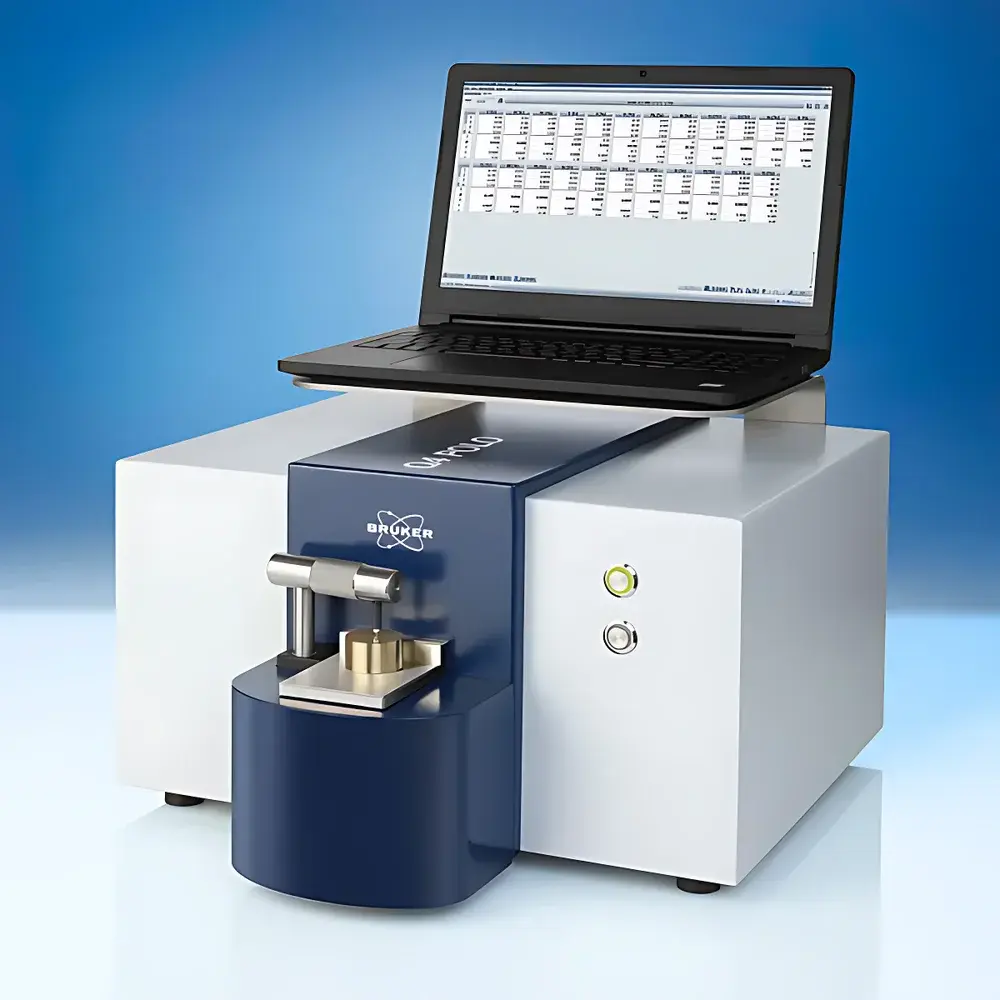
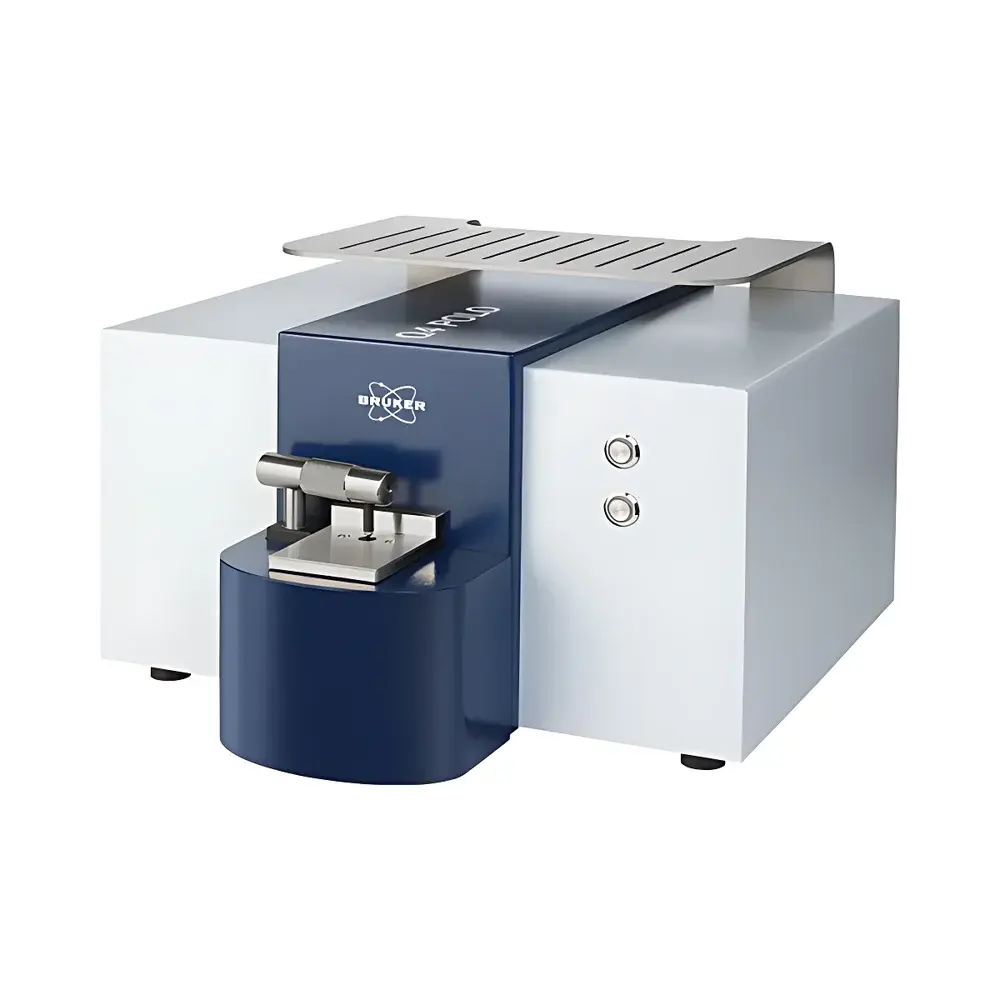
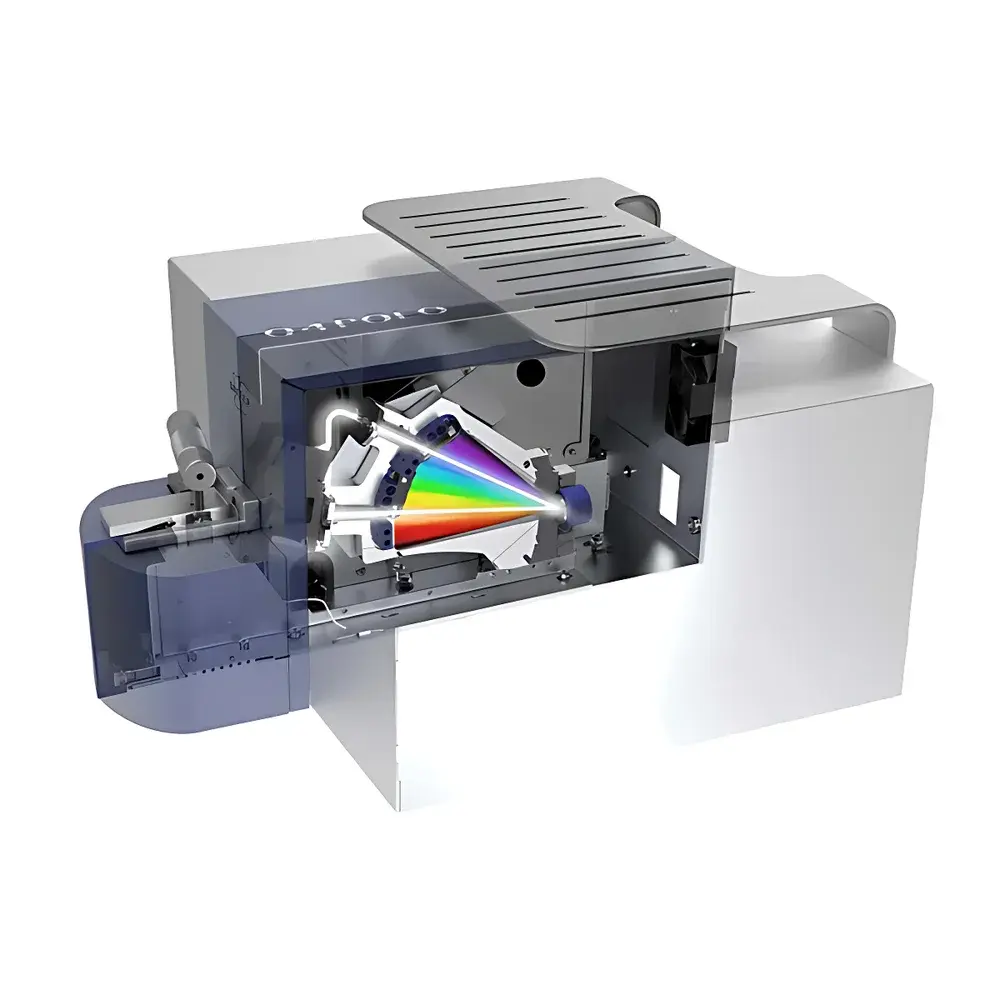
The Bruker Q4 Tasman is a high-performance benchtop direct-reading optical emission spectrometer (OES) engineered for precise, rapid, and reliable elemental analysis of metallic materials. Based on spark source atomic emission spectroscopy, the instrument excites solid metal samples using controlled high-voltage spark discharges in an argon-purged environment, generating characteristic atomic line spectra that are dispersed and quantified by a high-resolution optical system. Its core architecture integrates Paschen-Runge mounting geometry with Bruker’s proprietary ClearSpectrum technology—ensuring exceptional spectral resolution, long-term optical stability, and minimized stray light interference. Designed specifically for quality control laboratories in foundries, metal fabrication plants, and third-party testing facilities, the Q4 Tasman delivers trace-level detection (sub-ppm for many elements) and high reproducibility across diverse alloy matrices without requiring vacuum pumping or complex cooling infrastructure.
Key Features
- Paschen-Runge Optical Design: Rigid, thermally stable spectrometer frame with fixed focal circle geometry ensures consistent wavelength calibration and eliminates mechanical drift over time—critical for multi-shift industrial operation.
- Dual-Detector Architecture (PMT + CCD): Combines the high dynamic range and low-noise performance of photomultiplier tubes (PMTs) for major elements with the simultaneous multi-wavelength acquisition capability of a charge-coupled device (CCD), enabling full-spectrum coverage from 130 nm to 800 nm.
- ClearSpectrum Technology: Advanced optical filtering and signal processing algorithms suppress background continuum and inter-element spectral overlaps, significantly improving signal-to-noise ratio and analytical accuracy—particularly for challenging matrix elements (e.g., Al-Mg, Fe-Cr-Ni, Ti-Al-V).
- Pre-Configured Analytical Software Packages (ASP): Factory-calibrated method suites for ten primary metal bases—Fe, Al, Cu, Ni, Co, Pb, Sn, Zn, Mg, and Ti—cover standard alloy groups (e.g., ASTM, EN, ISO, JIS specifications), including low-alloy steels, aluminum die-castings, copper brasses, nickel superalloys, and titanium aerospace grades.
- Argon Optimization System: Intelligent gas flow management reduces consumption to 2–4 L/min during analysis while maintaining optimal plasma stability and spectral purity—lowering operational cost and supporting continuous unattended operation.
Sample Compatibility & Compliance
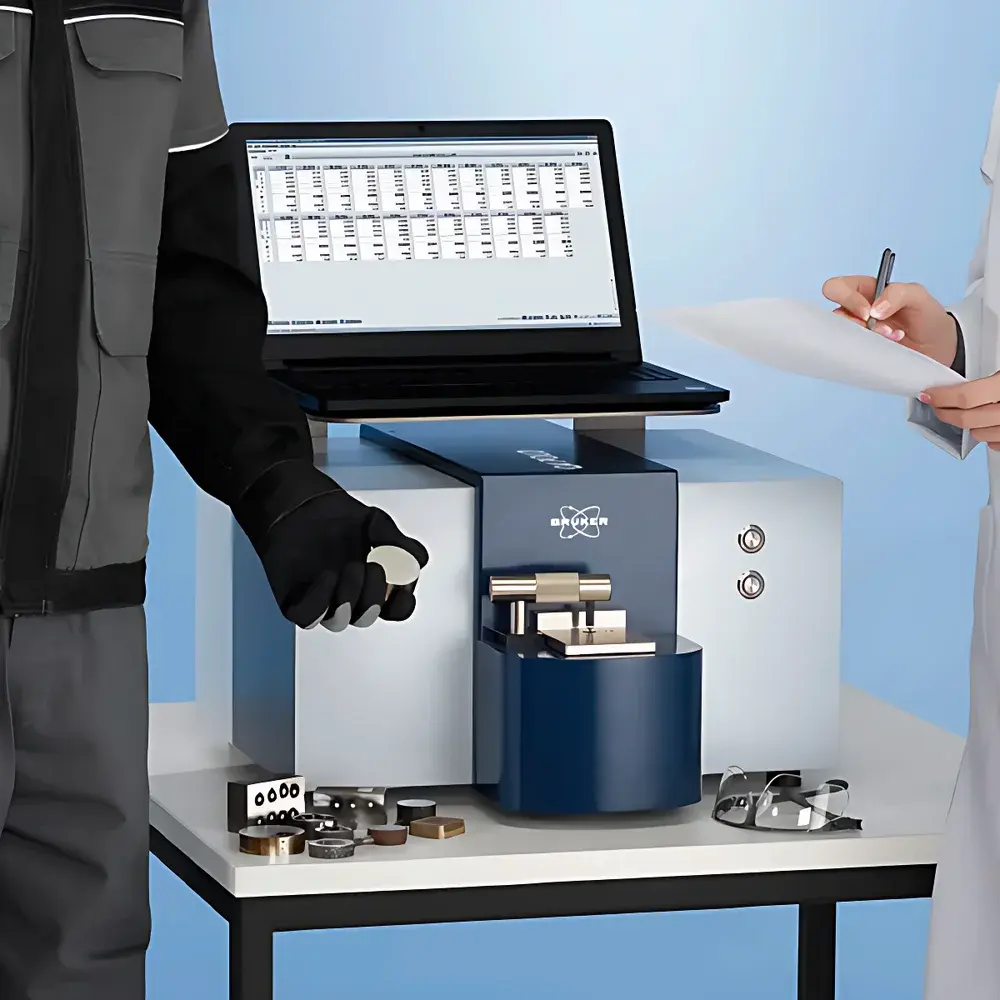
The Q4 Tasman accepts standard solid metallic samples (diameter ≥ 10 mm, thickness ≥ 4 mm) prepared via lathe turning or milling to ensure flat, oxide-free surfaces. It complies with international standards governing metal analysis, including ASTM E415 (Standard Test Method for Analysis of Carbon and Low-Alloy Steel), ASTM E1086 (for stainless steels), ISO 6871 (for dental alloys), and EN 10052 (metallographic nomenclature). The instrument supports GLP/GMP-compliant workflows through configurable user access levels, electronic signature support, and full audit trail logging—including method version history, calibration records, sample metadata, and raw spectral data archiving. All software modules adhere to FDA 21 CFR Part 11 requirements for electronic records and signatures when deployed in regulated environments.
Software & Data Management
Bruker’s Spark Analyzer Vision software provides intuitive, workflow-driven operation—from sample registration and spark parameter optimization to quantitative reporting and statistical process control (SPC). Real-time spectral visualization enables immediate diagnostic assessment of plasma stability and excitation quality. Calibration models are stored as encrypted, version-controlled assets; all calibrations include uncertainty estimates based on certified reference material (CRM) traceability. Data export formats include CSV, XML, and PDF reports compatible with LIMS integration. Raw spectral files (.spc) retain full detector pixel intensity values, permitting retrospective reprocessing with updated calibrations or multivariate correction algorithms.
Applications
- Grade identification and positive material identification (PMI) in piping, valves, and pressure vessels per ASME B16.5 and API RP 578.
- Alloy verification in automotive casting production (e.g., Al-Si-Mg engine blocks, Mg-AZ91 die castings).
- Trace element monitoring (e.g., Pb, Bi, As, Sb) in lead-free solder alloys and RoHS-compliant electronics materials.
- High-precision analysis of microalloyed steels (Nb, V, Ti additions) for structural applications.
- Research-grade compositional mapping of additively manufactured (AM) metal parts to verify elemental homogeneity and detect segregation.
FAQ
What sample preparation is required prior to analysis?
Solid metal samples must be flat, clean, and free of oxides or coatings. Surface conditioning is typically performed using a dedicated grinding or milling station to expose fresh metal; no acid etching or dissolution is needed.
Does the Q4 Tasman require vacuum or purge gas for UV-range detection?
No vacuum pump is required—the optical chamber is continuously purged with argon, enabling stable detection down to 130 nm without atmospheric absorption interference.
Can the instrument be integrated into an automated production line?
Yes, optional I/O interfaces (RS-232, Ethernet TCP/IP, OPC UA) support bidirectional communication with PLCs and MES systems for automated sample ID transfer, result feedback, and pass/fail decision logic.
How often does the optical system require recalibration?
Under normal operating conditions, wavelength calibration remains stable for ≥12 months; intensity calibration is recommended before each analytical session using certified reference materials.
Is training and application support available globally?
Bruker provides factory-certified installation, operator training, and ongoing method development support through its regional application laboratories and network of authorized service engineers.




