
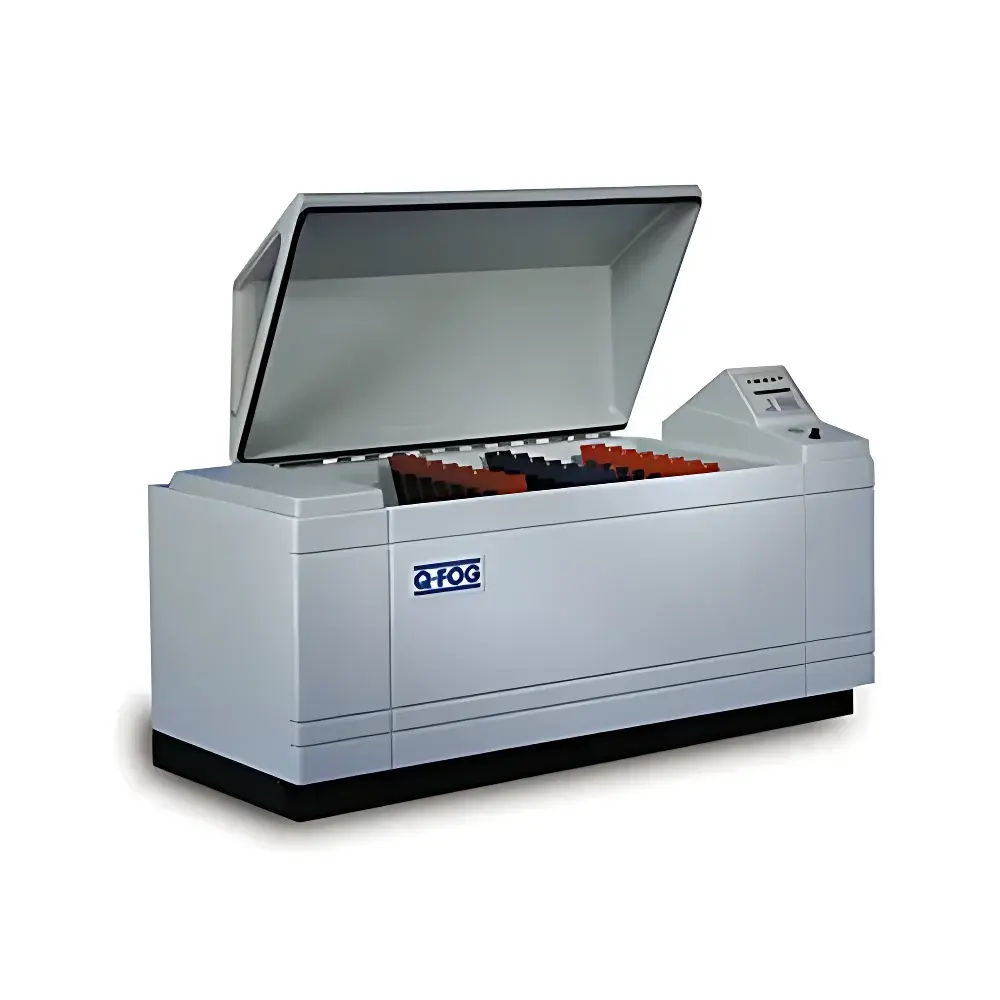
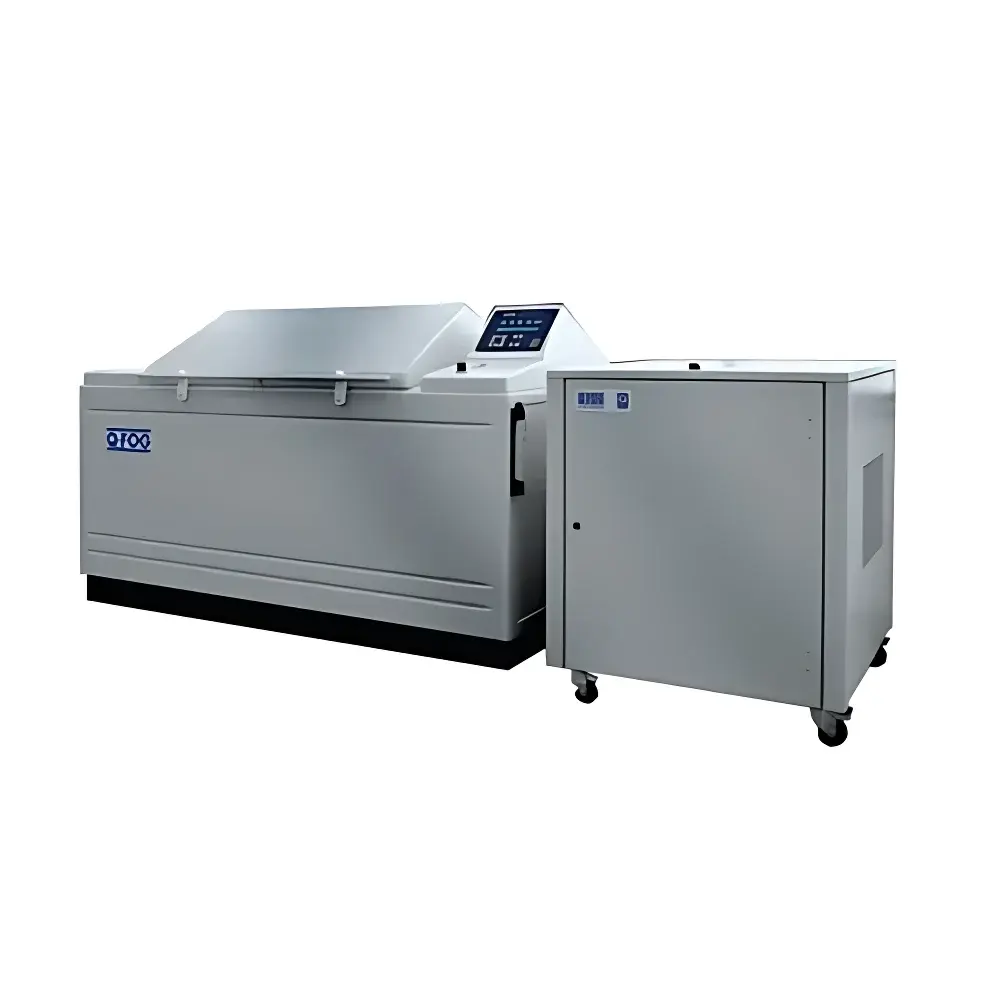
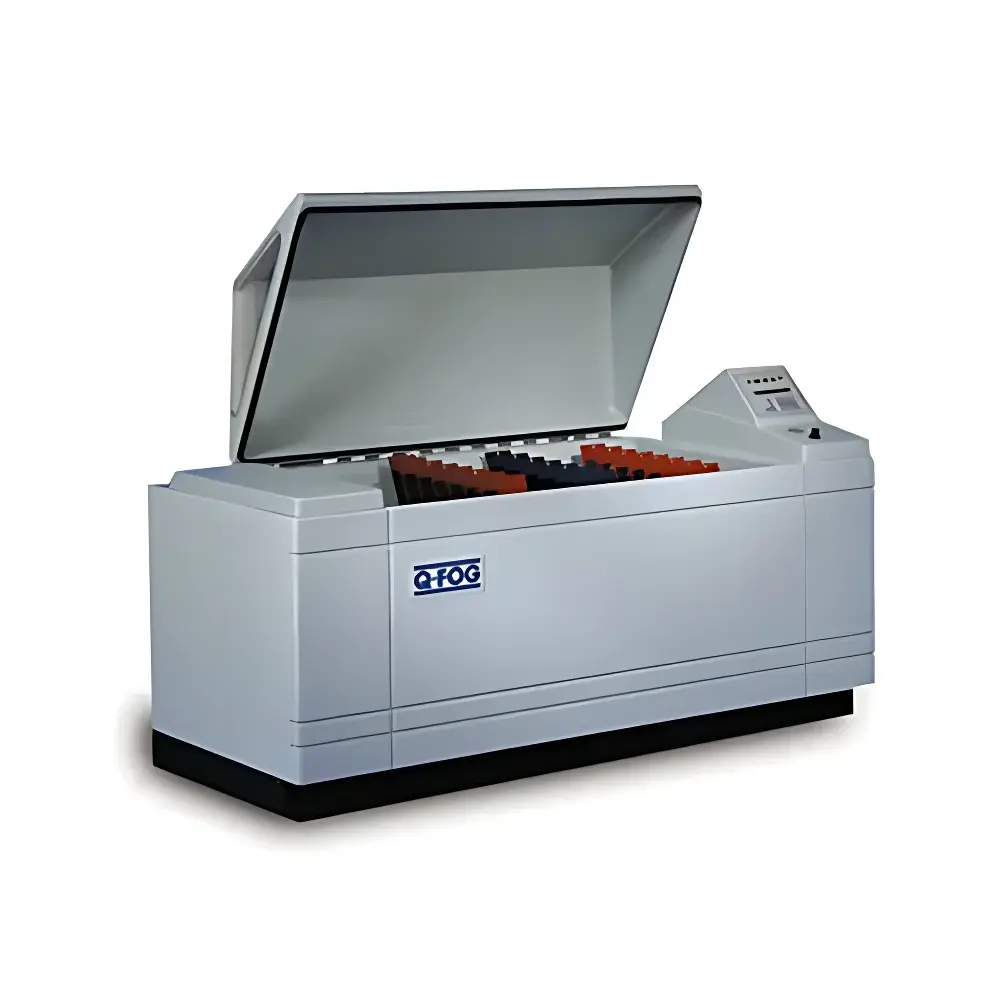
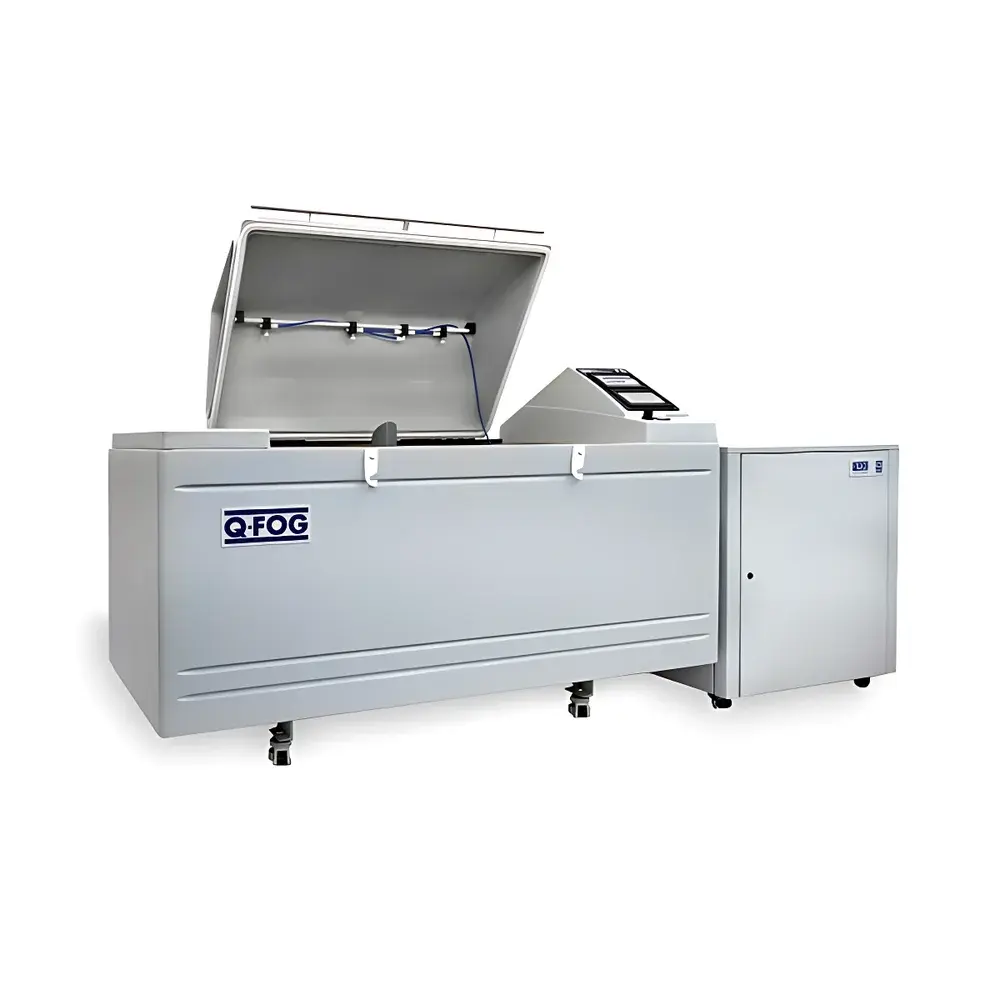
Q-Lab Q-FOG CRH1100 Cyclic Corrosion Test Chamber
| Brand | Q-Lab |
|---|---|
| Origin | USA |
| Model | Q-FOG CRH1100 |
| Spray Mode | Continuous Atomization |
| Fog Output | 1–5 L/h per 180 cm² |
| Nozzle Pressure | 0.7–1.0 kg/cm² |
| De-fogging Method | Air-pressurized Exhaust |
| Salt Fog Deposition Rate | 1–2 mL per 80 cm²·h |
| Temperature Range | 20–60 °C |
Overview
The Q-Lab Q-FOG CRH1100 is a fully programmable cyclic corrosion test chamber engineered for high-reproducibility, multi-phase environmental simulation—including salt spray, humidity control, drying, and optional direct solution spray—within a single integrated platform. Unlike conventional static salt fog chambers, the CRH1100 implements a dynamic corrosion testing methodology grounded in ASTM B117, ISO 9227, and automotive-specific protocols such as GMW 14872, SAE J2334, Ford CETP, VW PV1210, and Renault D17 2027. Its core innovation lies in the patented air pre-conditioning system, which enables precise, independent regulation of relative humidity (RH) and temperature during non-spray phases—critical for replicating real-world atmospheric corrosion mechanisms involving hygroscopic salt deliquescence and electrochemical activity under controlled moisture conditions.
Key Features
- Integrated RH control via dedicated air pre-conditioning module with heated/cooled airflow and precision-mist humidification nozzles—enabling stable RH setpoints from 30% to 95% at temperatures between 20 °C and 60 °C
- Dual-mode aerosol generation: fine-droplet salt fog (via compressed-air atomization) and coarse-solution spray (via independent spray module), both programmable with independent on/off timing and flow-rate adjustment
- Self-cleaning nozzle system with automatic purge cycles to prevent crystalline clogging—eliminating manual disassembly and maintenance downtime common in legacy systems
- 1103-liter test volume with low-profile access door and internal LED lighting; accommodates up to 240 standard 75 mm × 150 mm test panels or heavy-duty 3D components (up to 544 kg total load capacity)
- Onboard 120-liter deionized water reservoir with particulate filtration, level sensors, and audible/visual low-level alerts—supporting uninterrupted operation for ≥7 days under typical test cycles
- Rapid thermal transition capability: internal heating elements combined with high-capacity cooling/drying fans enable sub-10-minute transitions between wet, dry, and humid phases—unachievable in water-jacketed chambers due to thermal inertia
Sample Compatibility & Compliance
The Q-FOG CRH1100 supports flat, curved, and three-dimensional specimens—including automotive body panels, fasteners, coated substrates, electronic enclosures, and structural alloys—using standardized Q-PANEL racks, 20-mm diameter suspension rods, or custom grid assemblies. All internal surfaces are constructed from non-reactive, corrosion-resistant polypropylene and PVC-coated stainless steel. The chamber complies with calibration traceability requirements per ISO/IEC 17025 and supports GLP/GMP-aligned validation documentation. Temperature and RH sensors are user-calibratable every six months using NIST-traceable reference instruments—no external service required. The system meets the physical and operational criteria of ASTM G85 Annex A1–A5 (modified salt spray), ISO 16701 (electrolyte concentration cycling), and VDA 233-102 (cyclic condensation corrosion).
Software & Data Management
Control is managed through the embedded Q-FOG microprocessor controller with intuitive touchscreen interface and menu-driven programming logic. Users define multi-step test sequences—including dwell times, ramp rates, spray durations, RH targets, and temperature profiles—with up to 100 stored programs and full cycle duplication functionality. Real-time monitoring displays current chamber conditions, elapsed time, and active phase status. The controller includes built-in diagnostics, predictive maintenance alerts (e.g., filter replacement, reservoir refill), and automatic safety shutdown upon sensor fault or over-temperature event. Data logging records temperature, RH, and operational states at user-selectable intervals (1–60 min); logs export via USB to CSV format for audit-ready traceability. While not natively 21 CFR Part 11 compliant, the system supports integration with validated third-party LIMS or ELN platforms for electronic signature and audit trail requirements.
Applications
The CRH1100 is deployed in R&D laboratories, Tier-1 automotive suppliers, coating manufacturers, and aerospace component qualification facilities to accelerate corrosion failure mode identification and comparative material screening. Typical use cases include evaluating zinc-nickel plating durability under GMW 14872 cyclic exposure, assessing organic coating blistering resistance per ISO 12944-9, validating cathodic protection performance in marine-grade alloys, and qualifying adhesive bond integrity under alternating wet/dry salt-laden environments. Its ability to decouple deposition rate from droplet size—and independently modulate RH without altering spray dynamics—makes it uniquely suited for mechanistic studies linking microclimate evolution to localized pitting initiation.
FAQ
What type of water must be used in the CRH1100?
Deionized water with resistivity ≥1 MΩ·cm is mandatory for all internal humidification, spray, and reservoir functions to prevent mineral scaling and sensor drift.
Can the CRH1100 perform Prohesion testing?
Yes—the controller includes preloaded Prohesion cycles (ASTM G85 Annex A3) combining alternating salt fog and drying phases without humidity hold periods.
Is the RH control function available during salt fog exposure?
No—RH regulation is active only during non-spray phases (e.g., humidity holds, drying). Fog generation requires unconditioned compressed air to ensure consistent droplet formation.
How often must temperature and RH sensors be calibrated?
Q-Lab recommends user-performed verification every six months using a certified reference thermometer and saturated salt solution hygrometer kit—full recalibration is optional and performed by authorized service centers.
Does the CRH1100 support remote monitoring or Ethernet connectivity?
The base controller does not include network interfaces; however, optional Q-Lab WebServer hardware enables secure HTTP-based status viewing and limited program upload via local network—no cloud dependency or vendor-hosted infrastructure required.



