
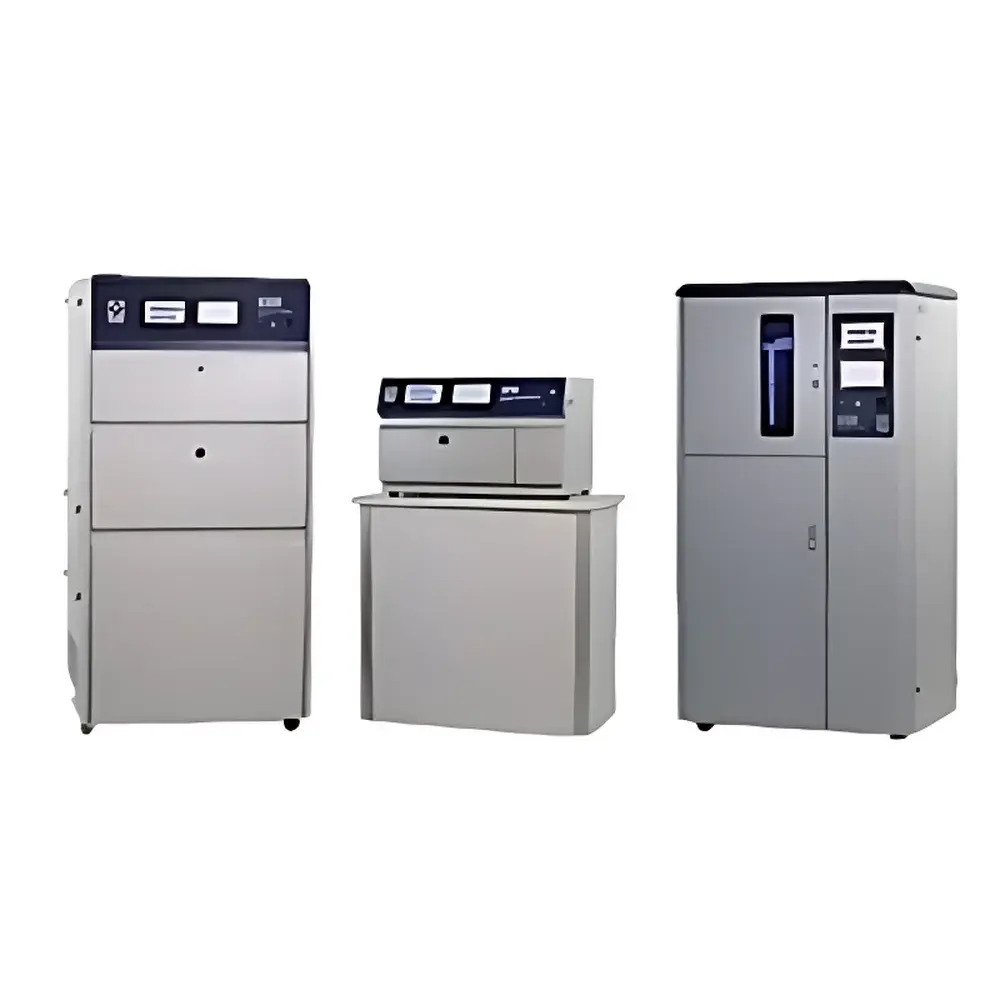
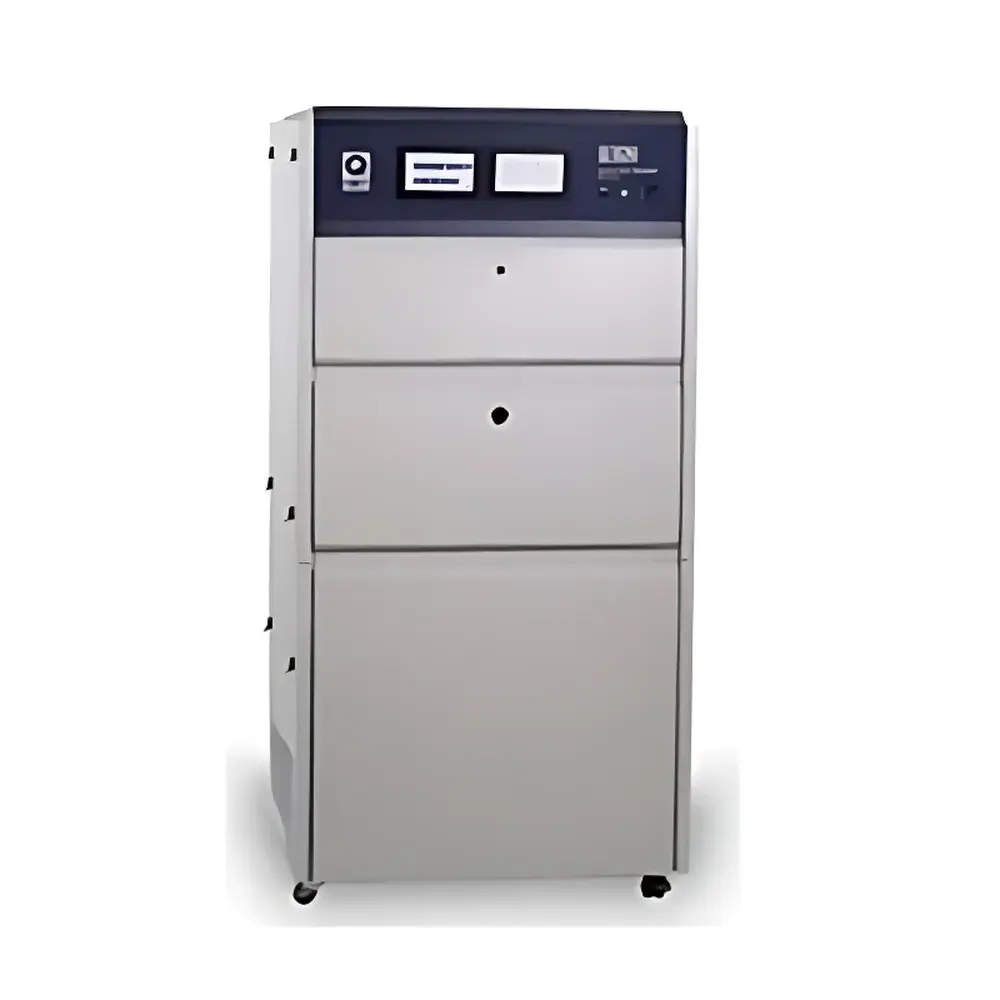
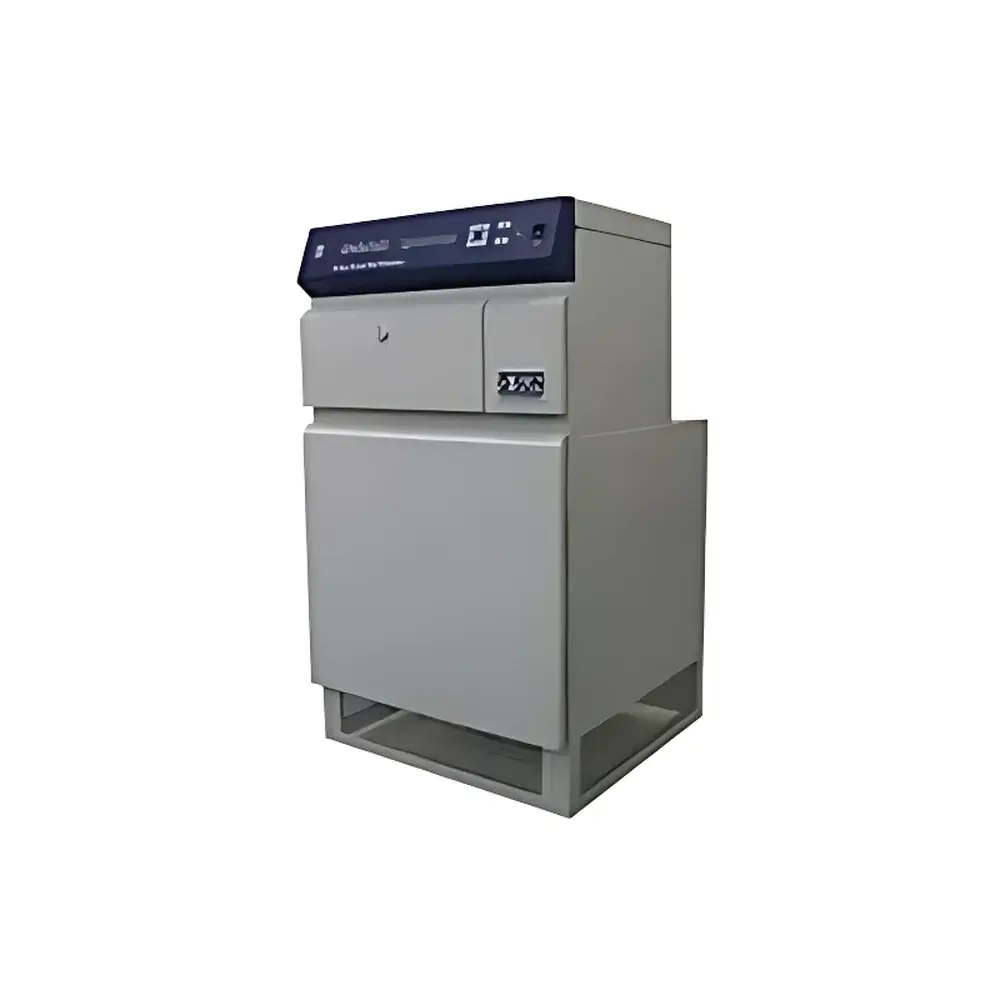
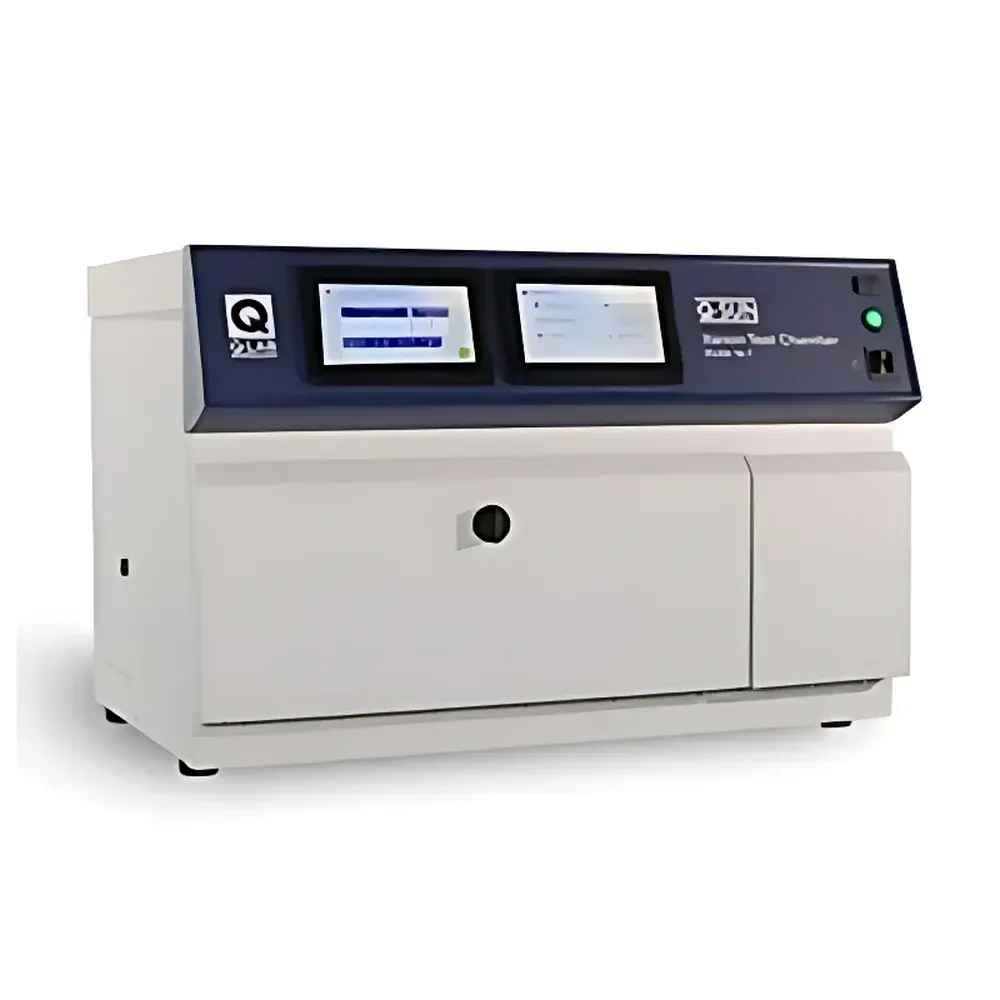
Q-LAB Q-SUN Xe-1 / Xe-3 / B02 Xenon Arc Weathering Test Chamber
| Brand | Q-LAB |
|---|---|
| Origin | USA |
| Model | Q-SUN Xe-1, Q-SUN Xe-3, Q-SUN B02 |
| Radiation Intensity | ≤1800 W/m² |
| Light Exposure Duration | 1–9999 h (continuously adjustable) |
| Humidity Control | Yes (RH range per IEC 60068-2-78 & ASTM G154) |
| Water Spray | Purified water spray, programmable during light/dark cycles |
| Lamp Type | Air-cooled xenon arc lamp |
| Lamp Life | ~1500 hours |
| Filter Options | Daylight, Window Glass, Extended UV (per ISO 4892-2, ASTM G155, SAE J2527) |
Overview
The Q-LAB Q-SUN series xenon arc weathering test chambers are engineered for precision simulation of natural solar radiation exposure under controlled environmental conditions. Utilizing air-cooled xenon arc lamps filtered to replicate the full solar spectrum—including ultraviolet (UV), visible, and near-infrared (NIR) wavelengths—these instruments deliver high-fidelity accelerated aging data aligned with international exposure standards. Unlike narrow-band UV fluorescent sources, xenon arc technology provides spectrally accurate irradiance across 290–800 nm, enabling reliable prediction of photodegradation mechanisms such as chalking, fading, cracking, gloss loss, and embrittlement. The Q-SUN platform supports both indoor and outdoor exposure simulation through interchangeable optical filters: Daylight (ISO 4892-2 Cycle 1), Window Glass (ASTM G155 Cycle 4), and Extended UV (for aggressive UV-rich environments). This spectral fidelity ensures correlation with real-world service life, particularly for color-critical applications in automotive coatings, architectural finishes, and textile dye systems.
Key Features
- Air-cooled xenon arc lamp system with typical operational lifetime of 1500 hours—minimizing thermal load on samples and eliminating need for complex water cooling infrastructure.
- Programmable exposure duration from 1 to 9999 hours, supporting long-term durability validation and comparative lifetime modeling.
- Integrated relative humidity control compliant with IEC 60068-2-78 and ASTM D4329, enabling precise regulation of moisture content during irradiation to simulate tropical, coastal, or condensing environments.
- Purified water spray system operable during light or dark phases; delivers uniform, low-mineral-content mist to replicate dew, rain, and thermal shock effects per ISO 4892-2 Annex A3.
- Modular sample mounting architecture: slide-out trays accommodate 3D components (Xe-1, Xe-3) or cylindrical drum fixtures (B02), supporting flat panels, molded parts, and textured surfaces without reorientation.
- Long-life optical filters certified for spectral stability over extended use—verified via Q-LAB Technical Report LX-5060—to maintain irradiance profile consistency across calibration intervals.
Sample Compatibility & Compliance
The Q-SUN series accommodates diverse material geometries and industry-specific specimen configurations, including ASTM D3359 cross-hatch adhesion substrates, ISO 105-B02 textile swatches, SAE J2412 automotive interior trim panels, and ISO 4892-2 Type III multi-layer polymer laminates. All models meet core regulatory requirements for materials qualification under ISO 4892-2, ASTM G155, ASTM D4329, IEC 60068-2-5, and SAE J2527. For regulated industries—including medical device packaging (ISO 11607), pharmaceutical primary containers (USP ), and aerospace composites (AMS 2700)—the system supports GLP-compliant operation when paired with Q-LAB’s optional data logging and audit trail modules compliant with FDA 21 CFR Part 11.
Software & Data Management
Q-SUN controllers feature intuitive touchscreen interfaces with embedded firmware supporting multi-step exposure profiles, real-time irradiance monitoring (via calibrated UV-A or TUV sensors), and automatic lamp hour tracking. Optional Q-LAB’s SunTest™ PC software enables remote scheduling, historical trend analysis, and automated report generation in PDF/CSV formats. All exposure logs include timestamped metadata: irradiance setpoint, chamber RH%, spray activation status, lamp voltage/current, and ambient temperature—ensuring full traceability for internal QA audits or third-party certification submissions.
Applications
The Q-SUN platform serves as a primary tool for R&D screening, formulation optimization, and quality assurance across sectors where solar exposure dictates functional or aesthetic performance. In automotive OEM supply chains, it validates pigment stability in instrument panel overlays and exterior clearcoats per GMW14124. In packaging, it assesses UV barrier efficacy of PET films and ink fade resistance on flexible laminates. Coatings manufacturers rely on Q-SUN data to substantiate warranty claims for architectural elastomerics and marine antifoulants. Academic researchers apply it to study photo-oxidative degradation kinetics of biodegradable polymers (e.g., PLA, PHA) under simulated subtropical conditions. Its reproducibility makes it suitable for inter-laboratory round-robin studies coordinated by ASTM Committee D01 on Paint and Related Coatings.
FAQ
What spectral filters are available, and how do they differ?
Three standardized filter types are offered: Daylight (CIE No. 1, matching terrestrial AM1.5G), Window Glass (borosilicate, filtering UV-B/C to simulate indoor exposure), and Extended UV (quartz, enhancing UV-A output for accelerated testing of UV-stabilized systems).
Is humidity control mandatory for all test methods?
No—humidity is programmable but optional per test standard; some protocols (e.g., ASTM D4329) require RH cycling, while others (e.g., ISO 4892-2 Cycle 1) specify dry exposure only.
Can the Q-SUN perform cyclic tests combining light, dark, spray, and humidity phases?
Yes—full cycle programming supports up to 10 sequential steps per exposure sequence, with independent control of irradiance, RH, temperature, and spray timing.
How often must the xenon lamp be replaced, and is recalibration required afterward?
Lamp replacement is recommended at ~1500 hours; post-replacement irradiance recalibration using a NIST-traceable sensor is required to maintain measurement integrity.
Does the system support external data export for LIMS integration?
Yes—via Ethernet or USB, raw sensor logs and summary reports can be exported in CSV format compatible with most laboratory information management systems (LIMS).



